I’d dreamed of visiting Iceland for as long as I can remember.
I’d already tried twice — and both times, the trip fell through before I even got on the plane. The first was back in the early 2000s, when finding information about lesser-known destinations was nearly impossible. Everyone thought I was out of my mind for wanting to go to a place they couldn’t even find on a map. Mission aborted.
The second attempt came in 2022, when Iceland was already one of the hottest travel destinations in the world. But I left the planning to the last minute, and everything was fully booked — and unbelievably expensive. So expensive that we ended up going to Norway instead — which, let’s be honest, isn’t exactly a budget destination. Just to give you an idea of how crazy the prices in Iceland were!
First of all, follow me on Instagram @danae_explore – that’s where you can keep up with my trips, find lots of travel tips, and send me a DM anytime. I love chatting about travel!
Since then, my wish to go has only grown stronger. A country completely different from home, with volcanoes, glaciers, geysers, northern lights, and landscapes that look like another planet. For anyone who loves nature, geography, and doesn’t mind the cold, Iceland is pure paradise.
In this post, I’ve put together my favorite highlights from Iceland — all of which can easily fit into a one-week itinerary around the island. We spent eight days there, and I’ve shared another post here on the blog with a detailed itinerary and suggestions for spending five to nine days exploring Iceland.
.
.
Our Iceland itinerary
We spent eight days in Iceland and did a wonderful road trip through the southern and eastern regions of the island. There’s another post here on the blog with our detailed itinerary and suggestions in case you have a few days more or less to explore the island.
In short, our itinerary looked like this:
1️⃣ Arrival at Keflavik Airport, pick up your rental car. Explore Reykjavik and spend the night at Hotel Odinsve.
2️⃣ Waterfalls along the South Coast; overnight at Vík Apartments, next to Hotel Vík í Mýrdal.
3️⃣ Explore the Vík area; overnight at Fosshotel Glacier Lagoon.
4️⃣ Visit Vatnajökull Glacier, Diamond Beach, and Jökulsárlón; stay again at Fosshotel Glacier Lagoon.
5️⃣ Return toward Selfoss; overnight at Hotel Selfoss.
6️⃣ Golden Circle; overnight at Hotel Hamar.
7️⃣ Snæfellsnes Peninsula; overnight at Hotel Snaefellsnes.
8️⃣ Blue Lagoon and Reykjavik; overnight at Hotel Local 101.
On the last morning, wake up early to return the car — our flight took off at 10 a.m.
Looking for tips to plan your trip to Iceland? You’ll find everything in this post — the same questions I had while planning my trip (and that you probably have too): When’s the best time to go? Is it easy to drive around? Should you rent a car or a campervan? What’s the best way to get there? What should you pack? And do you need cash?
In short, click here and you’ll find all the answers. And if you still have questions, just send me a message on Instagram @danae_explore.
To rent a car, I always use RentCars, where I usually find the best options, and with the DANAE promo code you still get an additional 5% off. Shall we go?
.
What to do in Iceland
What to do in Reykjavik
Reykjavik is one of the smallest capitals in Europe — a lovely, compact, and charming little city.
We didn’t spend much time there — just the late afternoon on the day we arrived (tired from the flight and struggling with jet lag), and then again on our last afternoon, already exhausted from so many days of travel and in that “end-of-the-trip, back-to-reality” mood. Still, even with little time and energy, we managed to visit the city’s main highlights.
Reykjavik is best explored on foot. Park your car — ideally on a street with free parking (look for P3 signs; it’s free on weekends). Download the Parka app to handle parking directly from your phone.
A great option is to join a guided walking tour of downtown Reykjavik — even better if it’s a free walking tour. I love this type of experience — it’s such a great way to get an introduction to the city. You learn and enjoy much more than just wandering around on your own. This time, we skipped it because the tours only ran in the morning, and we arrived in the city later in the day 🙁
On this map, you’ll find all the points mentioned below marked and ready to save directly to your Google Maps.
.
.
Main attractions we visited in Reykjavik
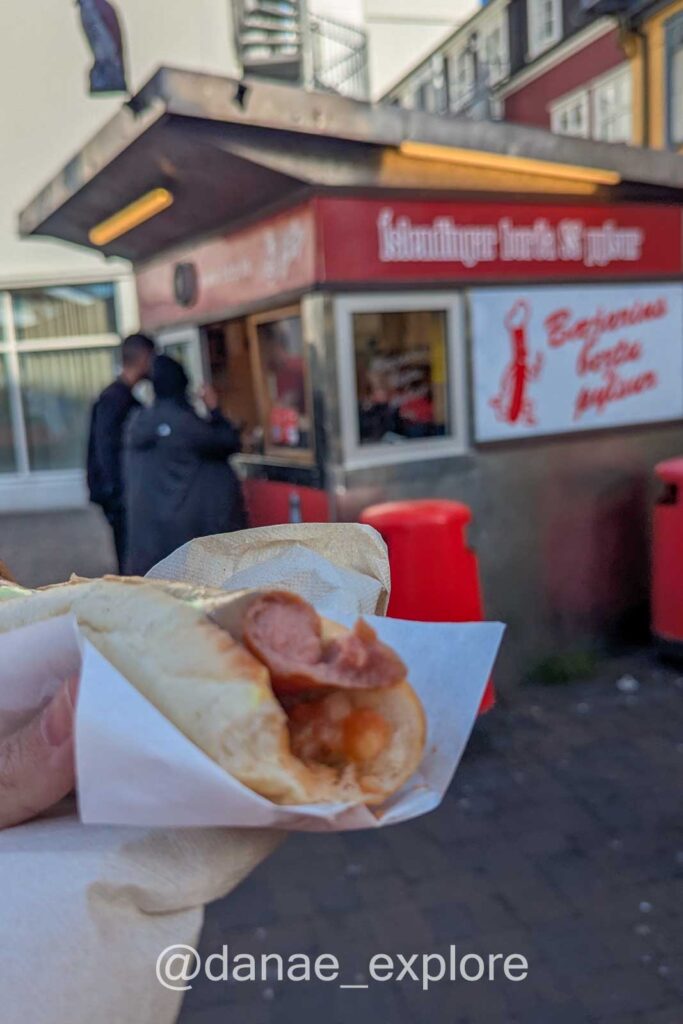
Bæjarins Beztu Pylsur– the world-famous Icelandic hot dog, and probably the cheapest meal you’ll find on the island. Don’t miss it, it’s truly unique and delicious.
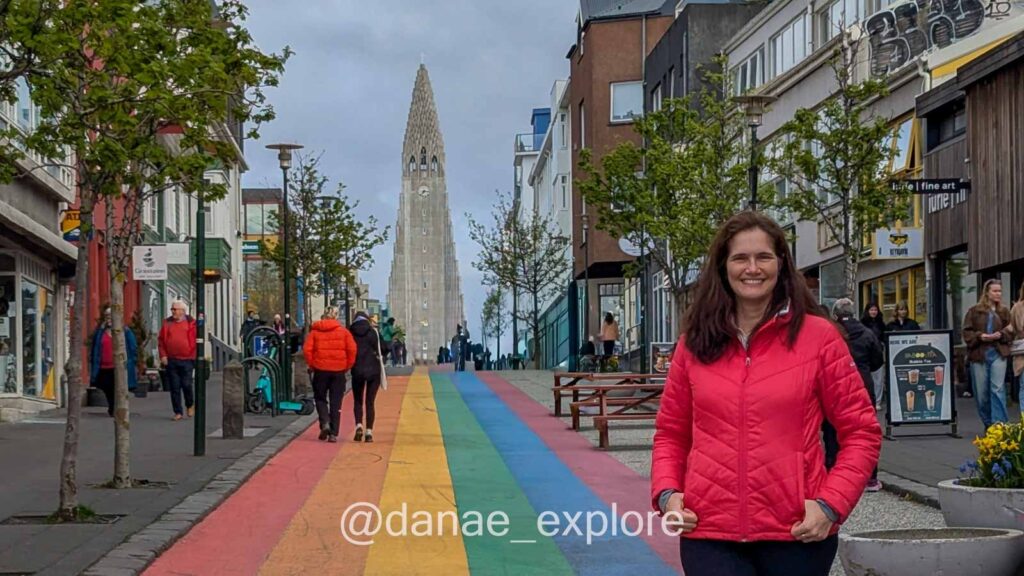
Skólavörðustígur– the rainbow street that connects the town center to the Hallgrímskirkja church.
Hallgrímskirkja– Cathedral consecrated in 1986, with a 73-meter tower inspired by the basalt columns so characteristic of the country.
Harpa Concert Hall– A cultural center in an iconic iron-and-glass building. It’s worth going inside and exploring. In the basement, we watched the film “The Volcano Express,” about Iceland’s geology and recent volcanic eruptions; it was a great introduction to the trip. The presentation lasts 15 minutes, has several showings throughout the day, and costs approximately USD 20.
.
.
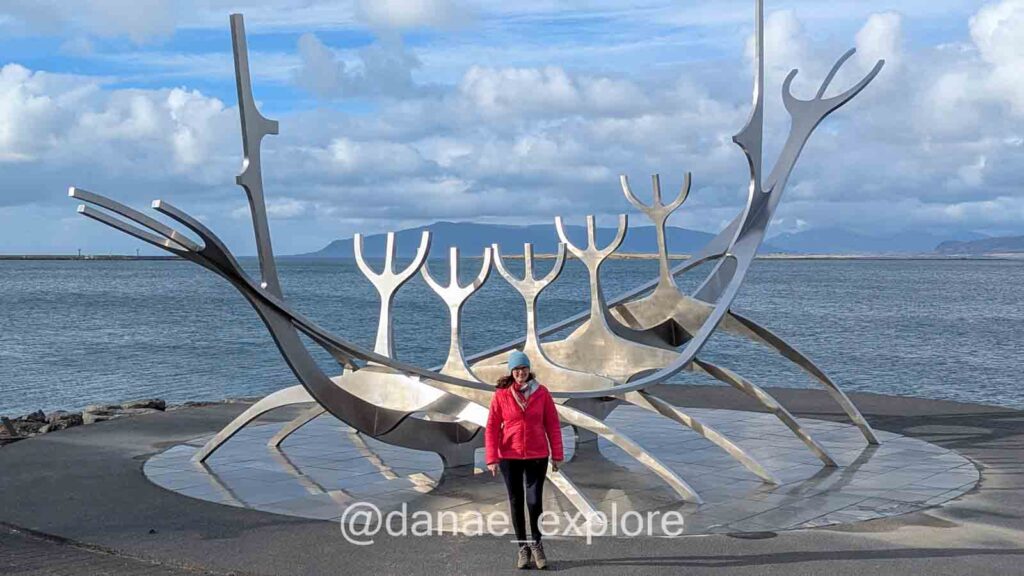
Sun Voyager– A steel sculpture shaped like a Viking ship, right by the sea.
Laugavegur– A commercial street full of small shops, bars, and restaurants. We had a hamburger at Kröns and picked up some sweets at Sandholt.
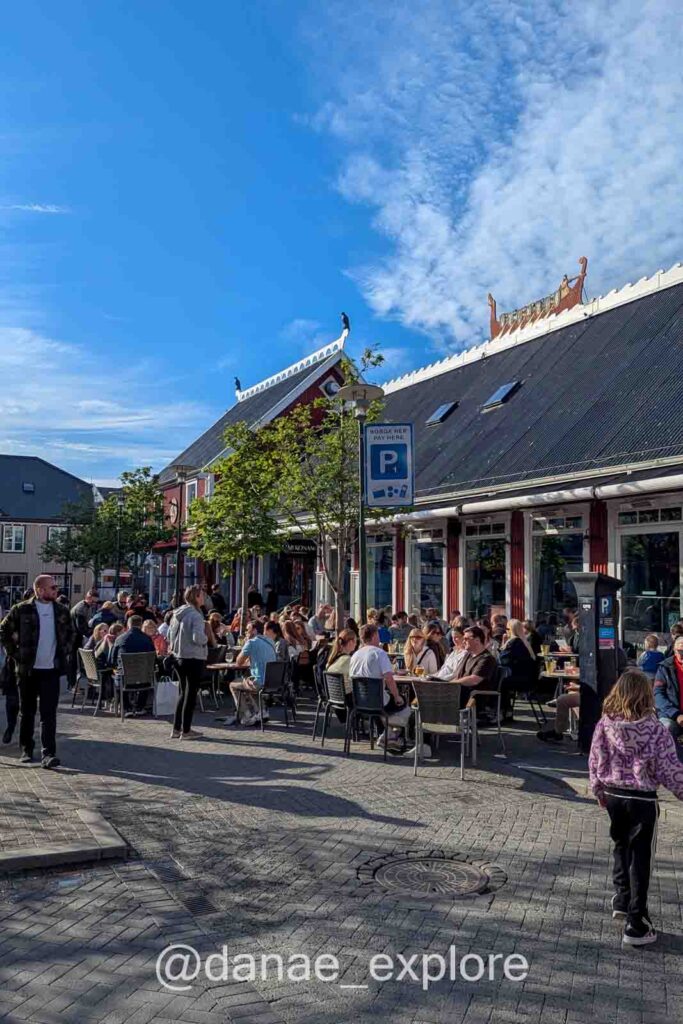
Old port region– revitalized, another lively area full of shops and restaurants, near the intersection of Lækjargata and Geirsgata streets and close to Bæjarins Beztu Pylsur. We walked around there quite a bit on our last day of the trip, a sunny Saturday with pleasant temperatures. The bars and restaurants were packed, lots of people on the streets, super lively. We had dinner at Posthús Food Hall & Bar, a kind of indoor food court.
.
.
Alþingishúsið– the Icelandic Parliament, with a pleasant square in front and several restaurants around it.
Perlan– a mix of science museum and natural history museum. We stopped by chance after seeing it from the road as we left Reykjavik, and it was a pleasant surprise. It has several exhibits on Iceland’s geology, fauna and flora, and history. There’s also an ice-cave simulator — which we later found to be quite underwhelming compared to visiting a real ice cave. We bought our tickets on the spot, but you can also buy them online in advance on the official website.
Sky Lagoon– A thermal pool very close to Reykjavik’s city center. We didn’t go because we chose the Blue Lagoon instead. It’s recommended to buy tickets in advance on the official website or through aggregators like Civitatis.
Blue Lagoon– Located 50 km from Reykjavik and 23 km from Keflavik Airport. It’s a large interconnected complex of thermal pools with turquoise blue water. The facilities are excellent, with changing rooms, bathrooms, a snack bar, and a small shop selling (extremely overpriced!) mineral beauty products. We bought our tickets online on the official website. I recommend purchasing as far in advance as possible because it fills up quickly. If you prefer, you can visit with a tour departing from Reykjavik.
.
.
Where to stay in Reykjavik
We stayed two nights in Reykjavik. On the first night of the trip, we stayed at Hotel Odinsve. The hotel has an excellent location, close to Rainbow Street and Hallgrímskirkja Church. We booked the family room, which was actually a two-bedroom apartment, perfect! The breakfast included in the room rate was excellent, a real plus given the high cost of food in Iceland.
On the last night of our Iceland itinerary, we returned to the capital and stayed at Hotel Local 101. It’s a compact hotel, with very small rooms and a tiny bathroom, the smallest bathroom I’ve ever seen in a hotel (and we’ve stayed in very compact places in many destinations, as Tokyo, for example). There wasn’t space to open the suitcase, but it was fine for just one night and it was much cheaper than Hotel Odinsve. The location is great, close to the old port area, just a few meters from the bustle. Overall, it was a good value for money.
Other options I had considered for staying in Reykjavik were Hotel Von and Center Hotels Laugavegur, both excellently located on Laugavegur Street.
It’s also worth checking out Grandi by Center Hotels, still in the central area but a little farther from the hustle and bustle, with what looks like excellent value for money.
An option with a great location and a more affordable price is Old Town Reykjavik.
You can check these and other options on the map below:
.
.
What to do in the Golden Circle
The Golden Circle, the country’s main tourist destination, is a circuit of approximately 200 km showcasing a little bit of everything Iceland has to offer. Waterfalls, volcanoes, geysers, and incredible landscapes everywhere you look. If you only have time for one trip in Iceland, make it this one (obviously, it would be a huge waste to visit Iceland and stay only one day, but you get the idea).
We did the Golden Circle starting in Selfoss and ending near Reykjavik., you can find our complete itinerary here. However, it is possible (and usually more common) to do the opposite. Many travelers arrive on the island, rent a car, and go straight from the airport to the Golden Circle without even stopping in the capital (which, although not my choice, I recommend for those with limited time).
.
To rent a car, I always use RentCars, where I usually find the best options, and with the DANAE promo code you still get an additional 5% off. Shall we go?
.
The main stops are (in order from Selfoss):
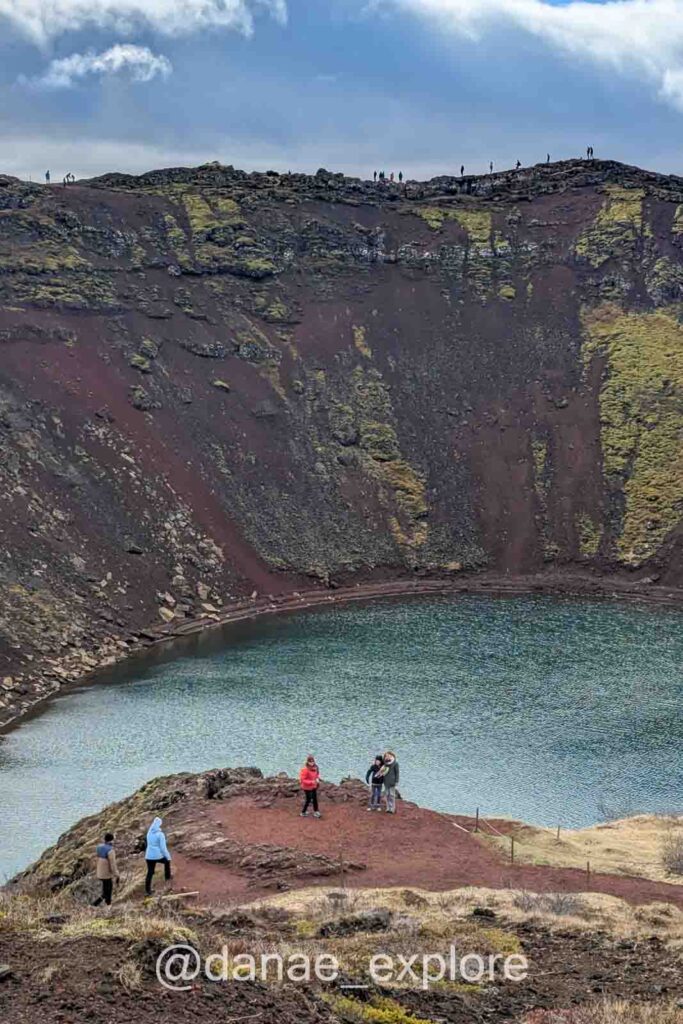
Kerid Crater – Volcanic crater with a lake; it’s worth walking all the way around the rim and going down to the lake.
Skálholtsdómkirkja – Historic church.
Secret Lagoon or Gamla Laugin – The oldest thermal pool in Iceland and a more economical alternative to the Blue Lagoon. We didn’t visit it. Nearby there is also Hrunalaug, a smaller and simpler thermal pool.
.
.
Lunch at the restaurant Fridheimar – A farm that grows tomatoes in greenhouses heated with geothermal energy. I recommend booking in advance through the official website.
Strokkur Geysir – The original geyser, which gave the name to the entire category, erupts every 5–8 minutes. Free entry, paid parking (use the Parka app).
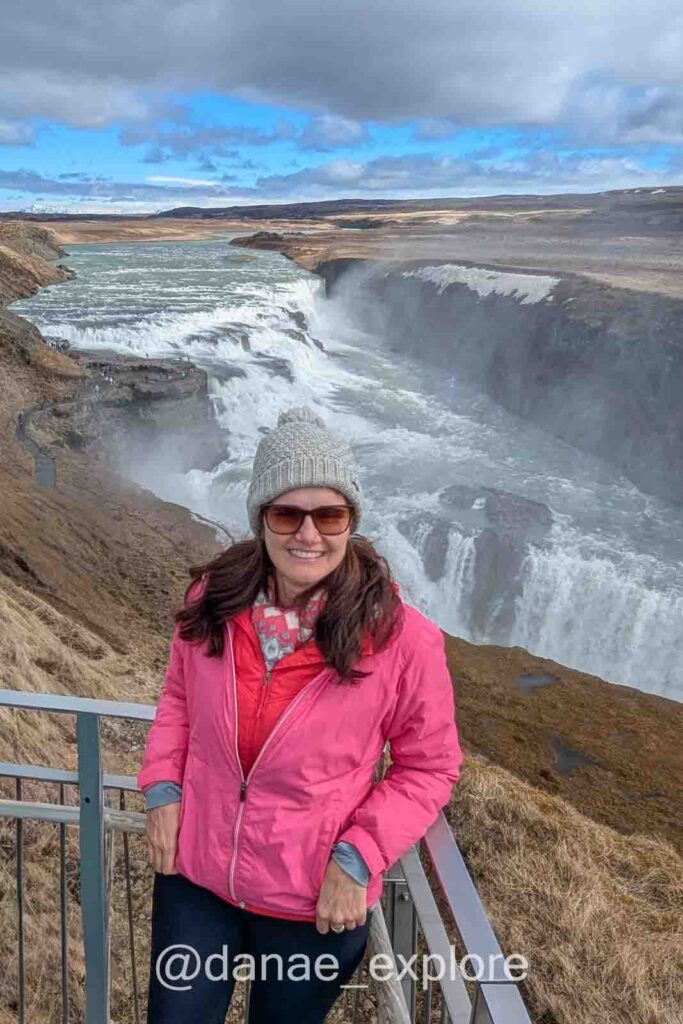
Gullfoss – or “the Golden Waterfall”, is one of Iceland’s largest waterfalls, comprising two drops: one eleven meters high and the other twenty meters high, totaling 31 meters.
Bruararfoss – A small waterfall with strikingly clear blue water, known as the bluest waterfall in Iceland.
Laugarvatn Fontana – A thermal pool complex with pools at different temperatures. It is currently closed and scheduled to reopen in April 2026, according to the official website.
.
.
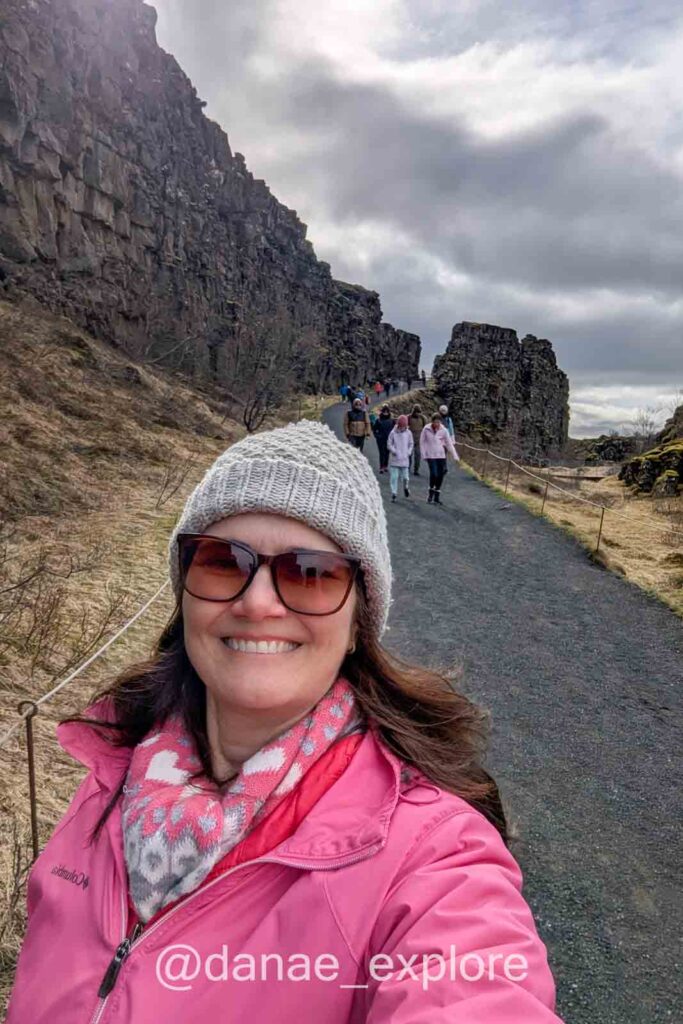
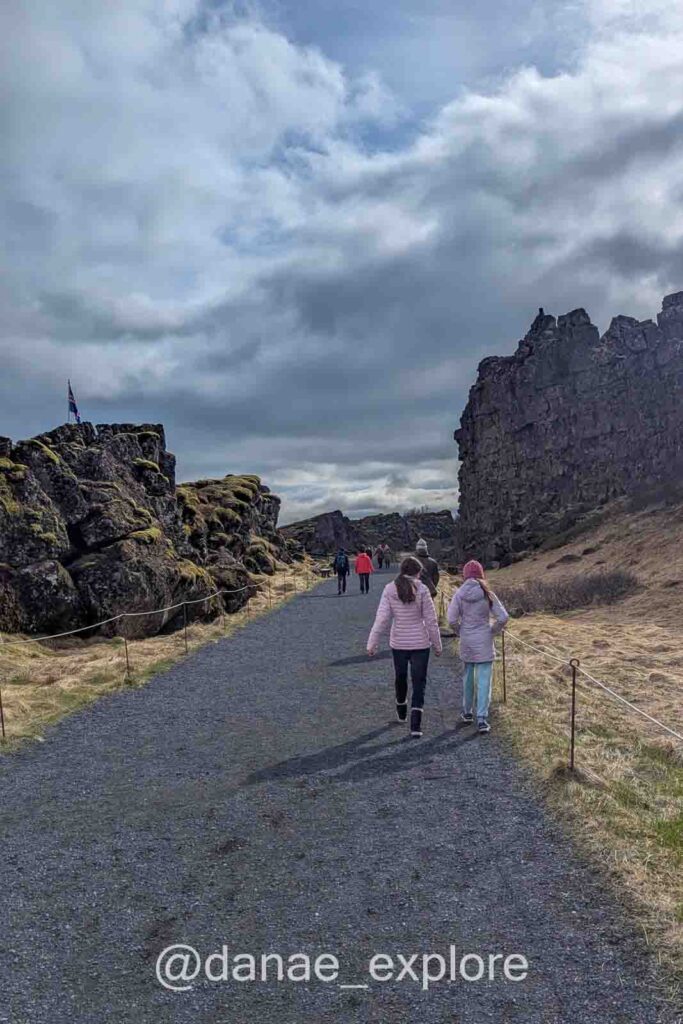
Thingvellir National Park
This national park is unique in the world. It’s where you find the meeting point of the European and American tectonic plates.
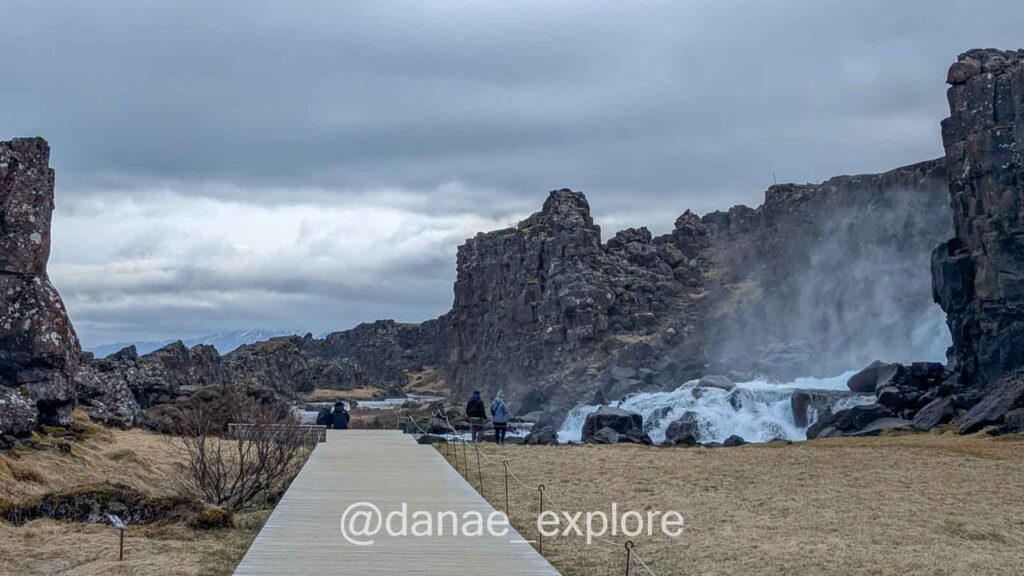
There are several trails through the main areas of the park; I recommend doing as many as your time allows. They are generally very easy, most of them on wooden walkways. Don’t miss Oxararfoss, a very charming waterfall formed right in the rift between the continental plates (to visit it, we parked at parking lot P2).
It’s possible to do snorkeling in the crystal-clear waters of Lake Silfra (here’s a booking option). Although many people spoke very highly of this snorkeling experience, I thought it would be not worth the price; in the end, we didn’t miss it at all, and we would have spent too much time on it, time we preferred to use exploring other parts of the park.
We also visited Þingvallakirkja (Þingvellir Church), the first church built in Iceland. The original dates back to the year 1000; the one we see today is a reconstruction from 1859. It is located next to the country’s Prime Minister’s summer residence.
Thingvellir Park also has historical significance, as it was there that the Alpingi, Iceland’s first parliament — and the world’s first — was established.
There are several parking lots in the park; to visit the main areas near the Visitor Center, we parked at P5 (near Silfra).
If you don’t want to rent a car, you can take a Golden Circle tour from Reykjavik, like this one here.
.
.
Where to stay in the Golden Circle
We started the Golden Circle in Selfoss, where we stayed at the Hotel Selfoss, which I imagine is the largest in the town. We booked a quadruple room with a queen bed and a double sofa bed, and it turned out to be quite comfortable.
The Hotel Selfoss is located across from the revitalized historic area of the town, where there is a small square surrounded by traditional Icelandic-style buildings that have been converted into restaurants, bars, and small shops. I found the area charming and lovely to walk around. We were just a bit unlucky with the weather, as it was very cold and drizzling, so we couldn’t enjoy it much. It must be very pleasant in the late afternoon when the sun is out. The Old Dairy Food Hall is a food court with several food stalls and is where you’re most likely to find a meal at an affordable price.
There are other options in the town of Selfoss, such as Hotel South Coast. There are also some accommodation options along the Golden Circle. I had my eye on the Hotel Skálholt and the Blue Hotel Fagrilundur, both near the Geysir area, but I felt that staying in the small town of Selfoss would work better for our itinerary and be more enjoyable overall. The Hotel Gullfoss, located near the waterfall of the same name, looks amazing for those hoping to see the Northern Lights.
.
.
What to do on the south coast of Iceland
We spent three days exploring the southern region of Iceland, which is the most visited by tourists and where the most beautiful waterfalls in the country are located. Many people travel to Iceland and stay only in that area, either due to lack of time or simply not knowing what else there is to see in the rest of the country. The first case is understandable; the second is a real shame – but luckily you found this article, because I don’t hold back on sharing information here!
So here we go, with all the places we stopped at (and some we would have liked to stop at) on our trip through southern Iceland. The attractions are listed in order, starting in Reykjavik and ending in Vik i Myrdal.
This is the part of the trip that’s going to be absolutely amazing. Those stunning waterfalls you see so often on social media are right here in front of you, ready to leave you speechless.
Caves of Hella
Caves carved out by Iceland’s first inhabitants (we did not visit). More information at the official website.
Lava Center
An informative, hands-on center about Icelandic geological phenomena. Since we had already been to Perlan, we skipped this one, but it looks very interesting. Check the official website for more info.
Seljalandsfoss
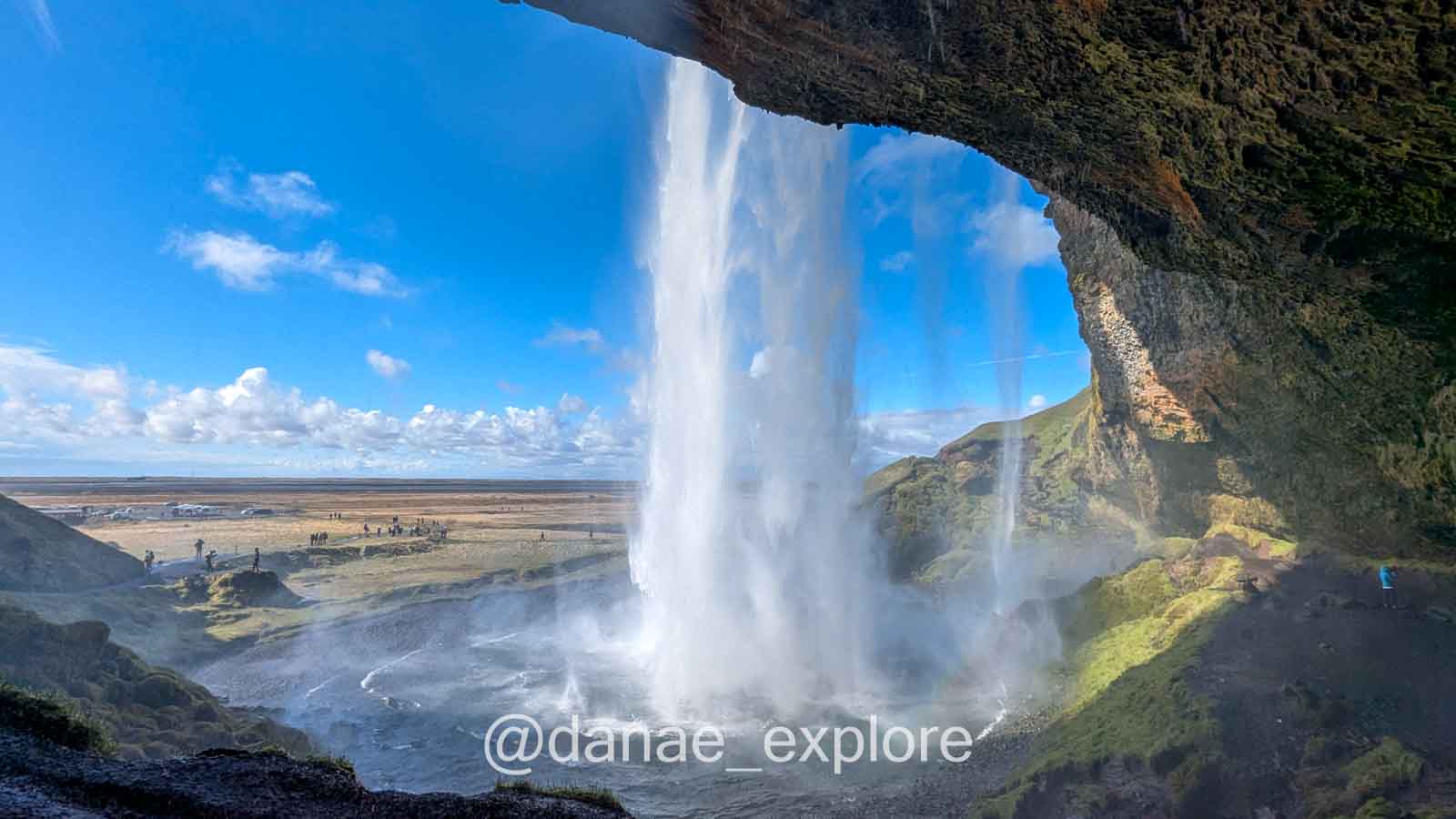
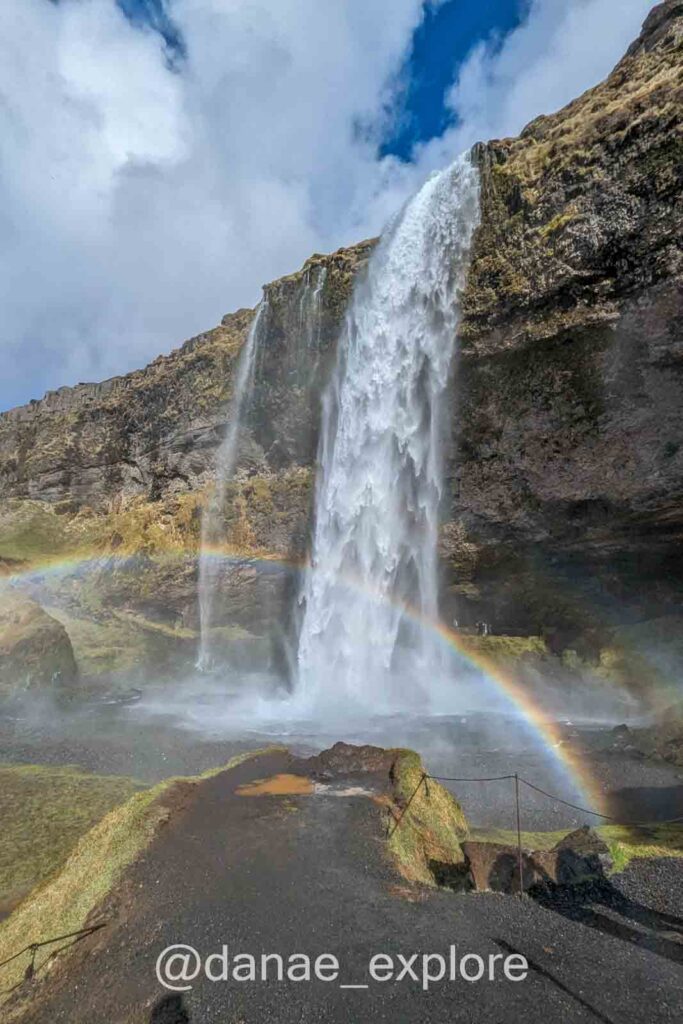
The waterfall I liked most in Iceland! You can walk behind the waterfall: we got soaked and almost froze, but it was one of the most fun parts of the trip. Entry is free, but parking is paid (ISK 1,000 – approx. USD 8, via the Parka app or at the on-site kiosks).
.
.
Gljúfrabúi
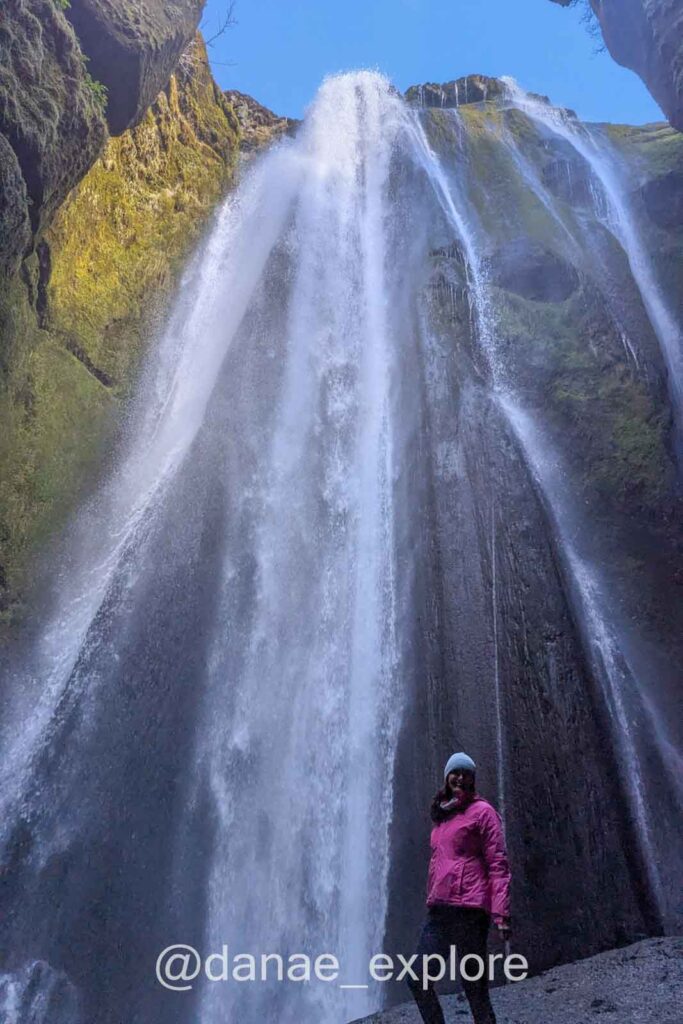
Leave your car parked at Seljalandsfoss and walk a few meters along a trail that begins on the left side of the waterfall. Enter a small canyon and prepare to be amazed! A stunning waterfall, hidden among the rock walls. We were already wet and got even wetter, but it was totally worth it.
Skogafoss
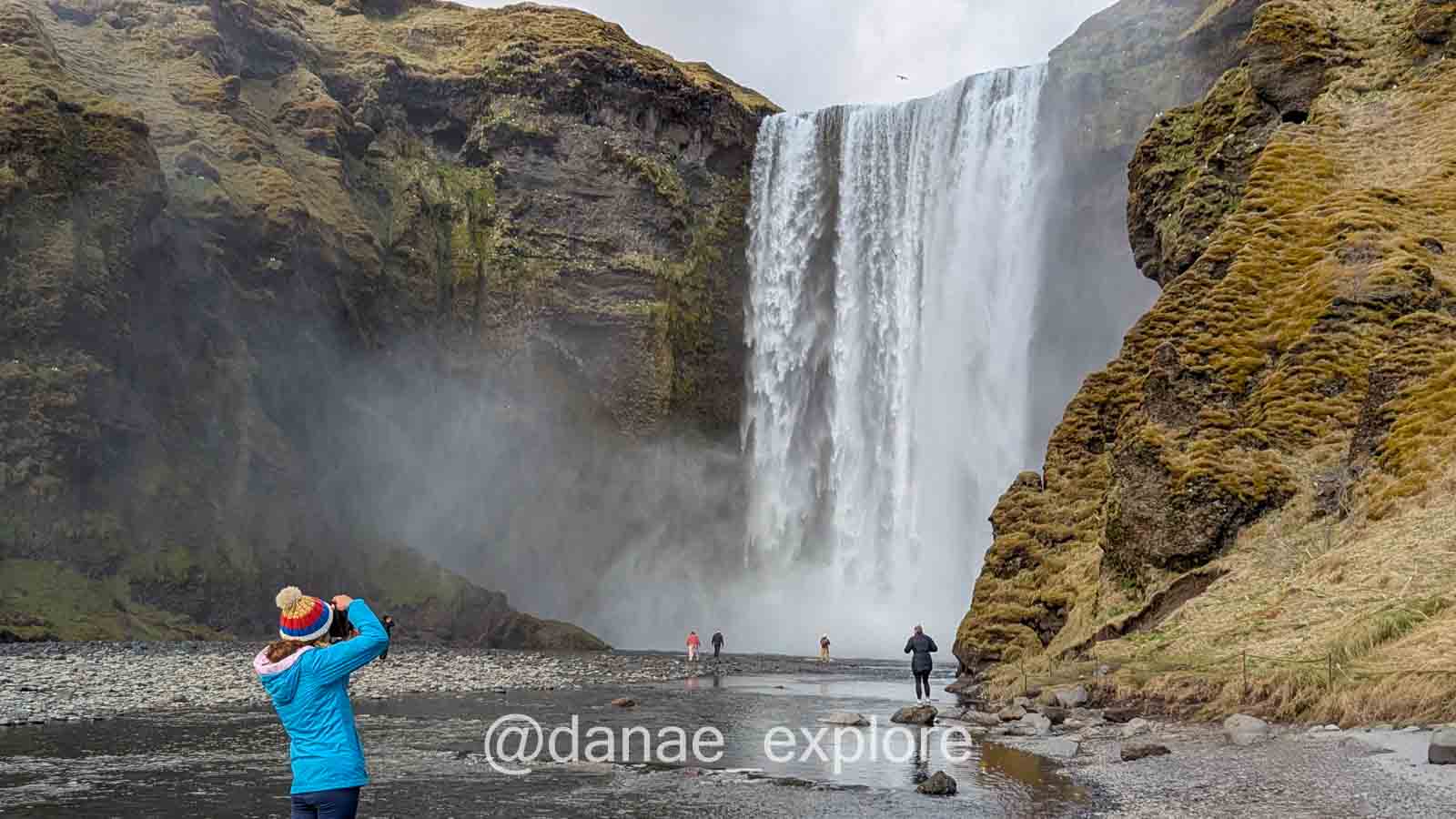
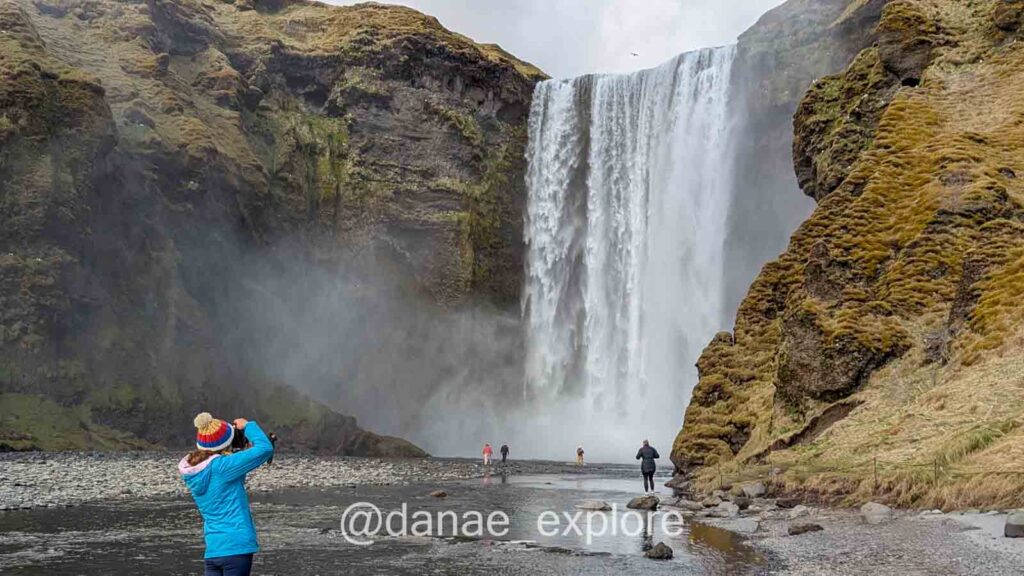
I think this is the Icelandic waterfall I’ve seen the most photos of on social media. It’s not surprising, since the place is spectacular and access from the highway is incredibly easy. As with other waterfalls, you only pay for parking (use the Parka app). There’s a staircase on the side that goes up to the top of the waterfall, where a trail begins with dozens of other waterfalls. We climbed the steps but realized we wouldn’t have enough time to do the trail and return to the hotel in Vik before dark. There’s a museum next to the waterfall, but we didn’t go in.
.
.
Kvernufoss
Just a few meters from Skogafoss, but with a fraction of the visitors, is another waterfall that makes you certain the trip to Iceland was worthwhile.
Sólheimajökull Glacier
This was the first glacier we visited in Iceland! It’s a short and easy walk from the parking lot to the glacier viewpoint.
Solheimasandur Plane Wreck
The famous American military plane that crashed on the beach in 1973 and has remained there ever since. It’s a 3 km walk each way, partly on sand, to reach the plane. There’s the option of taking a van for ISK 3,200 per person (approximately USD 25). It didn’t seem like a good idea to me; we didn’t go, and I don’t regret it.
.
Where to stay on Iceland’s South Coast
To visit this region, I recommend staying in Selfoss or Vik i Myrdal. However, there are some hotels along the south coast of Iceland, such as Hótel Skógafoss by EJ Hotels and Hotel Selja. We stopped for lunch at Midgard Base Camp, which is another hotel option in the region.
.
.
What to do in Vik i Myrdal
We arrived in Vik i Myrdal at the end of the day and settled into our accommodation, Vík Apartments (attached to Hotel Vík í Mýrdal). We took advantage of having a fully equipped kitchen to save money on meals, having dinner at home. The next day, we spent the morning in the Vik area and in the afternoon we headed north.
Here are the main attractions in the Vik region and the east coast of Iceland:
Reynisfjara Beach
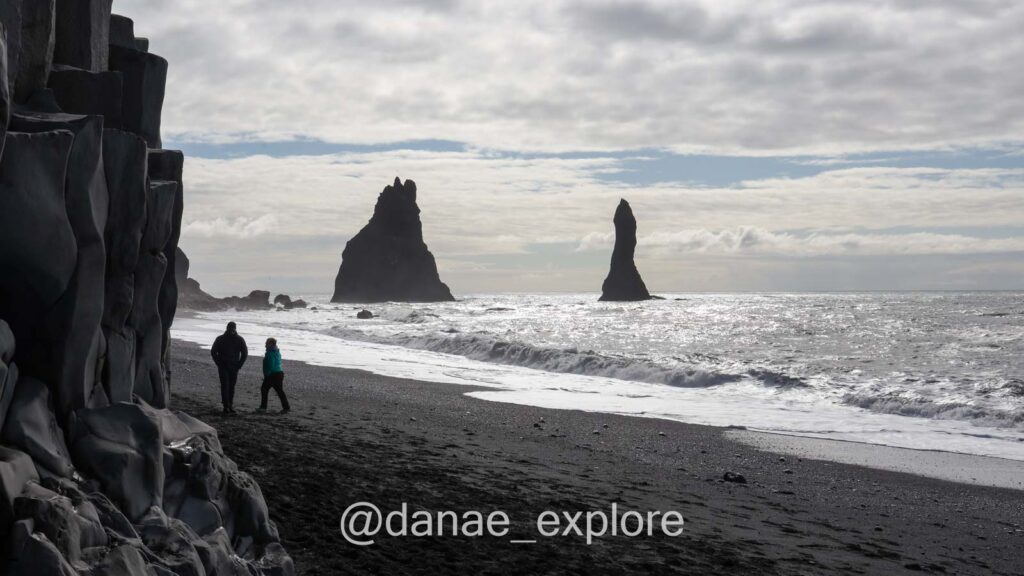
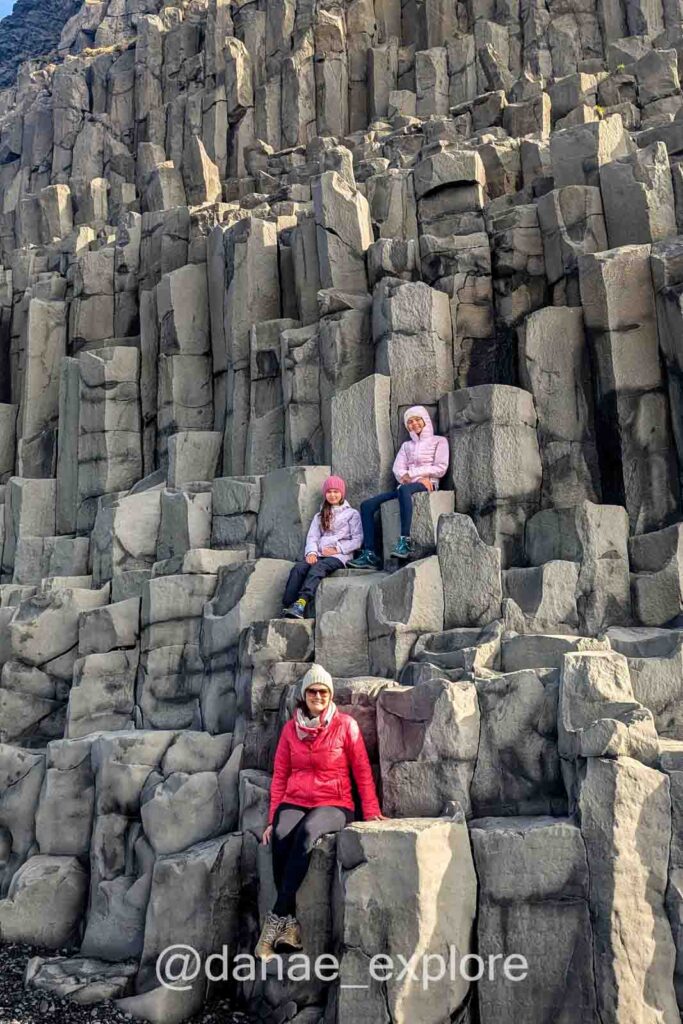
Iceland’s most famous black sand beach — and it truly lives up to the hype. The sea is rough, so be careful. On the left side of the beach are the even more famous basalt columns, called Reynisdrangar Cliffs. Following the beach, you’ll find the Hálsanefshellir Cave, a beautiful cave, and the striking rock formations in the ocean.
Kirkjufjara Beach
Another black sand beach, next to Reynisfjara (but you cannot walk from one to the other).
Icelandic Lava Show
It’s a kind of scientific-theatrical presentation, with real lava. Despite being well rated, it seemed like a tourist trap to me. We didn’t go. If you want to try it, here’s the link. There is also a similar show in Reykjavik.
Vik i Myrdal Church
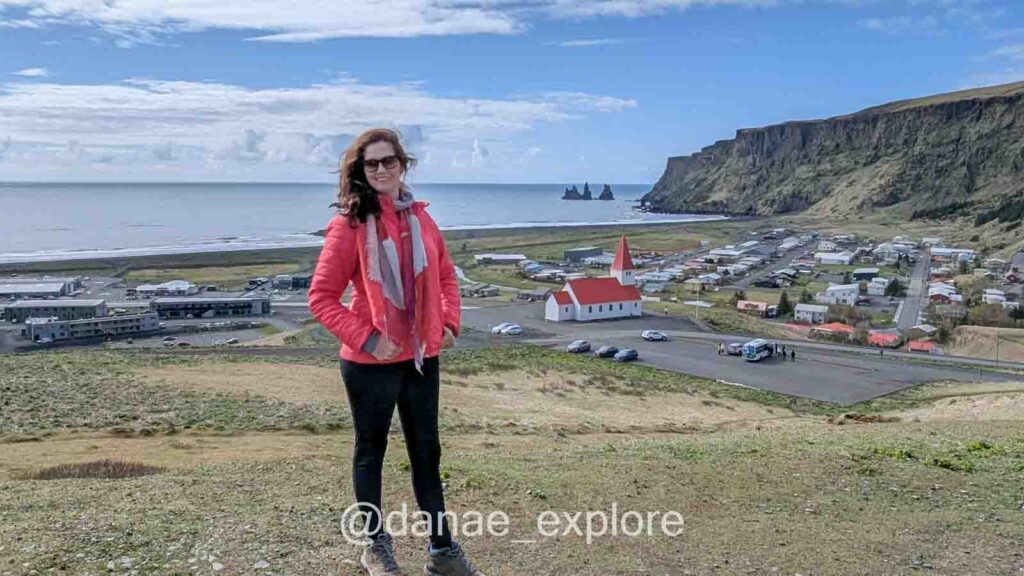
Located on a hilltop, it offers the best views of the town and Reynisfjara. I highly recommend it. You can go on foot or by car; parking is free. Walk up to the small cemetery, where the views — including the church — are even better.
.
.
Eldhraun Lava Field
Leaving Vik and heading north, the road passes through this lava field, one of the largest in Iceland. It was formed by an eruption at the end of the 18th century. The lava is covered by an endemic moss species that takes about a hundred years to grow. There is a viewpoint on the road, but you can stop at the shoulder anywhere — just don’t leave the marked paths (when in doubt, stay on the paved road).
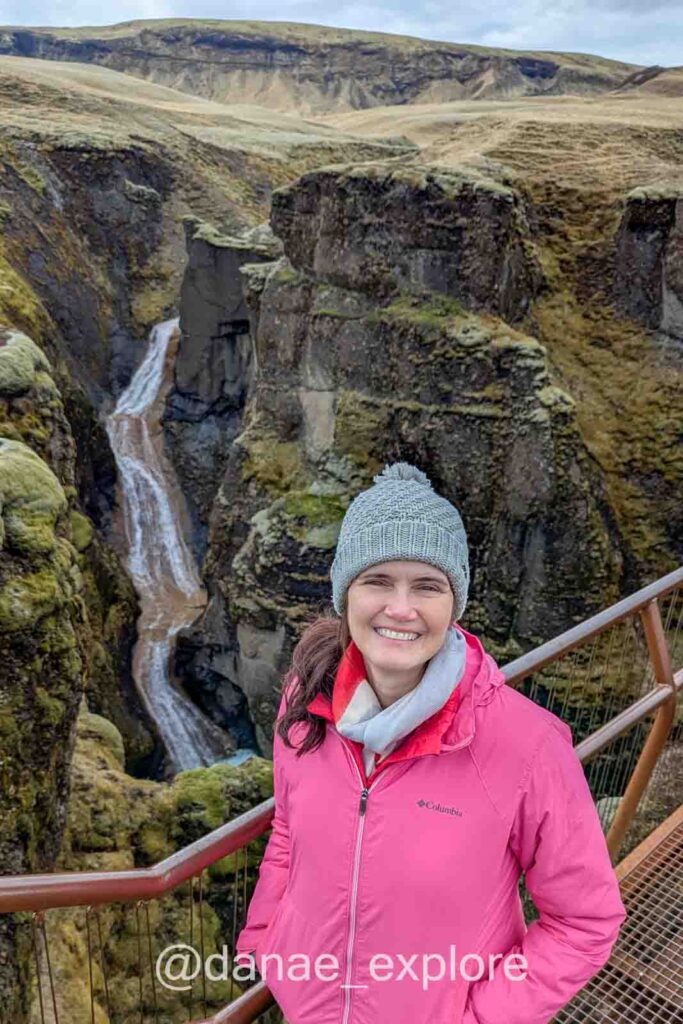
Fjaðrárgljúfur
A beautiful canyon, with the Mogafoss waterfall at the end. Short, well-marked trail, with an initial uphill section but quite easy.
Foss á Síðu
Another beautiful waterfall, with basalt columns typical of Icelandic geology.
.
.
Where to stay in Vik i Myrdal
We stayed one night at Vík Apartments, attached to Hotel Vík í Mýrdal. I found it excellent: a two-bedroom apartment, very spacious, and right across from a Krónan supermarket. It was the best value for money I found in the area.
Other options include the gorgeous Hotel Kría and, in a more economical range, the 1908 Hostels and Vik Inn, located side by side in the city center.
Since there’s just a few places to stay around the area, check availability and prices on this map:
.
.
What to do in eastern Iceland – Jokulsarlon and Diamond Beach
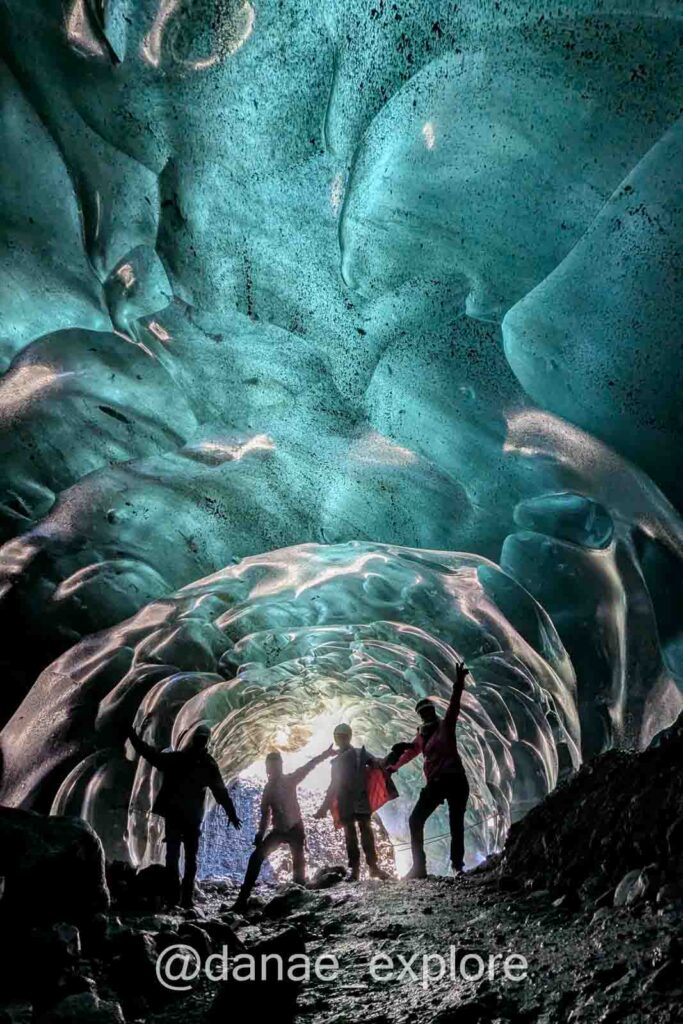
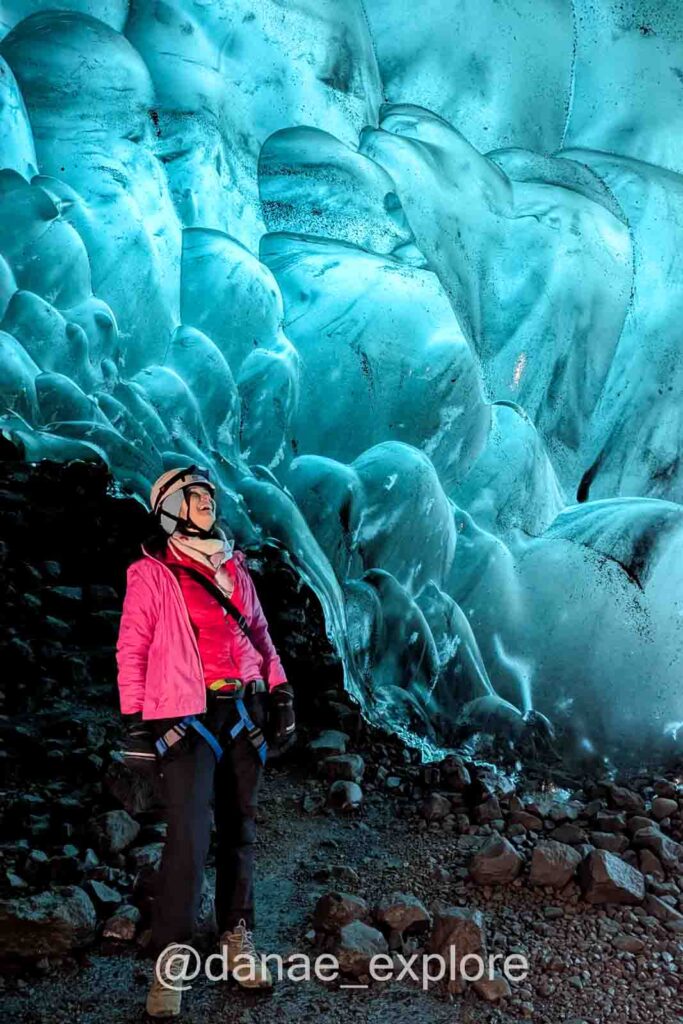
One of the things I most wanted to do in Iceland was to visit an ice cave. I’ve already had the opportunity to see glaciers; the first one I ever saw was the Perito Moreno Glacier in Argentina, and when we went to Alaska, we not only saw two glaciers but also trekked on two! But an ice cave was still on the wishlist.
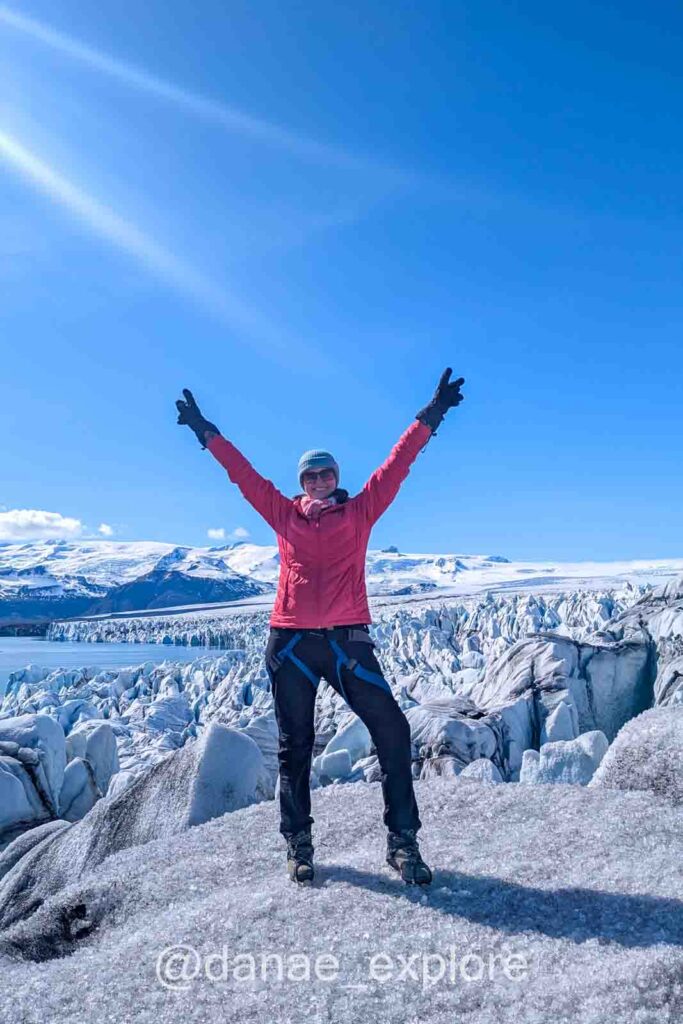
So, our focus in that region was a full-day tour with trekking on the Vatnajökull Glacier and an ice cave. We did it with Glacier Adventure. I bought it directly from their website (not sponsored), but there are options on platforms such as GetYourGuide or Civitatis.
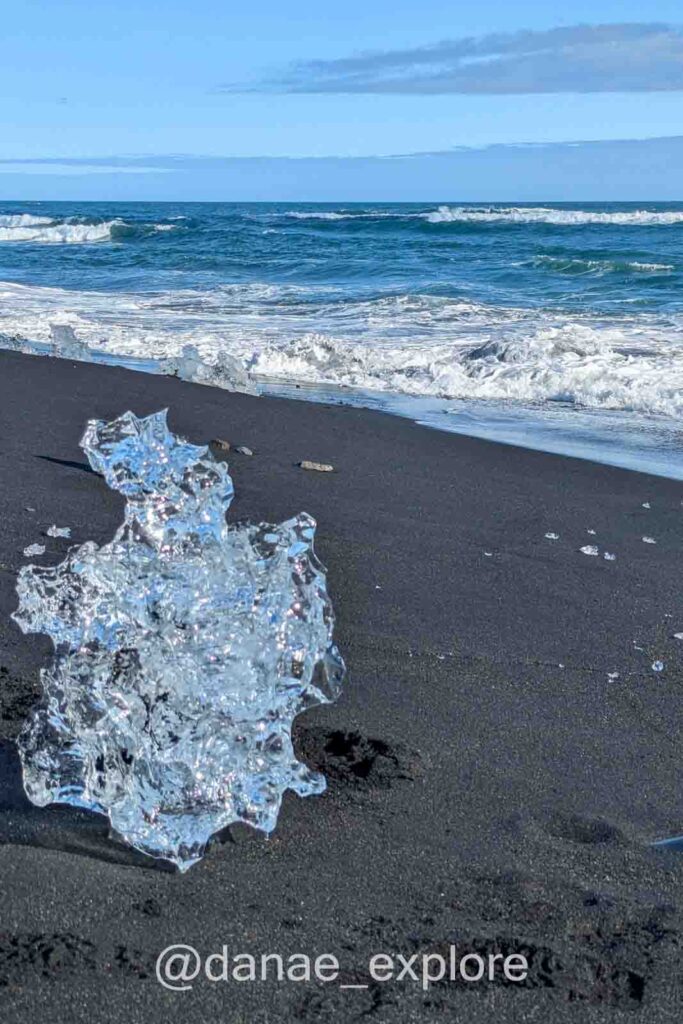
Then we visited Diamond Beach, the famous beach with the ice chunks that you’ve surely seen countless times on social media. These “diamonds” are nothing more than large pieces of ice that have broken off from the Vatnajökull Glacier and drifted until they reach the beach. When we visited, there were only a few ice chunks, but even so, it’s a sight that defies our understanding: how can there be ice on the beach?
Next to Diamond Beach is Jökulsárlón, the lagoon formed by the Vatnajökull Glacier. While the beach had almost no ice, the lagoon was full of icebergs and, even better, several groups of seals. The place was packed with tourists; it was where we saw the most visitors on our entire trip — and keep in mind, we were traveling in the off-season.
South of Jökulsárlón, there is another iceberg lagoon, Fjallsárlón, smaller but with far fewer tourists than its larger sibling.
.
To rent a car, I always use RentCars, where I usually find the best options, and with the DANAE promo code you still get an additional 5% off. Shall we go?
.
In addition to these attractions, I had planned to visit the Mulagljufur Canyon, but after a whole day at the glacier and the lagoon, we were simply exhausted and decided to head straight back to Fosshotel Glacier Lagoon. From what I’ve researched, it seems to be a beautiful canyon, with a moderate-level trail of about 2.2 km each way.
Between Vík and Diamond Beach, it’s worth stopping to see the Hofskirkja, a historic church with a roof covered in vegetation.
I also recommend stopping by the Skaftafellsstofa Visitor Center. The site features exhibits and information about the geology and geography of the area, its fauna and flora, and the history of the Skaftafell region; there is a small souvenir shop, a cafeteria, and restrooms. A few trails start there, but we didn’t hike any.
.
Where to stay in the Jokurlsarlon and Diamond Beach area
We stayed two nights at Fosshotel Glacier Lagoon, a hotel with modern Scandinavian design, in the middle of absolutely nowhere, on the edge of the Ring Road a little south of Jökulsárlón. The hotel is great, a bit more sophisticated (and expensive) than what we usually stay at, but it was one of the only options in the area and fit perfectly into our itinerary.
There is limited accommodation available in this region. Hotel Jökulsárlón follows the same style as the Fosshotel — impeccable design and matching prices; the Hali Country Hotel seems a bit more economical.
Other options would be in Vik i Myrdal or farther north in Höfn, where some places that look interesting are Hotel Höfn, Höfn Berjaya Iceland Hotels and, as a more economical option, the Apotek Guesthouse. The Fosshotel chain also has one in Höfn, the Fosshotel Vatnajökull.
Have a look at the map below to check prices and availability:
.
.
What to do on the Snæfell Peninsula
The thing to do on the Snæfell Peninsula is to drive around the complete loop of the peninsula. Follow Route 54 and, near Búðir, take a secondary (but paved, don’t worry) coastal road through Snæfellsjökull National Park, dominated by the Snæfells volcano — which, as a fun fact, is where Otto Lidenbrock, a character in Jules Verne’s novel, begins his journey to the center of the Earth.
There are several viewpoints and rest stops along the way. Here is a list of points of interest, following the direction from Borgarnes, going clockwise around the peninsula:
– Gerduberg Cliffs: basalt columns
– Ytri Tunga: beach with a seal colony, don’t miss it!
– Barnarfoss Waterfall: free parking; it’s a 15-minute walk to the bridge viewpoint, but you can also go down to the base of the waterfall.
– Búðakirkja Church: a beautiful black wooden church with traditional Icelandic architecture.
– Rauðfeldsgjá Gorge: it’s possible to walk inside the canyon (bring a raincoat; it gets very wet).
– Arnarstapi: a picturesque village with restaurants and the start of the Gatklettur trail, which leads to the troll monument.
– Hellnar Church and lookout point.
– Lóndrangar Viewpoint: a viewpoint with bird nests on the cliffs.
– Snæfellsjökull National Park Visitor Center in Malarrif: we stopped here; there are exhibits about the park and traditional life in the region, as well as information about trails and viewpoints.
– Vatnshellir Cave: lava cave; the visit lasts 45 minutes (we didn’t do it).
– Dritvík Djúpalónssandur: another black sand beach with an impressive viewpoint.
– Saxhóll Crater: you can’t miss this stop; the crater is visible from afar. There’s a wooden staircase to climb to the top, and it’s well worth it — interesting volcanic features and excellent panoramic views.
– Visitor Center in Þjóðgarðsmiðstöð á Hellissandi: we stopped here again; there are panels about the region, a bathroom, a small café, and a little shop.
.
.
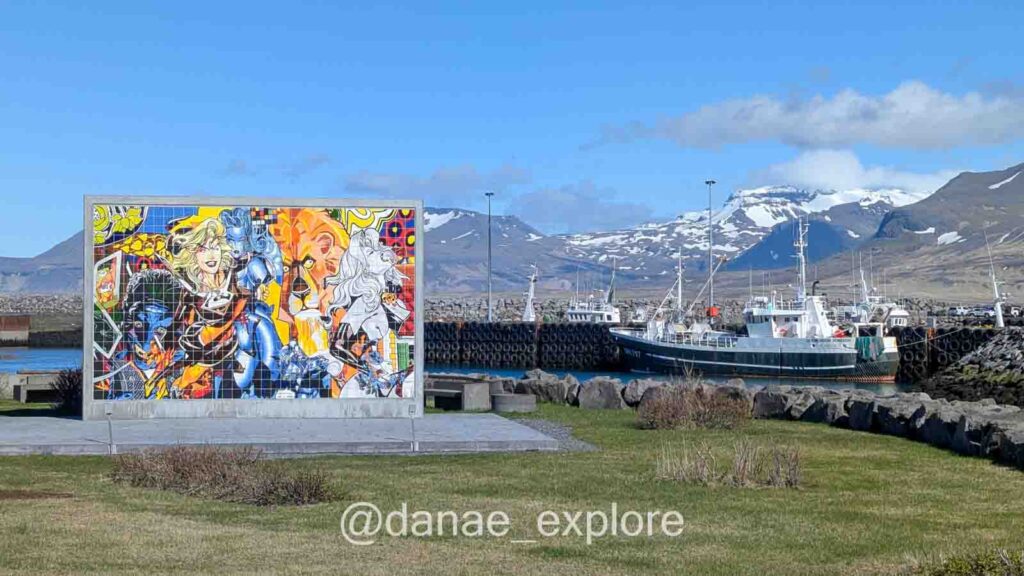
– Village of Höfn í Hornafirði: famous for the graffiti on its walls; it’s worth a visit.
– Svodufoss and Kerlingarfoss Waterfalls (we didn’t go).
– We stopped at Ólafsvík to have lunch at Sker Restaurant, have a coffee, and stretch our legs. From there, you can take whale-watching tours, but it is essential to book in advance. As we had recently seen whales in Ushuaia and Alaska, we skipped this one (we were recommended Laki Tours, with tours departing at 10 a.m. and 2 p.m.).
– Snæfellsjökull Glacier Viewpoint (it’s also possible to reach it from the other side, starting from Saxhóll and passing by some waterfalls).
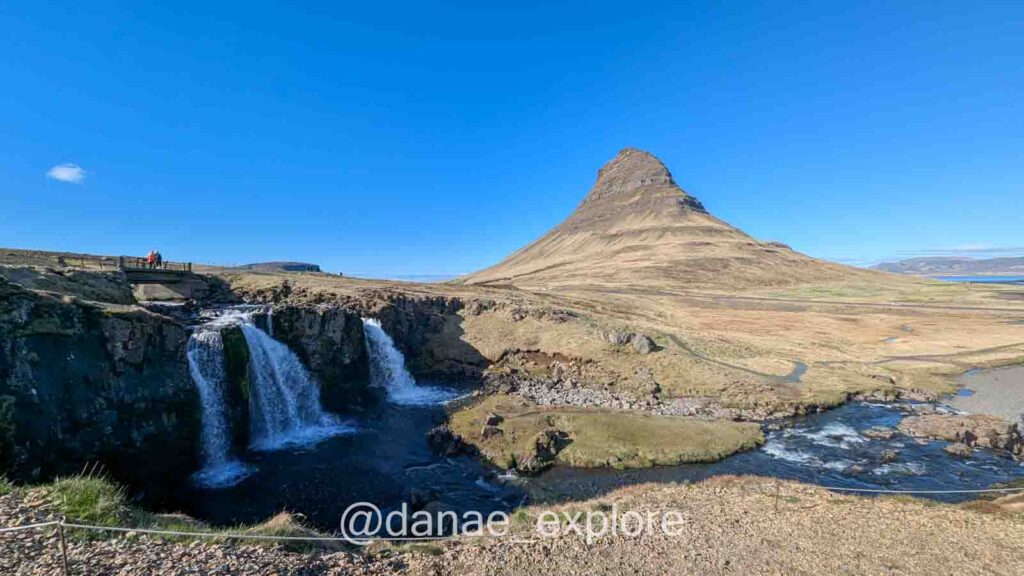
– Kirkjufellsfoss, one of Iceland’s most famous waterfalls, forming a striking landscape with the mountain behind it. It has been the setting for several productions, including Game of Thrones.
– Grundarfjörður, another charming little town, worth stopping for a coffee.
– Berserkjahraun, a lava field just before the junction of highways 54 and 56.
– Continuing along Route 54, you arrive in Stykkishólmur, a port town with an iconic lighthouse. If you want to return to Reykjavik, the best option is to take Route 56 from this point.
.
Where to stay on the Snæfells Peninsula
Some travelers visit Snæfellsnes on a day trip from Reykjavik, on tours like this, but it felt like a very long day to me. We preferred breaking the route in two: we spent the night in Borgarnes at the Hotel Hamar, and after completing the peninsula loop, we stayed at Hotel Snæfellsnes, right at the junction of roads 54 and 56.
Stykkishólmur is also a great place to stay. It’s the largest town on the peninsula and has more infrastructure. In our case, looking at our Iceland itinerary, we needed to leave early the next morning and drive straight toward the Blue Lagoon, so staying at Hotel Snæfellsnes made more sense logistically. I usually prefer staying in small towns rather than in isolated areas, but in this case convenience won. Still, Stykkishólmur looks lovely for an overnight stop. And if you plan to continue toward the Westfjords, it’s where several ferries depart. Good options there include The Stykkishólmur Inn and Hotel Fransiskus Stykkishólmi.
Ólafsvík,where we stopped for lunch at Sker Restaurant, also has a few accommodation options, such as Hotel Vest Mar.
.
.
Our eight-day Iceland itinerary
The map below shows our complete itinerary in Iceland — we drove 1,500 km over eight days, and in this post you’ll find the full day-by-day breakdown, along with suggestions in case you have a little more — or a little less — time in Iceland.
.
How to use this map: Click the menu tab in the upper left corner of the map to access different layers, including points of interest and routes. You can toggle layers on and off by checking the corresponding boxes. To see details about specific locations, click on the icons on the map.
To save this map to your Google Maps account, just click the star icon next to the map title. To access it later on your phone or computer, open Google Maps, tap the menu button, go to “Your Places”, select “Maps”, and you’ll find this map saved there.
Here are the websites I always use to plan my trips:
– 🛌 Accommodation: Booking
– ☀️ Tours & activities: Civitatis & Get Your Guide
– 📱 eSIM for mobile data: Airalo e-SIM – use promo code DANAE2375
– 🚗 Car rental: RentCars – use promo code DANAE
.
Posts to inspire and help you travel to Scandinavia:
- The best of Norway in 12 days: our complete itinerary
- Is it expensive to travel in Norway? Smart strategies to reduce the cost of your trip
- Preikestolen with children – what it’s like to hike the most beautiful trail in Norway
- 5 unmissable small towns in Europe
- Our 8-day Iceland itinerary – and suggestions for 5-9 days
- What to do in Iceland: the best of the south and east of the island
.
And here our posts about other destinations in Europe:
Greece
- The best itinerary for a 15-day road trip around mainland Greece
- What to do in 2 or 3 days in Athens
- 5 unmissable small towns in Europe
Spain
- 10 days in Andalucia – Our itinerary through southern Spain
- What to do in 2 days in Granada, Spain
- Ronda, the most charming city in Southern Spain
Balkans: Croatia, Serbia, Montenegro and Bosnia-Herzegovina
- Ultimate guide to Kotor, Montenegro: what to do, where to stay, when to go, and much more
- Mostar – what to do in the most charming city in Bosnia and Herzegovina
- 20-day itinerary through the Balkans, in Eastern Europe – Serbia, Montenegro, Croatia and Bosnia-Herzegovina
- What to do in Sarajevo: 1 or 2-day itinerary in the capital of Bosnia and Herzegovina
Portugal
- Portugal in two weeks: our complete itinerary and tips
- One week in the Azores – Complete itinerary with Sao Miguel, Pico and Terceira Islands
- São Miguel, Azores: your complete guide to the largest island in the Azores
- Pico Island – complete guide to visiting the most picturesque island in the Azores
- Terceira Island (Azores) – itinerary and tips
.
Did you like these tips? Then follow me on social media:
Instagram @danae_explore
Pinterest @danaeexplore
Comments or questions? Contact me on social media! I love to chat about travel 😉
And before you go, don’t forget to SAVE THIS PIN to your PINTEREST account for easy access to this post on What to do in Iceland – the best of the south and east of the island, whenever you need it!