How about exploring mainland Greece? That’s exactly what we set out to do when we decided to make the most of our 15-day vacation on our first trip to Greece.
Up until then, Greece had always been synonymous with islands for me. One island, in special, that mostly existed in my imagination (and maybe it looks similar in yours): white houses lining a cobblestone street on a gentle slope, small restaurants with tables set outside, bougainvillea climbing along the railings, and all of it set against that unmistakable turquoise sea. A true Mediterranean paradise.
But Greece is so much more than that idyllic image of its islands.
Greece is history, culture, and a welcoming people proud of their roots. It’s rich flavors and surprisingly good wines. It’s paradise beaches, charming villages, and plenty of fun.
We did this trip as a group, with two families — 4 adults and 4 children with ages ranging from 3 to 7 at the time. We included activities to keep everyone happy, aiming for that perfect balance of culture, fun, and relaxation that makes any trip work.
First of all, follow me on Instagram @danae_explore – that’s where you can keep up with my trips, find lots of travel tips, and send me a DM anytime. I love chatting about travel!
.
15-day Greece itinerary
This itinerary is best done by car. While you can cover most of it with public transportation and tours, to truly experience what the Greek countryside has to offer and enjoy it at your own pace, with full flexibility, I strongly recommend renting a car.
Driving in Greece: what to expect
Driving in Greece is generally quite smooth. I’d definitely recommend it, but there are a few things to keep in mind.
In Greece, driving is on the right-hand side, but the main challenge is the narrow streets you’ll find everywhere, many of them steep, with sharp inclines and declines. If you’ve driven in Southern Europe before, nothing here will come as a big surprise, but you do need to stay alert. With so many charming towns, a split-second distraction while admiring the scenery can easily lead to a fender-bender.
While driving in Nafplio, on one of those lovely but challenging narrow streets, we did end up scratching the car’s fender, which caused us a bit of a headache when returning it. In the end, everything was resolved.
If you’re not too comfortable driving through the narrow streets of ancient towns that sometimes feel too tight even for toy cars, I recommend renting a car with full insurance coverage.
Aside from this minor incident, which was completely our responsibility, we had no issues during the days we had the car.
And don’t forget to bring your International Driving Permit (IDP). Greece was, so far, the only country where we were specifically asked to present it when renting a car.
We picked up the rental car on our last day in Athens, since you don’t need a car in the city. You can easily get around on foot, by metro, bus, or Uber/taxi.
To rent a car, I always use RentCars, where I usually find the best options, and with the DANAE promo code you still get an additional 5% off. Shall we go?
.
Days 1 to 3 – Athens
Our15-day mainland Greece and the Peloponnese trip started in Athens, which will likely be your starting point as well, since this is where the main international airport is located.
Oh, and before you correct me, Athens is not in the Peloponnese , but there’s no way to leave this Greek gem out of a road trip around the country, right?
.
Where to stay in Athens
Athens offers a wide range of accommodation options to suit all styles and budgets. We stayed in Plaka, a central neighborhood near the Acropolis.
With its narrow cobblestone streets lined with charming shops, cafés, and restaurants, Plaka is a great place to stay in Athens, especially if you’re only in town for a few days.
After quite a bit of research, we chose the Plaka Hotel, with great rates, stunning views from the rooftop bar, and family rooms (two connecting rooms, ideal for those traveling with children). However, based on a recommendation from a friend of a friend, we ended up staying in a house rented through Airbnb, which unfortunately is no longer listed on the platform. At the end of the trip, we spent our last night at the Plaka Hotel before catching our flight back home
Another great option in Athens is The Pinnacle Athens, which also offers family rooms.
Check availability and rates here:
.
.
What to do in Athens
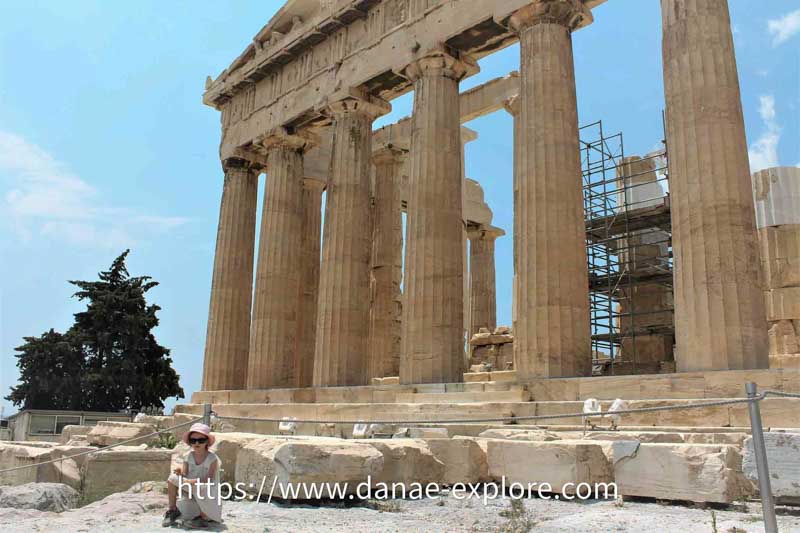
I strongly recommend spending at least 2 full days in Athens. If you have more time, 3 days (or more!) would be ideal to enjoy the city at a more relaxed pace.
In this 15-day Greece itinerary, we spent 2 and a half days in Athens.
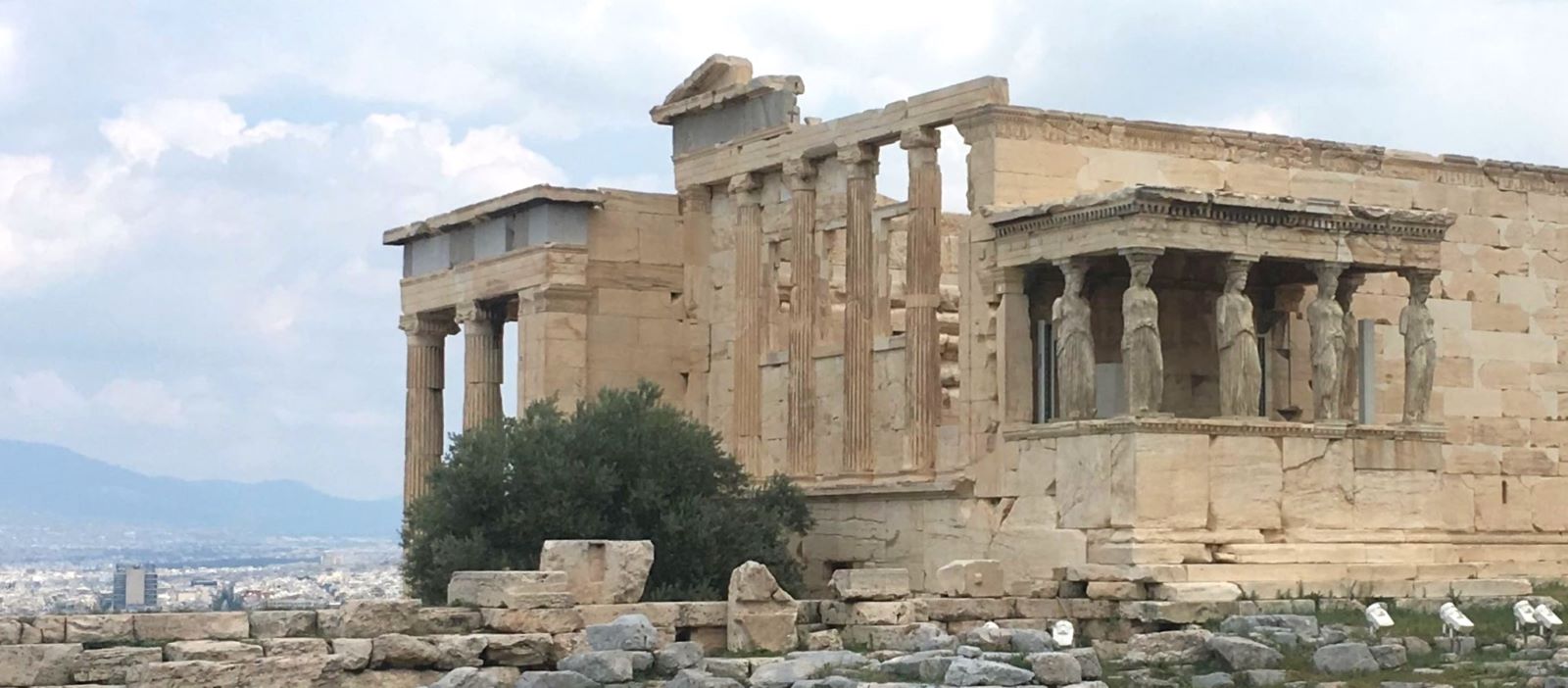
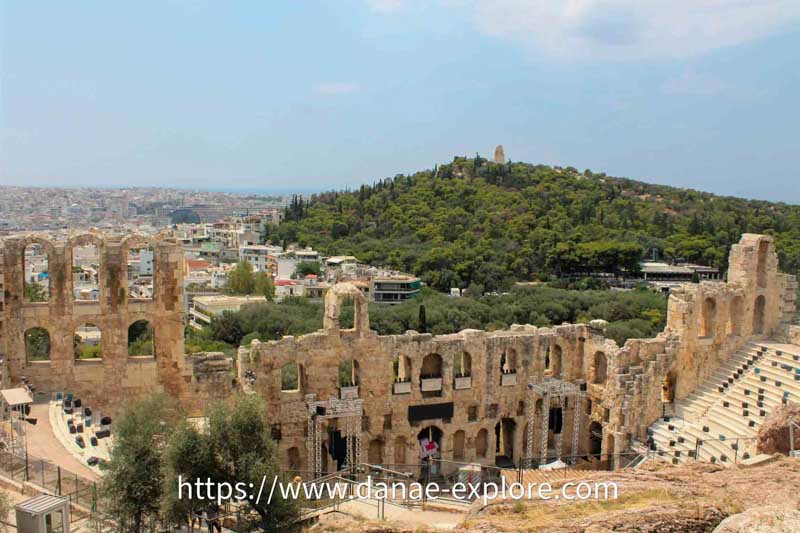
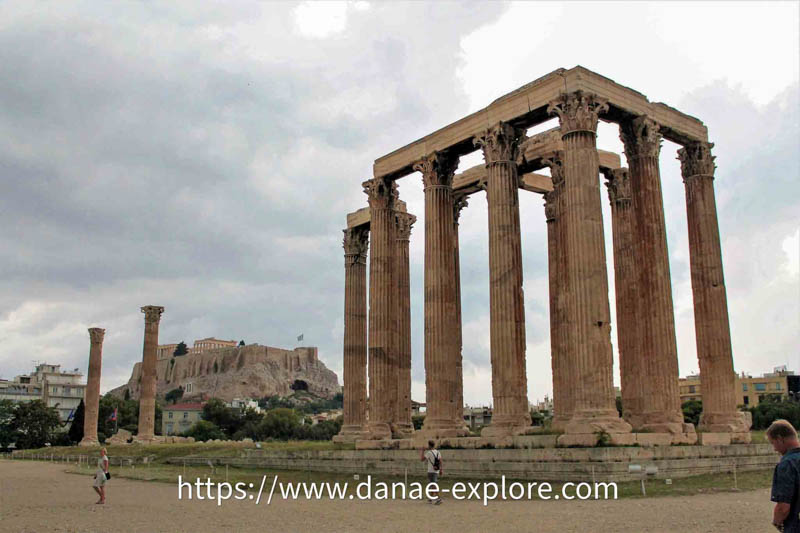
I share everything we did in Athens in this post, but here’s a quick overview of the highlights:
- Acropolis & Parthenon
- Acropolis Museum
- Temple of Olympian Zeus & Hadrian’s Gate
- Ancient Agora
- Panathenaic Stadium
- Plaka and surroundings (including Anafiotika and Monastiraki)
- Archaeological Museum (and the nearby Campo de Marte park)
- Syntagma Square (where the changing of the guard takes place)
- National Garden
- If you have more time, it’s worth exploring the Athens Riviera along the coast, including areas like Glyfada and Vouliagmeni (we didn’t make it there).
.
A fun way to explore Athens is by joining a free walking tour like this one.


.
.
Days 4 and 5 – Delphi
On the 4th day of our trip, our Greece road trip began! We picked up the rental car early and headed towards Delphi, about 180 km away.
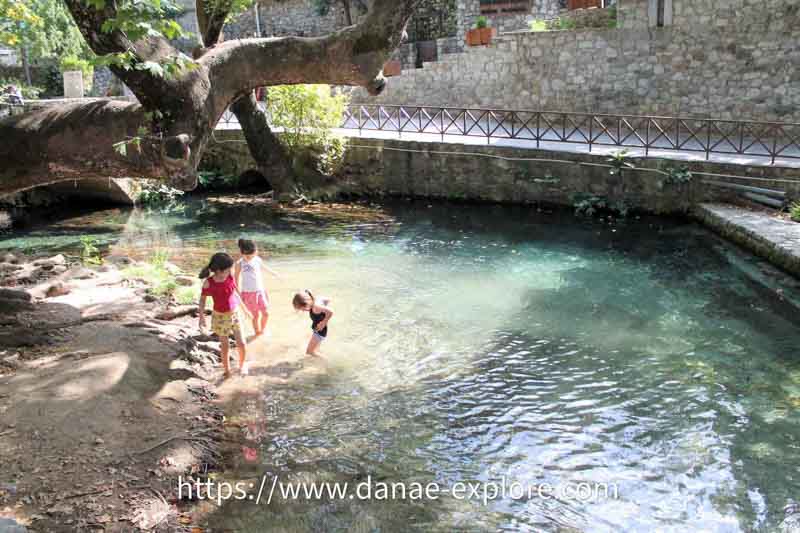
We stopped for lunch at Springs of Krya, in Livadia, at a restaurant called Watermill Tavern (ΤΑΒΕΡΝΑ ΝΕΡΟΜΥΛΟΣ). In this village, there are several restaurants by a small stream, and the food was delicious. The children played and cooled off in the water, we couldn’t have chosen a better place for lunch.
We arrived in Delphi by mid-afternoon and spent the rest of the day there, having ice cream, exploring the shops, and enjoying a good dinner.
To rent a car, I always use RentCars, where I usually find the best options, and with the DANAE promo code you still get an additional 5% off. Shall we go?

.
Where to stay in Delphi
The town of Delphi is quite small and is largely driven by tourism. There are several accommodation options, and if you stay anywhere central, you’ll have everything you need within walking distance.
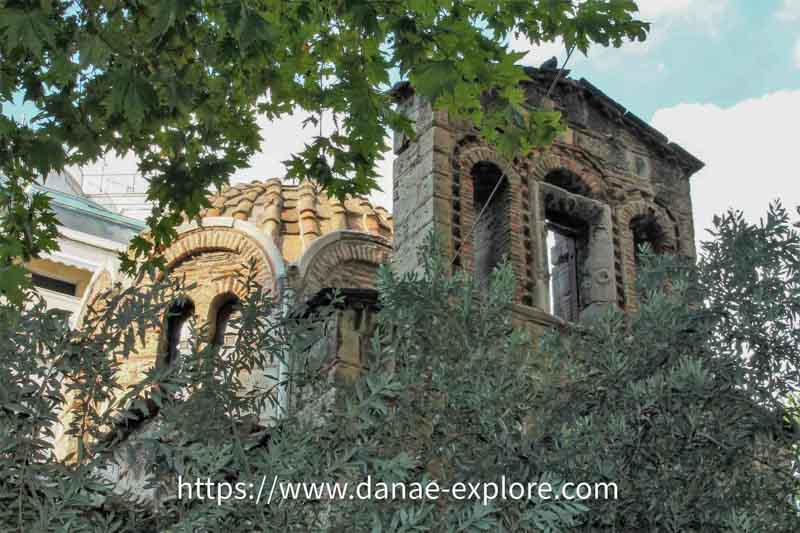
We stayed at Artemis Hotel, a charming hotel in a great location, with quadruple rooms (in addition to traditional doubles and triples) and very attentive staff. Another great value option with breathtaking views is the Fedriades Delphi Hotel, which also offers quadruple rooms.
.
.
What to do in Delphi
I recommend setting aside at least one full day in Delphi, allowing you plenty of time to explore at a relaxed pace one of the 15 UNESCO World Heritage Sites in Greece.
While it’s possible to visit Delphi on a day trip from Athens, either by rental car or on tours like this, in my opinion, it’s well worth staying one night in town and slowing down to fully experience all Delphi has to offer.
According to Greek mythology, Zeus, the all-powerful god, wanted to find the center of the world. To do so, he released two eagles, one flying east and the other west, instructing them to keep going straight ahead. The birds eventually met in Delphi, which was then considered the center of the world and became known as the “navel of the world” (the Greeks figured out long ago that the Earth is round).
The must-see attractions in Delphi are the Archaeological Site and the Delphi Museum.
.
.
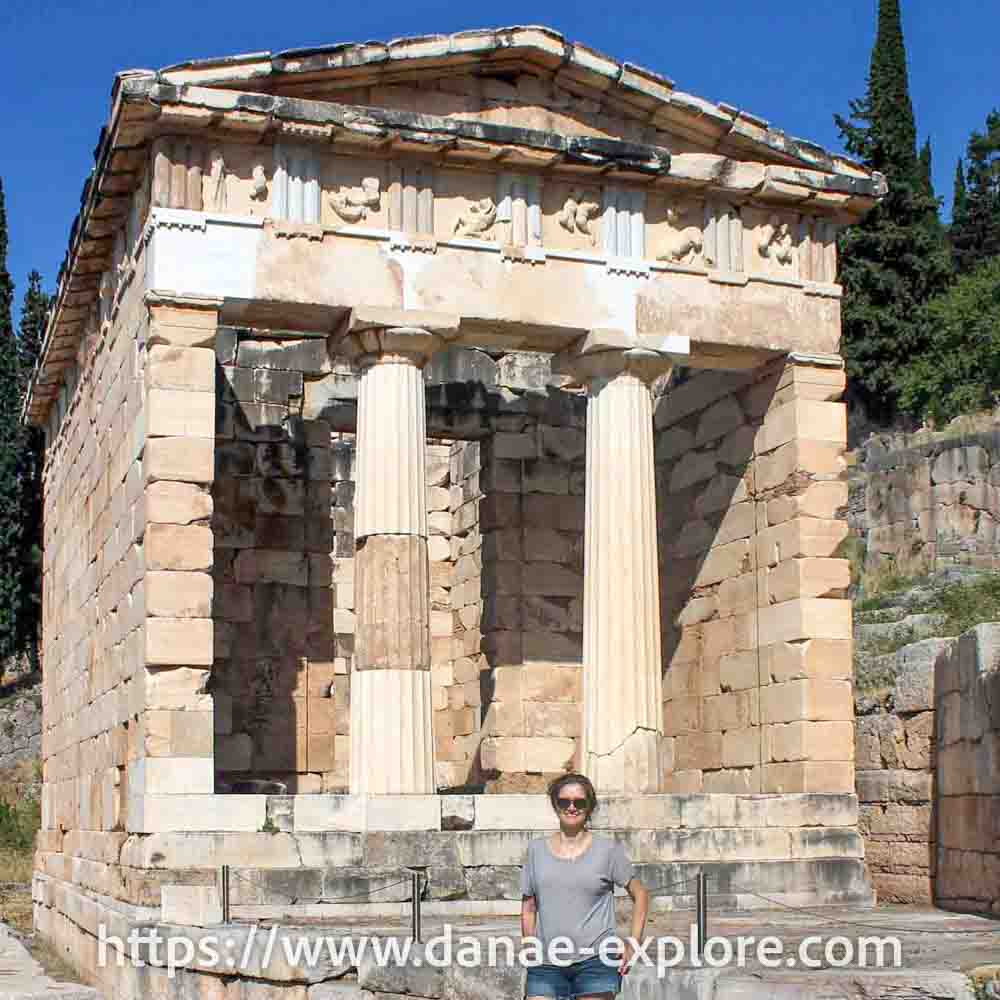
Temple of Apollo
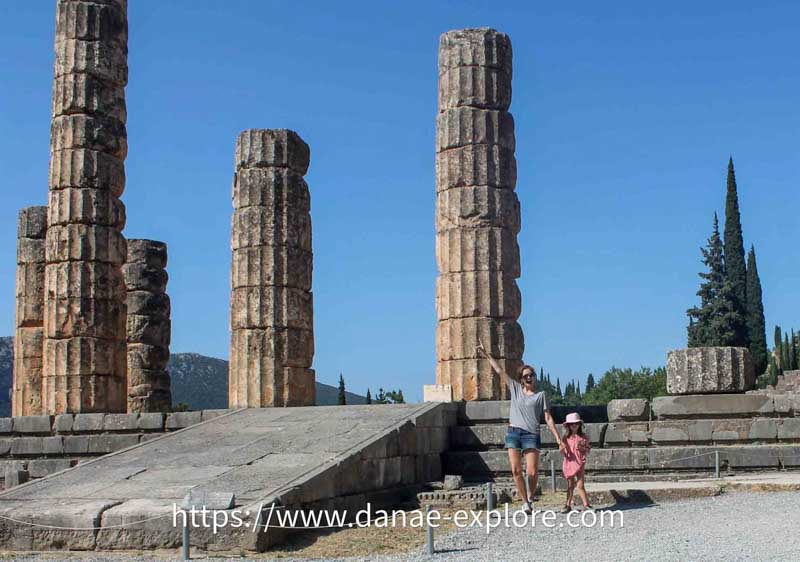
One of the most important areas within the Delphi Archaeological Site is the Temple of Apollo, famous for its oracle. Between the 8th and 2nd centuries BC, this was a major pilgrimage site where people from all walks of life sought answers about their future. The oracle’s prophecies were delivered by the Pythia, a specially trained woman who conveyed the messages of the god Apollo.
It was here that Acrisius, the father of young Danae (yes, I have a mythological Greek namesake), received the prophecy that his grandson would one day kill him. This prophecy set off a chain of events that ultimately led to the story of the dreaded Medusa. If you’re not familiar with the myths of Danae and Perseus, I highly recommend looking them up. They’re full of dramatic love stories, betrayal, violence, and heroic battles, everything you’d expect from Greek mythology.
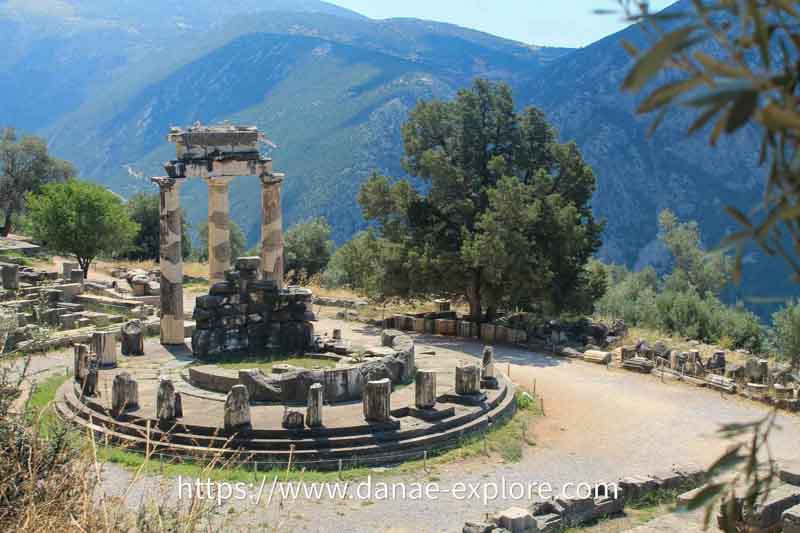
The Delphi Archaeological Site is quite extensive, so be prepared to walk a lot. Make sure to walk all the way to the top, where you’ll find the ancient stadium and enjoy stunning views over the valley.
.
.
Delphi Archaeological Museum
While you’re in Delphi, don’t miss the Delphi Archaeological Museum, even if you’ve already been to the one in Athens. Be sure to see the Delphi Charioteer, a rare and impressive bronze statue believed to have been created as a dedication after a victory in the Pythian Games.
After enjoying our time in Delphi, we spent another night in town before heading out early the next morning towards Epidaurus.
.
.
Day 5 – Corinth and Epidaurus
From Delphi to Epidaurus, it’s about 255 km.
.
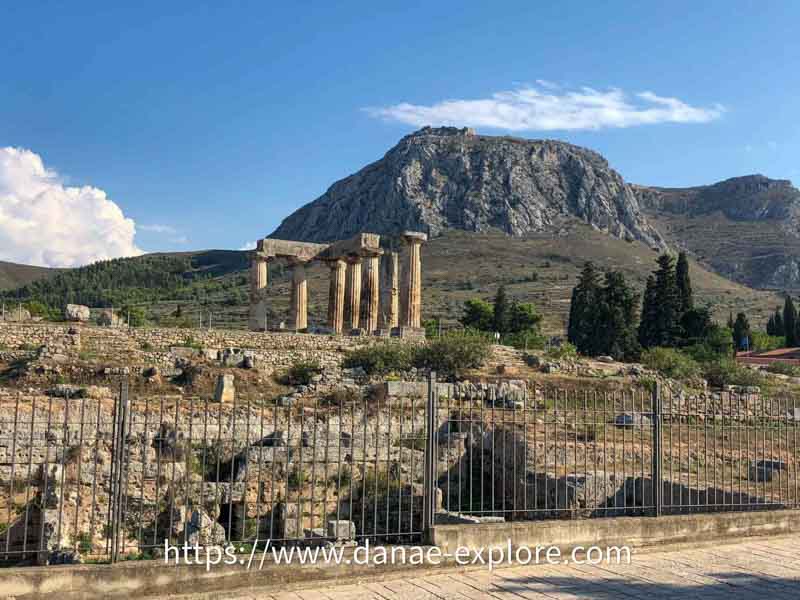
Temple of Apollo and Sanctuary of Dionysus
On the way, we stopped in Corinth, but we didn’t get to visit the ruins of the Temple of Apollo and Sanctuary of Dionysus. We simply admired them from a distance, had coffee and ice cream (Cafe Mousio and The Art of Gelato, just a few meters from the entrance to the archaeological site), let the children run around to burn off some energy, and then continued our journey towards Epidaurus, another UNESCO World Heritage Site in Greece.
.

.
Theater of Epidaurus
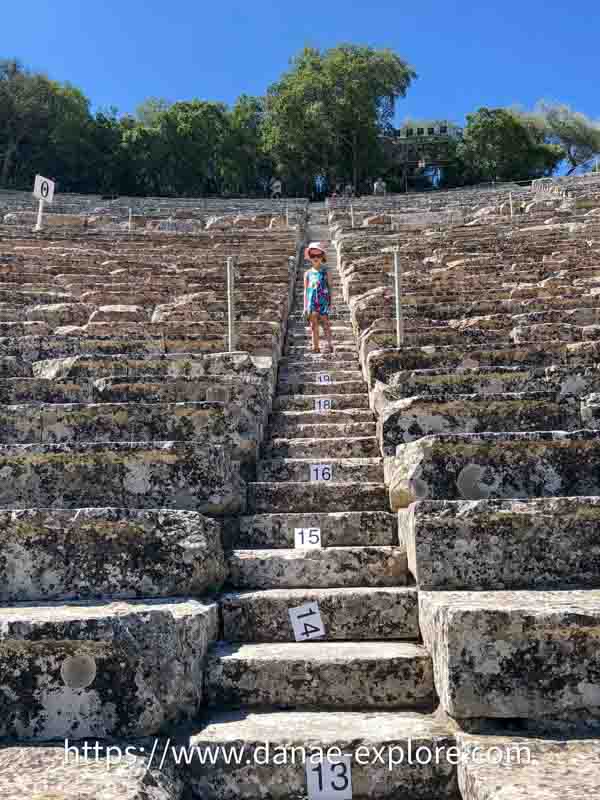
Epidaurus is renowned for its theater, built in the 4th century BC. It was one of the largest of its time and is famous for its exceptional acoustics, something we experienced firsthand. You can buy your tickets in advance here.
During our visit, a group was gathered in the center of the theater, and a girl began singing. We climbed almost to the last row and could hear her clearly all the way up there.
We then decided to join in the fun: while one of the adults stood on the stage making noise, the children ran around the seating area, laughing at what they could hear. There’s a marked spot in the center of the stage that indicates the best position for optimal acoustics.
The theater impresses not only with its acoustics but also with its grandeur. It measures 20 meters in diameter, has 55 rows of seats, and can accommodate over 13,000 people. Its semicircular design, the proximity of the stage to the seats, the materials used, and its location away from urban noise all contribute to its remarkable acoustic performance.
.
.
In addition to the theater, the archaeological site includes other ruins, such as the Temple of Asklepios and remnants of what was once one of the main sanctuaries of classical Greece. Unfortunately, only a few fragments of these structures remain.
You can visit the Theater of Epidaurus on a day trip from Athens, either by rental car (about 140 km away) or joining tours like this one.
From Epidaurus, we continued our road trip and arrived in Nafplio late in the afternoon, which is about 30 km further.
.
Day 6 and 7- Nauplia and Mycenae
We spent two days in Nauplia, a pleasant mid-sized town on the coast of the Argolic Gulf, in the Mediterranean.
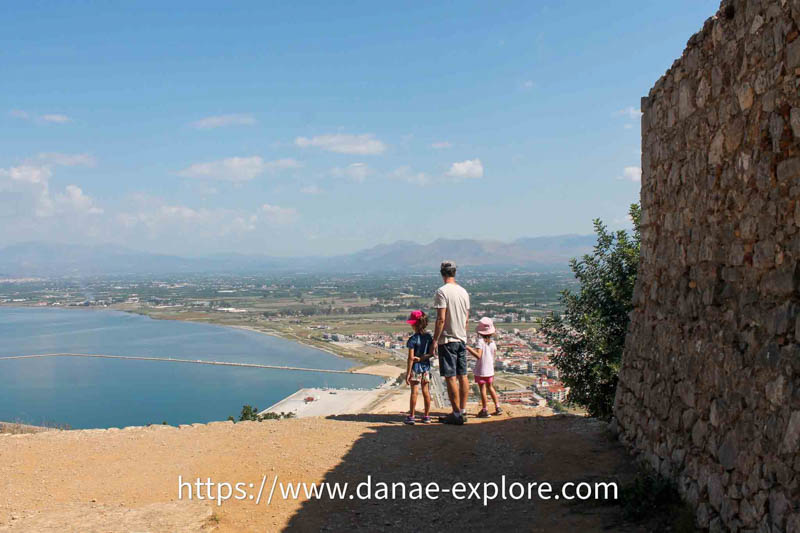
One day, we visited Mycenae. The next day, we explored the town, climbed up to the Palamidi Fortress, and visited the local beach, Paralia Arvanitias.
In Nauplia, we stayed at Pension Dafni, a well-located and charming guesthouse with great value for money and confortable family rooms (you’ve probably noticed by now that we’re experts at finding charming guesthouses with rooms for four, right?).
.
.
Mycenae
Just over 20 km from Nauplia, about a half-hour drive, you’ll find one of Greece’s most important archaeological sites: Mycenae.
In the second millennium BC, Mycenae was a major center of Greek civilization and a powerful military force that dominated much of southern Greece. The period from 1600 BC to 1100 BC is known as the Mycenaean Period because of its influence.
According to Greek mythology, Mycenae was founded by Perseus, the son of my namesake, Danae, and grandson of King Acrisius of Argos. After accidentally killing his grandfather, Perseus was unable to inherit the throne of Argos and instead settled in the region, establishing Mycenae.
The mythology surrounding Mycenae is rich with stories of war, love, betrayal, and intrigue, a fascinating topic if you enjoy diving into these legends.
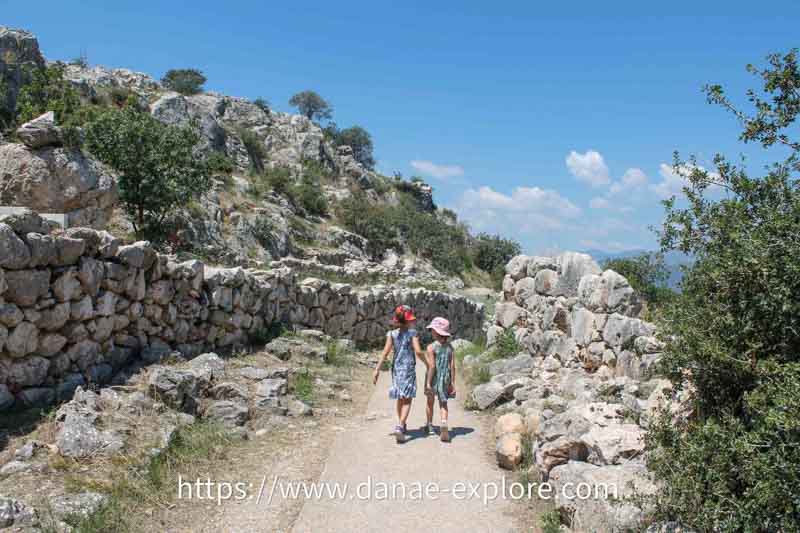
Equally fascinating are the ruins of the Mycenaean civilization that remain today. You can explore what’s left of the acropolis, the ancient walls, and the impressive tombs built from massive stone blocks. These structures were built around a thousand years before the classical Greek buildings we see today on the Acropolis of Athens.
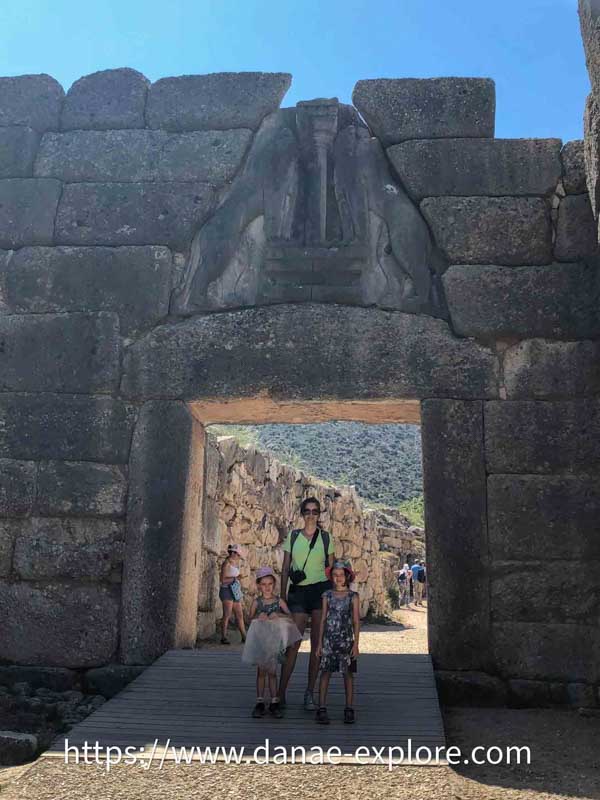
One of the most famous structures in Mycenae is the Lion’s Gate, dating back to around 1250 BC, when the city was at its peak and exerted influence over much of Greece.
While I recommend spending at least one night in Nauplia to fully explore Mycenae, Epidaurus, and Corinth, you can also visit all these sites on a day trip from Athens, either by car or through an organized tour.
.
.
Days 8 to 10 – Kiparissi
Leaving Nauplia, we drove to Sparta for a quick lunch stop. Despite its historic name, there’s not much left of the city’s former grandeur. We were there just long enough to grab a bite, let the children play in a nearby playground, enjoy some ice cream, and then continue on our journey.
From Nauplia to Sparta, it’s about 120 km, and from there to Kiparissi it’s another 90 km, but be prepared: the average speed on this second stretch is around 60 km/h at best.
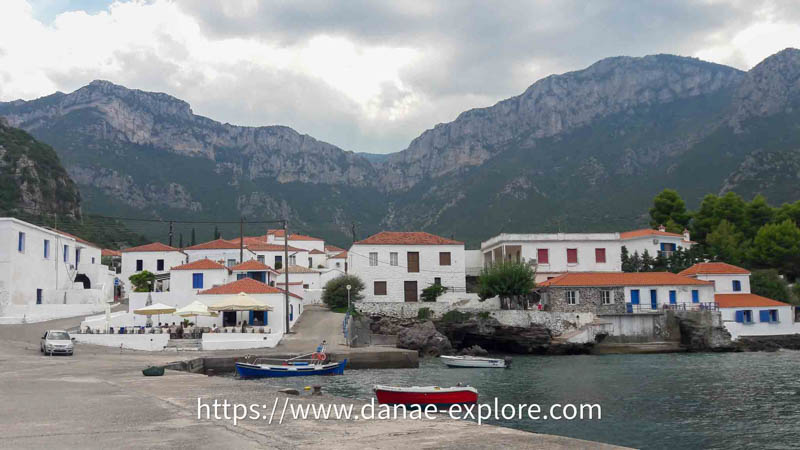
The road to Kiparissi is a destination in itself. It’s a single-lane road with almost no shoulder, full of twists and turns, and offering breathtaking views. If you enjoy venturing off the beaten path, Kiparissi is the place for you.
It’s one of the few places where, even in peak summer in Greece, you won’t feel overwhelmed by crowds or fighting for space.
.

.
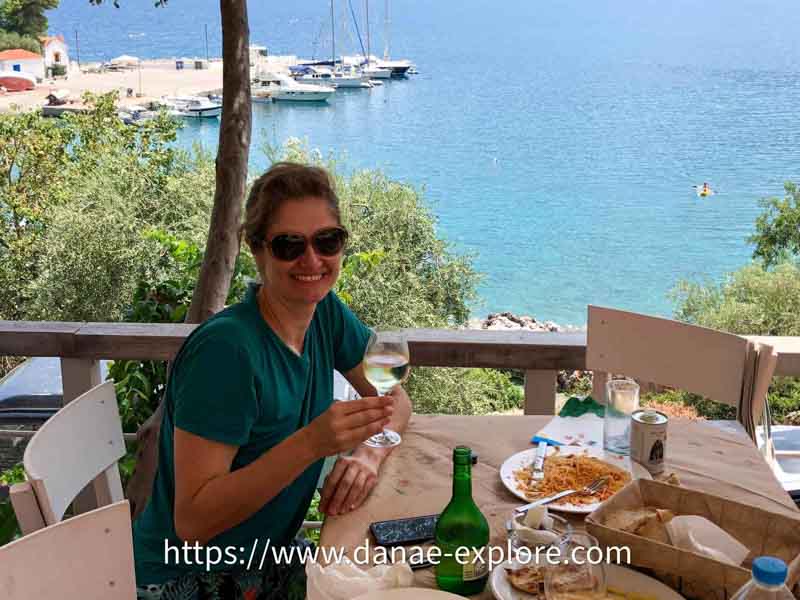
Kiparissi is where we chose to really enjoy the beach, slow down, and embrace the dolce far niente overlooking the Mediterranean.
That said, our stay was short, just three days, because we’re always eager to explore more of the wonders of the southern Peloponnese.
We stayed at Atalanti Apartments, a charming guesthouse just half a block from the beach, with excellent service. Our small one-bedroom apartment had two single beds in the living room, a double bed in the bedroom, a bathroom, a small kitchen, and a small balcony with a sea view. Not bad at all.
.
.
Day 11 – Monemvasia and Elafonisos
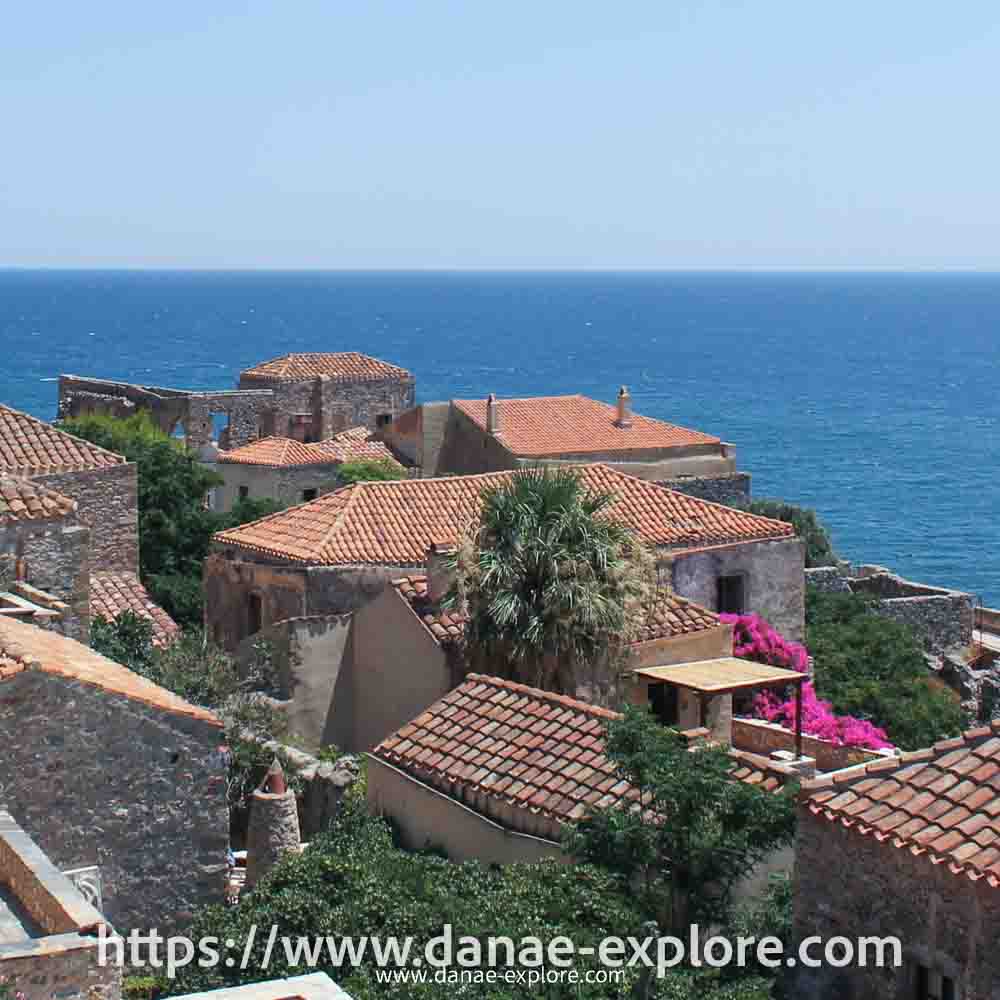
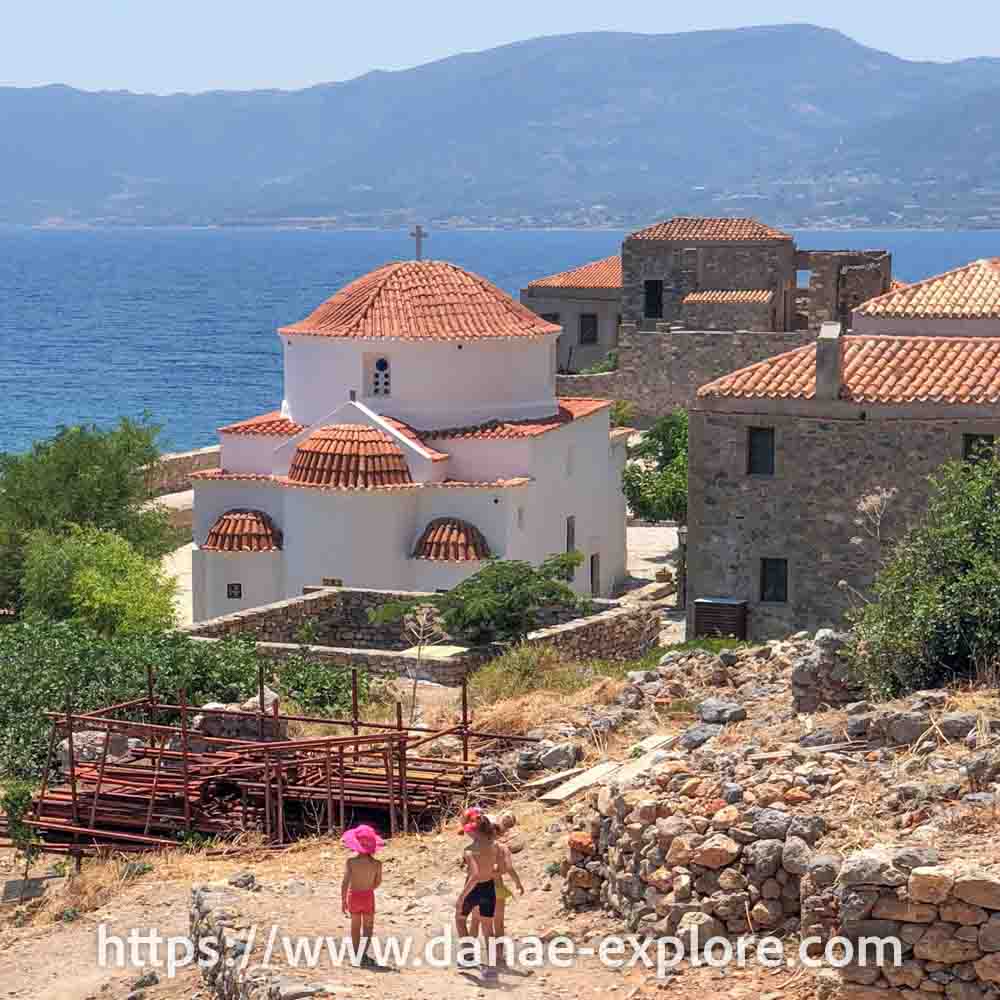
I’ve already written about Monemvasia in this post about 5 unmissable small towns in Europe, and just from the title, you can already tell how much I liked this charming village on the edge of the Mediterranean.
Monemvasia is one of those magical places that makes you want to sit at a table, have a drink, and watch life go by. If you manage to get a table with a sea view, even better; if not, the view of the town and the fortress on top of the hill is just as beautiful.
Founded in 583, this island town is dominated by an imposing medieval fortress, in the so-called “upper town”. Over the centuries, it came under Byzantine, Arab, Norman, Venetian, Turkish, and Ottoman rule.
.

.
In other words,for centuries Monemvasia was an important port and fortress, contested by the different civilizations that passed through the region, as reflected in the ruins found throughout both the upper and lower towns.The fortress-city was entirely self-sufficient, and its inhabitants could survive for months within the walls during times of attack.
We visited just for the day, but now I see that it would have been better to spend at least one night in Monemvasia. Besides avoiding the drive back to Kiparissi, staying overnight would have made the trip to Elafonisos the next day much easier. It’s only 42 km between the two, but the road is winding, so it’s best to allow about an hour for the journey.
In Monemvasia, there are several charming hotels and guesthouses. I recommend staying on the island: Ardamis Guesthouse looks like a dream, as does Bastione Malvasia Hotel. More budget-friendly options can be found on the mainland side, such as Filoxenia Hotel, very close to the bridge, Panorama, and several other options. I’m sure you’ll find something that fits your style and budget.
If you prefer, there are tours from Athens that cover a good part of the route we took through the Peloponnese, including Monemvasia.
.
.
Day 12 – Elafonisos
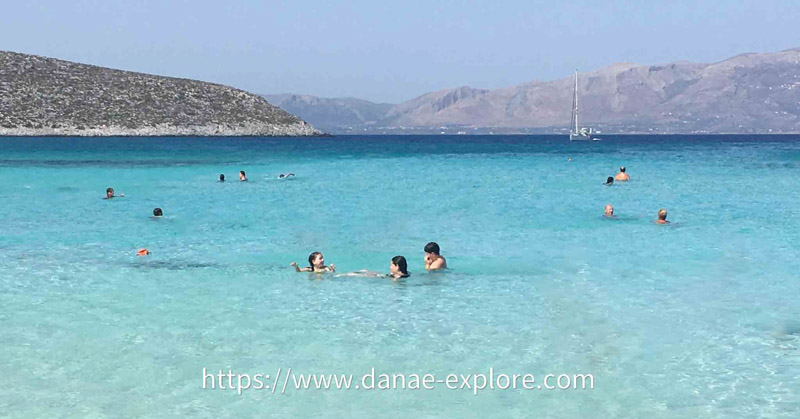
Picture crystal-clear, pale turquoise water, perfectly calm, with white sandy beaches in one of the most stunning regions of Greece.
Elafonisos has one of the most beautiful and relaxing beaches I’ve ever visited. Aside from soaking up the sun (you can rent beach chairs), swimming, and enjoying the atmosphere, there isn’t much else to do beyond enjoying the local taverns along the village’s main street.
To get to Elafonisos, head to the village of Vigklafia and take a ferry to the island. We didn’t have to wait, but we heard that, depending on the day and time, wait times can be over an hour.
On the island, there are a few charming places to stay, such as Sea and Sand and the Estella Studio, check themout!
.
.
Day 13 – Mystras
After leaving Kiparissi, we set off early for Dimitsana. We spent day 13 of our trip covering nearly 200 km, including a detour to visit Mystras. Although the distance isn’t particularly long, the roads are narrow and winding.
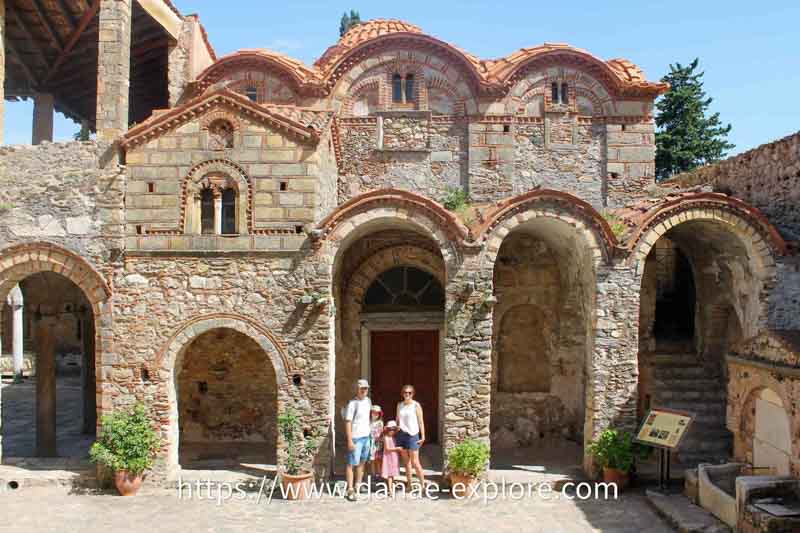
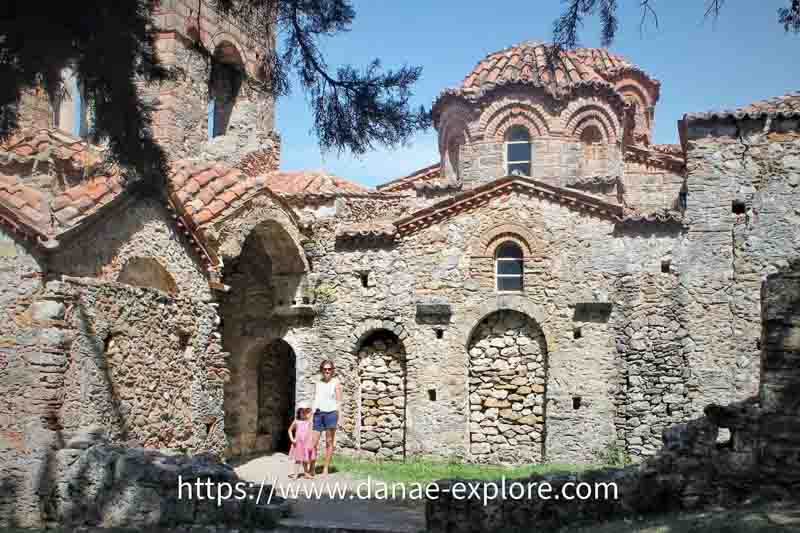
Mystras is a fortified Byzantine town, founded in 1249 AD. It reached its peak in the 14th and 15th centuries, when it became the second most important center of the Byzantine Empire, after Constantinople. In 1989, it was listed as a UNESCO World Heritage Site.
Often referred to as the “Wonder of Morea,” as it was the capital of the Morea region, Mystras is a stone-built fortress town with stunning views. With several well-preserved buildings decorated with mosaics, it offers a fascinating glimpse into this period of Greek history.
We then drove to Dimitsana and arrived there late in the afternoon. We stayed at Kazakou Guesthouse, a family-run bed and breakfast in a historic stone house. It was truly exceptional! In terms of authenticity, it was the most unique place we stayed on the trip.
.
.
Day 14 – Dimitsana
Dimitsana was a delightful surprise on our 15-day Peloponnese itinerary. It hadn’t been part of our original plan.
While on our Greek road trip, we spoke with other travelers who recommended this village in the Arcadian mountains, located 1,000 meters above sea level. A quick online search convinced us to swap a beach day for a chance to explore the mountains of the Peloponnese.
Our visit was truly memorable. If you find yourself overwhelmed by the crowds on Greek beaches in summer and the intense heat, consider heading into the mountains to explore one of these villages. They are rich in history, full of charming traditional stone houses, and home to family-run restaurants serving some of the best food we had in Greece. These hidden gems add a special touch to any trip.
Dimitsana is entirely built from stone: houses, Orthodox churches, public buildings, shops, and restaurants all maintain traditional architectural styles.
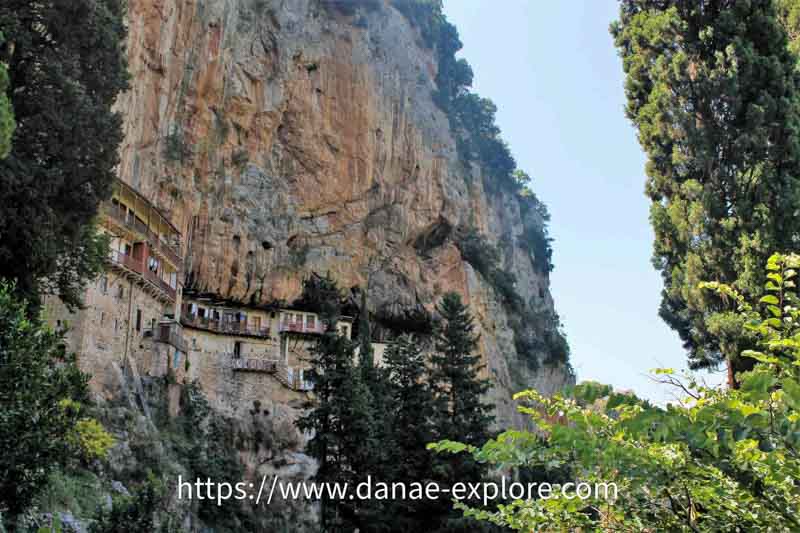
Beyond the village’s charm, the region is worth visiting for its monasteries perched above the Lousios River, the most famous are the Prodromos Monastery and the Filosofos Monastery, this one founded in 963, is the oldest in Arcadia.
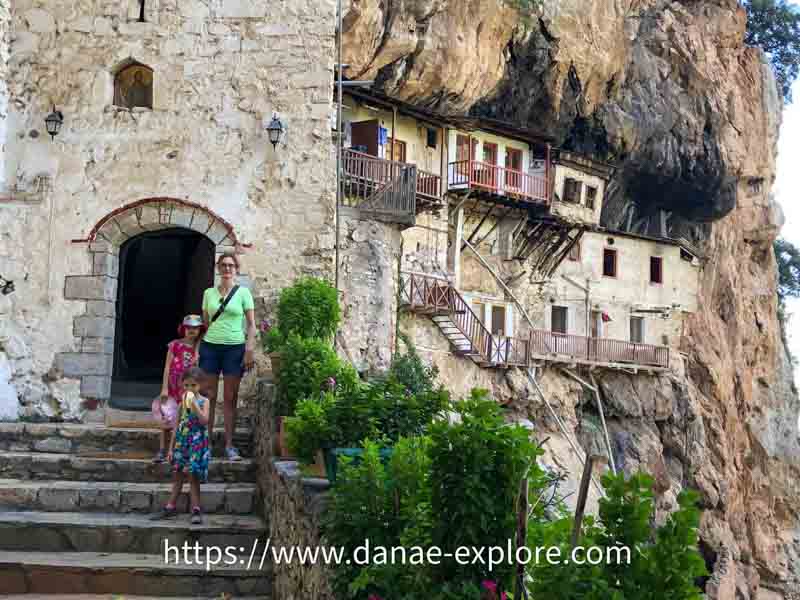
The Prodromos Monastery, built into the hillside, is particularly striking, with its balconies and corridors seemingly suspended from the rocks. You can walk up and visit the chapel, the views from up there are incredible, and the monks who greeted us were very welcoming.
A half-hour walk along a trail from the Prodromos Monastery, through the gorge below the Filosofos Monastery, leads to the so-called Secret School (kryfo scholio), which operated covertly during Ottoman rule. The trail is about 800 meters long, steep in a few sectors but well marked. We turned back halfway due to the kids’ fatigue and the late hour, but it’s well worth it if you can go all the way.
.
.
In addition to Dimitsana, other great stops in the area include Vitina, Stemnitsa, Karitena, and Valtesiniko. The mountains also offer several options for rafting and hiking.
After leaving Dimitsana in the mid-afternoon, we arrived in Athens in the evening. The 200 km drive took just over 2 hours.
We stayed at the Plaka Hotel on our last night in Athens. We spent the evening exploring the area, enjoying our final dinner in Greece, and already dreaming about our next visit.
.
.
Day 15 – Athens and return home
Our flight from Athens departed early in the morning, with a 9-hour layover in Rome. During this time, we enjoyed a nice lunch, some gelato, and took a photo at the Trevi Fountain before catching our evening flight back home.
.
Other suggestions
While this itinerary worked well, I’d suggest a small tweak: add two nights in Monemvasia with a day trip to Elafonisos, or spend one night in Monemvasia and one in Elafonisos. Other than that, I wouldn’t change anything.
If you have more time in Greece, one region we didn’t explore but I’d absolutely love to visit is Meteora. It’s about 240 km from Delphi, or 350 km from Athens, which means you’d need at least three days to include it in your itinerary. There are tours that promise a day trip to Meteora from Athens, but I truly believe the area deserves at least one night, as offered in tours like this one.
That’s exactly why I recommend traveling around Greece by rental car, it gives you much more flexibility and comfort.
To rent a car, I always use RentCars, where I usually find the best options, and with the DANAE promo code you still get an additional 5% off. Shall we go?
.
Greece is a year-round destination with activities for every season. From island hopping in summer to exploring ancient ruins and hiking in the cooler months, there’s always something to enjoy, whether it’s beaches, history, or culture.
.
.
Map of our 15-day mainland Greece itinerary
Here’s our Google My Maps with the full itinerary of our Greek adventure. Just click to open it and save it to your Google account, so when you start planning your trip to Greece, you already have a great place to begin😉
How to use this map: Click the menu tab in the upper left corner of the map to access different layers, including points of interest and routes. You can toggle layers on and off by checking the corresponding boxes. To see details about specific locations, click on the icons on the map.
To save this map to your Google Maps account, just click the star icon next to the map title. To access it later on your phone or computer, open Google Maps, tap the menu button, go to “Your Places”, select “Maps”, and you’ll find this map saved there.
Here are the websites I always use to plan my trips:
– 🛌 Accommodation: Booking
– ☀️ Tours & activities: Civitatis & Get Your Guide
– 📱 eSIM for mobile data: Airalo e-SIM – use promo code DANAE2375
– 🚗 Car rental: RentCars – use promo code DANAE, or DiscoverCars
.
All our posts about traveling Greece, to inspire you and help you travel more:
- 15-day itinerary around mainland Greece
- What to do in Athens in 2 or 3 days
- 5 unmissable small towns in Europe
.
And here are our posts about other destinations in Europe, come check them out!
Scandinavia
- What to do in Norway in 12 days – and itinerary suggestions for 7, 10, 15 or 20 days
- Is it expensive to travel in Norway? Simple strategies to reduce the cost of visiting one of the most beautiful countries in the world
- Preikestolen – complete guide to the most beautiful hike in Norway
- Iceland itinerary: complete 5 to 9 day road trip guide
- What to do in Iceland – the best of the south and east of the island
- 5 unmissable small towns in Europe
Spain
- 10 days in Andalucia – Our itinerary through southern Spain
- What to do in 2 days in Granada, Spain
- Ronda, the most charming town in Southern Spain
Balcans
- Mostar – what to do in the most charming town in Bosnia and Herzegovina
- What to do in Sarajevo: a 1 or 2-day itinerary in the capital of Bosnia and Herzegovina
- 20-day itinerary through the Balkans, in Eastern Europe – Serbia, Montenegro, Croatia and Bosnia-Herzegovina
- Complete guide to Kotor, Montenegro: what to do, where to stay, and when to go
Portugal
- Portugal in two weeks: our complete itinerary and tips
- One week in the Azores – Complete itinerary with Sao Miguel, Pico and Terceira Islands
- São Miguel, Azores: your complete guide to the largest island in the Azores
- Terceira Island, Azores – tips and the perfect itinerary to explore the island
- Pico Island – complete guide to visiting the most picturesque island in the Azores
.
Did you like these tips? Then follow me on social media:
Instagram @danae_explore
Pinterest @danaeexplore
Comments or questions? Contact me on social media! I love to chat about travel 😉
And before you go, don’t forget to SAVE THIS PIN to your PINTEREST account for easy access to this post with the best 15-day itinerary through the Peloponnese, continental Greece, whenever you need it!