
Of all the places we visited on our Balkans road trip, Mostar was the one that truly stood out.
A town rich in history and culture, with a charming old town in a breathtaking location, friendly and hospitable people, excellent food, affordable prices, and plenty of interesting things to do nearby.
If you’ve never considered visiting Bosnia and Herzegovina, or are only considering a day trip from Dubrovnik, keep reading — you might change your plans. Get ready to change your mind and include a proper stop in Mostar on your next visit to Eastern Europe.
First of all, follow me on Instagram @danae_explore – that’s where you can keep up with my trips, find lots of travel tips, and send me a DM anytime. I love chatting about travel!
.
How to get to Mostar, Bosnia and Herzegovina
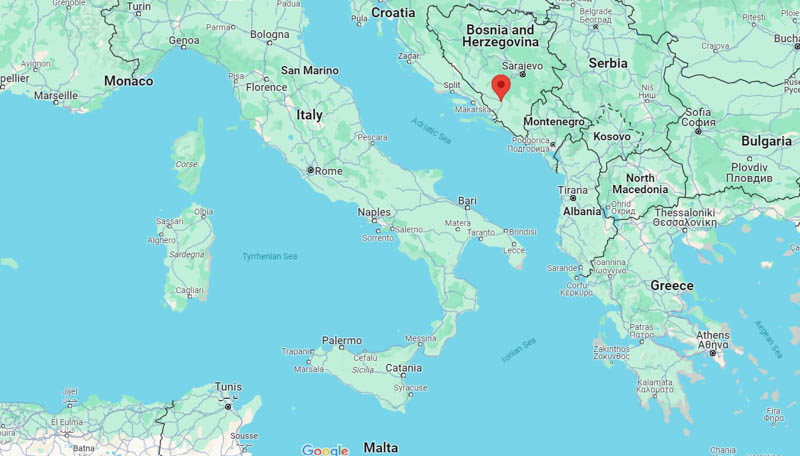
Bosnia and Herzegovina is one of the countries that emerged from the dissolution of the former Yugoslavia. It is located in Eastern Europe, and Mostar is situated in the southern part of the country, surrounded by mountain ranges (covered in snow during winter) and crossed by the Neretva River.
Very close to Croatia, Mostar is 150 km from Dubrovnik and 166 km from Split, making it easy to include in a Croatia itinerary, which is what most people end up doing. If you want to explore more of Bosnia, Mostar is just 125 km from Sarajevo.
We drove from Dubrovnik to Mostar, following the coast before crossing the border between Croatia and Bosnia and Herzegovina at Zaton Doli, then continuing on Bosnian roads to Mostar.
.
Driving in Bosnia and Herzegovina: what to expect
Our 20-day Balkans itinerary included driving across Bosnia from east to west, covering more than 750 km in the country. The roads are single-lane with proper signage in both Latin and Cyrillic alphabets, you drive on the right, and we didn’t encounter any tolls.
Overall, the experience was smooth and we didn’t run into any issues.
Keep in mind that Bosnia is a mountainous country, and much of our route involved winding roads with numerous curves. Take your time and enjoy the beautiful scenery along the way.
Driving from Dubrovnik to Mostar was easy and there was no border control upon entering Bosnia and Herzagovina; they only checked our documents when leaving Croatia (at Zaton Doli), and we didn’t go through any checkpoint when entering Bosnia. We exited Bosnia and Herzegovina through the eastern border with Serbia (at Sepak), where passport control took place both when leaving Bosnia and entering Serbia. You can find more information about driving and border crossing on this post.
To rent a car, I always use RentCars, where I usually find the best options, and with the DANAE promo code you still get an additional 5% off. Shall we go?
Calculate here the cost of renting a car in Bosnia and Herzegovina:
.
.
Where to stay in Mostar
Despite being one of the country’s most important cities in Bosnia and Herzegovina, Mostar is small and very easy to navigate.
It’s best to stay near the old town. We stayed at Hotel Sinan Han and I highly recommend it. It is just two blocks from Stari Most, the town’s iconic bridge, surrounded by plenty of restaurants, shops, and small markets. The room was comfortable and clean, and the hotel staff was exceptional. We had booked a family room (deluxe suite) for 4 people, but the sofa bed was too small for my two pre-teens. I asked the reception if it was possible to add an extra bed, but they offered us a complimentary double room! It was perfect. So, if you’re traveling with 4 people, I recommend getting 2 double rooms.
There are several other great options in the area. I had shortlisted Villa Gunga and Kriva Ćuprija, both well located and with excellent reviews. For a more sophisticated stay at still reasonable prices, Boutique Hotel Old Town Mostar looks like a great choice.
Check availability and rates here:
.
Currency and language of Bosnia and Herzegovina
In Bosnia and Herzegovina, the official currency is the Bosnian Convertible Mark, usually referred to as “marks” (BAM).
At the time of updating this post (April 2026), €1 = BAM 2 . In fact, the official exchange rate was slightly lower, at around €1 = 1.95 BAM, but when we were there most places rounded it to a simple 1:2 rate.
Even though we stayed in Bosnia for almost a week, we only exchanged money once, €100, to have some local currency for small expenses like entrance fees and small purchases. There were 7 of us, so we exchanged about €2 per person per day.
Euros are widely accepted in hotels, restaurants, souvenir shops, and tourist attractions. During our stay in Bosnia, we used Euros and credit cards for most expenses with no problems whatsoever. When paying in Euros, we often received change in Euros, and only occasionally did we receive change in BAM.
The official language of Bosnia and Herzegovina is Bosnian, a Slavic language similar to other languages in Eastern Europe. English is widely spoken, and everyone we met spoke it very well. We had no communication issues at all.
.
.
.
What to do in Mostar, Bosnia-Herzegovina
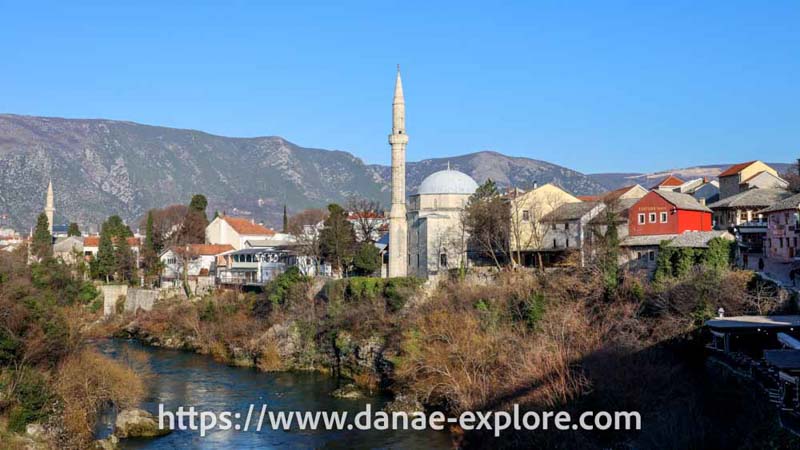
Walking through the old town of Mostar might make you question whether you’re really in Europe. Minarets from the many mosques are always in sight, and you’ll hear the call to prayer throughout the day. The Ottoman influence is so strong that at times, I felt like I was in Turkey.
It’s easy to explore the town center in a day. We took it slow, alternating between sights in town and nearby attractions.
.
.
Stari Most (Old Bridge)
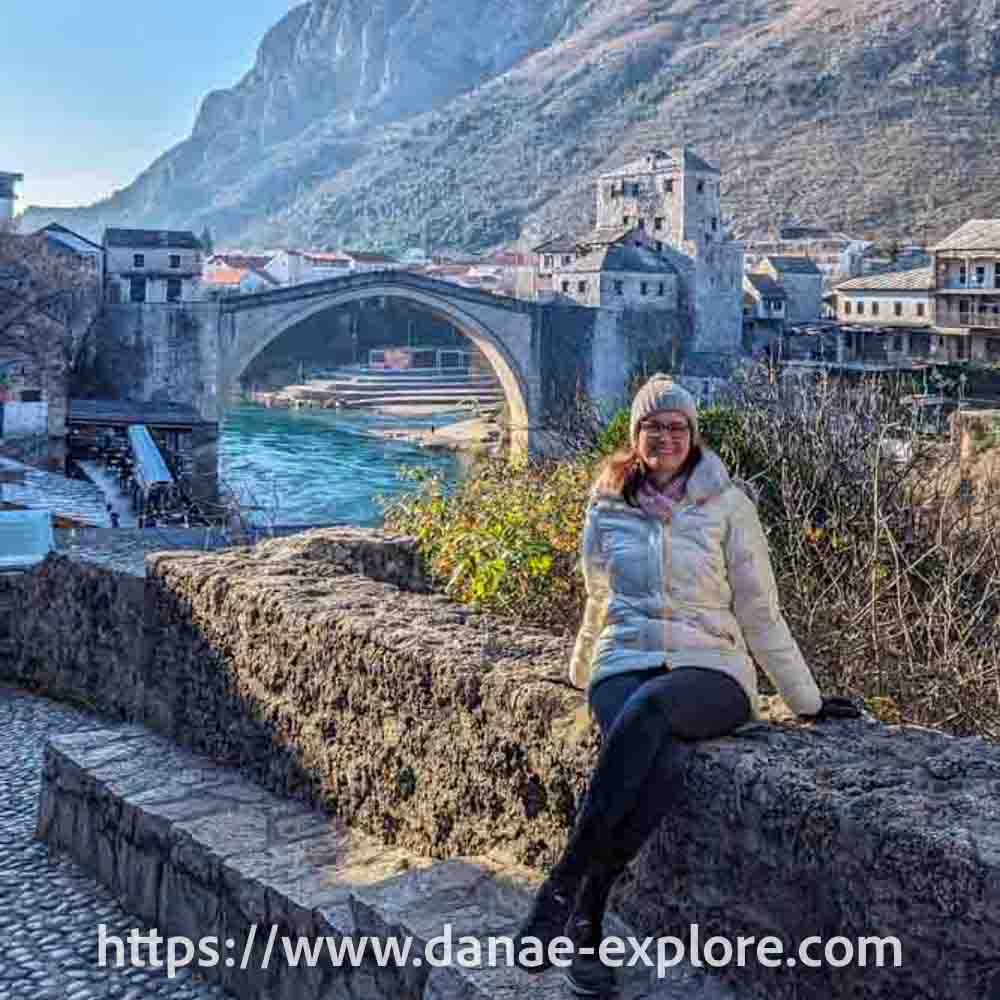
The town’s postcard landmark and one of the main (if not the main) tourist attractions in Bosnia and Herzegovina, Stari Most, or the Old Bridge, is a must-see in Mostar. The history of the bridge over the Neretva River and the town are so closely connected that Mostar means “bridge keeper.”
In addition to its architectural beauty, the bridge’s history is fascinating. It was built between 1557 and 1566, commissioned by Suleiman the Magnificent, when the present-day Bosnia and Herzegovina was part of the then all-powerful Ottoman Empire, and represented one of the greatest engineering feats of the time.
.
.
Stari Most survived the fascist Italian occupation during World War II, only to be destroyed in November 1993 by Croat forces during the wars that followed the breakup of the former Yugoslavia.
There are numerous photos of the bombed bridge around town and in museums; it’s heartbreaking and makes you question humanity.
The Bosnian war left a profound mark on the town. After the death of Tito, who had been holding Yugoslavia together, in 1992 Bosniaks and Croats joined forces against Serbs and Montenegrins. However, in May 1993, the former allies turned against each other, and the town was divided, with Bosniaks on one side and Croats on the other. To this day, the divide is still visible, with Muslim and Christian communities living on opposite sides. The war ended in 1995, with the town almost completely destroyed. Only one of its 27 mosques remained standing.
The bridge was rebuilt in 2004, using 16th-century techniques and stones from the original quarry. On July 17, 2005, Stari Most was declared a UNESCO World Heritage Site and is seen as a symbol of the resilience of its people and a hopeful future for all of Bosnia and Herzegovina.
Near the bridge, there are several lovely cafes and restaurants. Before taking a seat, it’s worth checking Google and TripAdvisor for recent reviews, as things can change, but in this area we had some of the best food experiences of our 20-day Balkan trip – keep reading for restaurant recommendations.
Next to the bridge is the Old Bridge Museum, which we couldn’t visit due to limited winter opening hours. The museum tells the story of the bridge and allows visitors to climb its tower, with great views for photos.
.
.
Crooked Bridge
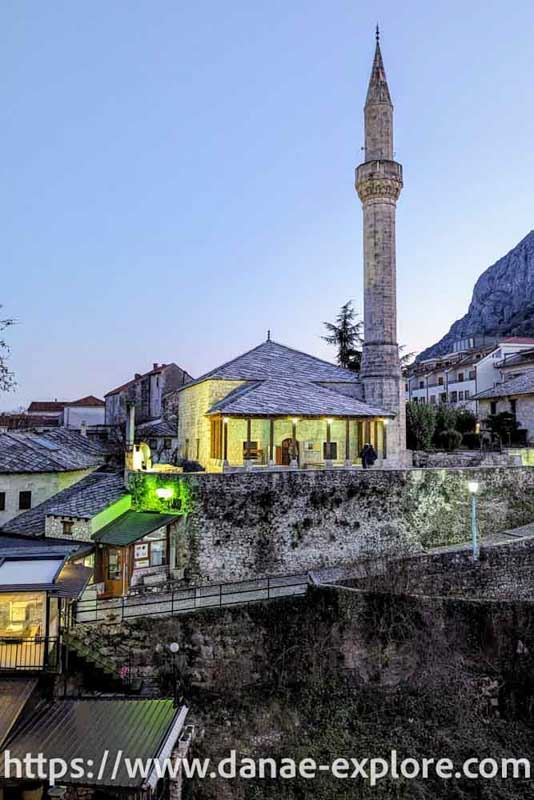
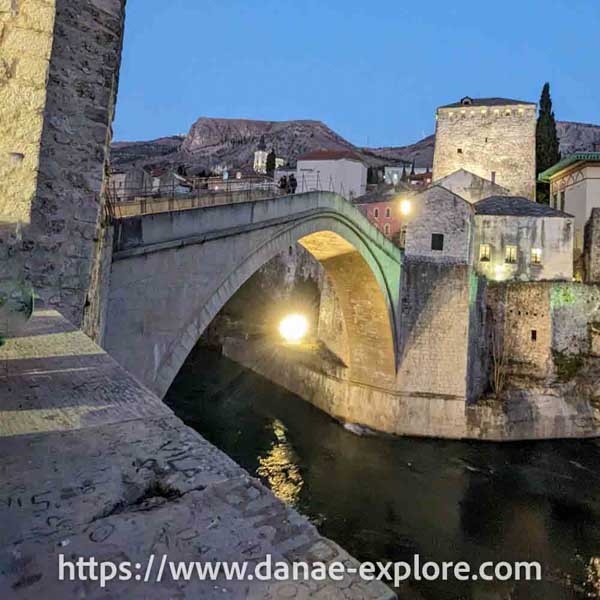
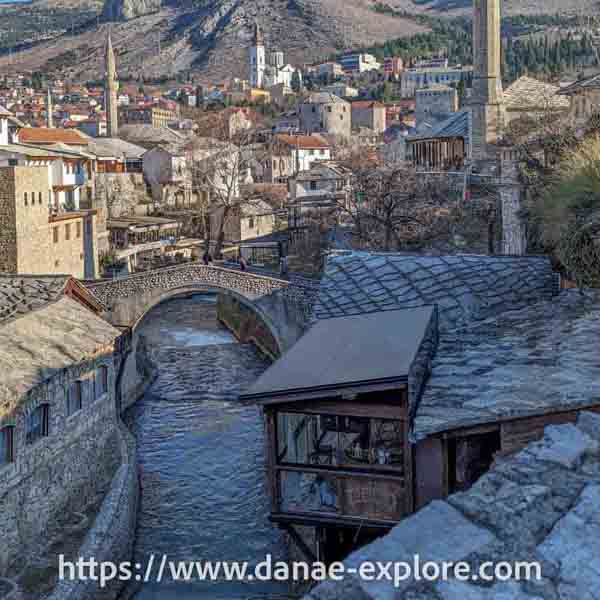
Looking like a smaller version of Stari Most, the Crooked Bridge, built around 1558, crosses the Radobolja River, a small tributary of the Neretva, just a few meters from Stari Most. It is beautiful, and the cafes and restaurants alongside it make it even more magical, especially at dusk, when the lights come on.
Just like its more famous counterpart, the original version of this bridge was severely damaged during the war in the 1990s, and what remained was swept away by a flood on New Year’s Eve in 1999. What we see today is a reconstruction completed in 2002.
Nearby there is the Haman Museum, housed in an old Turkish bathhouse from the late 16th century. We were told it was worth a quick visit; however, as it was winter, it was closed.
.
.
Kujundžiluk Street Bazaar
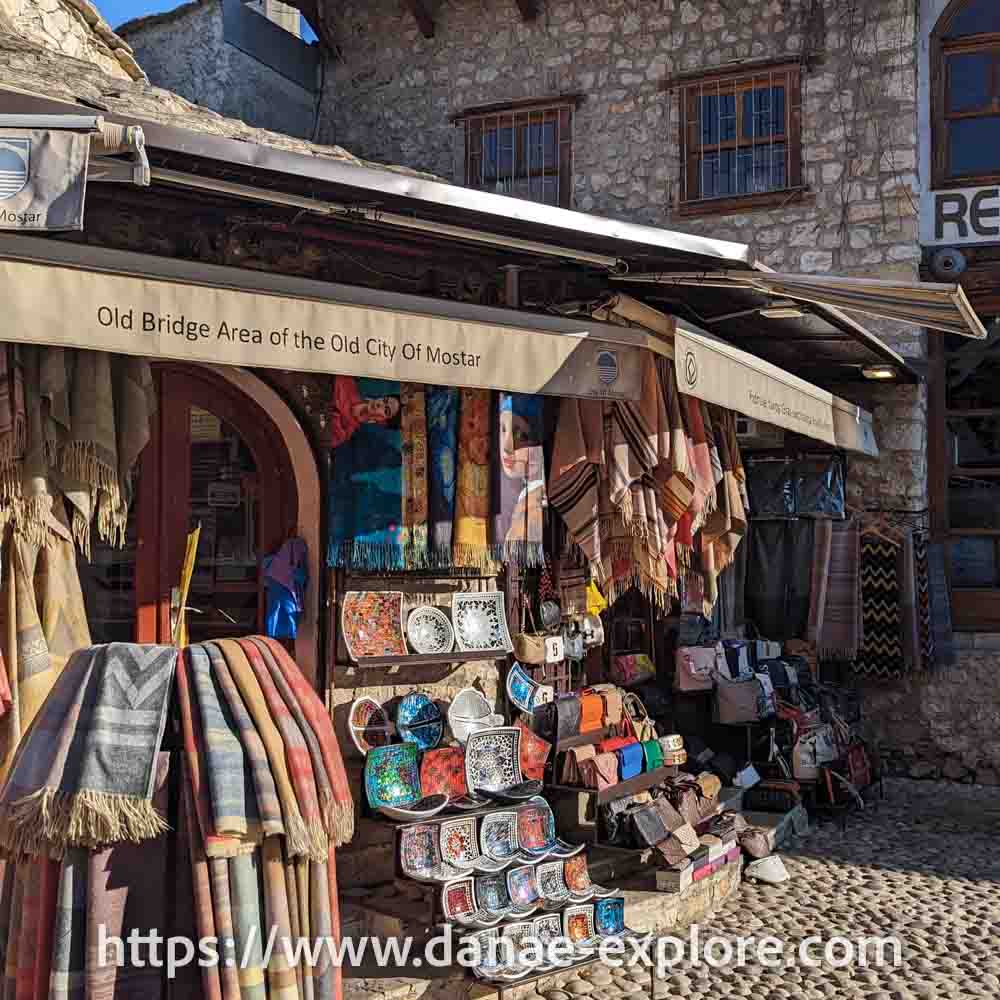
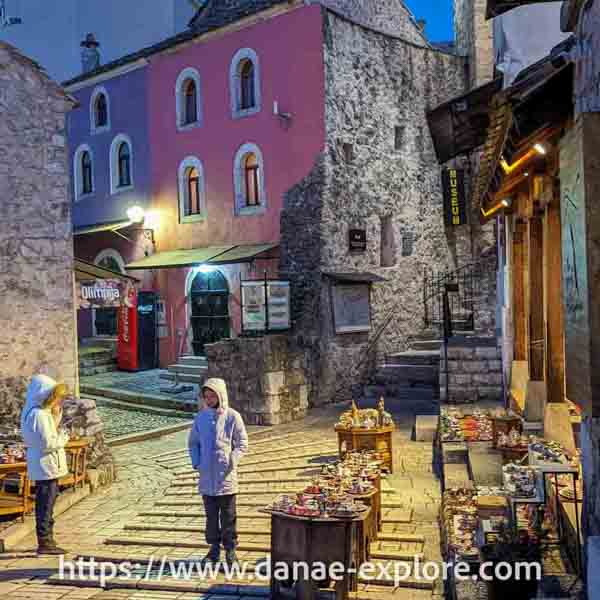
After crossing Stari Most, you’ll walk along a narrow street lined with small shops on both sides and, in some sections, with occasional views of the Neretva River to your left.
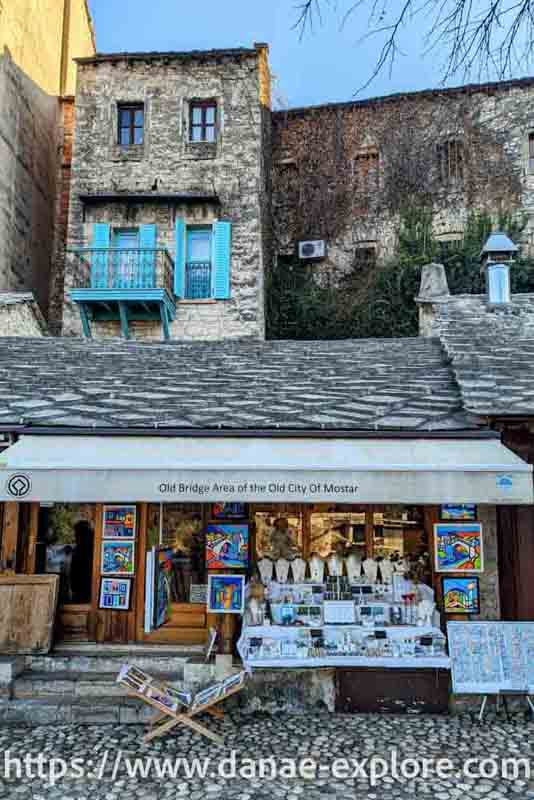
At first glance, it might seem like the typical souvenir street found in any historic city in Europe, but this one feels different. The houses, mostly reconstructed, reflect the Ottoman era, with their stone roofs and characteristic architecture.
We visited Mostar in winter, and many of the shops were closed. However, among those that were open, I had a good impression. They seemed to offer local products that reflect the region’s history and traditions, and at reasonable prices. Maybe my impression was influenced by our last stop before Mostar, which was Dubrovnik. In that sense, Dubrovnik was quite disappointing, with shallow souvenir shops selling mass-produced imports at exorbitant prices.
.
.
Koski Mehmed Pasha Mosque
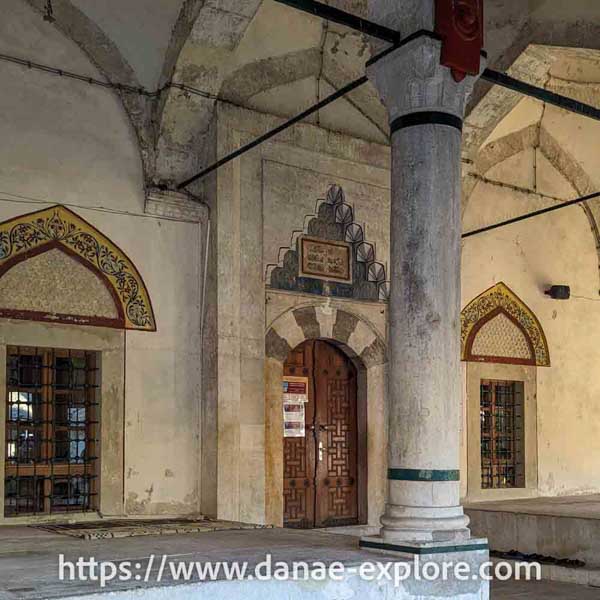
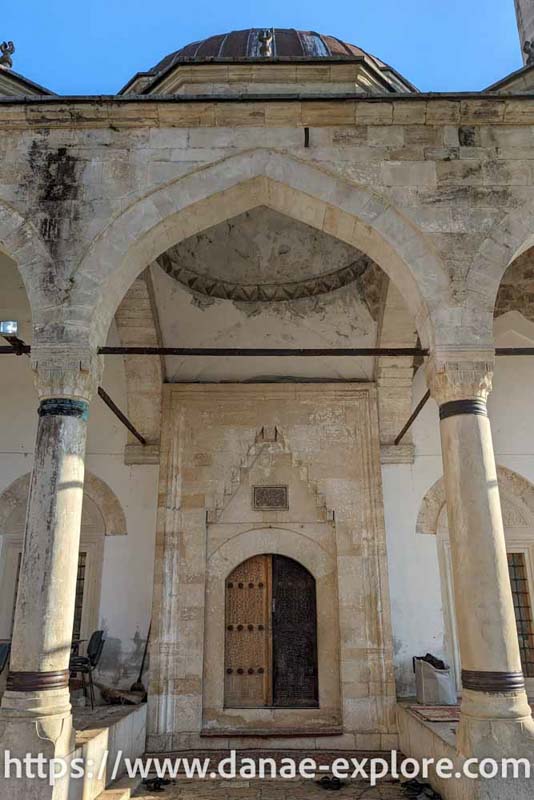
Koski Mehmed Pasha Mosque is a 17th-century architectural gem. Step inside, take in the peaceful atmosphere and pay attention to the beautiful details all around..
It is possible to climb the minaret; the views of the bridge and the surroundings are said to be great, but we didn’t do it. We only explored the courtyard, fountain, and small garden, which are free to enter.
In addition, it’s also worth visiting Biscevica Cosak, a house built 350 years ago during the Ottoman era that preserves the original interiors. In winter, visits are only possible by prior arrangement, which, unfortunately, we didn’t know.
.
.
New town
Mostar goes beyond its Ottoman-era old town.
It’s sad to point out, but Bosnia and Herzegovina was the setting for one of the cruelest wars of the 20th century, and Mostar, as one of the country’s main cities, was severely affected.
As I mentioned on Instagram, war tourism isn’t something that particularly appeals to me, but I think it’s essential to understand the history and the impact conflicts have on the lives of ordinary people, like you and me. It makes us more aware, more sensitive to others’ pain and, who knows, helps us see things more clearly and prevent history from happening again.
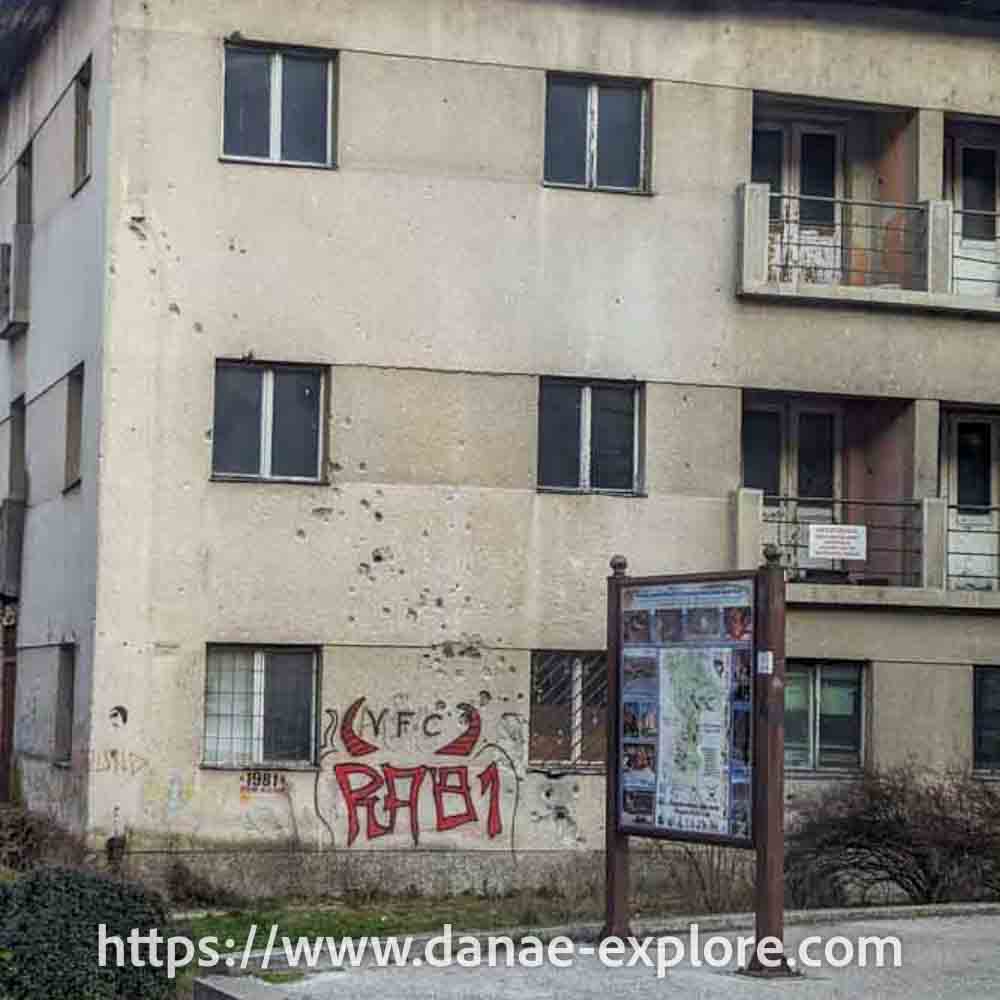
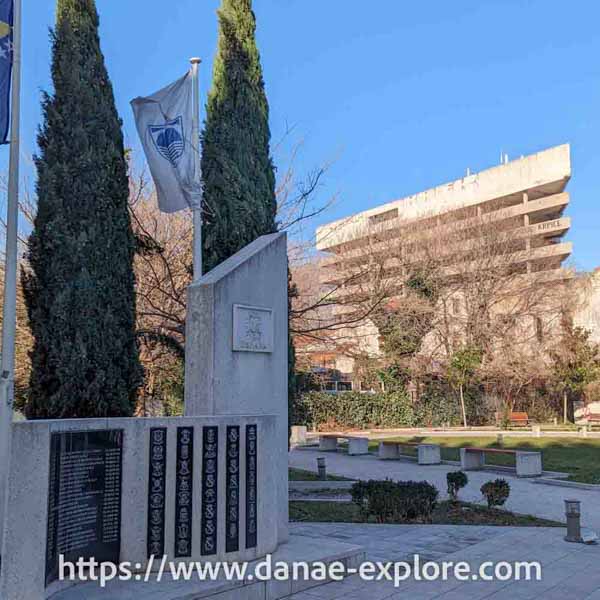
During the war in the 1990s, Mostar had a “front line” that separated Bosniaks (Muslims) on one side and Croats (Christians) on the other. Bulevar Avenue was this dividing line, and in the building of the former Ljubljanska Bank, snipers were positioned — a real-life sniper nest. Today, the triangular building remains in ruins, with little to suggest its past. There is now a memorial to Spanish peacekeepers, who were part of the peacekeeping force and lost their lives in the conflict, in what is now called Spain Square.
Around the roundabout and nearby, there are still some buildings in ruins, while others intentionally preserve the marks of the war. For us, living in a peaceful country, it is a shocking sight.
We did this trip with our children, who were 10 and 12 at the time, and whenever it felt appropriate, we explained to them about the war, the region’s ethnic and religious conflicts, and the communist period. These are heavy topics, but they can, and should, be introduced to children of all ages, just as we did when visiting the Hiroshima Peace Memorial Museum and the former Slave Market in Zanzibar.
To rent a car, I always use RentCars, where I usually find the best options, and with the DANAE promo code you still get an additional 5% off. Shall we go?
.
Mostar Museum
For those who enjoy history, Mostar’s museum offers an overview of the town’s history, from Ottoman times to more recent events.
.
.
Get lost in the medieval-Ottoman alleys
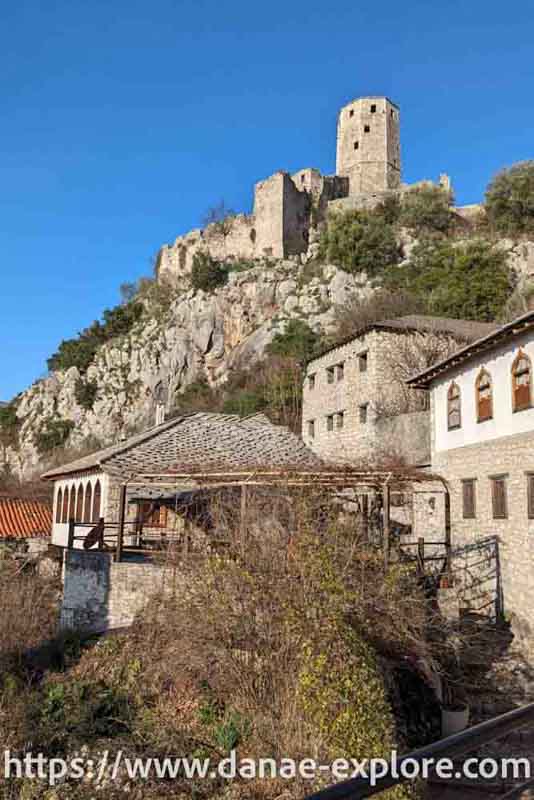
The old town of Mostar is not so large as to require a lot of time to explore, but it’s worth taking your time to enjoy it.
Many tourists come to Mostar on a day trip from Dubrovnik, or even Split. If that’s your only option, go for it. Don’t skip Mostar because of time constraints. Bosnia and Herzegovina is an amazing country — we were trully impressed, and Mostar is well prepared for tourism.
It was the place on our whole Balkans trip where we felt most welcome (ok, Sarajevo deserves a mention too) and we had some of our best experiences.
.
.
What to do around Mostar, Bosnia and Herzegovina
Within a short drive from Mostar, there are several great places to visit: historical ruins, waterfalls, monasteries and viewpoints.
We had a rental car, and our plan for the first day was the following itinerary:
.
1st day: Dubrovnik – Trebinje – Ljubinje – Stolac – Mostar
However, instead of heading to Trebinje (in the Bosnian countryside), we decided to take the scenic coastal road along the Adriatic to Neum (the only Bosnian town on the coast) and then head to Stolac, where we stopped for lunch at Restauran Han (an excellent choice, with great service, delicious food and affordable prices, but note that they do not serve alcoholic beverages).
Trebinje is a small town that, much like Mostar, dates back to the Ottoman period, with a well-preserved historic center. I really wanted to visit, but as we chose a different route, we didn’t get a chance to explore it.
.
.
2nd day: Mostar – Kravica Waterfall – Blagaj Monastery – Mostar
Kravica Waterfall
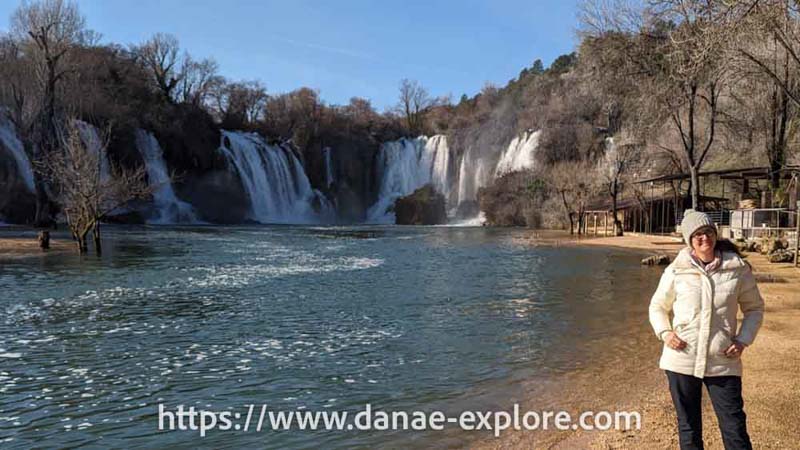
Located about a 40-minute drive from Mostar, Kravica Waterfall is a series of waterfalls that is likely even more beautiful in the summer. We visited in winter, bundled up in hats, gloves, and scarves, which probably explains why we had the place to ourselves.
There is an admission fee, but we weren’t charged, as there was no one at the entrance when we arrived.
Access is very easy; we followed Google Maps directions, parked just a few meters from the waterfall, and the path is a stone trail with sections of wooden walkways, quite straightforward. If you’re not renting a car, there are half-day or full-day tour options that include a visit to Kravica. If you don’t have a car, it’s worth considering a tour.
In the summer, I imagine Kravica Falls gets quite crowded. There are a few bars and restaurants by the pool formed by the waterfall, perfect for a refreshing swim. Even with the crowds, it seems like a great place to cool off from the intense summer heat typical of southern Europe.
.
.
Blagaj Monastery – Blagaj Tekke
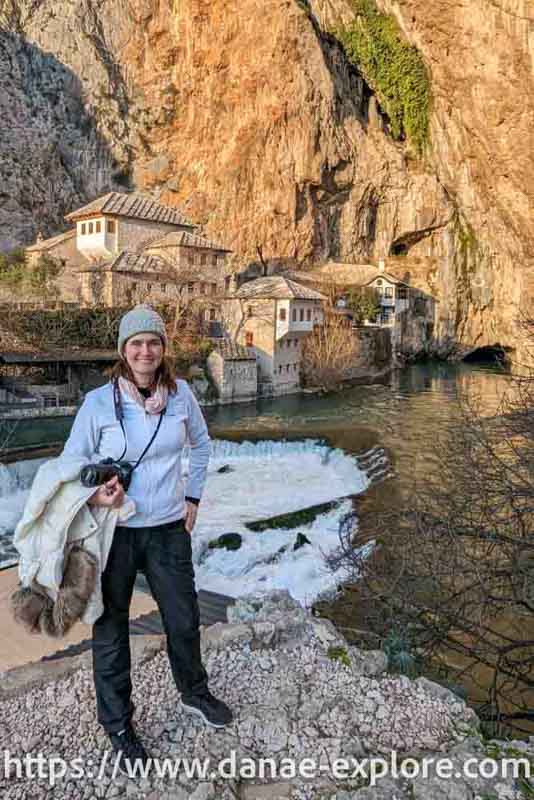
“It’s no wonder they chose this place to build the monastery” was the first thought that crossed my mind when we arrived at Blagaj Monastery.
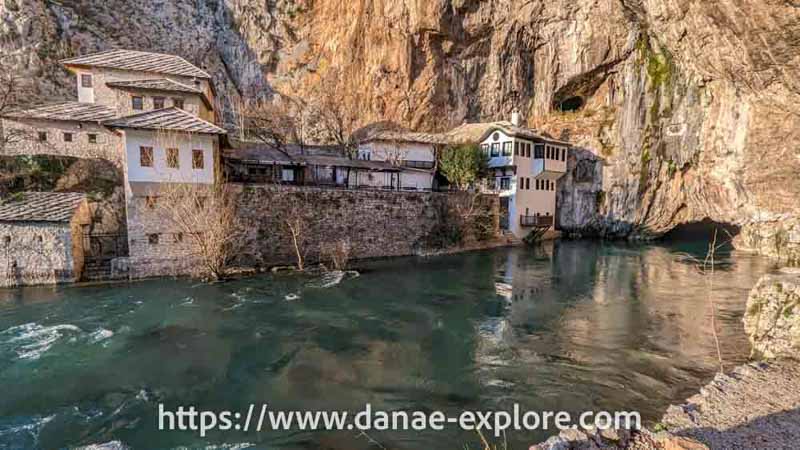
The Buna River emerges from a rock wall with an impressive volume of water, forming a semicircular waterfall surrounded by towering cliffs. If words fail me to describe the place, there was no shortage of emotion in experiencing it.
The monastery dates back to the 15th century and was founded by the Sufi dervish and scholar Osman Derviša with the message “love creatures for the sake of the Creator.” The current structure, however, was built in the 17th century. The combination of Ottoman and medieval architectural elements gives the monastery a unique and charming appearance.
If I remember correctly, the entrance fee is €4 per adult, with free entry for children, allowing you to explore the monastery grounds, including prayer rooms and contemplation areas.
But the best views are on the other side of the Buna River, where there are some restaurants — we stopped at Restaurant Vrelo for coffee and baklava (a typical local sweet). It was excellent, and prices weren’t as high as the location might suggest (but remember that we were there in winter and the place was almost empty).
If you’d like to spend more time enjoying this view, there are plenty of places to stay in Blagaj.
.

.
.
Where to eat in Mostar, Bosnia-Herzegovina
In Mostar, we had some great food experiences. The local cuisine is a blend of Ottoman and European influences.
Among the regional dishes, we tried cevapi (a type of grilled meat dish, often served as small grilled sausages, burgers, or meatballs), burek (a pastry with various fillings), and pljeskavica (another kebab-style dish).
Desserts were my favorite part of the local cuisine, especially baklava and smokvara.
Here is the list of places we ate at and liked in and around Mostar:
Restaurant Šadrvan – overlooking the Radobolja River, I tried japrak (similar to stuffed vine leaves), and it was delicious.
Hindi Khan – recommended by our hotel, the food was great and the service excellent.
Restaurant Vrelo – with stunning views of the Blagaj Monastery, we had coffee and tried baklava and smokvara. I imagine it gets quite busy in high season.
Restauran Han – in Stolac, a great choice if you’re passing through the area.
One final tip: it’s worth checking reviews on Google and TripAdvisor before sitting down to avoid surprises.
Mostar is a beautiful mix of history, culture, and natural beauty. I hope these tips help you plan your trip and that you enjoy every moment in this special destination. Safe travels!
.
Complete itinerary of our Balkans trip
Here is the Google MyMaps, with our detailed Balkans itinerary – Serbia, Montenegro, Croatia and Bosnia and Herzegovina. Just click and save it to your Google account. When you start planning your next trip to Eastern Europe, you’ll already know where to start😉
How to use this map: Click the menu tab in the upper left corner of the map to access different layers, including points of interest and routes. You can toggle layers on and off by checking the corresponding boxes. To see details about specific locations, click on the icons on the map.
To save this map to your Google Maps account, just click the star icon next to the map title. To access it later on your phone or computer, open Google Maps, tap the menu button, go to “Your Places”, select “Maps”, and you’ll find this map saved there.
.
Here are the websites I always use to plan my trips:
– 🛌 Accommodation: Booking
– ☀️ Tours & activities: Civitatis & Get Your Guide
– 📱 eSIM for mobile data: Airalo e-SIM – use promo code DANAE2375
– 🚗 Car rental: RentCars – use promo code DANAE, or DiscoverCars
.
All our posts about travel to the Balkans, to help you plan your trip:
- A 20-day Balkans itinerary: Serbia, Montenegro, Croatia and Bosnia-Herzegovina
- The complete guide to Kotor, Montenegro: what to do, where to stay, and when to go
- Mostar – what to do in the most charming town in Bosnia and Herzegovina
- What to do in Sarajevo: a 1 or 2-day itinerary in the capital of Bosnia and Herzegovina
.
Explore more of Europe with us:
Scandinavia
- Is it expensive to travel in Norway? Practical tips for visiting without breaking the bank
- Preikestolen: a hiker’s guide to Norway’s most spectacular viewpoint
- What to do in Norway in 12 days – and itinerary suggestions for 7, 10, 15 or 20 days
- Iceland itinerary: complete 5 to 9 day road trip guide
- What to do in Iceland – the best of the south and east of the island
- 5 unmissable small towns in Europe
Greece
- What to do in 2 or 3 days in Athens
- The best itinerary for a 15-day road trip around mainland Greece
Spain
- 10 days in Andalucia – Our itinerary through Southern Spain
- What to do in 2 days in Granada, Spain
- Ronda, the most charming town in Southern Spain
Portugal
- Portugal in two weeks: our complete itinerary and tips
- One week in the Azores – complete itinerary with Sao Miguel, Pico and Terceira Islands
- São Miguel, Azores: your complete guide to the largest island in the Azores
- Pico Island – complete guide to visiting the most picturesque island in the Azores
- Terceira Island itinerary for first-timers: a perfect Azores adventure
.
Did you like these tips? Then follow me on social media:
Instagram @danae_explore
Pinterest @danaeexplore
Comments or questions? Contact me on social media! I love to chat about travel 😉
And before you go, don’t forget to SAVE THIS PIN to your PINTEREST account for easy access to this post on what to do in Mostar, Bosnia and Herzegovina, whenever you need it!