
Ahh, Portugal, one of the most delightful countries to visit in Europe. It has that charming European atmosphere yet feels genuinely welcoming. It’s easy to get to, easy to get around in, easy to love — and resisting the temptation to stay and start a new life in Lusitania is no small feat.
Portugal is one of the countries I’ve visited most in Europe — by my rough count, only Italy and the United Kingdom rank higher. And with each visit, I fall even more in love with the country. The food is delicious, the weather is among the best, and the people are warm.
On one of my trips, we set out on a two-week road trip with the mission of discovering the best that Portugal has to offer. We drove from north to south, east to west, making the most of the country’s compact size to immerse ourselves in its rich culture. Then we continued on to Spain for another ten days exploring Andalucía.
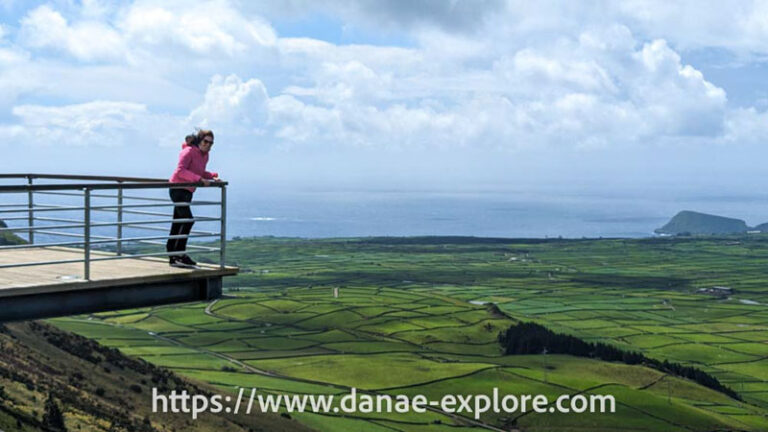
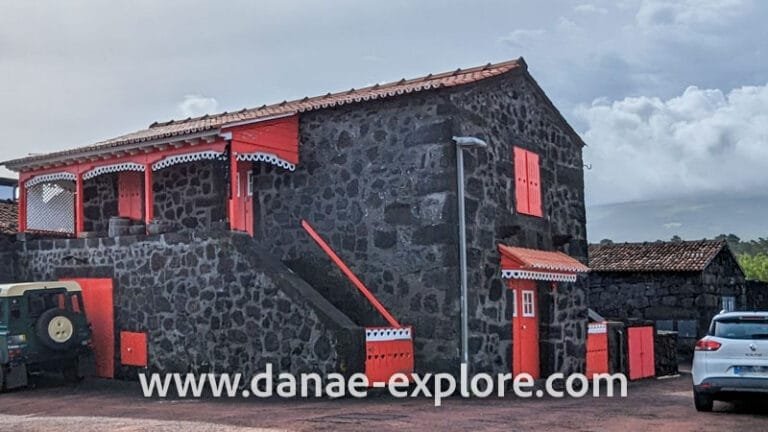
The itinerary was perfect and could easily be expanded to include lesser-known but beautiful regions of Portugal, such as the Azores, with islands like São Miguel, Pico and Terceira.
Portugal in 2 weeks
How we split the nights: 5 in Lisbon (with day trips to Sintra and Évora), 1 in Coimbra, 2 in Porto, 2 in the Alentejo and 3 in the Algarve, in Carrapateira.
Where to stay: in Lisbon, Hotel Santa Justa, in the Baixa; in Coimbra, Casa da Carqueja; in Porto, Ribeira Douro Hotel; in the Alentejo, Torre de Palma Wine Hotel; in the Algarve, Carrapateiramar Guest House, in Carrapateira.
Car: we picked up the rental car only as we left Lisbon and dropped it off in Faro. In Lisbon and Porto it’s more trouble than help.
When to go: for me, spring and fall. We went in July: guaranteed beach days in the Algarve, but brutal heat.
Getting there: we flew into Lisbon and out of Seville, Spain, where the trip continued through Andalusia.
First of all, follow me on Instagram @danae_explore – that’s where you can keep up with my trips, find lots of travel tips, and send me a DM anytime. I love chatting about travel!

Itinerary overview – two weeks in Portugal
This Portugal itinerary was carefully crafted based on extensive research and insights from previous travels across the country. Tested firsthand, it’s a plan you can rely on!
In just two weeks, we discovered some of the best of Portugal — from the lively streets of Lisbon and Porto to picturesque villages, from gorgeous vineyards to postcard-perfect beaches, from delicious food to fascinating archaeological sites. In short, this is a beautiful country worth visiting as many times as you can.
Our two-week Portugal itinerary:
Days 1 to 5: Lisbon, with a day-trip to Sintra and another to Évora; in Lisbon, we stayed in a comfortable apartment in Alfama, housed in a historic building overlooking Largo São Rafael. If you prefer a hotel with easier access and an excellent location, I highly recommend Hotel Santa Justa;
Day 6: pick up the rental car and head to Coimbra, with a stop in Óbidos (218 km, about 2h30 of driving); in Coimbra, we stayed at Casa da Carqueja;
Day 7: drive to Porto, with a stop in Aveiro (138 km, about 1h45); in Porto, we stayed in an apartment near Rua das Flores and São Bento Station, at Citybreak-apartments Patio;
Day 8: Porto
Day 9: drive to the Alentejo, with a stop at Castelo de Vide (341 km, about 3h45, the longest stretch); in Alentejo, we stayed at our favorite hotel of the trip, Torre de Palma Wine Hotel, easily one of the best places I’ve ever stayed;
Day 10: Alentejo (wineries)
Day 11: drive to the Algarve (342 km, about 3h45) – we stayed in Carrapateira at Casa do Miradouro;
Day 12: Algarve
Day 13: Algarve
Day 14: Algarve, return the rental car in Faro (109 km from Carrapateira, about 1h20) and continue by bus to Spain, check out our complete Andalucia itinerary.
This itinerary follows a strategy I often use for longer trips, like in Southeast Asia or Guatemala & Belize: we started at a faster pace, exploring cities, art, and culture, and then slowed things down toward the end to enjoy some well-deserved wineries and beach days.
The best thing about planning a trip yourself is that it’s yours to personalize however you like. As a suggestion for adjusting this two-week itinerary in Portugal, if you enjoy cities more than beach time, it’s worth spending an extra night in Porto (if you prefer larger cities) or in Évora (if you’d like to enjoy a smaller historic town), reducing one beach day in the Algarve.
If you’re not into wine, no problem. You can easily reallocate the two winery days. I’d recommend adding one more day in Porto and another in Coimbra or Évora, or simply spending more time on the beaches of the Algarve.
If you only have 10 days in Portugal, my suggestion is: 3 nights in Lisbon (with the Sintra day trip), 1 in Coimbra (stopping in Óbidos), 2 in Porto, 1 in the Alentejo, visiting Évora on the way to the Algarve, and 2 in the Algarve.

Where to stay in Portugal
Finding good accommodations at reasonable prices (for European standards) is not difficult in Portugal.
However, it’s important to choose your lodging carefully, especially in big cities: as in any other place in the world, there are better and worse areas, and cheaper options may come with drawbacks that are hard to notice when booking — those little inconveniences you only realize once you arrive, when it’s usually too late.
One important thing to keep in mind is stairs: many places are located in historic buildings, which adds to their charm, but these buildings rarely have elevators. Before booking, read the description carefully to check which floor the apartment or room is on and whether there’s an elevator. Read the reviews and contact the property directly to avoid surprises like the one we had in Porto.
Below are the accommodations we used for this road trip, along with some other options I considered while planning the trip.
This two-week itinerary in Portugal was done with kids, traveling as two families, eight people in total (four adults and four children aged 5 to 9). We prioritized apartments and hotels with family rooms, always prioritizing comfort while keeping good value in mind.

Where to stay in Lisbon
We spent five nights in Lisbon in a very comfortable apartment in Alfama, housed in a historic building with a lovely view of Largo São Rafael. However, keep in mind that this street — like many others in the area—is not accessible by car. This can be tricky if you haven’t followed my advice on traveling with only a carry-on. Jokes aside, while cars can’t reach the doorstep, they can drop you off nearby, but be prepared for an uphill walk. When booking, I recommend contacting the host to get the exact address to enter in Uber to avoid any confusion. Also, note that the apartment is on the second floor with no elevator.
On a previous trip to Lisbon (without kids in tow), I stayed at Hotel Santa Justa, in the Baixa/Chiado area, an excellent location with easy access to public transportation. Other great options in the same area include Eurostars Lisboa Baixa and Lisbon Prata Boutique Hotel, both offering good value for money.
For a budget-friendly option, check out Lisbon Central Hostel.
Readers of the blog also chose Residentas Arco do Bandeira, in the Baixa, and Solar dos Mouros, just below the castle. Another well-rated budget option is Home Lisbon Hostel and, for a night near the airport, Meliá Lisboa Aeroporto.

Where to stay in Coimbra
In Coimbra we again chose an apartment, Carqueja House, very well located between the University of Coimbra and the Sé Velha church, with a beautiful view of the Mondego River. The sunset on the day we stayed there was one of the best of the trip. But be aware that there are a couple of flights of stairs to climb, meaning another building without an elevator.
For those who prefer hotels, I recommend the Vila Galé Coimbra. I have stayed at a hotel from this chain before, in São Miguel (Azores) and found it excellent, and this one in Coimbra seems just as good. Another option I considered was the Sapientia Boutique Hotel, located next to the University, with modern decor in a clean and elegant style.
As a more affordable option, the Hotel Vitória is very well rated and has a great location.
The map below shows this and other options:

Where to stay in Porto
Porto, the Portuguese city that stole my heart! During this road trip through Portugal, it was my first time in Porto, but later I had the opportunity to return to visit dear friends who moved there and are absolutely loving it.
On the trip with the kids, we stayed in an apartment in the city center, in an excellent location between the Palácio da Bolsa and São Bento Station, near Rua das Flores. The apartment was great, a duplex on the top floor of a historic building, very comfortable and well-equipped. But there was one problem: five flights of stairs to climb. Imagine that challenge and multiply it by five. Even traveling light, no one deserves to carry suitcases and backpacks up and down five flights of stairs — not only their own luggage but often the children’s as well. The same company that manages this apartment seems to have others in the same building, so if you don’t need one this large, you can book one on a lower floor.
Alternatively, the Rio da Vila on the same block looks beautiful, cozy, and has an elevator.
For those who prefer hotels, comfortable options with good locations and great reviews include the Ribeira Douro Hotel and the Sé Catedral Hotel Porto. In front of the Bolhão Market (which I highly recommend visiting), the B The Guest Downtown also seems to be a solid option with great value for money.
When I returned to Porto, this time without the kids, I stayed at the Portus Cale Hotel. If you’re visiting Porto for sightseeing and want to make the most of your time, this wouldn’t be the best location, as you’ll need to take public transport, use Uber, or walk quite a bit to reach the main attractions. However, it’s an excellent hotel at a great price, located in a very quiet residential neighborhood.
Another hotel in Porto readers of the blog chose is Thomaz Palace, in Bonfim.

Where to stay in the Alentejo
This was the biggest splurge of the trip! You know that moment when you combine “you deserve this” with “you only live once”?
This resulted in two nights at the absolutely wonderful Torre de Palma Wine Hotel. It was worth every single euro spent. I think it was the most elegant hotel I’ve ever stayed in (and that’s saying a lot for someone who’s usually quite thrifty).
Located in the heart of the Alentejo, in Monforte, on a historic estate surrounded by vineyards and olive groves, the two nights we spent at Torre de Palma were a true “vacation within the vacation.” The décor blends Portuguese touches with timeless rustic-chic style, the food is divine, and the wines are excellent. The stay includes a visit to the winery and bicycles to explore the area.
Since staying there, I’ve recommended this hotel to two close friends, and both loved it. If it fits your budget, go for it — it’s absolutely worth it!
On the way from the Alentejo to the Algarve, readers of the blog also chose Monte Maravilhas, in São Martinho das Amoreiras (Odemira).

Where to stay in the Algarve
The Algarve, in the far south of Portugal, is famous for its beaches and golf resorts, often filled with English and German tourists. If resorts are your thing, you’ll find no shortage of options. But if you know us, you know we avoid resorts at all costs, so nope, not for us! Let’s look at other options.
We stayed in Carrapateira, on the Atlantic coast of the Algarve, at Casa do Miradouro. The house was a bit old-fashioned, but fine. Nearby, there’s the Carrapateiramar Guest House, which, looking back, seems like a better option.
Carrapateira Beach has a long stretch of sand, framed by dunes and rock formations. Right next door is Amado Beach, where we enjoyed a breathtaking sunset one evening. Both beaches are beautiful, but they’re not the Algarve you see in postcards.
The postcard-perfect Algarve is on the south coast, home to towns like Lagos, Portimão, Albufeira, and Tavira. But don’t be fooled, this area is quite built-up and always packed with tourists. I didn’t even bother researching accommodations there, but readers of the blog chose Belmar Spa & Beach Resort, on Porto de Mós Beach in Lagos.

Driving in Portugal: what to expect
Over two weeks and 1,700 km on the road with our rental car, everything went as smoothly as possible: excellent and safe roads, polite drivers, little traffic, no police checks — in short, everything went incredibly smoothly.
We used Google Maps for all our routes. Even with an eSIM, I highly recommend downloading maps offline, just in case your phone signal drops right when you need it most (because, let’s be honest, that always happens when you need it most).
About tolls: many motorways charge tolls, and some are electronic only, with no booths. Ask your rental company for a car with a Via Verde transponder, which records each toll and bills you later. In the Algarve, the A22 (Via do Infante) has been toll-free since January 2025.
To rent a car, I always use RentCars, where I usually find the best options, and with the DANAE promo code you still get an additional 5% off. Shall we go?
Before you go: documents, taxes and best time to visit
Documents. Visitors from the US, Canada, the UK and Australia don’t need a visa for stays of up to 90 days in the Schengen Area. Europe has used the EES, which records fingerprints and a photo at the border, at every border since April 2026, so lines at Lisbon airport can be long.
Update, November 2026: ETIAS, the new travel authorization for visa-exempt visitors, still has no start date. It was expected in late 2026, but the EU removed that date from the official website and says it will give a few months’ notice: check before you travel.
Tourist tax. It’s charged by your accommodation, per person, per night: €4 in Lisbon (up to 7 nights), €3 in Porto (the city is considering raising it to €4), €2 in Sintra and €1.50 in Évora. In the Algarve, it varies by town.
When to go. We did this trip in the summer, in July: guaranteed beach weather in the Algarve, but the heat was brutal. I’ve also been to Portugal in February, when it was cool but really pleasant, and another time in early April, when it was warm in that lovely way, sleeveless during the day and cooler at night. For me, the most pleasant times are spring and fall, and even the beginning and end of winter (in that case, no beach).

What to do in Portugal – highlights of each stop
Here’s a quick overview of what we did during our trip (plus a few things we would have liked to do but didn’t manage to fit in). This should give you a good sense of what to expect and help you plan an amazing trip to Portugal.
What to do in Lisbon
Lisbon is one of those cities you can visit over and over without ever getting bored. I’ve been four times, and if I get the chance to go again, I wouldn’t hesitate for a second!
For a first visit, this is our list of must-see spots. We covered them in three days, so feel free to use this as a base and customize your Lisbon itinerary to match your interests.
Day 1 – Alfama, the castle and viewpoints, Praça do Comércio, Baixa and Chiado
- Stroll through the streets of Alfama
- Miradouro de Santa Luzia (Santa Luzia Viewpoint)
- Miradouro do Recolhimento (Recolhimento Viewpoint)
- Castelo de São Jorge (São Jorge Castle)
- Miradouro da Graça (Graça Viewpoint)
- Sé de Lisboa (Lisbon Cathedral)
- ride Tram 28
- Praça do Comércio (Commerce Square)
- Cais do Sodré
- Mercado da Ribeira (Ribeira Market)
- Explore the streets of Baixa & Chiado
- Elevador de Santa Justa (Santa Justa Lift), closed since September 2025, with no reopening date when I updated this post
Most of these sights can be covered on a walking tour with a local guide. We didn’t do one in Lisbon, but on other trips, I joined these types of tours and they’re usually fantastic, not long ( 2 – 3 hours), full of historical and cultural insights, and a great way to get your bearings before exploring on your own.
Day 2: Museu Nacional do Azulejo and Parque das Nações
- Museu Nacional do Azulejo (National Tile Museum), closed for renovation since November 2025, so check the website before you go. A good alternative is the Calouste Gulbenkian Museum, which reopened after a full renovation in July 2026
- Lisbon Oceanarium (highly recommended if you have kids or if you enjoy marine life!)
- Parque das Nações
- Head back to your accommodation and take some time to explore the surrounding neighborhoods, whether it’s Alfama, Baixa, or Chiado.
- Parque Eduardo VII (Eduardo VII Park)
Day 3: Belém Tower and Jerónimos Monastery
- Torre de Belém (Belém Tower), which reopened in May 2026 after a year of restoration, with timed entry and a daily visitor cap: book ahead, online or at the Jerónimos Monastery ticket office (open 9:30 am to 5:30 pm)
- Padrão dos Descobrimentos (Monument to the Discoveries)
- Mosteiro dos Jerónimos (Jerónimos Monastery), also with timed entry
- MAAT – Museum of Art, Architecture & Technology (We only saw it from the outside)
- Fábrica do Pastel de Nata de Belém (for the famous custard tarts!)
It’s also worth stopping by LX Factory, a laid-back area with shops, restaurants, and bars. Nearby, you’ll find Jardim da Estrela (Estrela Garden) and Basílica da Estrela (Estrela Church) — we visited in the late afternoon after returning from Sintra.

What to do in Sintra
We visited Sintra on a day trip from Lisbon, as it’s very close and easy to reach. However, be warned: the road leading to Pena Palace and Quinta da Regaleira is narrow, winding, and usually packed with cars. Patience is key — this was the most traffic we encountered on our entire trip.
Update, November 2026: private cars are no longer allowed up to Pena Palace and the Moorish Castle, only authorized vehicles. If you drive, park in central Sintra (spaces are scarce) and take bus 434 from the train station, or walk up. From Lisbon, the train from Rossio is the easiest option. Pena Palace tickets come with a set entry time, and late arrivals are not let in. Taxis and Uber can still drive up to Pena.
Another thing to keep in mind: Sintra is colder than Lisbon, especially at Pena Palace, Castelo dos Mouros, and Quinta da Regaleira. When we visited in July, we didn’t even think about bringing a jacket — we all wore shorts, T-shirts and sleeveless tops. Big mistake. We ended up returning to Lisbon earlier than planned because we were freezing, the kids started sneezing, and the last thing you want while traveling is a sick child.
Main attractions in Sintra:
- Palácio Nacional da Pena (Pena Palace) – Almost always crowded, so buying tickets in advance is a must!
- Quinta da Regaleira – you can skip the line by purchasing tickets beforehand.
- Palácio Nacional de Sintra (Sintra National Palace)
- Park and Palace of Monserrate – We didn’t visit, but you can buy tickets in advance here
- Castelo dos Mouros (Moorish Castle) – We didn’t go, but you can buy skip-the-line tickets in advance
I think it’s pretty tough to see all of this in just one day. I’ve been to Sintra three times, and the most I’ve ever managed was two attractions in a single day. If you have plenty of energy and get lucky with the crowds (definitely buy tickets in advance!), you might be able to fit in three.


What to do in Évora
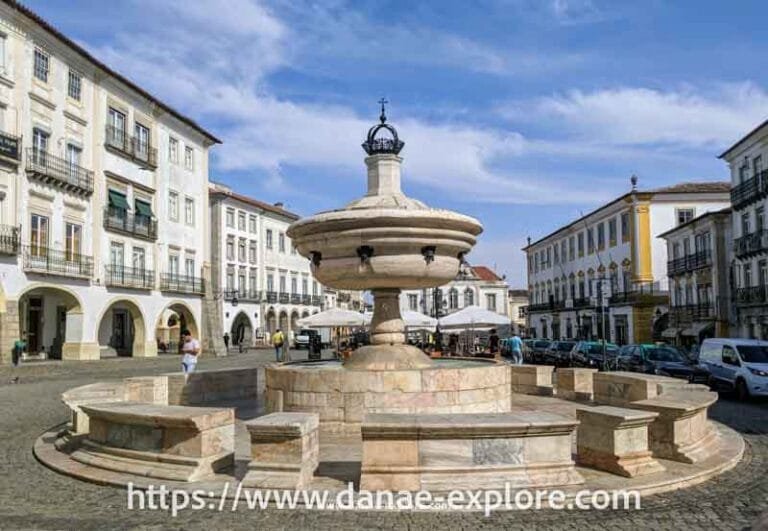
We visited Évora on a day trip from Lisbon and honestly, it was a bit of a struggle, mainly because of the scorching heat that day. But despite that, it was absolutely worth it. And 2027 is a great year to go: Évora is the European Capital of Culture, with the official program starting in February.
If you have time and want to experience the city at a more relaxed pace, spending the night in Évora is a great option — that’s what I did when I backpacked through Portugal in the ’90s. I’d recommend Evora Olive Hotel or Pousada Convento de Évora, both of which are centrally located in the historic district.
Évora is surrounded by well-preserved medieval walls, and one of the best spots to explore them is near the Agua de Prata Aqueduct. Built in 1537, this aqueduct still supplies water to the city from springs 18 km away, in the region of Graça do Divor.
Évora is a city best enjoyed at a leisurely pace, wandering through its charming streets. Joining a walking tour can make the visit even more rewarding, giving you insights into its history and culture. Some must-see highlights include:
- Temple of Diana (Roman Temple of Évora)
- Chapel of Bones and Church of Saint Francis
- Évora Aqueduct
- Giraldo Square
- Jardim Público e as Ruínas Fingidas (Public Gardens and the Fingidas Ruins)
- Cromeleque dos Almendres (a prehistoric megalithic site from the 6th millennium BC)
There’s also a dedicated post on the blog about what to do in Évora, with a one-day itinerary, where to eat and where to stay.
What to do in Óbidos
Óbidos is a charming medieval town, the kind that feels straight out of a fairy tale. The best way to experience it is simply to wander through its narrow streets — perhaps even join a guided tour to learn about local history and legends. Stop for a coffee, an ice cream, a glass of wine, or a pastel de nata, and enjoy the atmosphere. It’s a place to slow down and escape the pressures of modern life — that is, if you’re lucky enough to visit when it’s not packed with tourists. Even when crowded, though, the town is lovely and well worth the visit.
I highly recommend walking up to the viewpoint near Óbidos Castle and exploring a section of the medieval walls for panoramic views.
It’s possible to visit Óbidos as part of a day-tour from Lisbon , often combined with a visit to Fátima and Nazaré, but I think, honestly, trying to fit three destinations into one day feels unnecessarily rushed.

What to do in Coimbra
Coimbra is a city deeply intertwined with its historic university, one of the oldest in the world. Founded on March 1st, 1290, by King D. Dinis I, the University of Coimbra has been in continuous operation ever since and today has over 25,000 students. One of its highlights is the magnificent Biblioteca Joanina, an extraordinary Baroque library considered one of the most spectacular in Europe. Don’t skip the interior tour, even if the lines are long — it’s absolutely worth it.
Beyond the university, other must-visit spots in Coimbra include:
- Monastery of Santa Cruz
- A stroll along the banks of the Mondego River
- Exploring the alleys and stairways of the historic center
- Botanical Garden (we didn’t visit)
- Portugal dos Pequenitos, a theme park featuring miniature replicas of Portugal’s most famous monuments (we didn’t go).
What to do in Aveiro
On our way from Coimbra to Porto, we made a quick stop in Aveiro to stretch our legs and grab lunch. The city, crisscrossed by canals, has a charming and relaxed atmosphere, making for a lovely visit. Don’t miss Praça Humberto Delgado, the Fish Market and Museu Arte Nova (formerly Casa Major Pessoa), as well as a boat trip through the canals.

What to do in Porto
Porto is Portugal’s second-largest city, packed with attractions to keep even the most demanding travelers entertained for days. During our two-week itinerary through Portugal, we only spent one full day in Porto, which I found too little time to truly appreciate the city. If possible, I highly recommend spending at least two full days in Porto.
Here are some of the main activities to do in Porto (of course, the city offers much more, depending on your specific interests):
- The iconic tiles of São Bento Station
- Igreja da Sé do Porto (Porto Cathedral)
- Wandering through the narrow streets of Ribeira (behind the Cathedral)
- Rua das Flores
- Cais da Ribeira
- Palácio da Bolsa (former Stock Exchange Palace)
- Igreja de São Francisco do Porto (Church of Saint Francis)
- Walking across the D. Luís Bridge (sunset here is spectacular!)
- Vila Nova de Gaia – stroll along the Douro River for a great view of Porto
- Visit a wine cellar in Vila Nova de Gaia (check visiting hours and whether booking is required)
- Boat tour on the Douro River (we didn’t do it, but it’s a popular activity!)
- Douro Valley: for a full day with a winery, lunch and a boat ride, there’s this day trip from Porto
- To see Porto from the river at sunset, a sailboat cruise with port wine
- Praça da Liberdade (Liberty Square)
- Torre e Igreja dos Clérigos (Clérigos Tower and Church)
- Livraria Lello (Lello Bookstore – book tickets in advance online! The ticket price is deducted if you buy a book)
- Igreja do Carmo e Igreja das Carmelitas (Carmo and Carmelitas Churches)
- Bolhão Market
- Capela das Almas (Chapel of Souls) on Rua de Santa Catarina
- Palácio de Cristal Gardens
- Parque das Virtudes (also great for sunset)
- Matosinhos Beach (we didn’t go)
Clearly, it’s impossible to visit all of these in just one day. I managed to see and revisit these places over three different trips to Porto. If you’re short on time, a hop-on-hop-off bus can be a great way to explore the city efficiently.
On another trip to Porto (on my way back from the Azores), I joined a walking tour with Rita, from O Porto Encanta, a Brazilian who has lived in Porto for years and has a huge knowledge about the city, its art, and history. The tour was fantastic, and I highly recommend it!
What to do in the Algarve
For me, the Algarve is synonymous with gorgeous beaches and spectacular rock formations. But before you start dreaming of those postcard-perfect clifftop views, let me warn you — there’s a price to pay. And I’m not just talking about the inflated euro prices (which, depending on where you go, can rival those in Paris!).
To get those clifftop views that fill the imagination of 11 out of 10 people when they think of the Algarve, be prepared for crowds — especially in summer, when every inch of sand is taken by northern Europeans eager for sunshine.
We stayed in Praia da Carrapateira, on the Atlantic coast, which was much quieter in terms of crowds. This beach, also called Praia da Bordeira, has a long stretch of sand forming dunes, which the kids loved, and freezing cold water, which helps keep the crowds away.
We also visited Praia do Amado, which was a bit busier but still pleasant. Another good option on the Atlantic coast is Praia da Arrifana.
The iconic Algarve cliffs are located on the south coast (which, despite the weather, is also on the Atlantic, not the Mediterranean), and that’s where things get crowded. We went to that region one day and stayed near Portimão – see here accommodation options in Portimão.
We were recommended to do the Sete Vales Suspensos Trail, a six-kilometer trail along the cliffs, passing several beaches, with breathtaking views and numerous stopping points. The path is entirely on wooden walkways, and although it’s long (and the sun can be harsh, as there’s no shade), there are several exit options along the way; you can make the trail as long as you feel comfortable. One of the highlights of the trail is Benagil beach, where there is a rock formation known as Benagil Cave (which you’ve probably seen countless times on Instagram). Since August 2024, you can only enter the cave on a licensed boat tour or a guided kayak tour: swimming there and landing on the little beach inside are banned. From the clifftop trail you can see the opening in the cave roof.
Other beaches recommended to us included Praia da Galé, a large beach with good facilities and easy access; Falesia Beach, also quite extensive and well-equipped, accessed via stairs and wooden walkways; Praia do Camilo; Praia dos Tomates; Praia do Carvoeiro and Ponta da Piedade.
Despite the temptation to visit all these wonders, we decided to dedicate the last day of our trip to Portugal to relaxing. We enjoyed the tranquility of the beaches near our accommodation in Carrapateira, since the next day the journey would continue towards southern Spain.

And the journey continued through Spain
We returned the rental car in Faro, where we caught a bus to Seville. There we rented another car to do the Spanish part of our Iberian road trip.
At the time, I looked for a rental company that would allow me to pick up the car in Lisbon (where our outbound flight arrived) and return it in Seville (where our return flight departed), but I couldn’t find any options. So I rented one car in Portugal – picked up in Lisbon and returned in Faro – and another in Spain – picked up and returned in Seville – I always use RentCars, that’s usually where I find the best deals.
To learn more about our ten-day trip through Spain, which included stops in Ronda, Granada, Córdoba, and Seville, check out our complete itinerary for southern Spain, or click on each city for specific posts about them.
And if you want to stretch the trip even further, Morocco is just across from southern Spain: see our 10-day Morocco itinerary.
Frequently asked questions about this Portugal itinerary
Is two weeks enough for Portugal?
For mainland Portugal, yes: you can cover Lisbon, Sintra, Évora, Óbidos, Coimbra, Aveiro, Porto, the Alentejo and the Algarve without rushing, as in this itinerary. The Azores need at least one extra week.
Do you need a car in Portugal?
Not in Lisbon or Porto, where a car is more trouble than help. Between cities, trains connect Lisbon, Coimbra and Porto well, but for the Alentejo, the wineries and the Algarve beaches, a car makes a big difference. That’s why we only picked up the car when leaving Lisbon.
How many days should you spend in Lisbon and Porto?
In Lisbon, three days in the city plus day trips to Sintra and Évora. In Porto, we only had one full day and it wasn’t enough: I recommend two.
What is the best time for this itinerary?
Spring and fall are the most pleasant seasons. The beginning and end of winter are also great for the cities, but there’s no beach. In July, when we did this trip, the heat was brutal.
Can you pick up a car in Lisbon and drop it off in Spain?
On our trip, I couldn’t find a rental company that allowed it. We rented one car in Portugal (from Lisbon to Faro), took a bus from Faro to Seville and rented another one there.
Can you do Portugal in 10 days?
Yes, by cutting two days from Lisbon, one from the Alentejo and one from the Algarve: 3 nights in Lisbon, 1 in Coimbra, 2 in Porto, 1 in the Alentejo and 2 in the Algarve. With 7 days, I’d stick to Lisbon, Sintra and Porto, and save the Algarve for another trip.
Detailed map of our Portugal road trip itinerary
Our 1,700 km journey through Portugal is detailed on the map below — just click and save it to your Google account. That way, when you plan your next trip to Portugal, you’ll already have a great starting point!😉
How to use this map: Click the menu tab in the upper left corner of the map to access different layers, including points of interest and routes. You can toggle layers on and off by checking the corresponding boxes. To see details about specific locations, click on the icons on the map.
To save this map to your Google Maps account, just click the star icon next to the map title. To access it later on your phone or computer, open Google Maps, tap the menu button, go to “Your Places”, select “Maps”, and you’ll find this map saved there.
Plan your trip
The websites I always use to plan my trips. Booking through these links costs you nothing extra and helps keep the blog going.