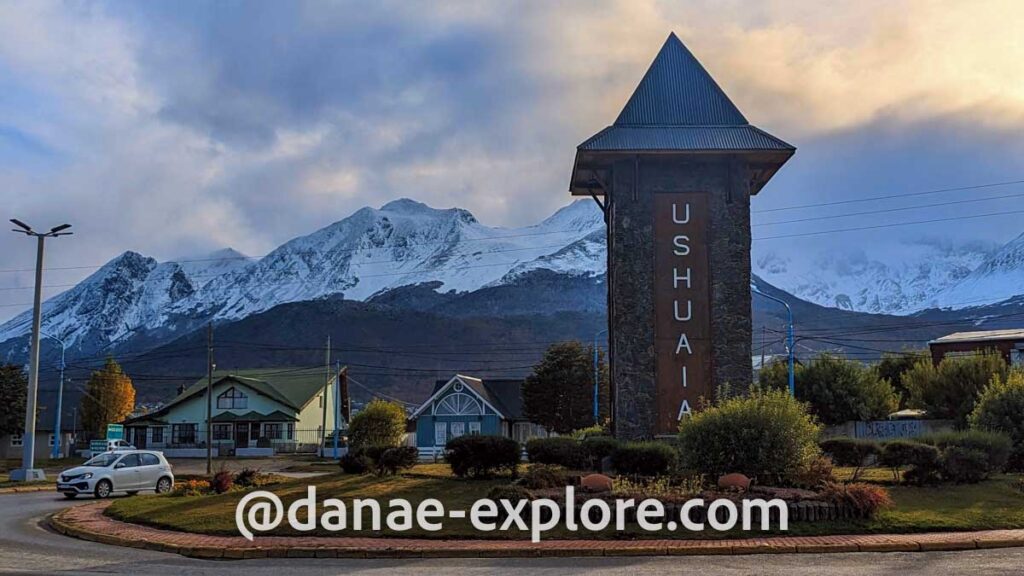
Ushuaia, famously known as “the town at the end of the world,” truly lives up to the nickname. As the southernmost city in the world, it sits on the southern coast of Tierra del Fuego, that remote island at the very tip of South America. In fact, the phrase “end of the world” is something you’ll come across constantly during your trip — and it never gets old.
If you’re planning your trip and wondering what to do in Ushuaia, this destination offers a great mix of history, stunning landscapes, unforgettable excursions, hikes for all fitness levels, and plenty of chances to spot local wildlife. And let’s not forget the excellent Argentine cuisine, which alone is worth the trip.
Located on the shores of the legendary Beagle Channel — the very waterway Charles Darwin sailed through in 1833 aboard the HMS Beagle under Captain FitzRoy’s command — Ushuaia holds a special place in my heart. It’s easily one of my favorite destinations in Argentina. And considering Argentina ranks among my top three favorite countries in the world, that’s saying something.
In this Ushuaia travel guide, I share everything you need to know to plan your trip, especially during autumn or spring, or even summer. We visited in late April (autumn in the Southern Hemisphere), and I’ve put together a detailed Ushuaia itinerary with tips and recommendations to help you make the most of your time there.
First of all, follow me on Instagram @danae_explore – that’s where you can keep up with my trips, find lots of travel tips, and send me a DM anytime. I love chatting about travel!
.
When to visit Ushuaia
Ushuaia is a destination that can be visited year-round, but each season offers a completely different experience.
Ushuaia in summer
During summer, Ushuaia is a haven for hiking enthusiasts and nature lovers. With pleasantly mild temperatures (rarely exceeding 15ºC) and long daylight hours, it’s the town’s high season, with all the pros and cons of peak season.
Ushuaia in winter
In winter, Ushuaia transforms into a wonderland for snow and winter sports lovers. The Cerro Castor ski resort, one of the earliest to open and the last to close in the Southern Hemisphere, attracts a steady flow of visitors and athletes from the Northern Hemisphere in search of snow. While not as crowded as summer, winter is also considered high season.
If it’s your first time seeing snow, Ushuaia is an ideal destination. The town is not just about skiing — there’s a wide range of attractions in and around Ushuaia to mix up your snow trip. Let’s be honest: during your first ski trip, staying on the slopes for more than three or four days is no easy feat (speaking from personal experience here!).
.
Looking for more polar destinations? There’s plenty of inspiration here on the blog! How about a well-planned Norway itinerary or an epic Iceland road trip? Or maybe heading to the other end of the Americas on an Alaska RV-adventure? And if you really want to go far, why not visit Sapporo, on Japan’s northernmost island?
.
Ushuaia in spring and autumn
I’ve visited Ushuaia twice: once in spring and once in autumn. In my opinion, these are the best seasons to explore the town.
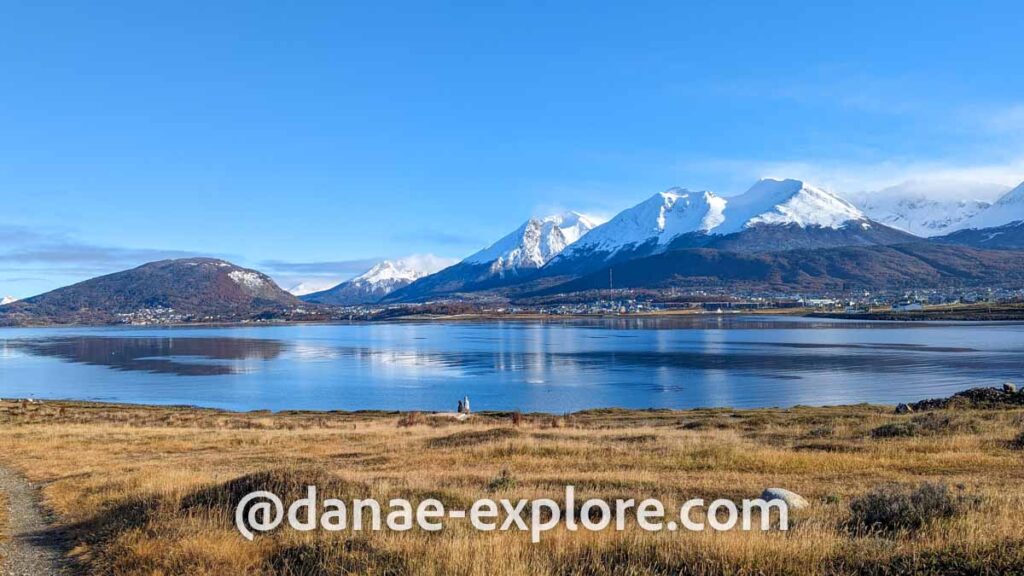
During these shoulder seasons, you get the best of both worlds. It’s the perfect time for hiking and soaking in the breathtaking Patagonian landscapes, while still finding snow in the mountains for a little snow fun — because, as residents of the tropics, we never pass up the chance to enjoy a snowy adventure.
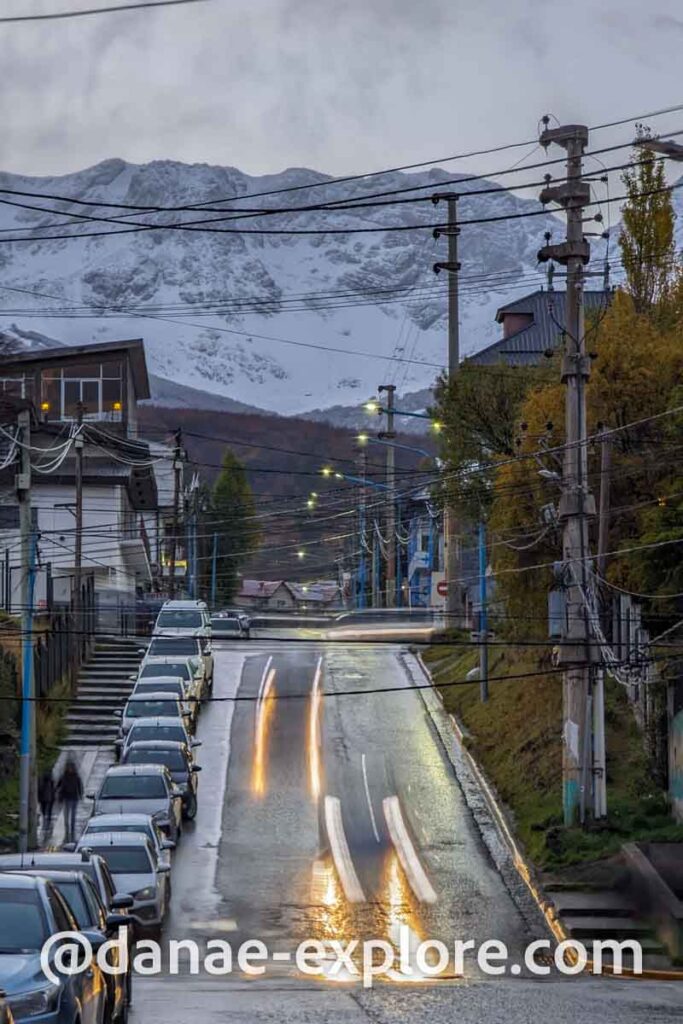
The weather is mild, the landscapes are stunningly colorful, there are far fewer tourists (and it really does feel much quieter!), and the town has a unique charm. Visiting Ushuaia in spring or autumn lets you enjoy its beauty at a more relaxed pace, away from the crowds. While there’s snow in the mountains, it’s unlikely to cover the streets — which, to me, is a bonus, no one wants to risk slipping on every corner!
.
.
How to get to Ushuaia
By plane
Despite being called Ushuaia International Airport (USH), there are currently no international flights operating there. However, it’s still worth checking when planning your trip, as airlines occasionally announce direct flights from Latin American cities such as São Paulo to Ushuaia. I recommend using the website flightsfrom.com to see whether any direct flights are available.
To reach Ushuaia, you’ll typically need to make a stop in Argentina, most commonly in Buenos Aires at either Ezeiza International Airport (EZE) or Aeroparque Jorge Newbery (AEP). When booking your ticket, double-check that you won’t need to switch airports in Buenos Aires. If a transfer is required, be prepared for a bit of a hassle: the two airports are fairly far apart, airlines don’t provide transportation between them, and you’ll need to collect your luggage and check it in again at the second airport.
Ushuaia also has flights from other Argentine cities, such as El Calafate (an excellent option if you’re planning to explore Argentine Patagonia), Trelew, and Cordoba.
.
.
By car or motorbike
For road trip lovers, Ushuaia is a dream destination.
As the southernmost city on the planet, Ushuaia serves as the starting or ending point for travelers crossing the Americas on two or four wheels.
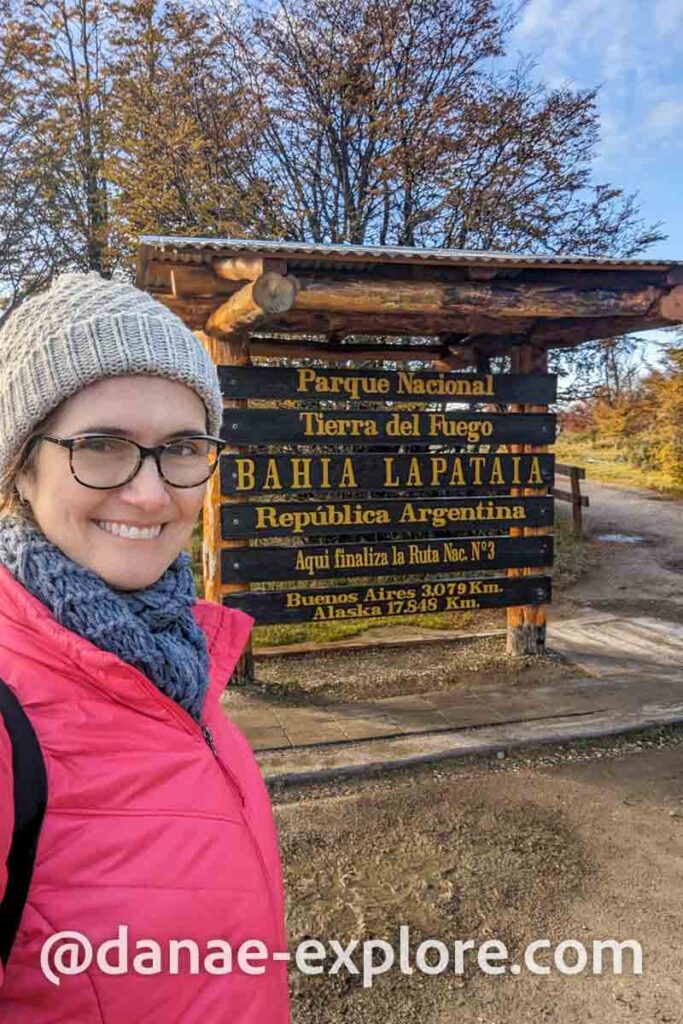
Bahia Lapataia marks the southernmost point of the road that runs all the way north to Alaska. I’ve been to both ends of the Americas (check out my post about Alaska), but who knows? Maybe one day we’ll take on the challenge of driving between them!
Even if an epic continental journey isn’t part of your plans, Ushuaia is an excellent place to rent a car and set off on a Patagonia road trip. It’s about 900 km from Ushuaia to El Calafate and slightly less to Torres del Paine National Park in Chile.
.
.
Where to stay in Ushuaia
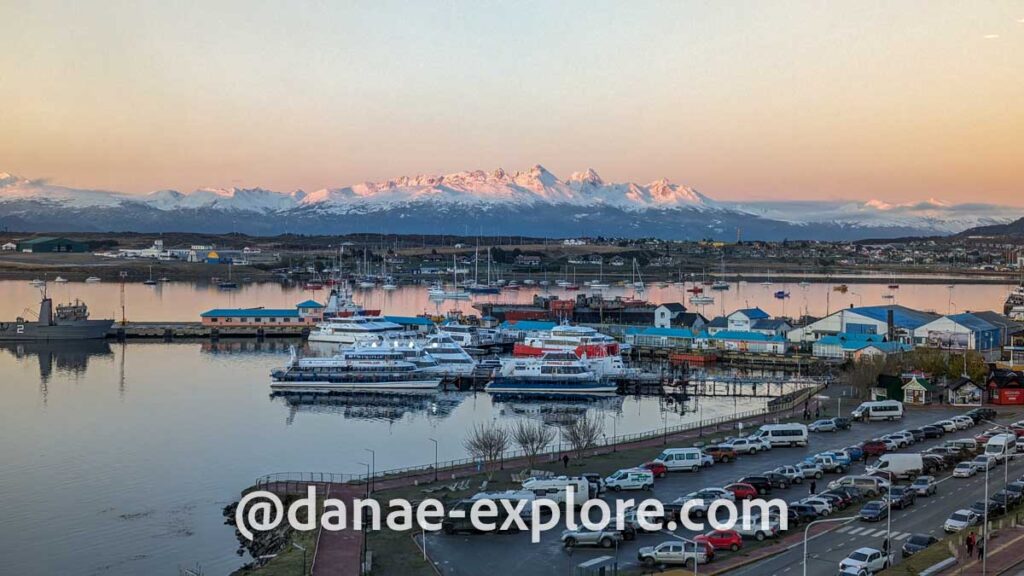
Ushuaia offers accommodation options for every budget and travel style. I recommend staying in the central area, near San Martín Street, where you’ll find plenty of restaurants, shops, and cafés within walking distance of the tourist pier and the Beagle Channel waterfront.
On our first trip to Ushuaia, we stayed at Hotel Tierra del Fuego, one of the town’s most traditional hotels. It’s well located, comfortable, and a great choice overall. Another excellent option in the same area is Hotel Albatros, which has a similar style and an equally convenient location.
More recently, while traveling with the kids, we stayed at Antarctica Park Ushuaia/ Costa Sur Aparments, a two-bedroom apartment on Maipú Avenue right across from the Beagle Channel. The view alone made the stay worthwhile. Other apartment options I considered for this trip were Austral 503 and Aunaisin – Toluken apartments, but I have to admit that Costa Sur won me over because of the views.
If you’re looking for a more upscale stay, Las Hayas Ushuaia Resort, is one of the best hotels in the area. Another standout option nearby is Los Acebos Ushuaia Hotel. But if I had to choose my dream hotel, it would definitely be Arakur Ushuaia Resort & Spa, which looks like the definition of perfection at the end of the world.
For more budget-friendly options, consider Posada Del Fin Del Mundo and El Refugio Lodge Hostel, both highly rated on booking platforms.
You can check prices and availability on the map below:
.
.
What to pack for fall or spring in Ushuaia
This was one of my biggest questions since I’ve been traveling only with a carry-on in recent years. I knew it would be cold, but how cold exactly?
On our most recent trip to Ushuaia, in mid-autumn (late April to early May), temperatures ranged from -7°C to 7°C. In town, it was usually around 2°C early in the morning, rising to about 7°C in the early afternoon. In the mountains, we experienced temperatures as low as -3°C, and during our boat trip on the Beagle Channel, it dropped to -7°C, and with the wind, it felt even colder.
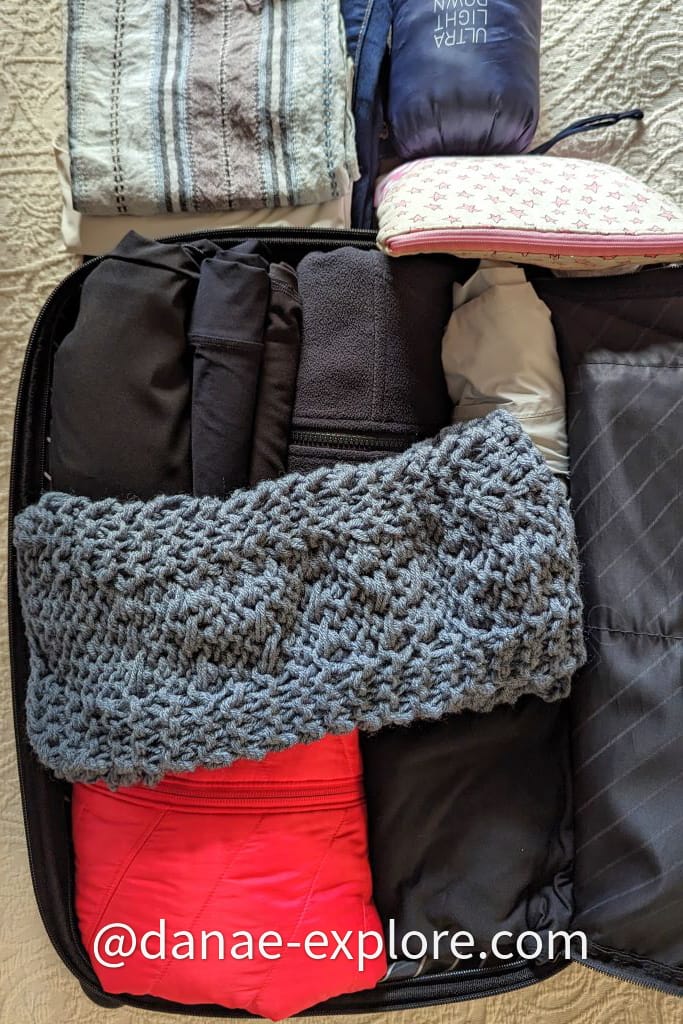
We packed basically the same clothes we had packed for a three-week winter trip to Eastern Europe, just in smaller quantities. Here’s what I packed:
Checklist – what to pack for cold destinations
- 1 pair of thermal pants (specifically for trekking; mine are from Decathlon)
- 1 pair of thermal leggings (can be worn alone or under the thermal pants; mine are from UNIQLO)
- 5 long-sleeved dry-fit t-shirts
- 1 fleece jacket
- 1 thick winter coat
- 1 raincoat (since my coat isn’t waterproof; if yours is, you can skip this)
- 1 pair of pajamas
- 5 pairs of regular socks
- 2 pairs of thick wool socks (to wear over regular socks)
- underwear for 5 days
- 1 pair of waterproof trekking shoes
- 1 pair of slippers
- hat, scarf, wool gloves and waterproof gloves
Honestly, this is pretty much my standard packing list for any winter trip. I wear the bulkiest pieces on the plane (except for the thermal pants), and everything else fits into my carry-on. For longer trips, I just add more leggings, shirts, socks, and underwear — maybe an extra hat or scarf too, just to switch things up a bit.
For more tips, check out my post on how to travel with only a carry-on.
.
.
How to get around Ushuaia
On both of our trips to Ushuaia, we rented a car, picking it up and returning it at the airport. For our fall and spring visits, a 4 WD wasn’t necessary; we opted for the most economical model available, which worked perfectly.
Driving around the region is very straightforward, with easy access to the main attractions. When we visited Tierra del Fuego National Park, we encountered a stretch of road covered in snow. Even though it was our first time driving in such conditions, everything went smoothly — another ✅ for our travel résumé!
.
When renting a car, make sure to ask whether snow tires are required (both of our rental cars already had them) and learn how to use snow chains if needed. We didn’t have to use them on either trip, but it’s always better to be prepared.
If you’re staying outside the town center, having a car will make getting around much easier. Otherwise, you may only need one for day trips and sightseeing.
Although renting a car gives you flexibility — and in our case, it was more cost-effective — it’s not essential. All the tours can be done with organized groups, and for short trips, taxis or Uber are readily available. For getting from the airport to the town, you can schedule a transfer in advance.
.
To rent a car, I always use RentCars, where I usually find the best options, and with the DANAE promo code you still get an additional 5% off. Shall we go?
.

.
4-day itinerary in Ushuaia
We arrived in Ushuaia early in the afternoon, absolutely starving. Naturally, our first stop was for a hearty ojo de bife at Casimiro Biguá restaurant.
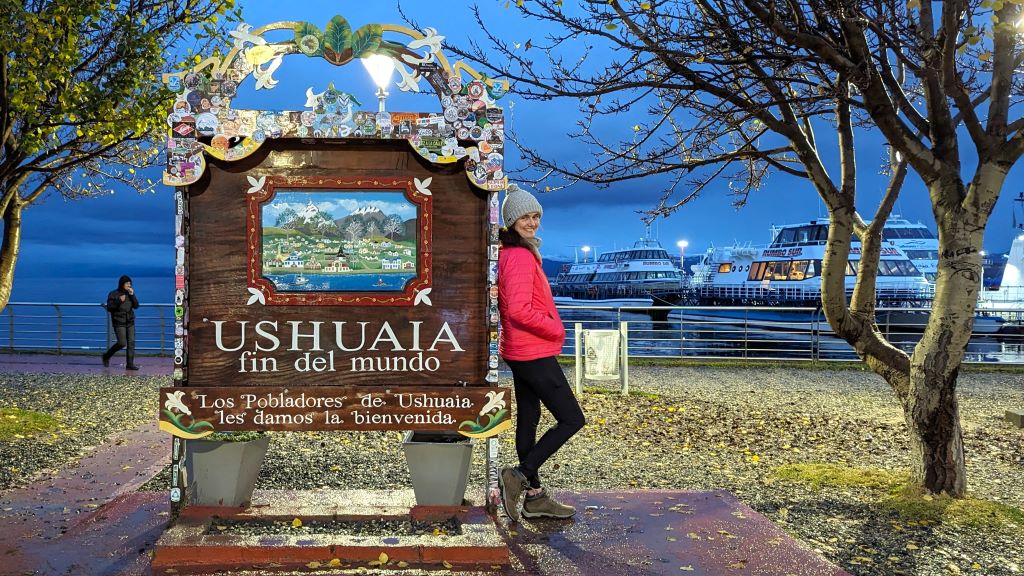
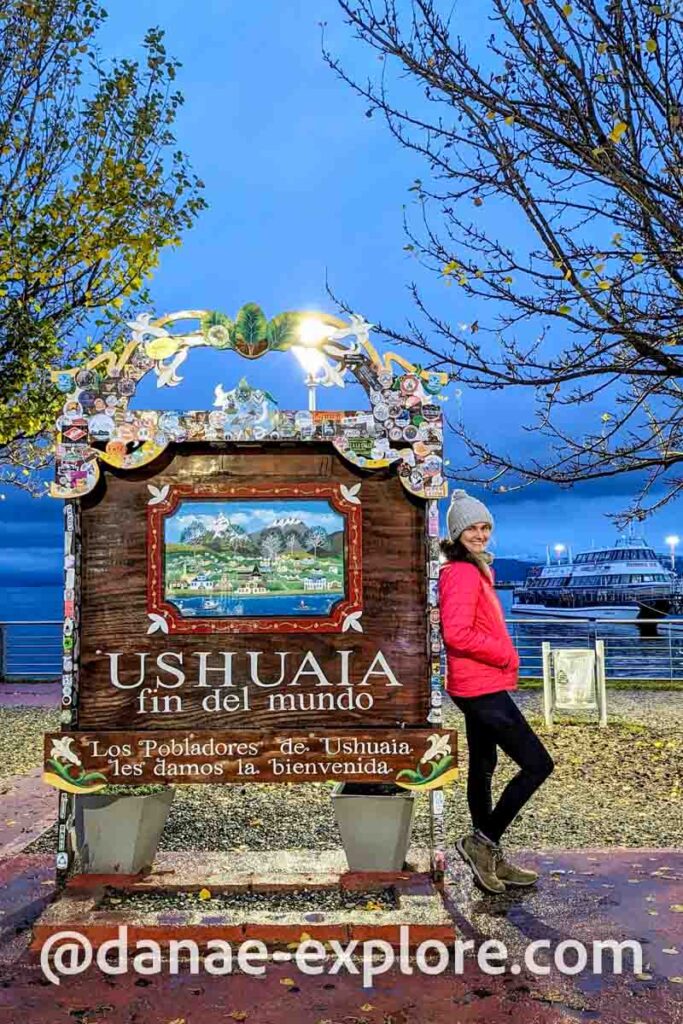
After checking in at our apartment, we headed out into the cold for a walk around town, stopped for a coffee, and took the classic photo at the Ushuaia Fin del Mundo sign. The sign is located at the tourist pier, where you’ll find the tour operators offering boat trips along the Beagle Channel.
Since our first day was fairly relaxed — aside from the food, of course — I’m starting this four-day Ushuaia itinerary with our second day there. Sounds good?
.
.
Day 1: 4×4 Tour of Lakes and the Prison Museum
4×4 Tour Escondido and Fagnano Lakes
On our first full day in Ushuaia, we joined a 4×4 tour to Escondido and Fagnano Lakes. This was the only tour I booked in advance, with Antartur (although I left the payment until the day of the tour). Several other companies offer similar excursions, and you can also book them online if you prefer. Tours are usually done in small groups of 8 to 10 people, but on our day it was just the four of us and an Argentine couple.
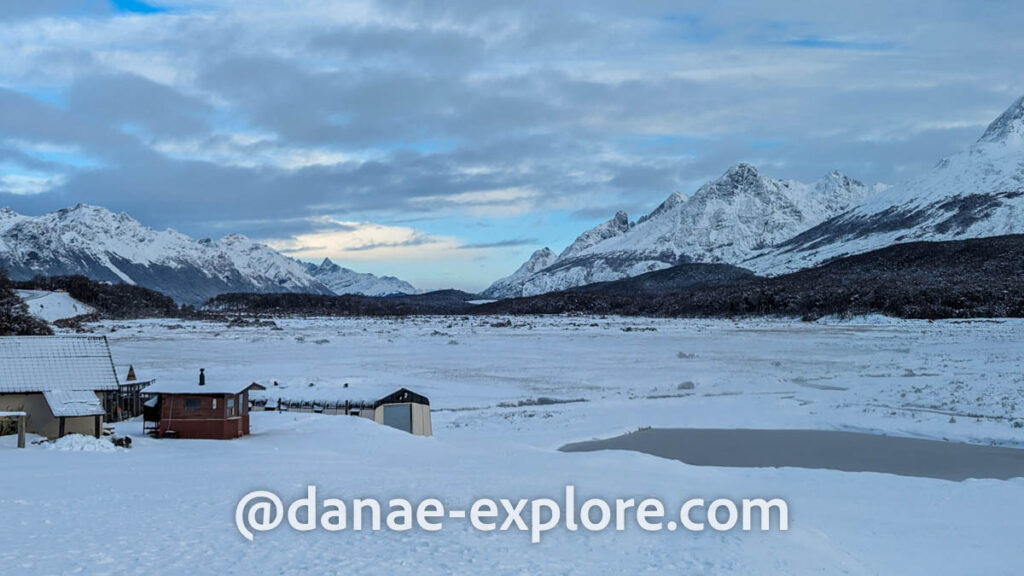
Our guide picked us up from the apartment early in the morning, and we followed Route 3 to our first stop: a coffee break at Centro Invernal Tierra Mayor (Tierra Mayor Winter Center). Everything was covered in snow, and the kids were thrilled.
.
.
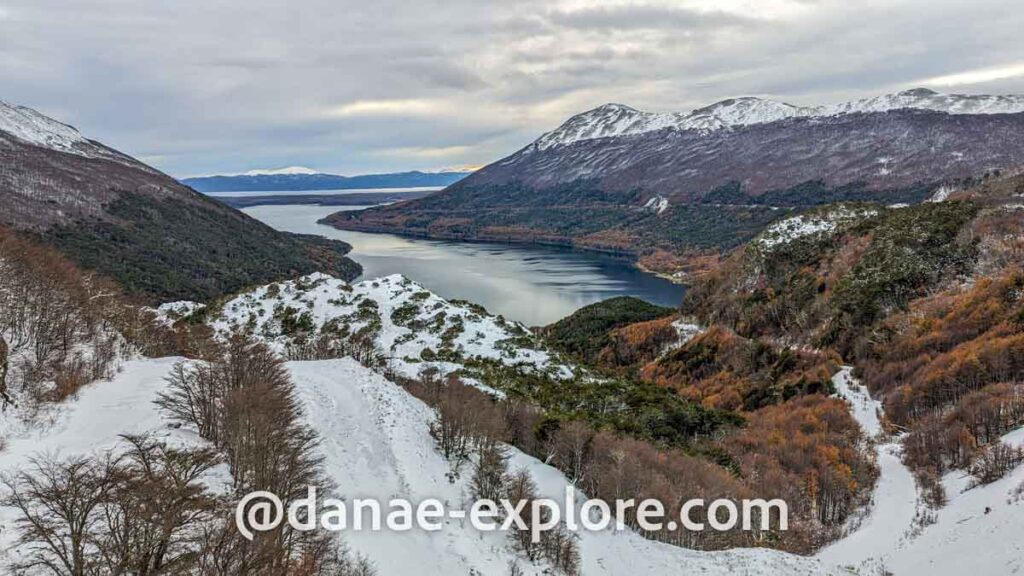
We continued along the road to Paso Garibaldi, the highest point on Route 3, which marks the point where the Andes in Tierra del Fuego shift from running north-south to east-west. Garibaldi Pass sits 450 meters above sea level and, as our guide explained, in this region (and at this time of year), the temperature drops by 1°C for every 100 meters of elevation gain. So be prepared for cold temperatures and strong winds: this was definitely the coldest stop of the day for us.
At the pass, there’s a viewpoint with beautiful views over our two main destinations: Escondido and Fagnano Lakes.
.
.
After a quick stop to enjoy the scenery, we headed back down and left the paved road behind, continuing along dirt roads until we reached Escondido Lake. The vehicle went as far as possible, and then we walked the remaining 200 meters to the lakeshore.
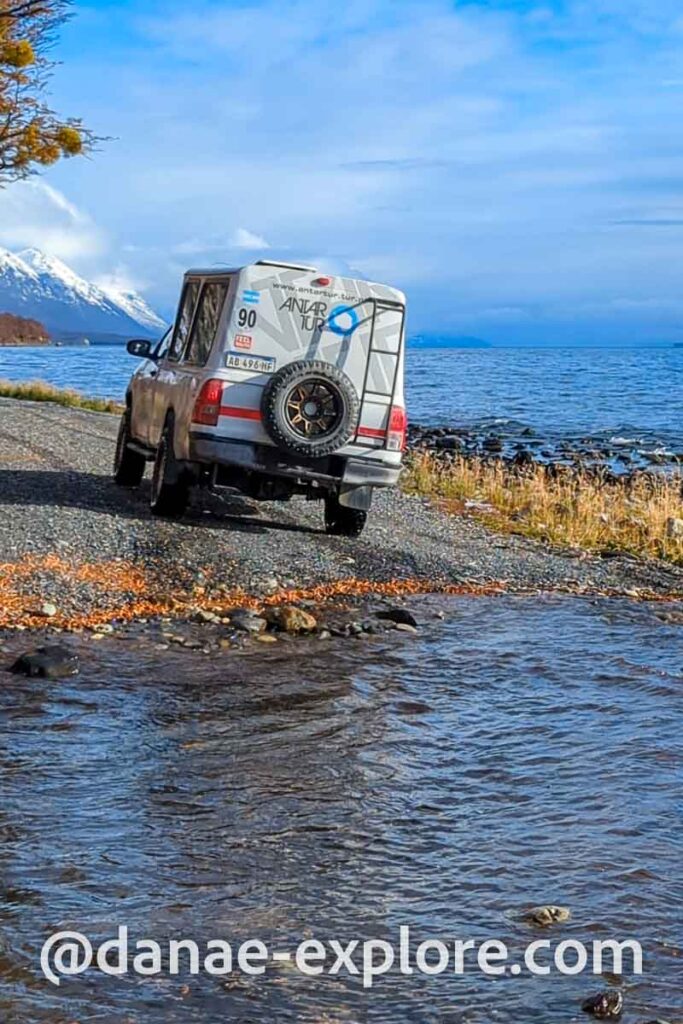
After spending some time by the lake, we got back into the car, and that’s when the real off-road fun started. The road quickly turned into mud, puddles, and rough terrain, with the vehicle bouncing and splashing the whole way. Needless to say, the kids absolutely loved it and felt like real explorers in the forests of Tierra del Fuego.
.

.
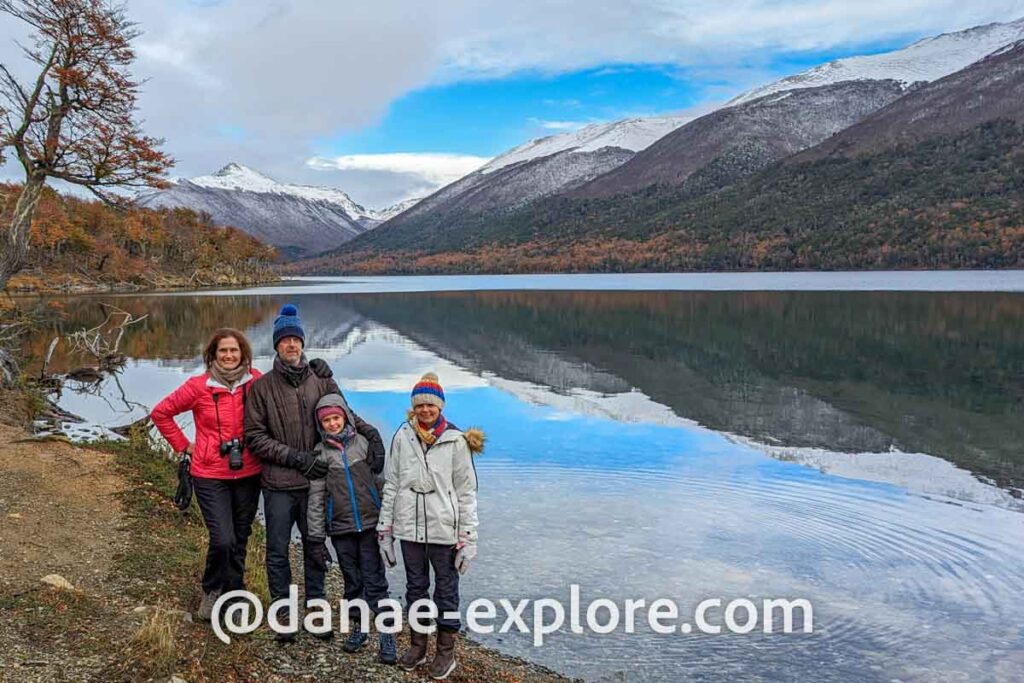
Finally, we arrived at Fagnano Lake, the largest lake in Tierra del Fuego and one of the most breathtaking landscapes of our trip. We drove along the edge of the lake, sometimes splashing through so much water it barely felt like a road, until we reached a beautiful picnic spot.
The return journey was much quicker. We got back onto the main road, crossed Paso Garibaldi again, and stopped at Husky Park and Refugio Nunatak, another centro invernal (winter center) located near Tierra Mayor.
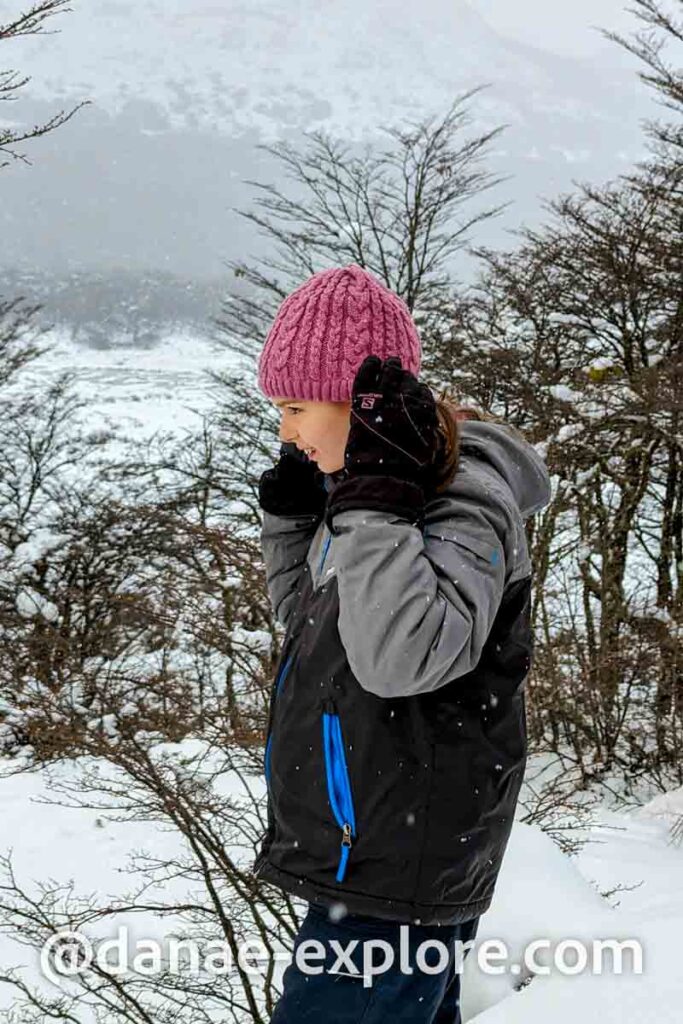
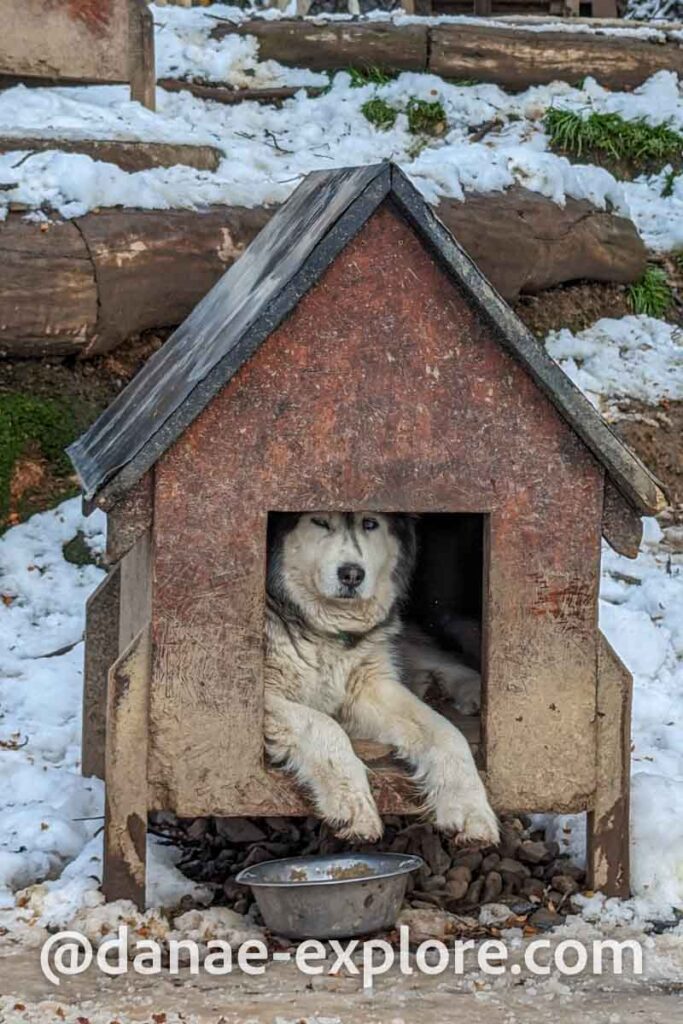
Needless to say, the kids absolutely loved Husky Park! There are dozens of dogs there, most of them Siberian Huskies (although there are other breeds too), and they’re all incredibly cute. The handlers explained how the dogs are trained, how they pull sleds, and even gave us a demonstration. Some of the dogs even came over for pets and cuddles, which made the experience even more special. During winter, visitors can also go on dog sled rides.
.
.
And just when we thought the day couldn’t get any better for the kids, it started snowing. It felt magical for my two girls — it was the first time they had ever seen snow falling.
After plenty of fun in the snow, we had lunch at Refugio Nunatak. The meal was excellent, with starter, main course, and dessert, and the portions were huge. After lunch, it was time to head back to Ushuaia.
.
Maritime Museum and Museum of the Ushuaia Prison
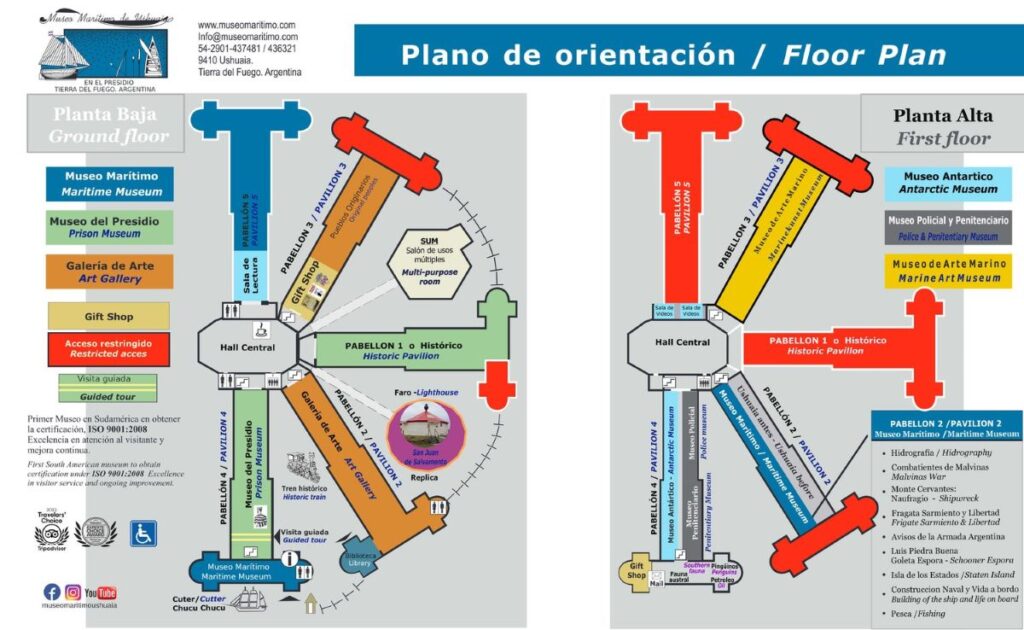
When visiting Ushuaia, don’t miss the Ushuaia Maritime and Prison Museum.
When we visited, the museum stayed open until 8 PM, which made it easy to fit into our itinerary after a full day of sightseeing. Set aside at least two hours for the visit. And if you run out of time, don’t worry: you can have your ticket stamped at reception and return within the next two days without paying again (although it’s always worth checking the official website for updated information).
The ticket includes guided tours in Spanish, and I highly recommend joining one if you understand Spanish. According to the museum’s website, English tours may also be available, so it’s worth asking. I joined the guided tour both times I visited, and the stories shared by the guides are what really make the visit special.
.
.
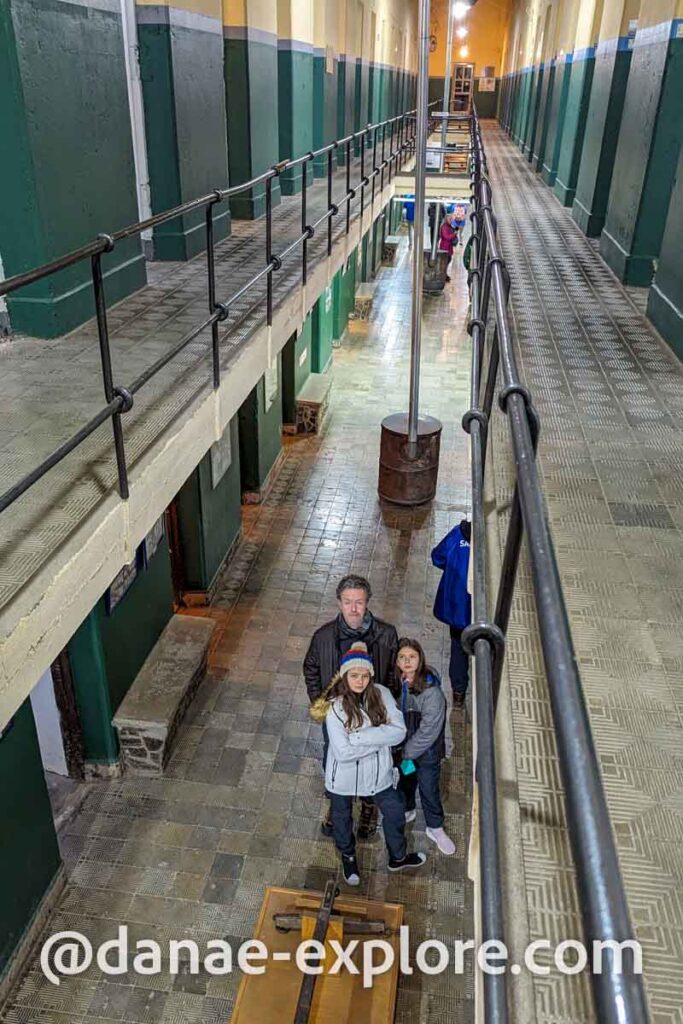
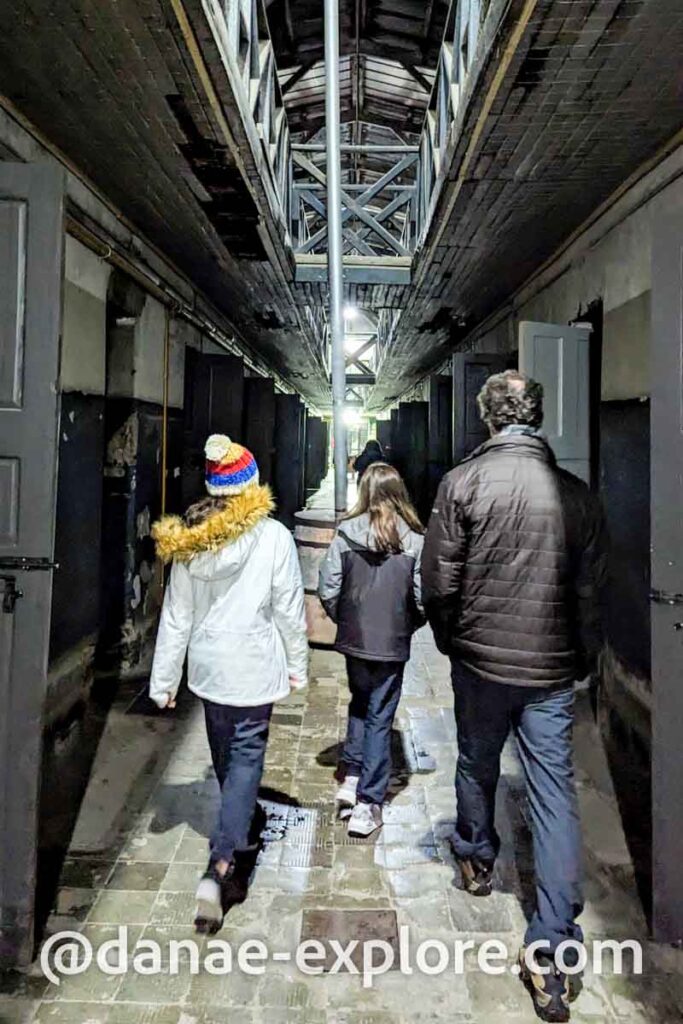
As the name suggests, the museum is housed inside the old prison that operated in Ushuaia from 1904 to 1947. As you walk through the corridors, you can visit restored cells that show what life was like for prisoners sent to the “end of the world” and how the town itself developed around the prison.
The prison was built with five wings spreading out like spokes from a central courtyard. One of those wings has been left exactly as it was when the prison closed in 1947, and it’s fascinating to see.
.
.
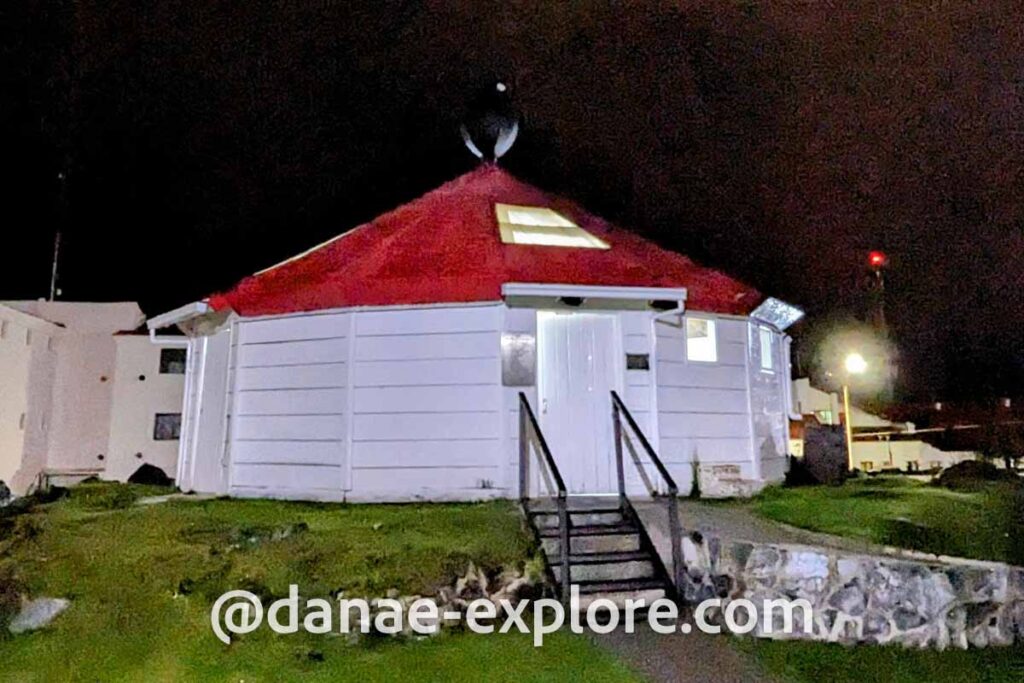
Another highlight of the Prison Museum is the full-size replica of the famous Lighthouse at the End of the World. Built in 1884 on the remote Isla de los Estados, the San Juan de Salvamento Lighthouse inspired Jules Verne’s famous novel, although it operated there for only a short time because of the harsh conditions in the area.
The museum also has sections dedicated to Argentina’s maritime history, Antarctic expeditions, and temporary art exhibitions.
.
.
Day 2: Tierra del Fuego National Park and End of the World Train
Tierra del Fuego National Park
We spent our second day in Ushuaia exploring Tierra del Fuego National Park, a must-see for anyone visiting the region.
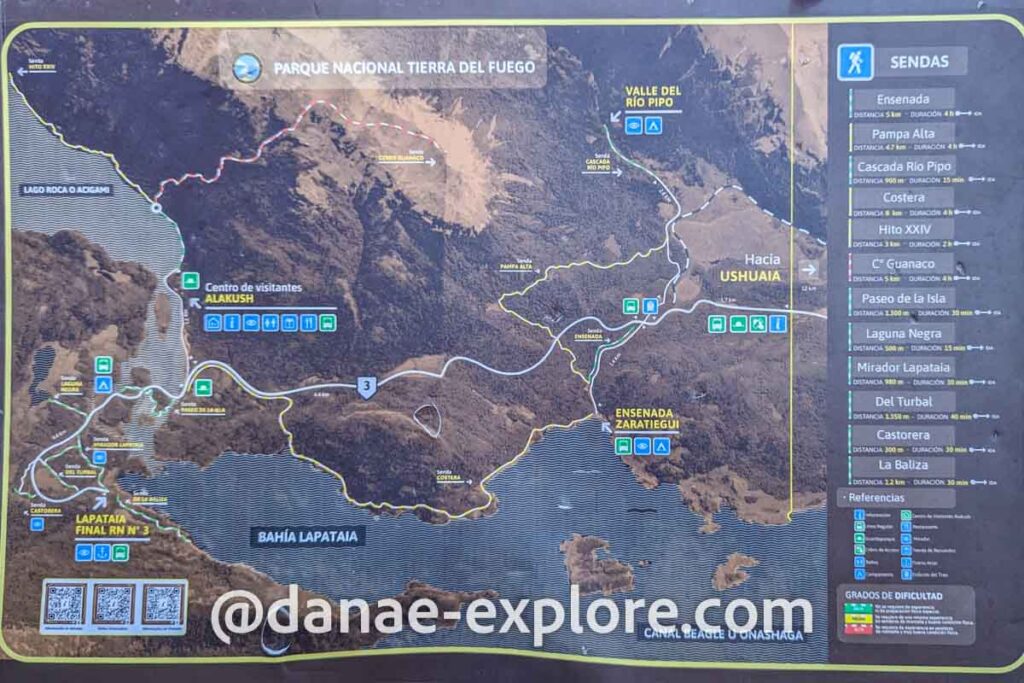
After all, this is where the Pan-American Highway comes to an end, at Lapataia Bay, along Argentina’s Route 3. It’s possible to drive here from Prudhoe Bay on Alaska‘s Arctic coast, aside from the small gap between Panama and Colombia. From here onward, the only way to continue south is by boat. Ushuaia is about 1,000 km from Antarctica.
The entrance fee for foreign visitors is ARS $40.000. You can explore the park independently, as we did, or join a guided tour that may also include a ride on the End of the World Train.
.
.
Tierra del Fuego National Park spans a vast area, reaching all the way to the Chilean border and has several beautiful viewpoints and hikes worth exploring.
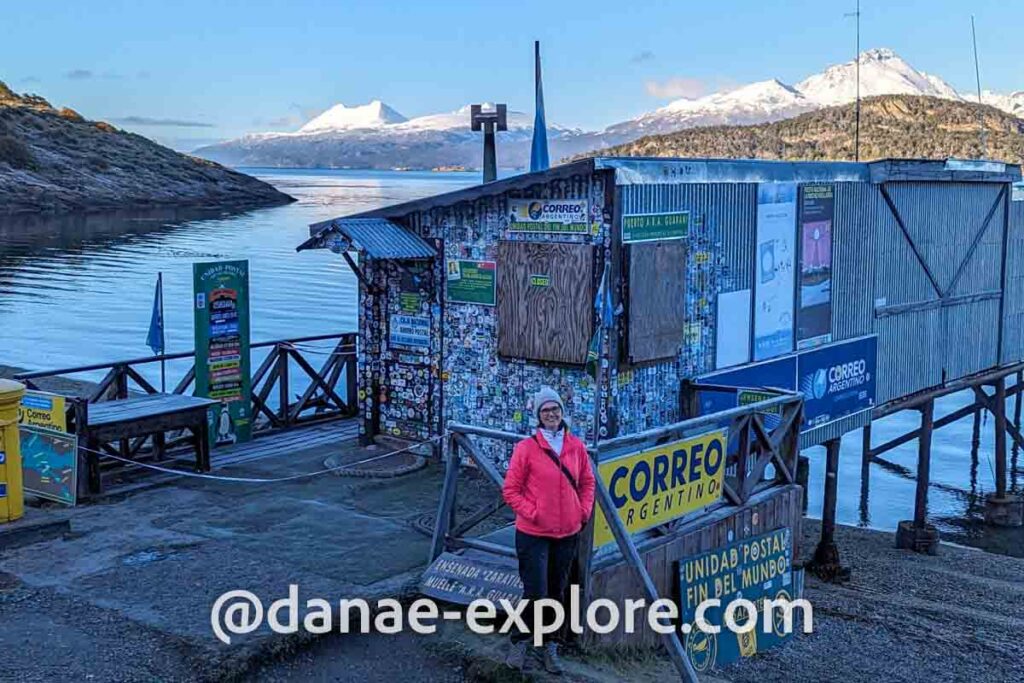
One of the park’s highlights is the End of the World Post Office, in Zaratiegui Cove. They say it’s a functioning post office, but when I visited on a Monday morning, it was closed. As someone who grew up in the 1980s eagerly waiting for the mailman, sending a postcard from the end of the world would have been such a nostalgic experience.
.
.
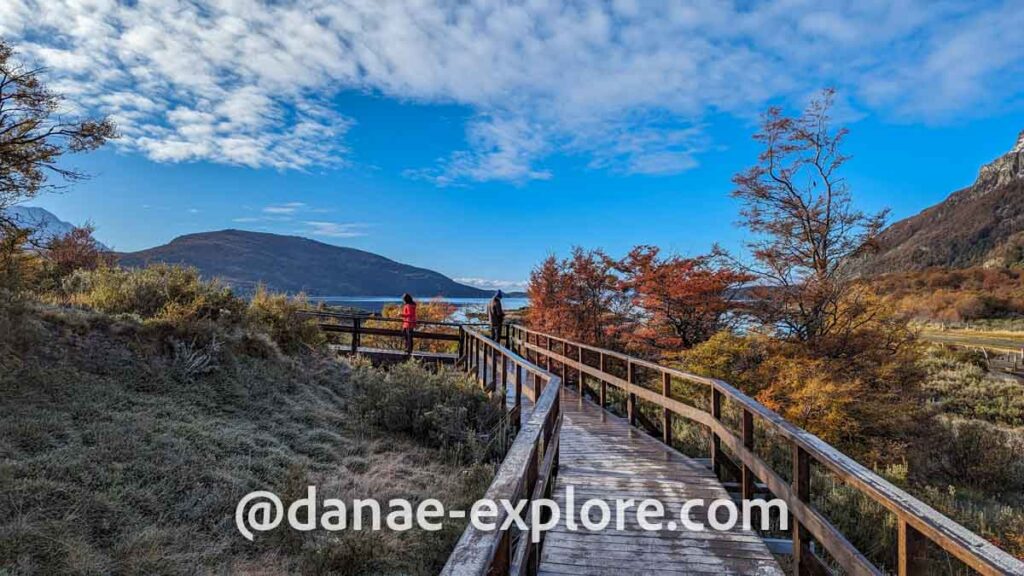
Another unmissable stop is Lapataia Bay, literally the end of the road. Wooden walkways lead to the bay’s shore, and several trails start from this spot, including one that extends all the way to the Chilean border (I hiked this one during my first visit to Ushuaia).
Nearby, you’ll find the Turbal, Mirador Lapataia, and Laguna Negra trails. These are short, flat, and very easy walks that are well worth doing. We also started the Paseo de la Isla trail, which is equally easy and offers stunning views.
The Alakush Visitor Center, located within the park, has a simple restaurant, though it’s a bit pricey for what it offers. Still, if you didn’t bring snacks, it’s your best option for a meal.
.
.
End of the World Train
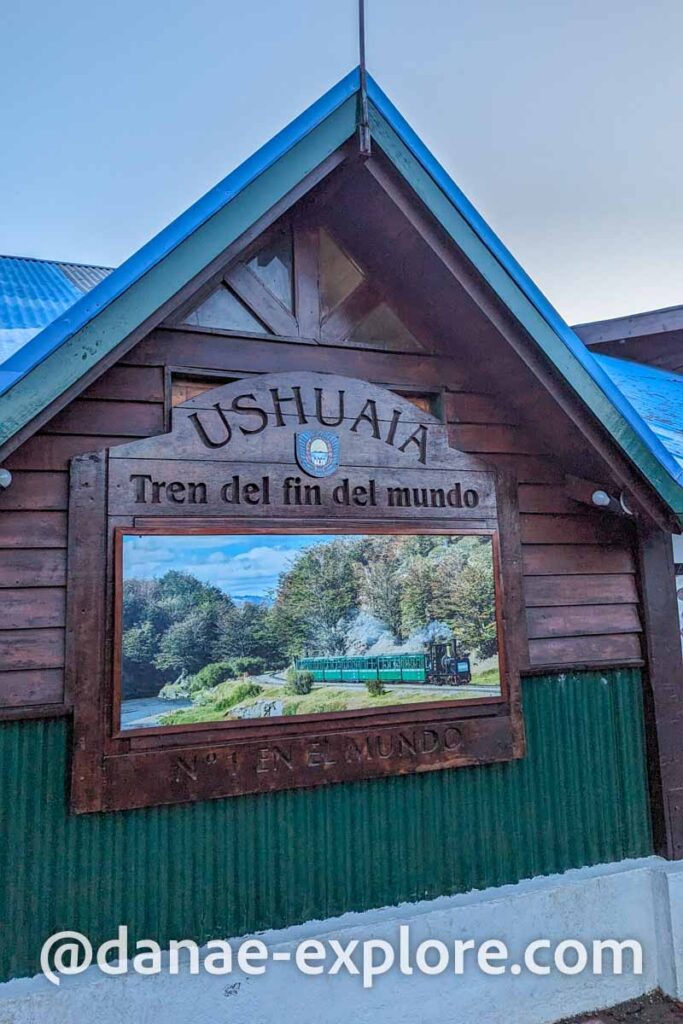
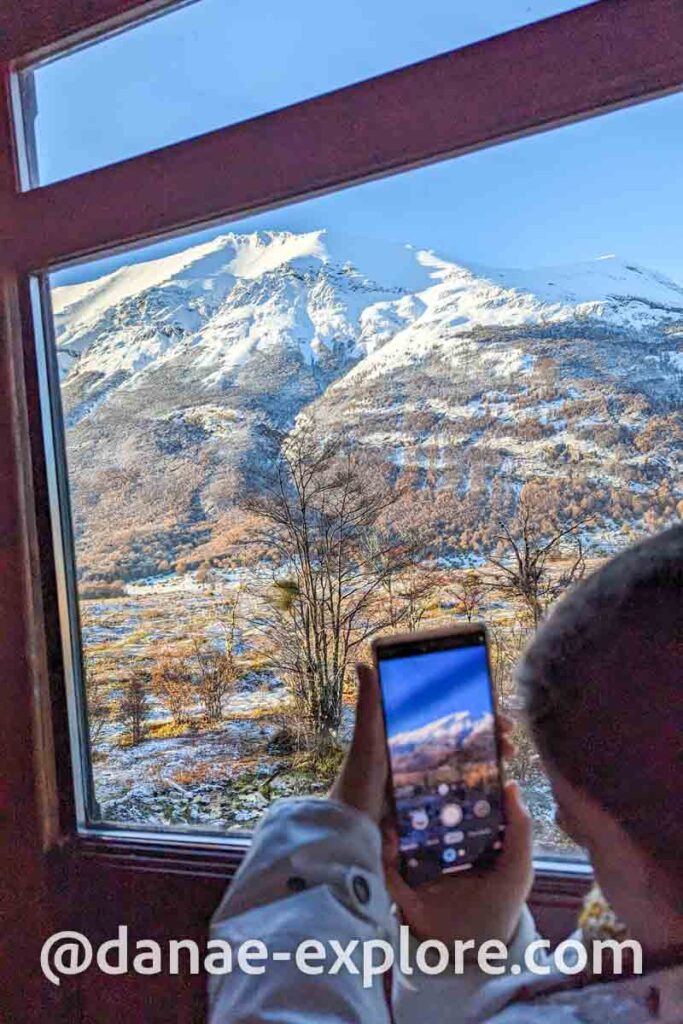
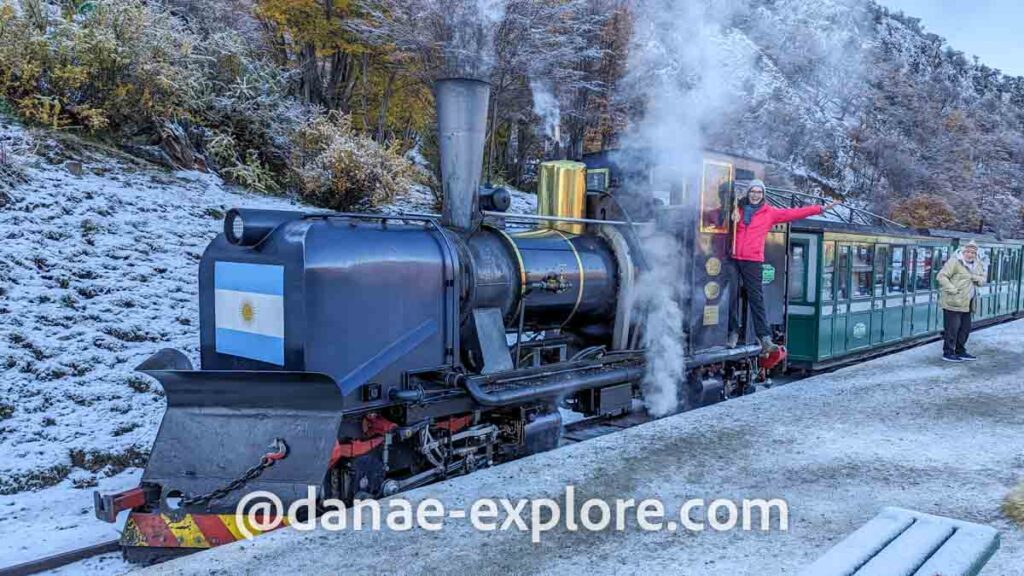
We also took a ride on the End of the World Train. It’s a pleasant experience, especially suited for small children or people with mobility issues. However, to be honest, I found it overpriced and not particularly different from what we had already seen in the rest of the park. Throughout the journey, there’s an audio narration explaining the history of the railway, which was the most interesting part of the ride (although much of this story had already been covered at the Presidio Museum).
The End of the World Railway was originally built by prisoners to transport materials for constructing the prison and the town — primarily stone, sand, and firewood, including the firewood used to heat the homes of Ushuaia’s residents. Back then, the railway connected the park area to the town, but today only the section within the National Park remains operational.
The ride costs ARS $62,000 (around USD 60 at the time of our visit), which I thought was quite expensive. I wouldn’t do it again.
.
.
The train’s departure station, Estación Fin del Mundo, is located outside the park, while its final stop, Estación Parque Nacional, is inside the park. Keep in mind that you’ll need a valid park entrance ticket to take the ride.
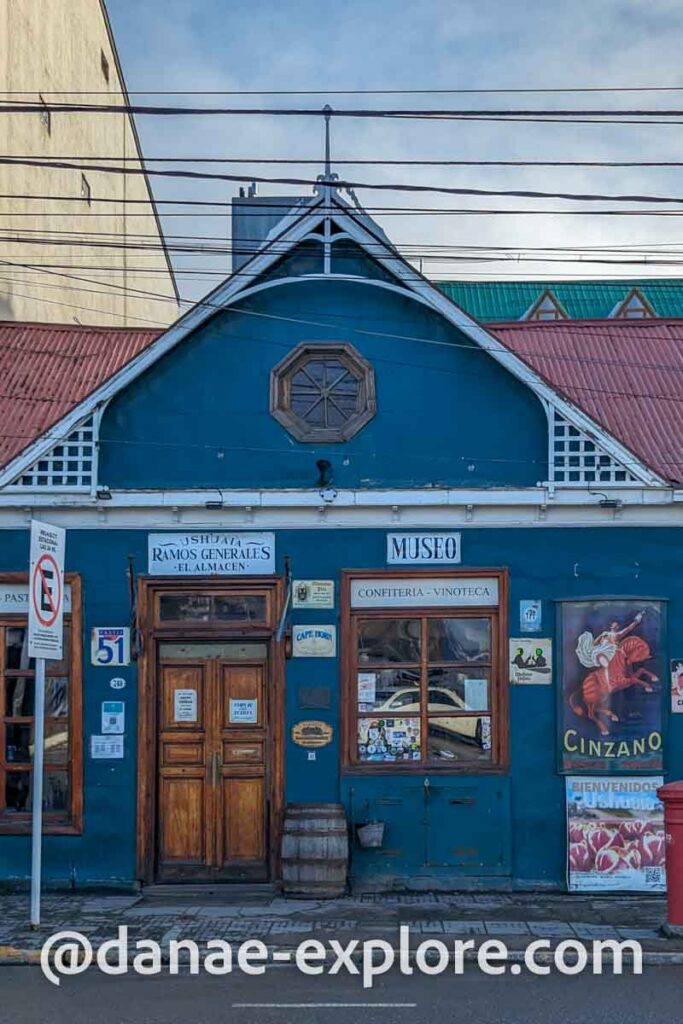
On our way back to Ushuaia, we had dinner at Almacén Ramos Generales, one of the oldest restaurants in town. It’s definitely worth stopping by, even if it’s just to try an empanada or sip a beer served in a penguin-shaped mug. I ordered merluza negra (black hake), one of Ushuaia’s signature dishes — and I could easily eat it five times over!
.
.
Day 3: Sailing the Beagle Channel and Exploring Martial Glacier
Boat tour on the Beagle Channel
I couldn’t have asked for a better birthday celebration: a boat tour along the Beagle Channel.
This is one of the quintessential tours in Ushuaia, a must-do for anyone visiting the town.
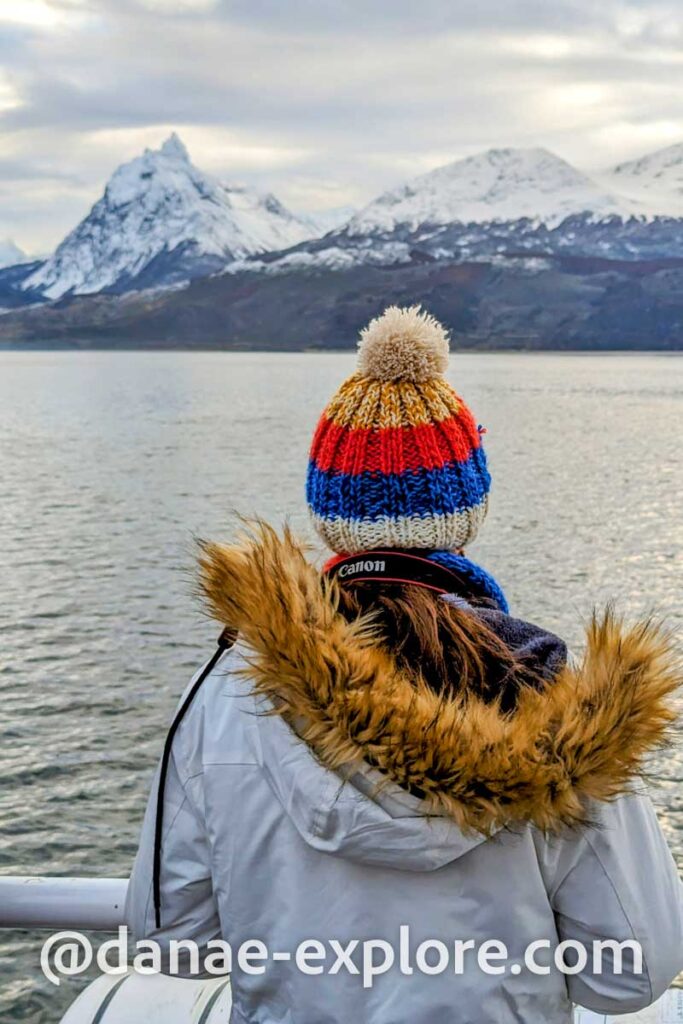
The Beagle Channel separates the main island of Tierra del Fuego from the smaller islands of the archipelago. It’s famous for being the route Charles Darwin traveled in 1833 aboard the HMS Beagle, commanded by Captain FitzRoy, during the voyage that forever changed the course of science.
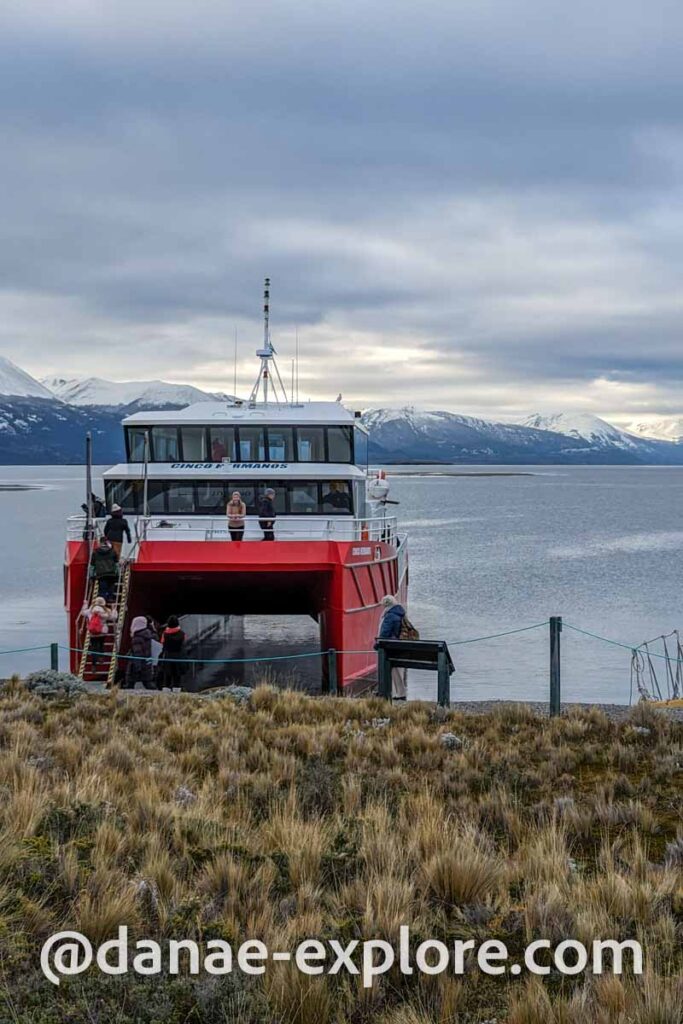
We booked our tour with Canoero Catamaranes, though several other companies offer similar tours. We bought our tickets the day before at the tourist pier, which was conveniently located across from both the port and our apartment. If I remember correctly, the cost was around USD 40 per adult.
.
.
The tour lasts about three hours and sails along the Beagle Channel to Les Éclaireurs Lighthouse before returning to the starting point.
There are two main stops before reaching the lighthouse.
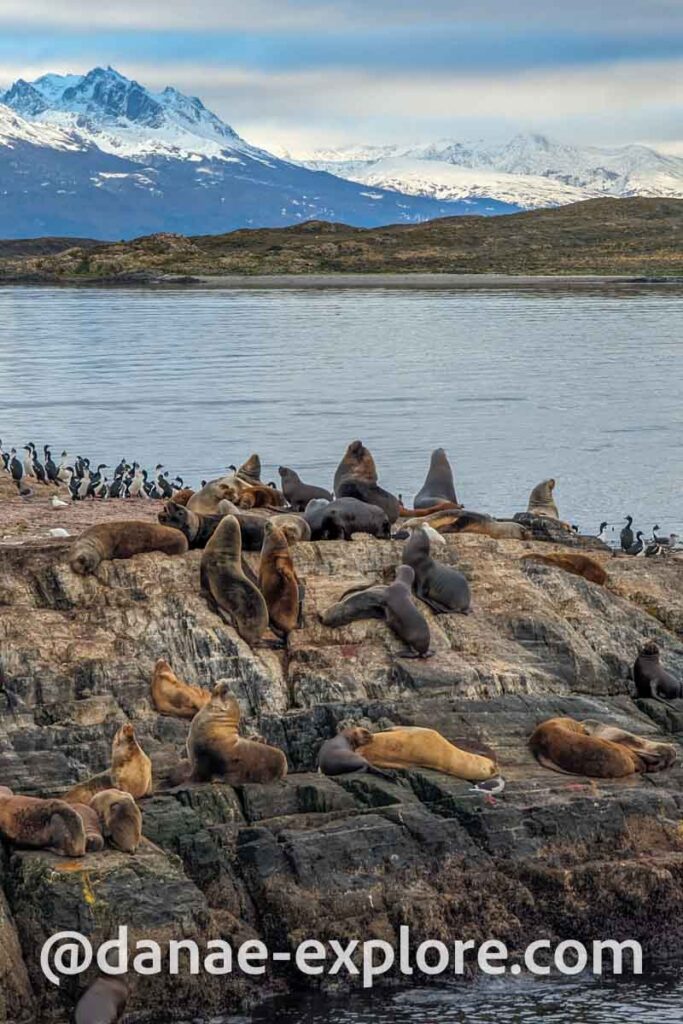
The first stop is at an island full of sea lions and birds, mostly cormorants. These birds resemble penguins but are actually more closely related to pelicans. The boat gets very close to the rocky island, giving us an excellent view of the wildlife. We spent some time watching the sea lions, including adorable pups awkwardly swimming around and doing the funniest and cutest things.
.
.
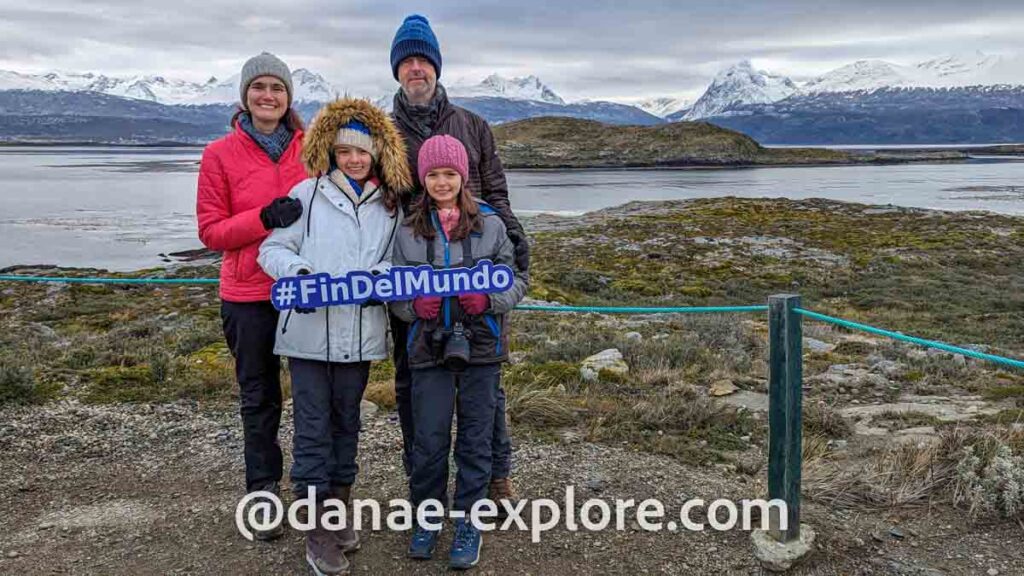
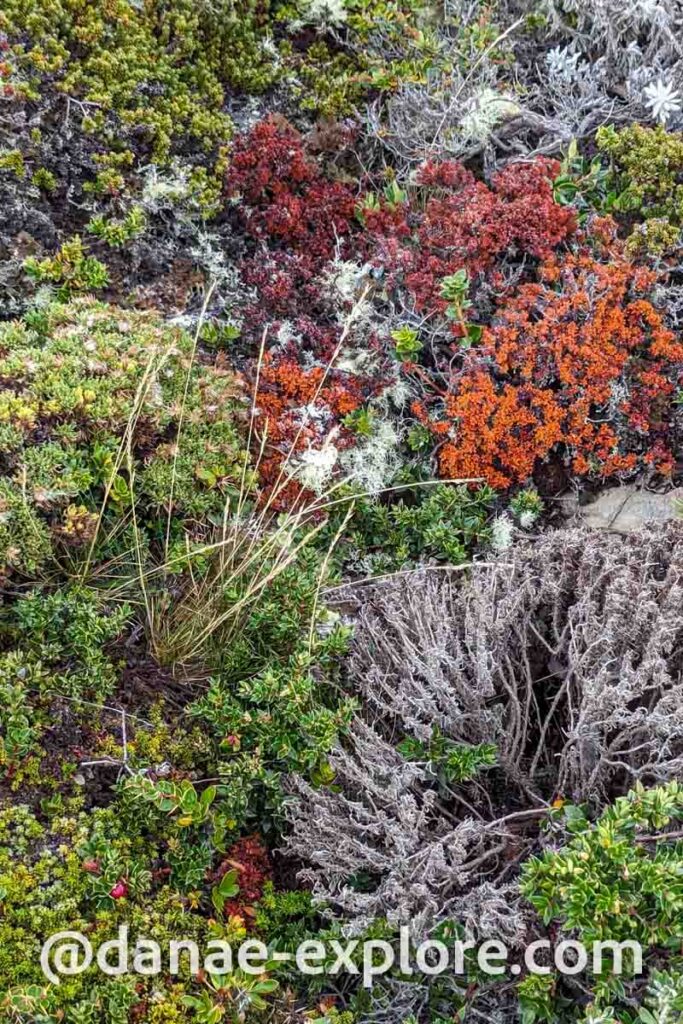
Our next stop was Bridges Island, where we got off the boat for a short walk to a scenic viewpoint. The island was once home to the native Yaghan people, and signs along the trail share interesting details about their history.
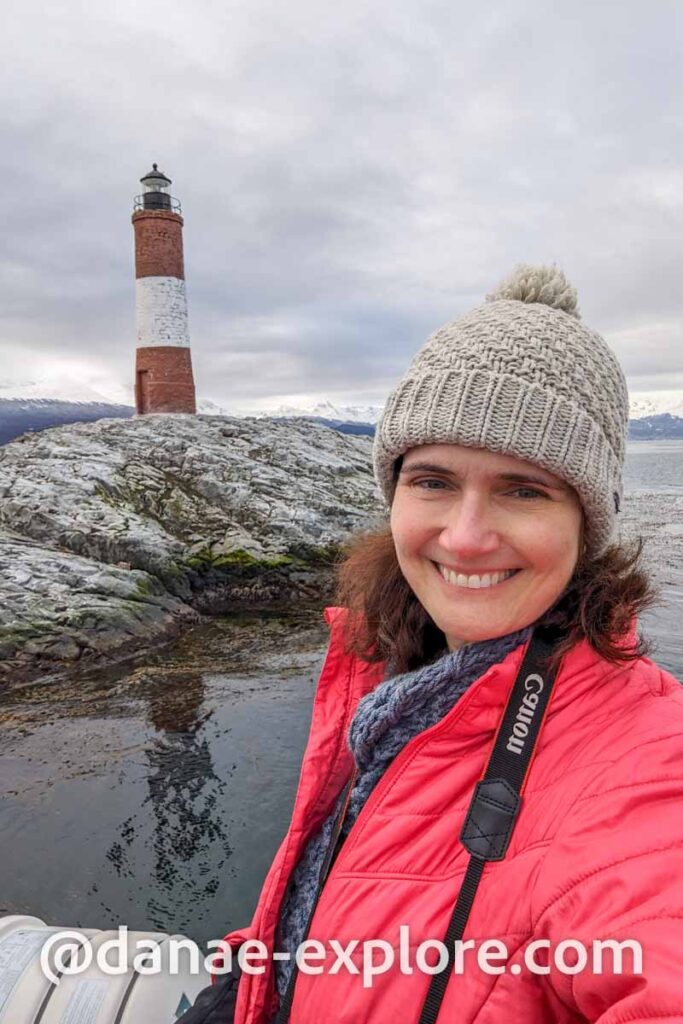
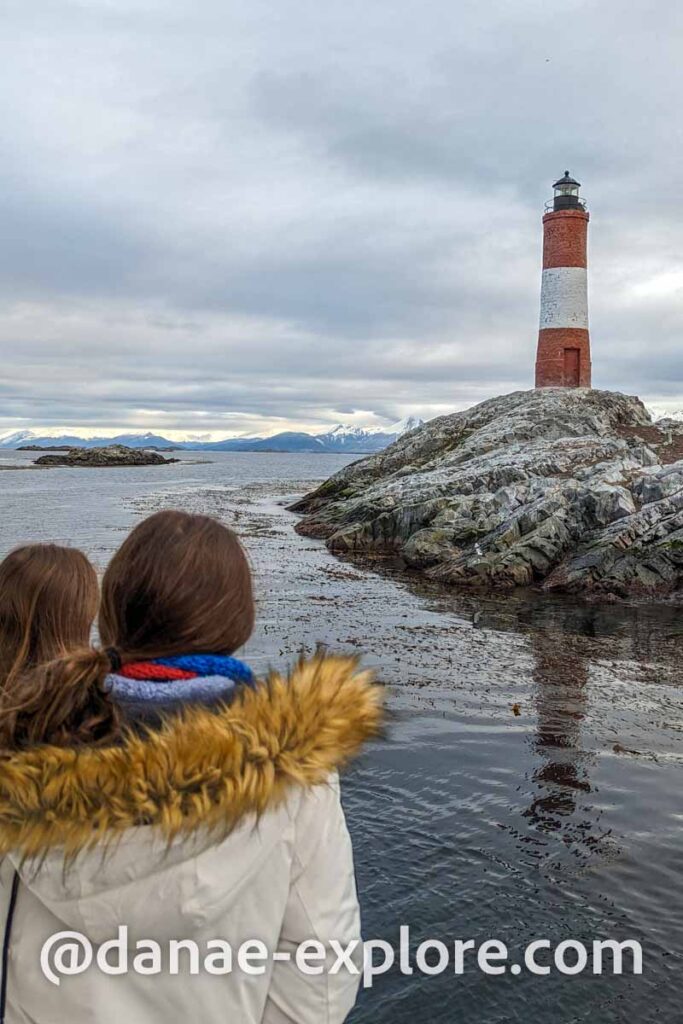
After about twenty minutes on Bridges Island, we continued toward our final destination: Les Éclaireurs Lighthouse, often called the “Lighthouse at the End of the World.” I immediately headed to the bow of the boat to try to get the perfect photo, while my husband and daughters stayed inside, trying to escape the freezing wind and the -7°C wind chill.
.
.
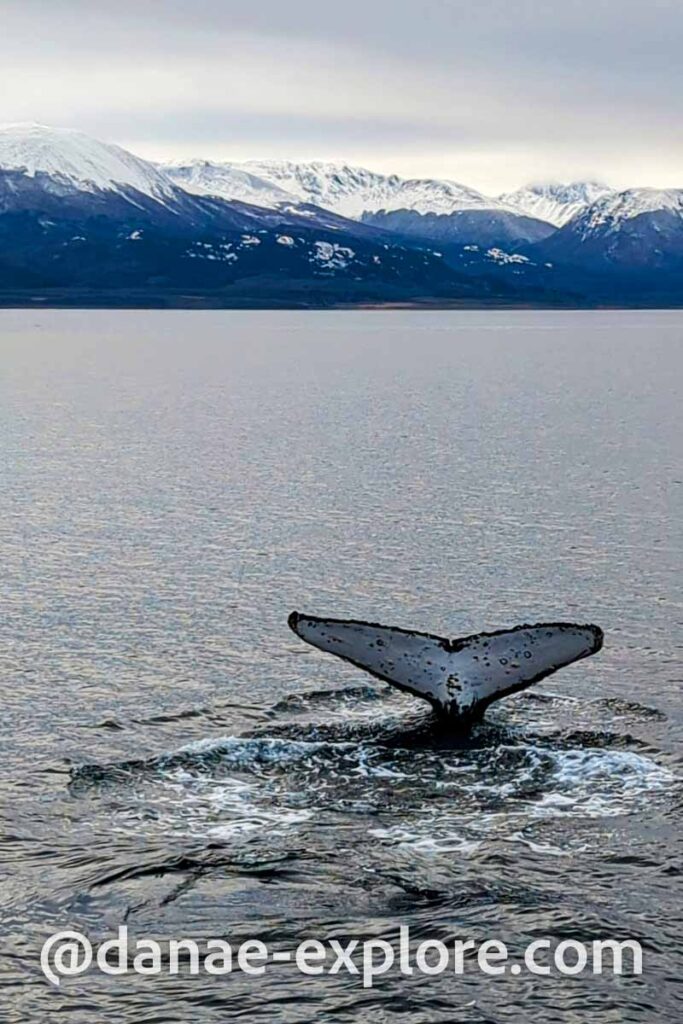
Then, completely out of nowhere, the boat stopped in the middle of the channel and the engines were turned off. For a second, I thought, “What the f… is happening?”, when suddenly three humpback whales appeared right in front of us.
For the next ten minutes, these magnificent animals put on a show just for us, with no other boats around. It felt magical. Whale season in Ushuaia usually runs from June to October, so seeing them in April was completely unexpected — the perfect birthday surprise.
At that point, the lighthouse became secondary, especially since I had already visited it before. But for my daughters, it was their first time there, just proving that no two visits to the same place are ever exactly alike.
In summer, the Beagle Channel tours also include a stop at an island home to a penguin colony. Penguin season runs from November to March.
.
.
Cerro Martial
After a quick lunch back in the town, we headed to Martial Hill, also known as Parque del Fin del Mundo (did I mention how everything here seems to scream “end of the world”?).
Cerro Martial is home to a glacier inside a protected area. In winter, it turns into a winter sports area with alpine skiing and snowboarding. It’s also a popular spot for hiking up to the glacier.
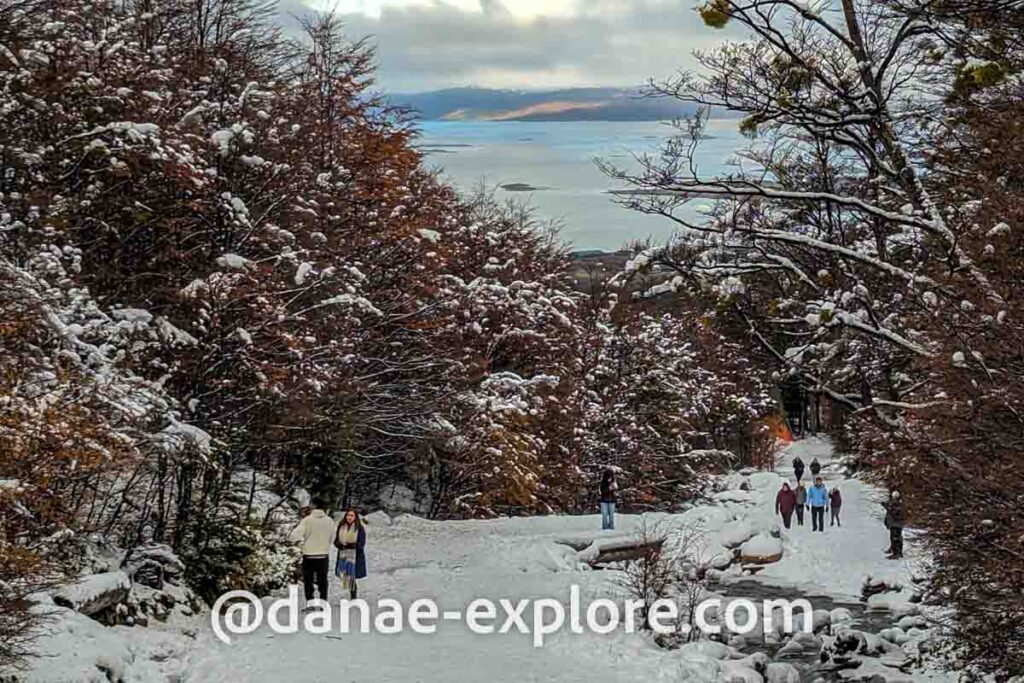
We visited in April, before the official winter season, so although the area was open and free to access, none of the infrastructure was operating yet. We parked at the entrance and started hiking up the snow-covered mountain.
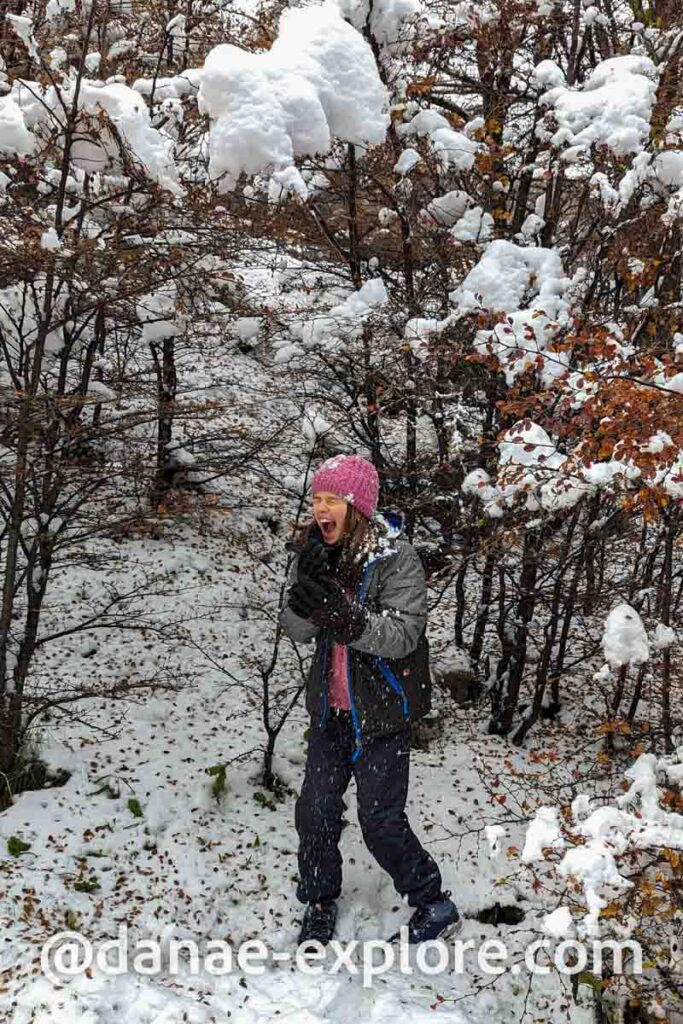
As we climbed higher, we reached a point (I’m not sure how close we were to the top) where it started snowing heavily. It was real, thick snow — the kind my kids had never seen before. They were ecstatic! They stopped right there to play in the snow, laughing and having fun while the snow kept falling around them. Eventually, wet gloves and soaked pants became too much, and we reluctantly headed back down despite their protests.
.
.
Day 4: Emerald Lagoon and farewell to the end of the world
Our last day in Ushuaia was supposed to include one of the activities I had been most excited about: trekking to Lagoa Esmeralda (Emerald Lagoon). It’s a tour I missed on my first trip to Ushuaia and, sadly, I missed it this time too.
Originally, our return flight to Buenos Aires was scheduled for 5 PM, but Aerolíneas Argentinas changed it to 2 PM. If it had just been the two of us adults, I probably would have considered waking up extremely early to try to fit in the hike. But with kids, it didn’t seem worth the risk with such a tight schedule. We decided to save it for our next visit — because yes, I’m absolutely sure we’ll return to the end of the world.
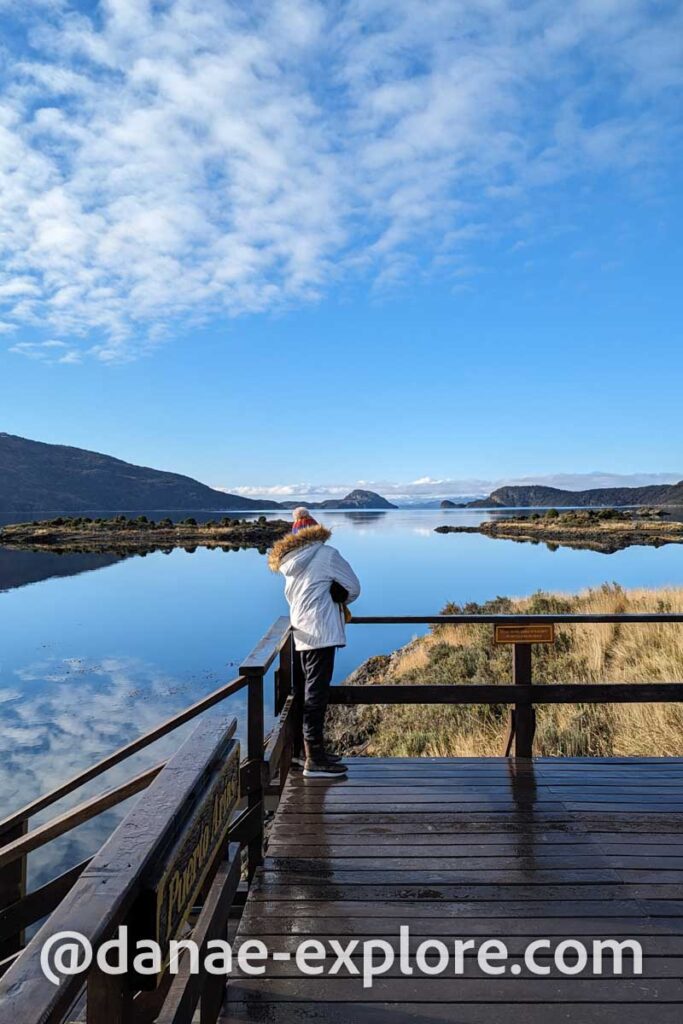
Instead, we spent our last hours in Ushuaia enjoying a slow morning in town. We started with a wonderful breakfast at Café El Recreo, strolled along Av. San Martín, visited the town signs, took a few dozen more photos by the Beagle Channel, stopped for ice cream and coffee, and simply enjoyed a relaxed vacation morning. It was the perfect way to say goodbye to Ushuaia, the magical town at the end of the world.
.

.
Other things to do in Ushuaia
For my next trip to Ushuaia, I’ve already added a few tours to my must-do list:
- trekking to Lagoa Esmeralda – This trail starts about 18 km outside Ushuaia. The hike is well-marked and moderately challenging, covering about 9 km round trip. It usually takes around five to six hours, with beautiful views of the lagoon at the end.
. - visit Estancia Harberton – Established in 1886, Harberton Ranch was the first productive enterprise in Tierra del Fuego. Today, it offers a tour that blends history, science, nature, and gastronomy. It also provides accommodation for those looking to stay overnight.
. - trekking to Vinciguerra Glacier – One of the most remarkable glaciers in Ushuaia. The trail is moderately challenging and can be done independently. However, if you want to explore the glacier itself, joining a guided tour is highly recommended. The trek covers about 10 km, and it’s best to allow around nine hours for the full experience.
.
.
Map of our Ushuaia itinerary
Our four autumn days in Ushuaia are mapped out below. Just click on the link to save it to your Google account — it’s the perfect starting point for planning your next trip to Ushuaia 😉
How to use this map: Click the menu tab in the upper left corner of the map to access different layers, including points of interest and routes. You can toggle layers on and off by checking the corresponding boxes. To see details about specific locations, click on the icons on the map.
To save this map to your Google Maps account, just click the star icon next to the map title. To access it later on your phone or computer, open Google Maps, tap the menu button, go to “Your Places”, select “Maps”, and you’ll find this map saved there.
Here are the websites I always use to plan my trips:
– 🛌 Accommodation: Booking
– ☀️ Tours & activities: Civitatis & Get Your Guide
– 📱 eSIM for mobile data: Airalo e-SIM – use promo code DANAE2375
– 🚗 Car rental: RentCars – use promo code DANAE, or DiscoverCars
.
Check out all our posts about traveling in Argentina and Chile:
- El Calafate and Perito Moreno Glacier – the best of Argentinan Patagonia
- The best of Ushuaia – A 4-day itinerary for spring and autumn
- Northern Argentina: complete 10-day itinerary through Salta and Jujuy
- Torres del Paine photographic expedition – Chilean Patagonia
.
Here are our posts about other destinations in South and Central America:
Guatemala
Colombia
- The best of Colombia – 12-day itinerary
- What to do in 3 days in Bogotá
- What to do in Cartagena de Indias – Colombia
- How to visit Tayrona National Park – the most beautiful beaches in mainland Colombia
Chile
Belize
- One week in Belize: a perfect itinerary for first-time visitors
- What to do in Belize: the best of San Ignacio, Caye Ambergris and Caye Caulker
.
Did you like these tips? Then follow me on social media:
Instagram @danae_explore
Pinterest @danaeexplore
Comments or questions? Contact me on social media! I love to chat about travel 😉
And before you go, don’t forget to SAVE THIS PIN to your PINTEREST account for easy access to this post on what to do in Ushuaia in 4 days whenever you need it!