Kyoto was one of the last stops on our four-week adventure in Japan. You know the saying, “save the best for last”? Well, that’s exactly what we did.
After soaking in the modern energy of Tokyo, exploring medieval villages, crossing the Japanese Alps, and letting Hiroshima‘s history sink in, we arrived in Kyoto thinking we already knew everything about Japan. What a mistake! Kyoto surprised us at every turn, with new experiences, surprises, and discoveries around every corner.
Our five days in Kyoto were filled with stunning temples, peaceful gardens, incredible food, and breathtaking landscapes, and they gave us a clear picture of what to do in Kyoto across every kind of day
First of all, follow me on Instagram @danae_explore – that’s where you can keep up with my trips, find lots of travel tips, and send me a DM anytime. I love chatting about travel!
In this post, I’ll share the best of it, all packed into a five-day Kyoto itinerary. You could easily fit everything into four days, as I’ll explain below. And if you only have three days, you’ll still get a great taste of Kyoto — enough to fall even more in love with Japan and start planning your next trip.

.
What to do in Kyoto in 5 days – overview
1️⃣ Arrival in Kyoto and Nishiki Market
2️⃣ Nanzen-ji Temple, Philosopher’s Path, Ginkaku-ji Temple and Kinkaku-ji Temple
3️⃣ Gion Matsuri Festival, Fushimi Inari Taisha Shrine, Tenryu-ji Temple, Arashiyama Bamboo Forest and Gion
4️⃣ Lake Biwa OR Nara, and Kyoto Tower
5️⃣ Kiyomizu-dera Temple, Hokanji Pagoda and Yasaka Shrine, and Nara (if not visited the day before)
We loved Japan so much that we were back before long, this time in winter: skiing in Sapporo, revisiting old favorites (hello again, Tokyo, Hiroshima and Kyoto), and adding some new ones like Kanazawa and Himeji, as well as some day-trips from Tokyo we haven’t done before. Check it all out here on the blog or over on Instagram.
.
Day 1 – Arrival in Kyoto and Mibubojocho Area and Nishiki Market
We were in Hiroshima and our plans involved taking the Shinkansen to Quioto, with a stop in Himeji to visit the beautiful Himeji Castle. But plans change, and sometimes that’s a good thing — we decided to skip Himeji (we had already explored the incredible Matsumoto Castle) and headed straight to Kyoto.
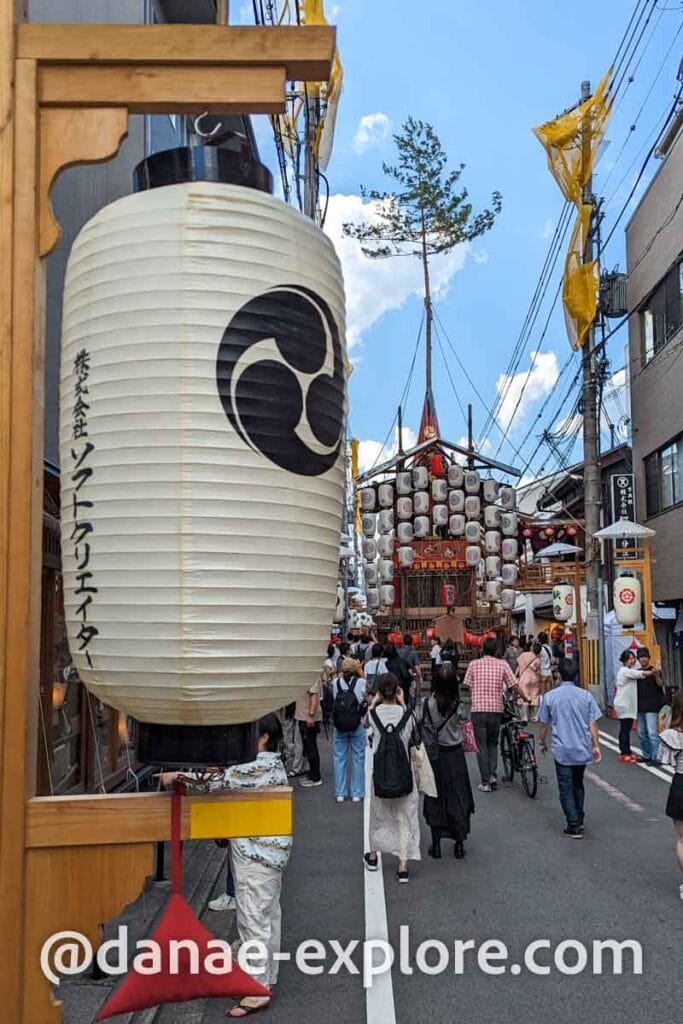
We arrived in Kyoto around lunchtime, checked into ORI Kyoto, and after grabbing a bite to eat, wandered around the Mibubojocho area. It didn’t take long to notice that something was going on in the city. It turned out to be preparations for Kyoto’s main festival, the Gion Matsuri, which takes place every July. The highlight of the festival is the Yamaboko Junko parade, where beautifully decorated floats make their way through Kyoto’s main streets.
As we strolled through the neighborhood, we came across several of these floats, richly adorned with tapestries and historical artifacts, each one tied to its own local traditions and legends. There were also plenty of food and drink stalls lining the streets, along with crowds of people enjoying the festivities.
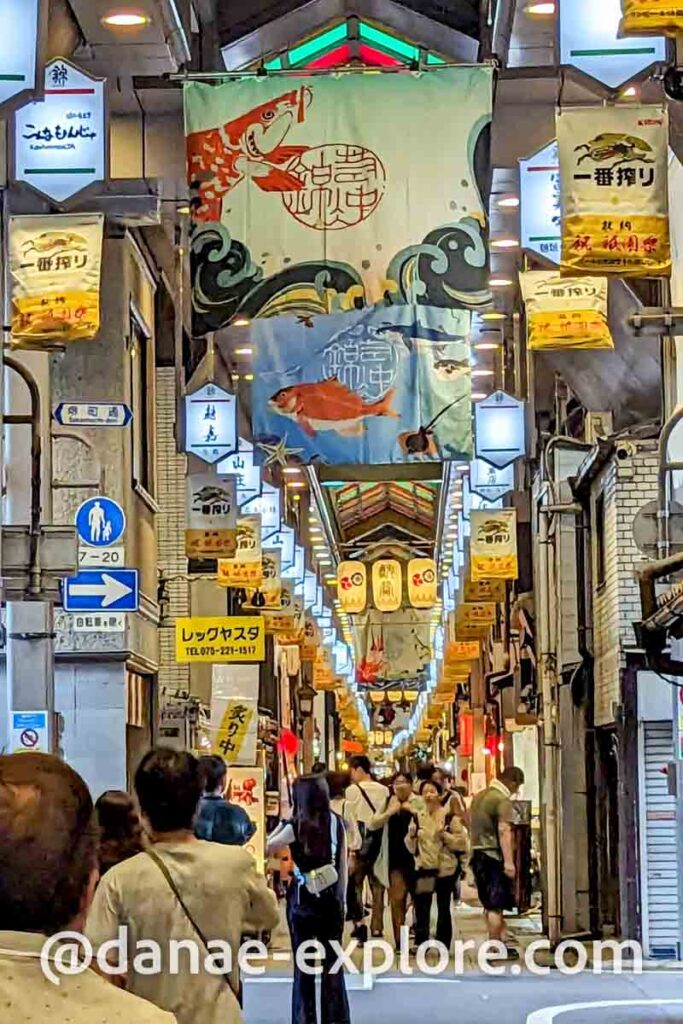
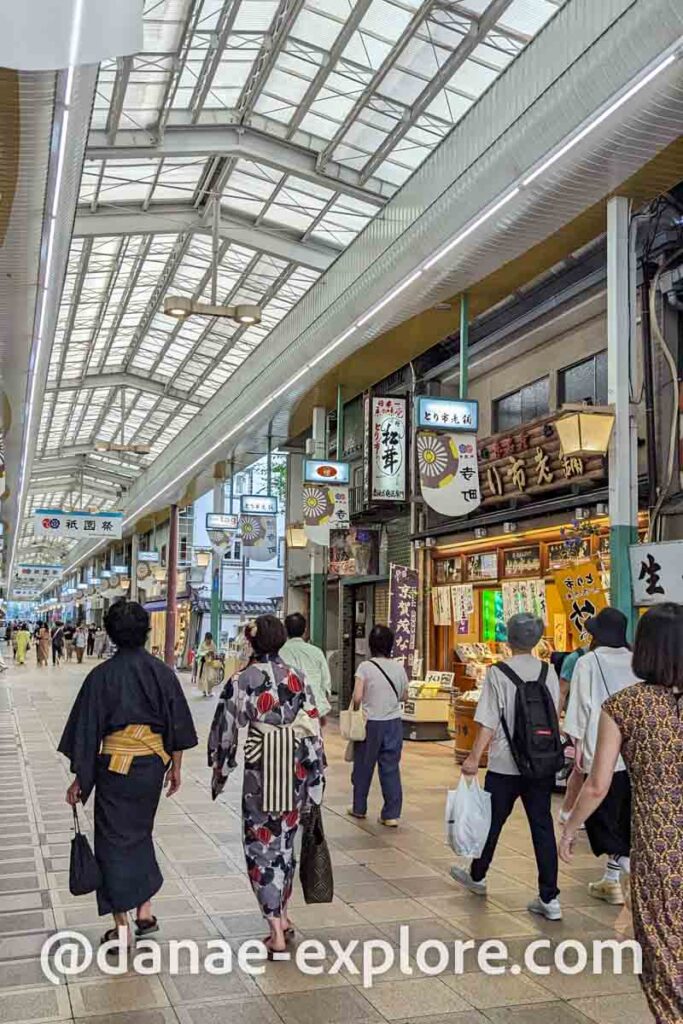
We ended the day exploring Nishiki Market, a network of narrow streets and covered arcades filled with all kinds of delicacies. If you’re nearby, it’s also worth checking out Teramachi Shopping Street, a bustling shopping arcade full of shops and restaurants..
.

.
Day 2 – Nanzen-ji Temple, Philosopher’s Path, Ginkaku-ji Temple, and Kinkaku-ji Temple
.
Nanzen-ji Temple and the Philosopher’s Path
Nanzen-ji Temple, one of Japan’s largest Zen complexes, is a standout for its grand architecture and tranquil gardens. Once the most important temple in the country, you might recognize the massive Sanmon Gate from the movie Lost in Translation. A short trail leads you to a historic aqueduct, well worth the short walk.
This is also where the Philosopher’s Path (Tetsugaku no Michi) begins — a charming path that runs alongside the Kamo Canal. It’s named after Kyoto University philosophy professor Nishida Kitaro, who walked this route every day in quiet contemplation. The path is lovely any time of year, but in spring it transforms into a tunnel of cherry blossoms. We visited in the summer and enjoyed a peaceful walk along the 2-kilometer trail, which took us around 30 minutes — a perfect escape from Japan’s intense July heat.
For lunch, we stopped at a small, unpretentious restaurant called Ikana, where I tried matcha noodles — delicious! The only place we came across them on the entire trip.
.
This is just the beginning, Japan has so much more to offer. Here on the blog, alongside our full 4-week itinerary from the first trip, you’ll find accommodation tips for Tokyo, day-trips from Tokyo, itineraries for Kyoto, Hiroshima and the charming post towns of Magome and Tsumago plus the Tateyama-Kurobe Alpine Route for those looking to get off the beaten path. If Japan is on your list, you already know where to start 😉
Ginkaku-ji Temple
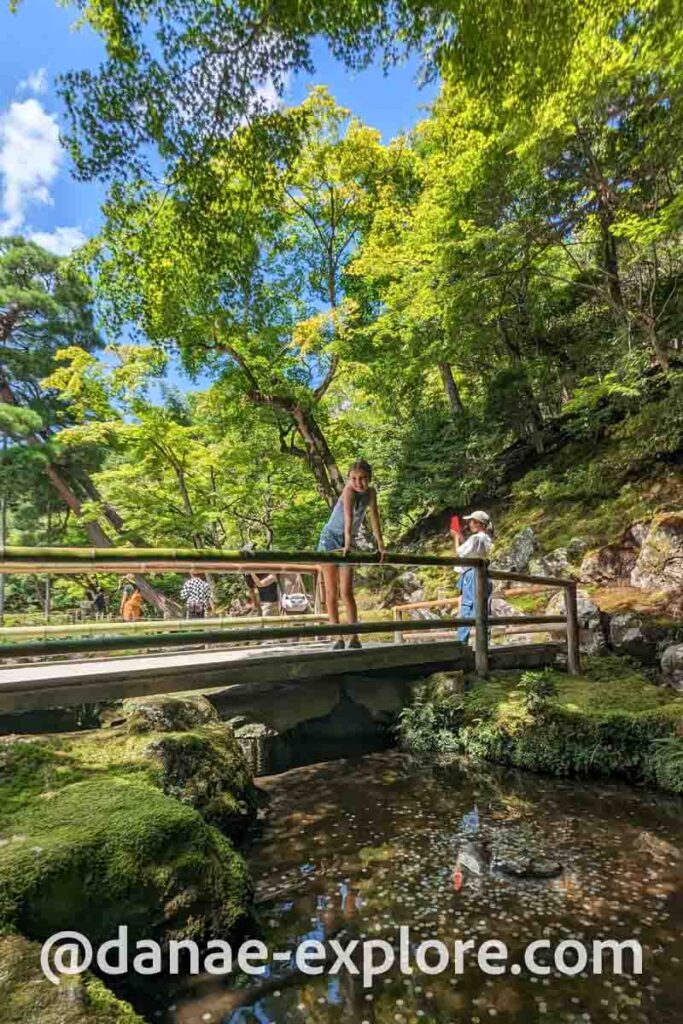
Ginkaku-ji quickly became one of my favorites in Kyoto. Known as the “Temple of the Silver Pavilion,” it was designed to shimmer in soft silvery hues under the moonlight. We visited on a scorching hot summer day, but the temple grounds were pleasantly cool and relatively quiet. The gardens were lush and green, with a large moss-covered area that was simply beautiful. I can only imagine how stunning the fall foliage must be, or the cherry blossoms in spring.
.

.
Kinkaku-ji Temple
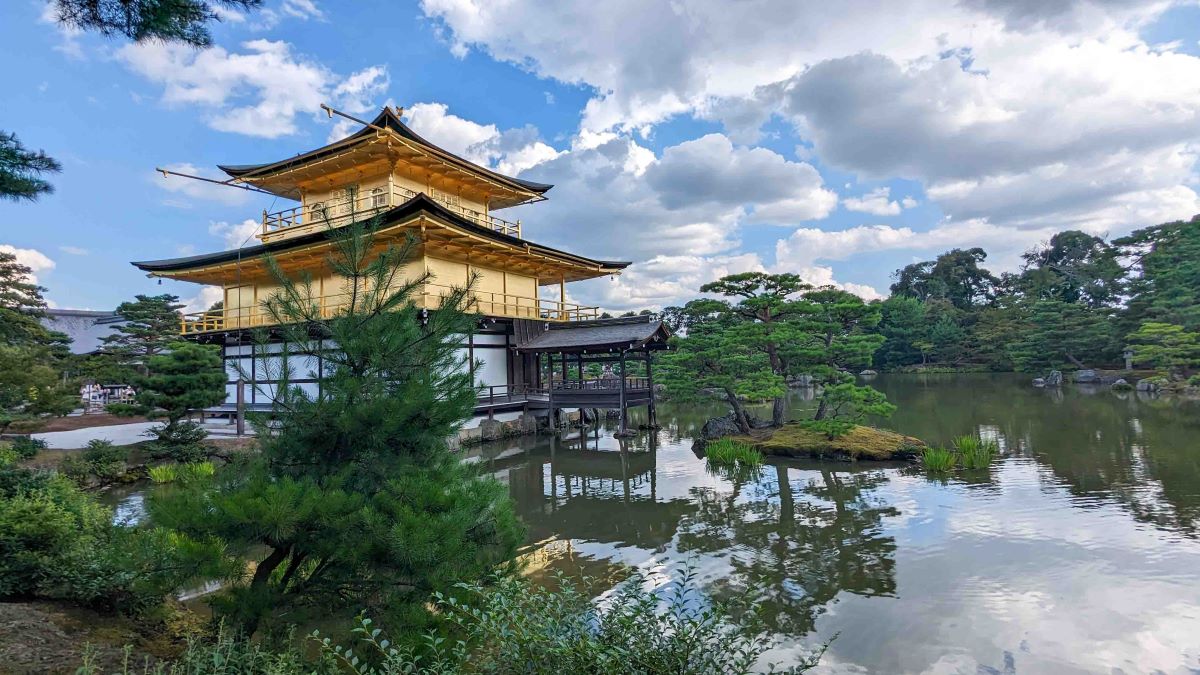
Next, we took a bus to visit the iconic Temple of the Golden Pavilion — Kinkaku-ji.
Covered in gold leaf and surrounded by a serene lake, it’s one of Japan’s most famous landmarks, which explains why it’s always crowded. The path around the lake, offering views of the temple, was packed with tourists. While the rest of the gardens were a bit quieter, they were still quite busy. If you’re looking for a quiet, contemplative moment, this isn’t the place.
We ended the evening back at Nishiki Market, exploring more of its alleys
.

.
Day 3 – Gion Matsuri Festival, Fushimi Inari Taisha Shrine, Tenryu-ji Temple, Arashiyama Bamboo Forest, and Gion
It was Monday, July 24th, and our schedule was already packed. We had two must-visit spots in Kyoto: the Fushimi Inari Taisha Shrine (the one with the iconic red torii gates) and the Arashiyama Bamboo Forest. That alone would have been enough to keep us busy, but as we set out in the morning, we realized we had lucked into something special — a traditional event we hadn’t even planned for.
.
Gion Matsuri Festival
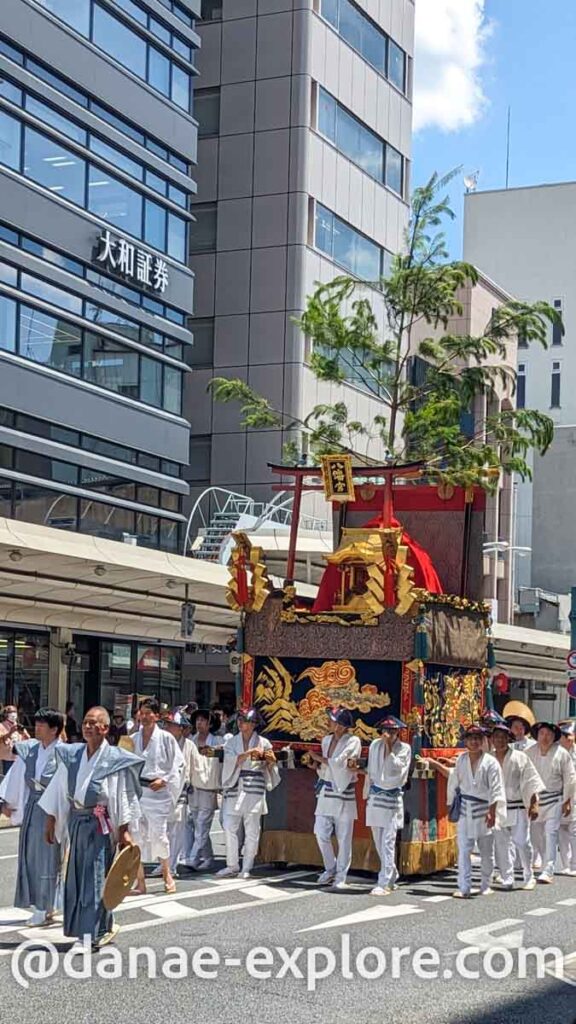
It was the final day of the Yamaboko Junko, the festival’s main parade. Despite the festival being named after the Gion neighborhood, most of the main events take place on the opposite side of the Kamo River. The streets of central Kyoto were taken over by beautifully decorated floats, draped in Nishijin tapestries, while crowds lined the sidewalks, politely “cheering” for their favorites. As you’d expect in Japan, everything was incredibly polite and orderly.
We found a shaded spot on the sidewalk and spent quite a bit of time watching the parade. One by one, several floats — some weighing up to 12 tons and carried by dozens of men — made their way down the street. The corners were the prime viewing spots, where the audience silently watched as the floats navigated the turns, guided by a traditional chant sung by the carriers to keep their movements in sync.
.

.
Fushimi Inari Taisha Shrine
After the parade, we walked to Gion Station and took the subway to Fushimi Inari Taisha Shrine. The station is right by the shrine entrance.
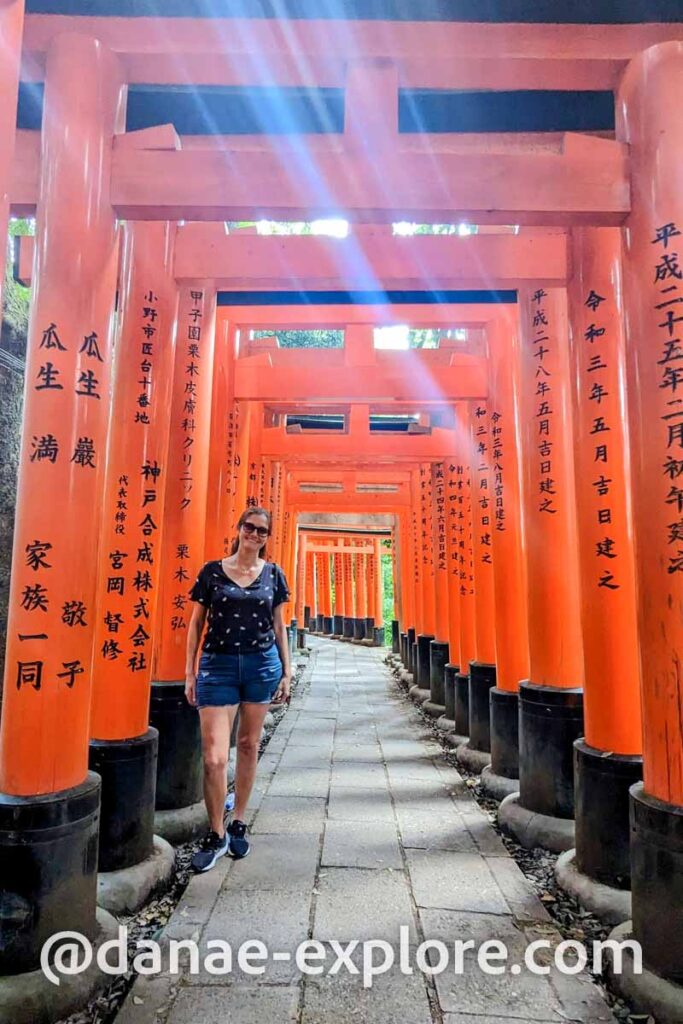
Fushimi Inari is famous for its rows of red torii gates, which stretch across four kilometers of trails leading to the top of the mountain. Dedicated to Inari, the deity of good harvest and business success, Fushimi Inari Taisha is the most important Inari shrine in Japan. Merchants and businesspeople donate torii gates to the shrine, and it’s believed there are over ten thousand gates here. You’ll also notice several statues of foxes, considered messengers of Inari.
Don’t let the crowds at the base discourage you. As you climb the mountain, the crowds thin out, and eventually you’ll find a quiet section of the torii tunnel all to yourself. If you’re like us and battling Japan’s intense summer heat, you’ll become a true devotee of Inari, grateful for the shade provided by the endless gates.
The view from the top is stunning. It took us about two hours to complete the entire hike, though there was a point when the kids decided they’d had enough, leaving the adults to forge ahead at a quicker pace. If you’d rather take your time, allow about three hours.
.


.
Arashiyama Bamboo Forest
After leaving Fushimi Inari, we took the subway across town toward the Arashiyama Bamboo Forest, about a 15-minute walk from Saga-Arashiyama Station.
On the way, we passed Tenryu-ji Temple and walked through the Sogenchi Zen Garden (next to the temple but with a separate entrance) to reach the bamboo forest entrance.
You’ve probably seen countless photos of this forest on Instagram, but trust me, it’s even more impressive in person than any photo can capture. The Arashiyama Bamboo Forest itself isn’t huge — just a single path of about 500 meters lined with towering bamboo.
It’s worth continuing a bit further beyond the forest toKameyama Park, with sweeping views over the Katsura River Valley.
Deep within the forest lies the Okochi Sanso Garden, a former imperial villa with beautiful gardens and one of the best views of Kyoto. The visit even includes tea, but when we arrived it had already closed (at the time it closed at five pm — best to check before visiting).
As we exited the forest, we stopped by the Nonomiya-jinja Shrine, which is also worth a few minutes of your time.
.

.
Gion and Ponto-Cho
Exhausted but still wanting more, we made our way back to central Kyoto and wandered through the Gion neighborhood: traditional dark wooden houses, geishas, and temples. You know that image of old Japan you carry in your head? This is it. I’d recommend a walking tour guided, ideally in the late afternoon.
We strolled through the streets for a while before heading back toward the center, crossing the Kamo River via Shijo Bridge to have dinner on Ponto-Cho Street.
Ponto-Cho is a small, pedestrian-only alley running parallel to the Kamo River, on the opposite bank. It’s lined with small restaurants and bars, some with terraces at the back overlooking the river.
We arrived thinking we could just walk in and sit down, but the planning gods were not on our side. On a Monday, the street was packed and every restaurant was full. We tried everywhere — everything was full or reservation-only. We ended up at 7-Eleven and had dinner at the hotel.
.

.
Day 4 – Lake Biwa and Kyoto Tower
If you only have four days in Kyoto, I suggest skipping today’s itinerary and following what we did on day five.
However, if you have five or more days and don’t feel like spending a whole day at Lake Biwa, consider spreading day five’s activities over two days, as I explain below.
But beware: if you’re traveling around Japan in the summer, I highly recommend spending a day at the lake. Don’t underestimate the intensity of the Japanese heat! It’s wise to leave one day open so you can decide once you’re there whether you need a break with shade and cool water, or whether you’d rather keep sightseeing.
.
Lake Biwa
Who doesn’t love a vacation within a vacation?
After nearly a month of traveling around Japan, seeing one temple after another and enduring a heatwave I never imagined could hit Japan, we were desperate for a break.
We found our paradise just minutes from Kyoto. Lake Biwa is Japan’s largest lake, with activities like canoeing, stand-up paddleboarding, and fishing. But what we really wanted was to cool off in the water. And what delicious water!
The train to Omi-Maiko Station takes about 40 minutes from Kyoto Station, and from there it’s just a five-minute walk to the beach. The beach itself is fantastic: a few restaurants and bars, plenty of shade, and lots of room to spread out your towel. Drinking beer on the beach is allowed, and the water temperature was perfect!
It was exactly what we needed to recharge for the final days of our Japan trip.
.

.
Kyoto Central Station and Kyoto Tower
Refreshed after a day at Lake Biwa, we headed back to Kyoto.
We made a stop at Kyoto Station, which is home to an impressive maze of shops and restaurants. Right across from it is the iconic Kyoto Tower, with an observation deck 100 meters up, offering sweeping 360° views of the city. I highly recommend buying your tickets in advance through the official website.
.

.
Day 5 – Nara and Kiyomizu-dera Temple, Hokanji Pagoda, and Yasaka Shrine
Lake Biwa wasn’t part of the original plan, so we had to squeeze five days of activities into four. But that’s travel, right? You adapt. So we woke up early and got moving.
.
Nara
Nara, Japan’s first permanent capital, is perfect for a day trip from Kyoto or Osaka. The city’s top attractions include:
1. Todai-ji Temple
The star of Nara, Todai-ji Temple is one of Japan’s largest and most significant Buddhist temples. Inside stands the Daibutsu, a 15-meter bronze statue of Buddha.
.


.
2. Nara Koen Park
Famous for its freely roaming deer, Nara Park is where these gentle creatures roam — and in Shinto culture, they’re considered sacred messengers. Just be gentle with them: they’re wild animals, even if they don’t always act like it.
.


.
3. Kasuga Taisha Shrine
Nestled in the woods of Nara Park, Kasuga Taisha is renowned for its otherworldly atmosphere, created by hundreds of stone and bronze lanterns. We skipped this one due to time constraints.
4. Kofuku-ji Temple
This temple is home to a stunning five-story pagoda and sits near Nara Park.
.

.
Kiyomizu-dera Temple
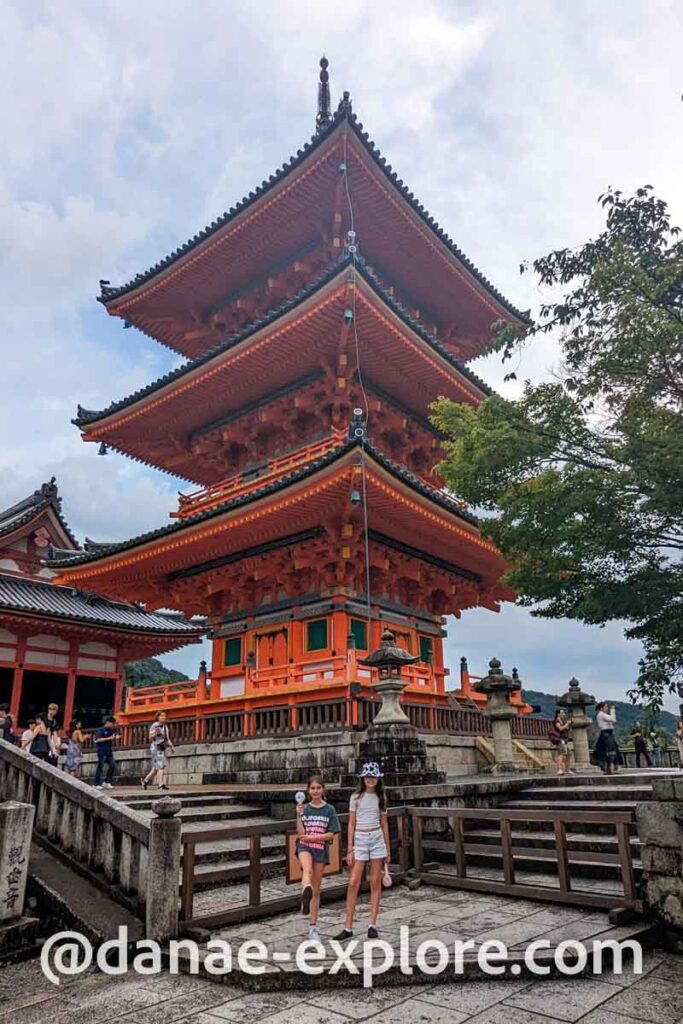
After Nara, we headed back to Kyoto for one of the city’s most iconic spots, Kiyomizu-dera Temple. Founded in 778, the temple’s wooden veranda juts out from the hillside, offering panoramic views of Kyoto and the surrounding mountains. Walking along Ninenzaka Street on the way to the temple, with its quaint shops and traditional houses, was a highlight in itself.
In the same complex, we visited Otowa-no-taki waterfall, where three separate streams flow. It’s believed that drinking from each stream grants a different blessing: longevity, success in studies, and a prosperous love life. Naturally, we braved the long line to sip the water using bamboo ladles and made our wishes.
.
Hokanji Pagoda
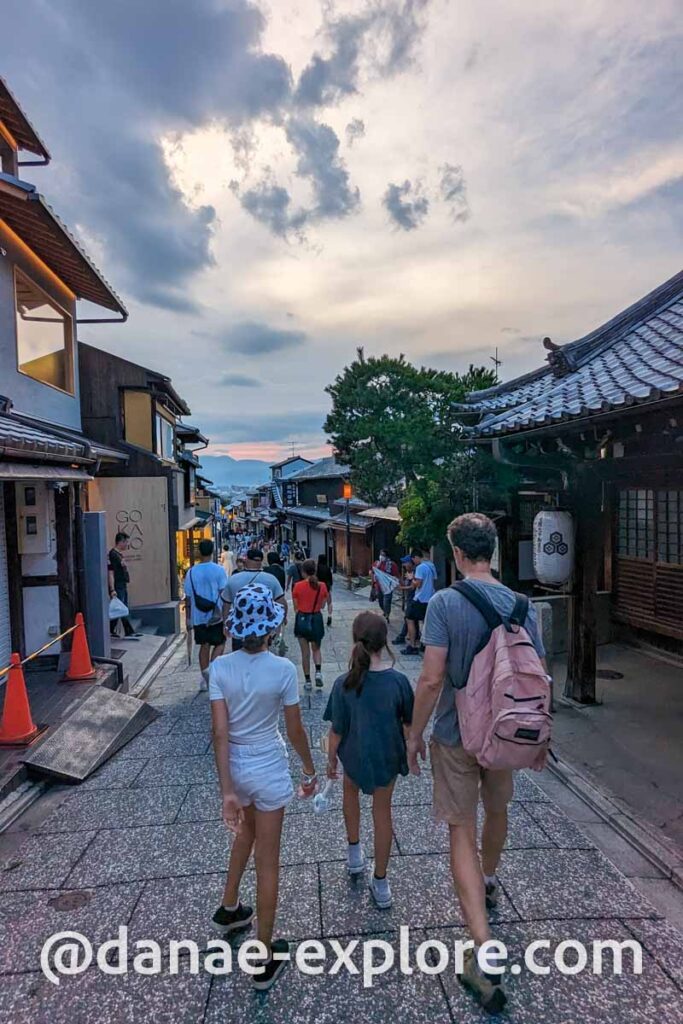
From Kiyomizu-dera, we wandered through Higashiyama toward Gion, passing the picturesque Hokanji Pagoda. This five-story pagoda, framed by traditional wooden houses, is a favorite Instagram spot. It’s undeniably beautiful, but the sheer number of tourists crammed into the narrow street made the experience a little overwhelming.
.
.
Yasaka Shrine
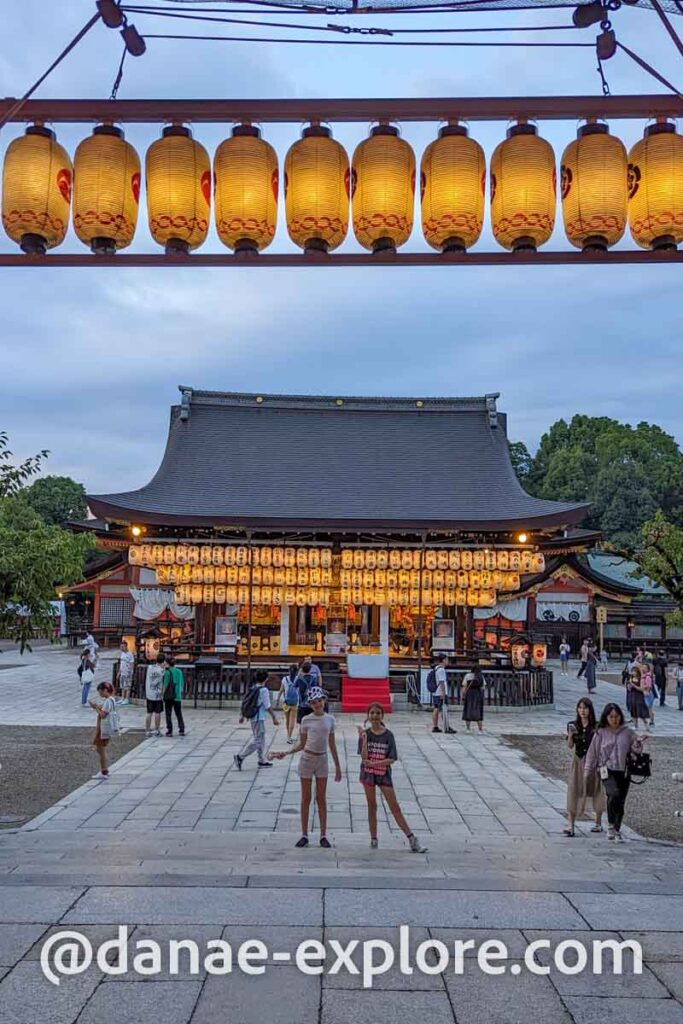
We wrapped up the day with a serene visit to Yasada Shrine, enjoying the late afternoon glow. Afterward, we went out for our final dinner in Kyoto, soaking up the last moments in this amazing city.
The next day, we left early for Osaka, the final stop on our four-week adventure in Japan.
.

.
Getting around Kyoto
Kyoto is a vast city and its attractions are spread out. Even if you’re staying in the city center or the Gion area, there’s only so much you can do on foot. You’ll inevitably need to cover longer distances by subway or bus, so planning your route carefully will save you a lot of backtracking.
It’s also worth noting that Kyoto’s subway system isn’t as extensive as Tokyo. Often you’ll find yourself needing to take a bus, which can get crowded! On our way back from Arashiyama, the bus was packed for almost an hour.
But don’t worry — getting around is straightforward. The key is having a good cell phone signal (I use the Airalo eSIM — promo code: DANAE2375) and keeping Google Maps handy. Just set your destination and let it guide you. It shows you everything: the route, whether to take the bus or subway, which line, where to get off, how much it costs, departure times — it’s all there, just follow where it points.
.

.
Where to stay in Kyoto
I recommend staying near the Karasuma, Kyoto-Kawaramachi, or Kyoto Shiyajusho-mae subway stations, or in the Gion area.
We stayed at ORI Kyoto, close to Karasuma station, and I highly recommend both the hotel and the area. We booked a family room with two bunk beds, a small living room with two sofas, and a kitchenette, which was perfect for our five-night stay.
Other options I had shortlisted were the Sotetsu Fresa Inn Kyoto-Shijokarasuma, Hotel Grand Bach Kyoto Select and the Hotel Rings Kyoto, but I ultimately chose ORI for its great value, as it accommodated all of us in a single room.
.


.
Detailed itinerary of our trip to Japan
Below is the Google MyMaps with the four-week trip to Japan. Just click and save it to your Google account. When you’re planning your next trip to Japan, you’ll know exactly where to start 😉
On the map, you’ll find details of everything we did, where we stayed, and the best places we visited. There are different layers, each with a unique color for the various regions we explored.
How to use this map: Click the menu tab in the upper left corner of the map to access different layers, including points of interest and routes. You can toggle layers on and off by checking the corresponding boxes. To see details about specific locations, click on the icons on the map.
To save this map to your Google Maps account, just click the star icon next to the map title. To access it later on your phone or computer, open Google Maps, tap the menu button, go to “Your Places”, select “Maps”, and you’ll find this map saved there.
.
Check out all our posts about traveling in JAPAN:
- 4-week Japan itinerary: the best of Japan for a first trip to the Land of the rising sun
- Where to stay in Tokyo
- Beyond Tokyo: 7 day-trips that live up to the hype
- The best of Kyoto: what to do in 4 or 5 days in Japan’s ancient capital
- Tateyama Kurobe Alpine Route – Your ultimate guide to the journey crossing the Japanese Alps
- Nakasendo Road, from Magome to Tsumago, the most beautiful villages of medieval Japan
- Hiroshima: 2-day itinerary, with a day trip to Miyajima
- Sapporo: complete itinerary and tips for skiing in Hokkaido
- 10 things you need to know before traveling to Japan
.
Here are our posts about other destinations in Asia:
- 3-week itinerary through Southeast Asia – the best of Thailand, Laos and Cambodia
- Siem Reap and Angkor Wat in Cambodia
- New Year’s Eve in Siem Reap, Cambodia
- What to do in 3 days in Luang Prabang
- The best of South Korea: 7-10 day itinerary
.
Did you like these tips? Then follow me on social media:
Instagram @danae_explore
Pinterest @danaeexplore
Comments or questions? Contact me on social media! I love to chat about travel 😉
And before you go, don’t forget to SAVE THIS PIN to your PINTEREST account for easy access to this post on the best of Kyoto – what to do in 4 (or 5) days in the ancient Japanese capital, whenever you need it!