.
I have to admit: visiting South Korea wasn’t high on my travel bucket list. Despite having a close friend of Korean descent, this small country in East Asia was, for me, overshadowed by its more famous neighbors — so much so that, on my first trip to the region, I chose Japan.
But life takes unexpected turns, and I ended up losing the family vote on where to go next. If Korea was the pick, then turn the K-pop all the way up — I was already Korean!
SPOILER: I left completely in love with both the country and its people, wondering why on earth I hadn’t made it there sooner.
First of all, follow me on Instagram @danae_explore – that’s where you can keep up with my trips, find lots of travel tips, and send me a DM anytime. I love chatting about travel!
.
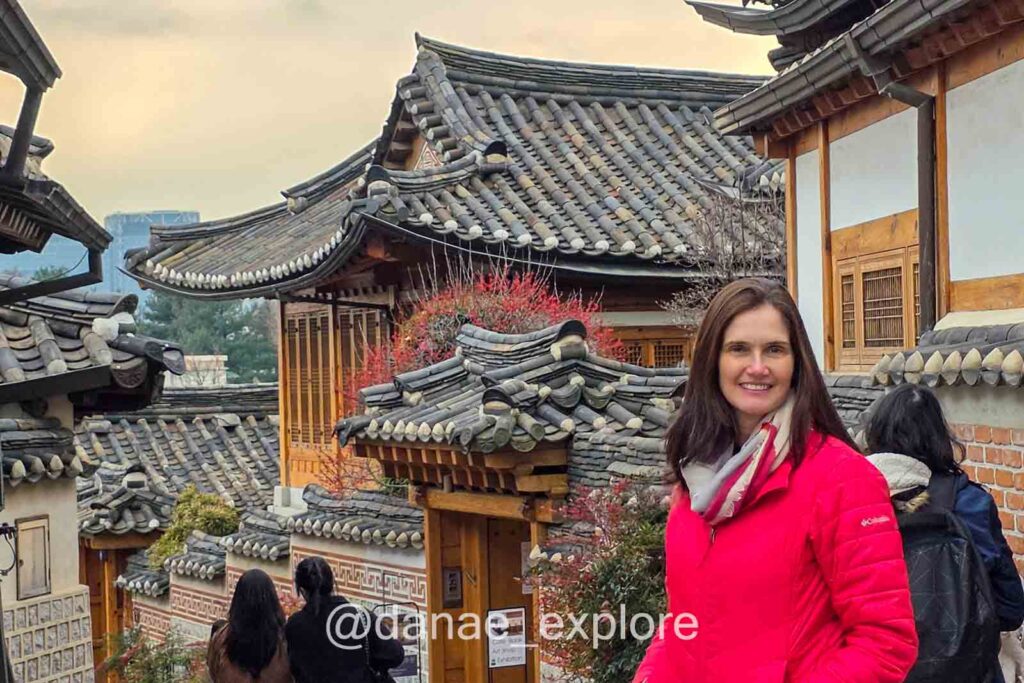
We then set off on a longer journey through East Asia, which included South Korea, Japan, and the Philippines — the longest trip, in terms of length, that I’ve taken since that slightly crazy backpacking adventure through Southeast Asia back in the 90s, which I talk about here.
South Korea ticks all the boxes for a great travel destination. Rich culture, centuries-old history, vibrant traditions, delicious cuisine, beautiful landscapes, and cutting-edge technology, all brought together by genuinely friendly, attentive people. On top of that, it’s an extremely safe country, very welcoming to visitors and, even better, with costs that feel reasonable — especially compared to what we experienced in Japan and Western Europe on our previous trips.
They say the best trips are the ones that make you reflect and come back changed in some way. South Korea definitely belongs to that select group. I arrived with low expectations and left wondering why this country doesn’t yet get the attention it deserves internationally. Good for you: make the most of it while South Korea still feels under the radar.
Come with me, here you’ll find everything you need to plan your trip, with a tried-and-tested itinerary and plenty of tips.
.
7-10 day South Korea itinerary
We spent nine days in South Korea, and the itinerary I put together was perfect! Given the time we had, I wouldn’t change a thing. The destinations we chose were ideal: three cities with distinct personalities, each explored at its own pace, in a well-balanced mix of the best the country has to offer.
.
.
Our 9-day South Korea itinerary
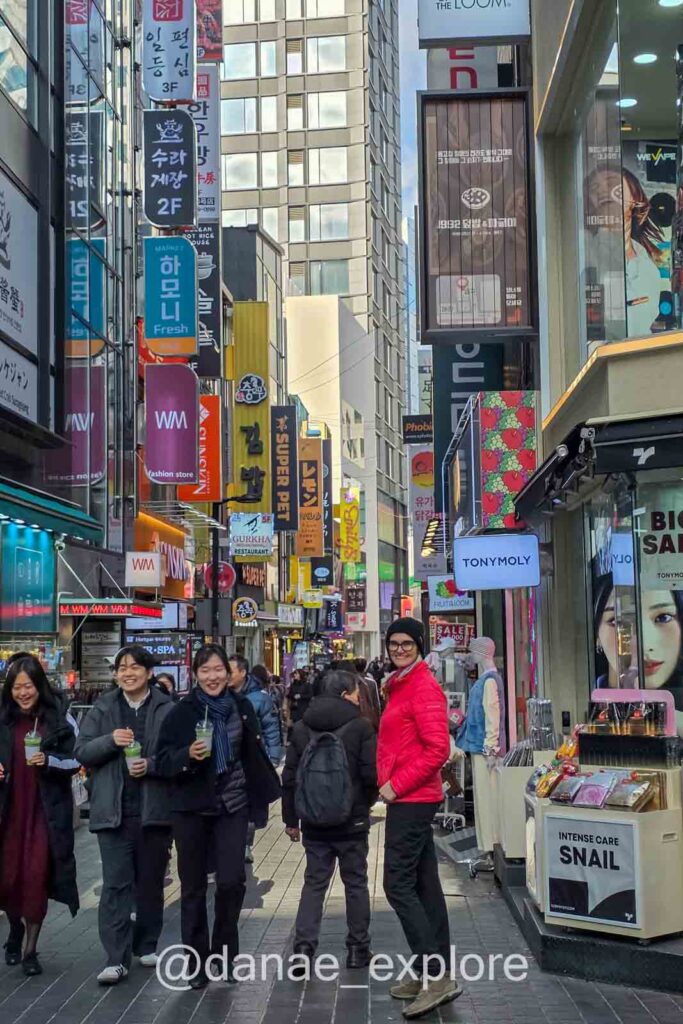
Day 1 – Arrival in Seoul. We arrived at night, so all we did was grab a bite and head straight to bed. We stayed in Myeongdong at Nine Tree by Parnas Seoul Myeongdong 2.
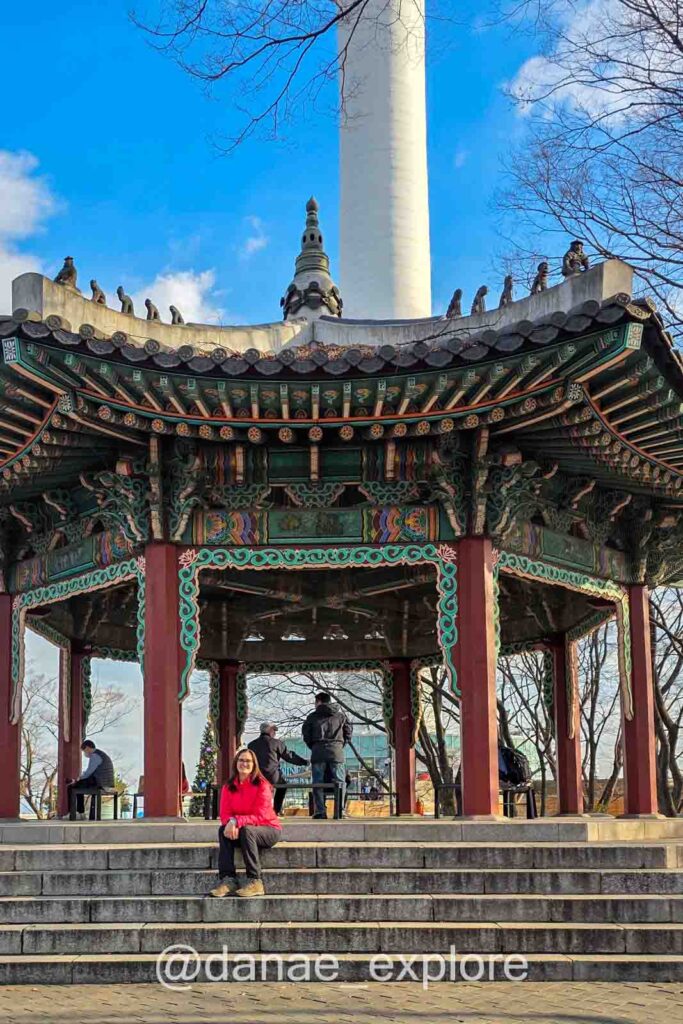
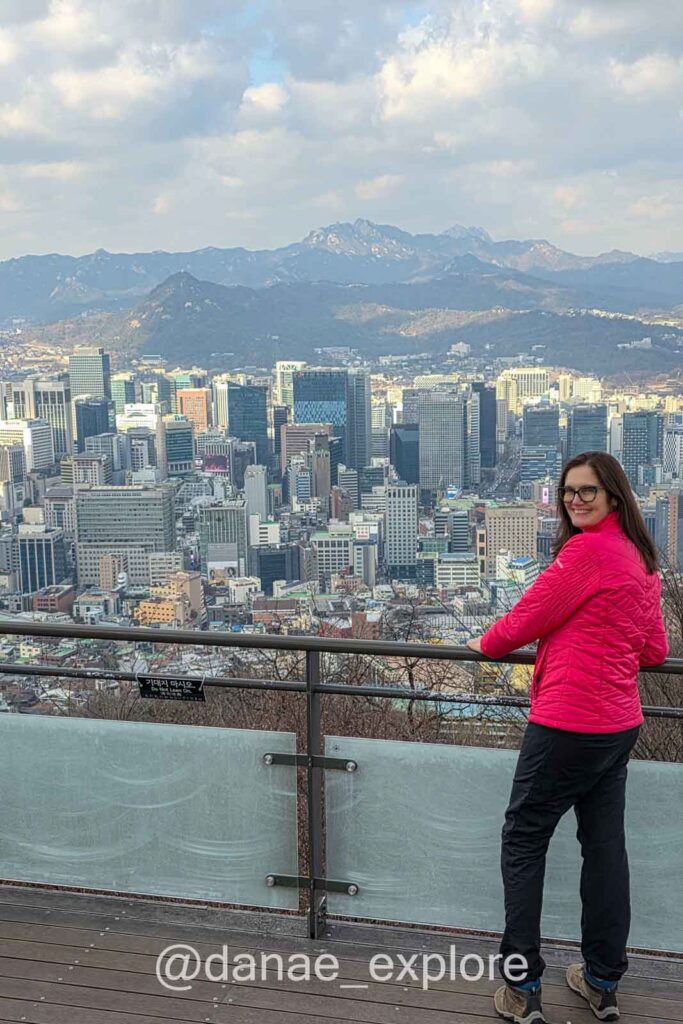
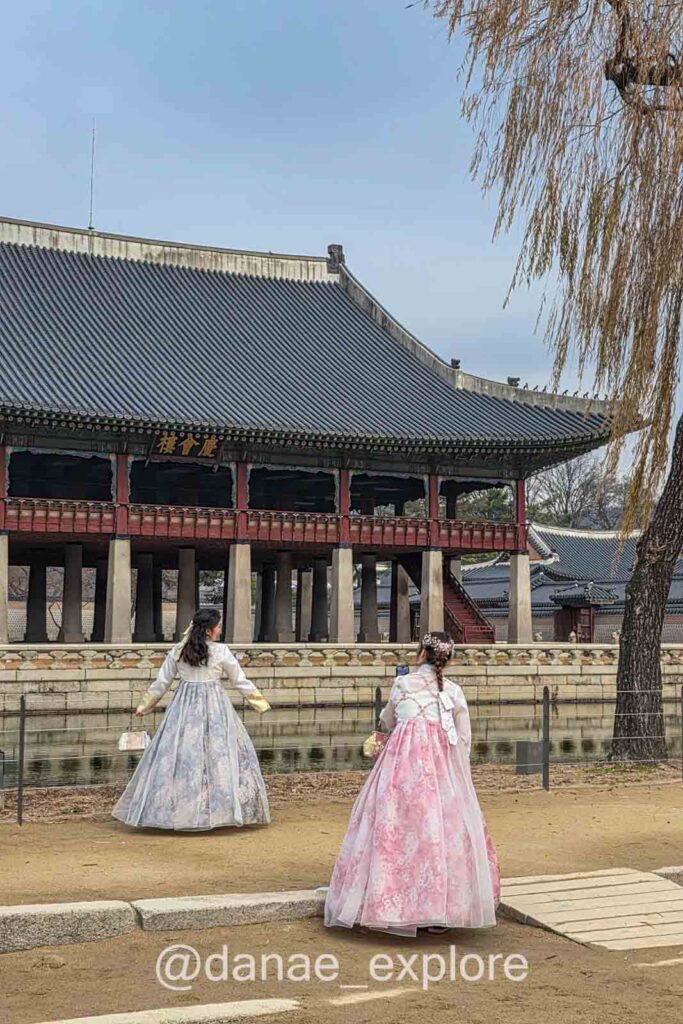
Day 2 – Seoul. A lighter schedule to help us adjust to the time zone. We walked around Myeongdong and went up to N Seoul Tower; the views over the city are excellent!
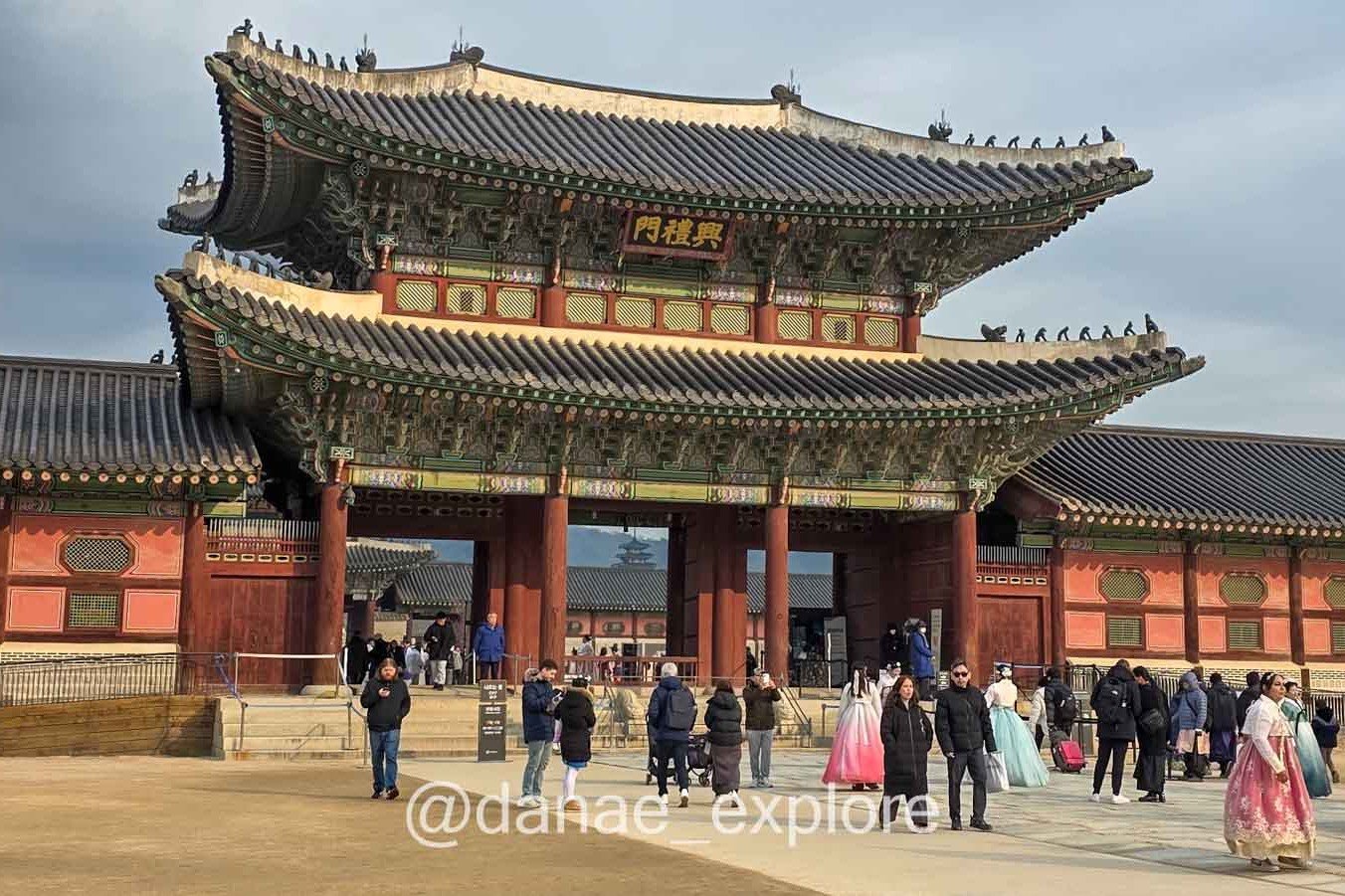
Day 3 – Historic Seoul: Gyeongbokgung Palace, Bukchon Hanok Village, Changdeokgung Palace, and we wrapped up the day at Cheonggyecheon; dinner in Myeongdong. We explored everything on our own, walking between the sites, but joining a guided tour or a free tour can be a great option if you’d like to understand Korean history and culture more deeply.
Day 4 – Modern Seoul: Gangnam, Starfield Library, Bongeunsa Temple; Hongdae, Gyeongui Line Forest Park, and dinner in Hongdae.
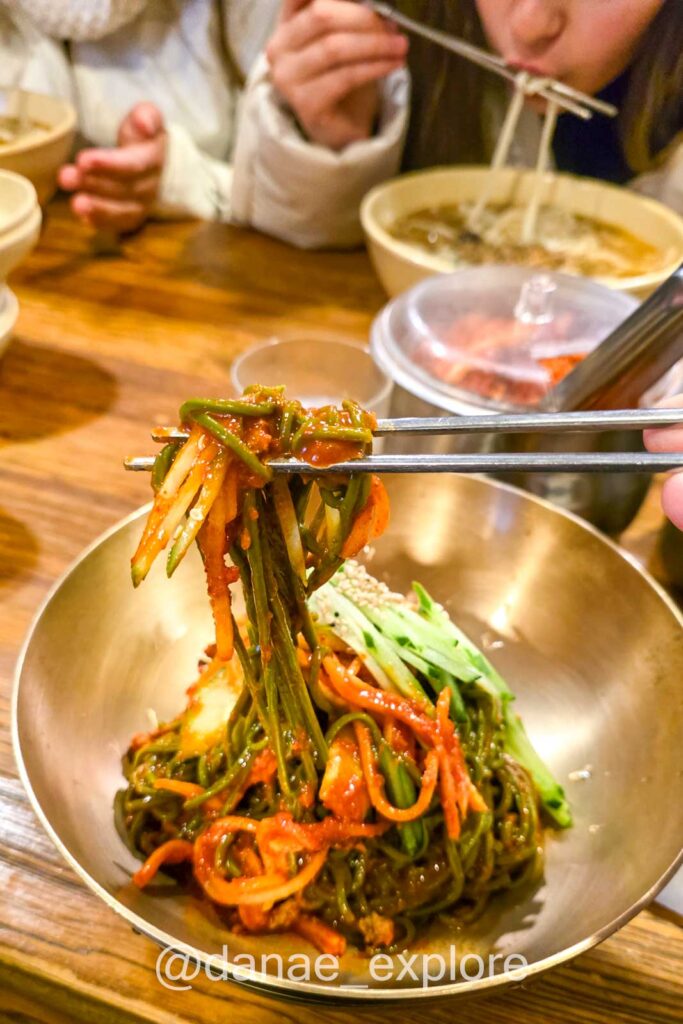
Day 5 – Seoul. War Memorial of Korea, Dongdaemun Design Plaza, lunch at Gwangjang Market; Insadong, Jogyesa Temple, dinner in Myeongdong.
Day 6 – High-speed train to Gyeongju. Late afternoon stroll around central Gyeongju. We stayed at Gyeongju GG Hotel.
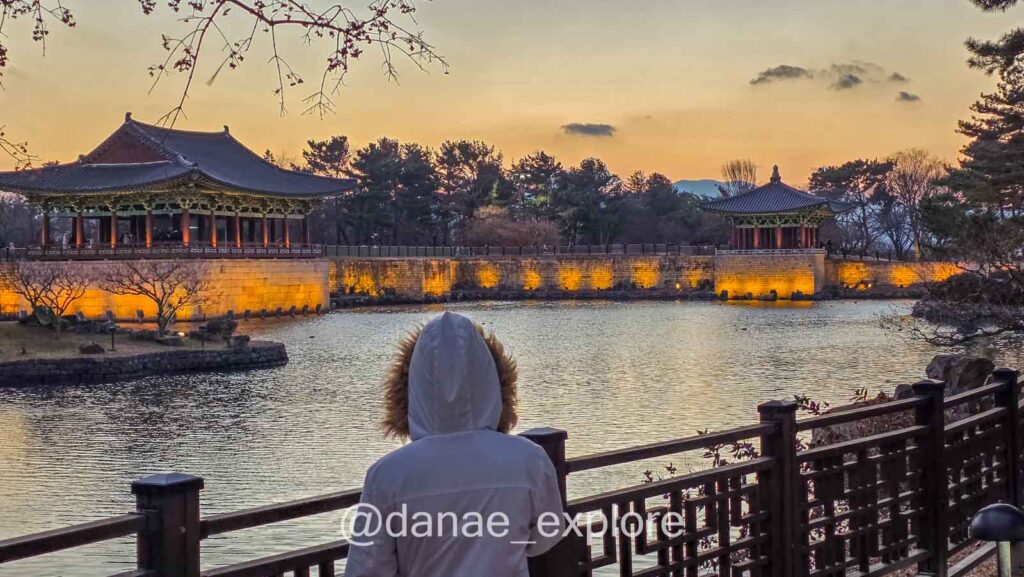
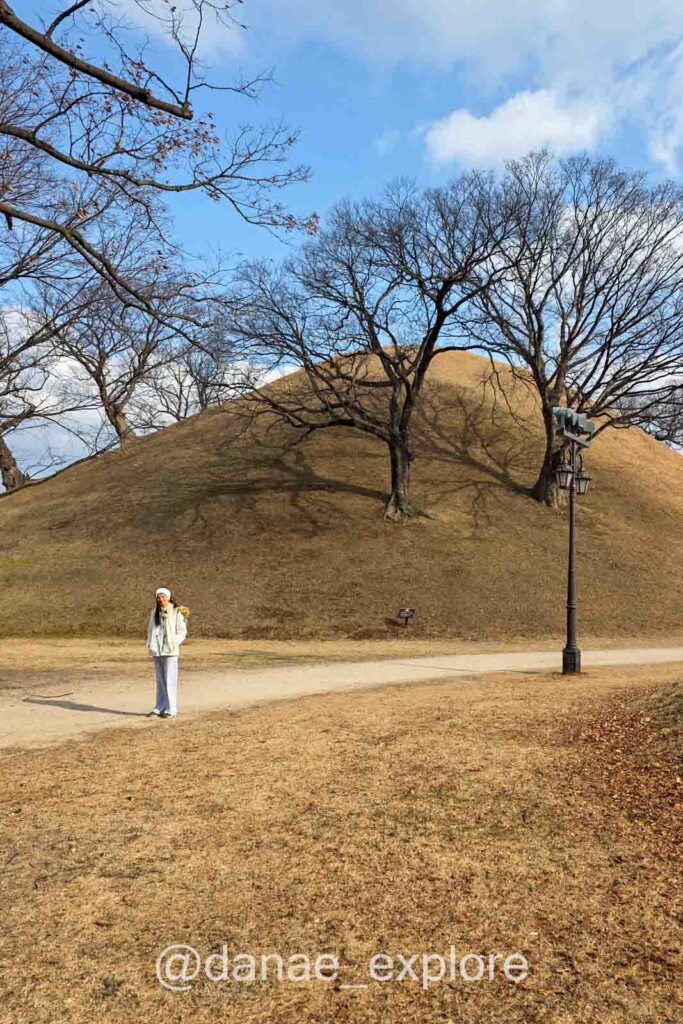
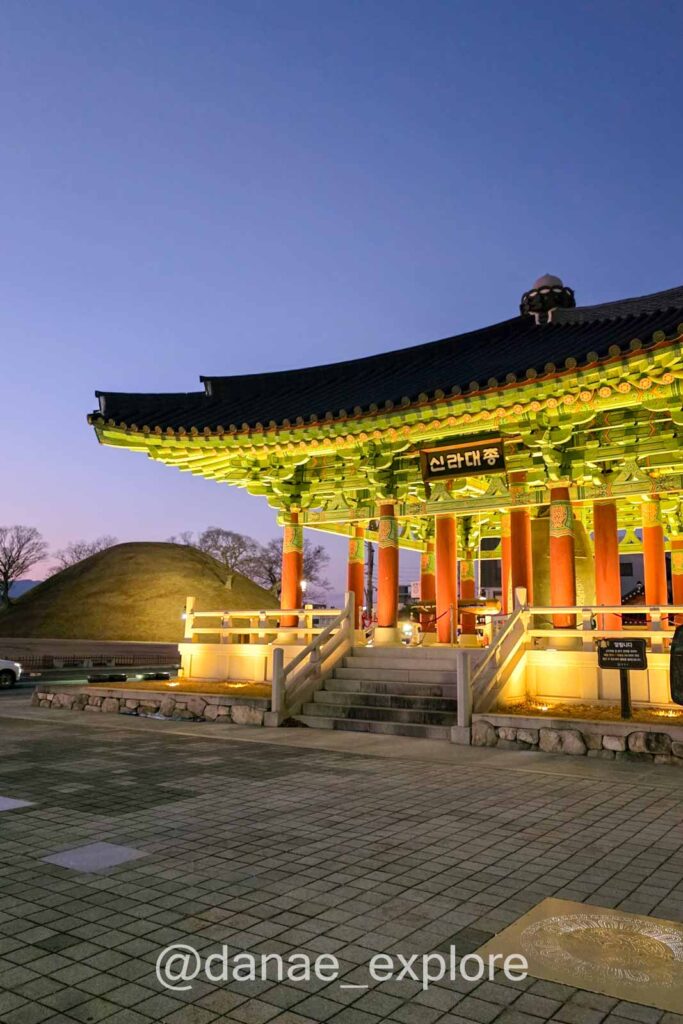
Day 7 – Gyeongju: Daereungwon Tomb Complex, Cheomseongdae Observatory, Bulguksa Temple, Donggung Palace & Wolji Pond.
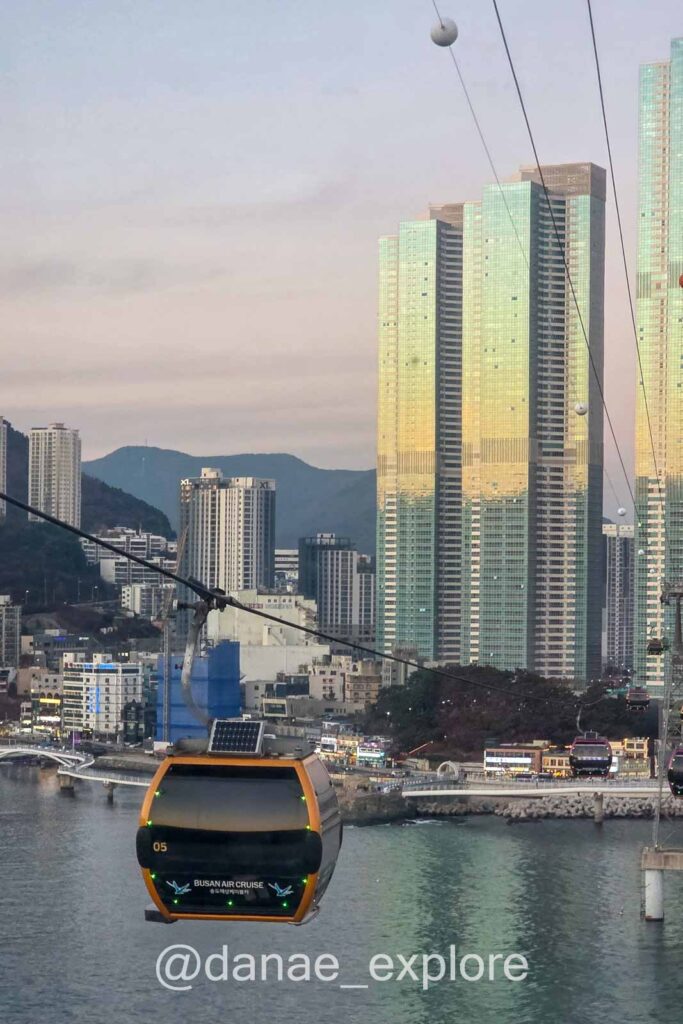
Day 8 – High-speed train to Busan. Afternoon in Busan: Seomyeon and Songdo Cable Car. We stayed at Lotte Hotel Busan.
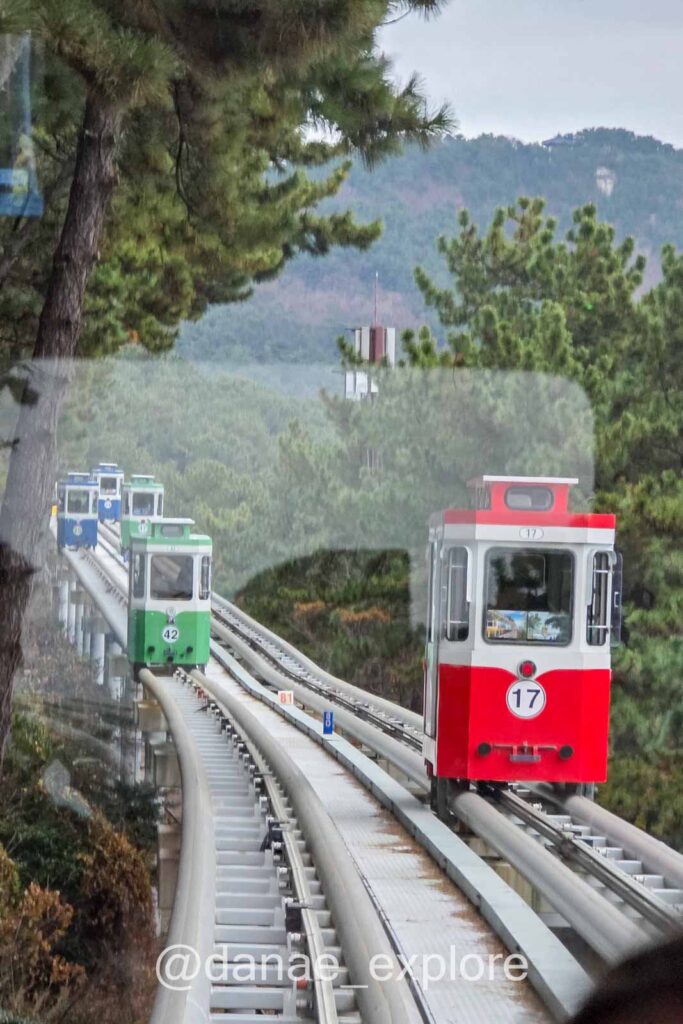
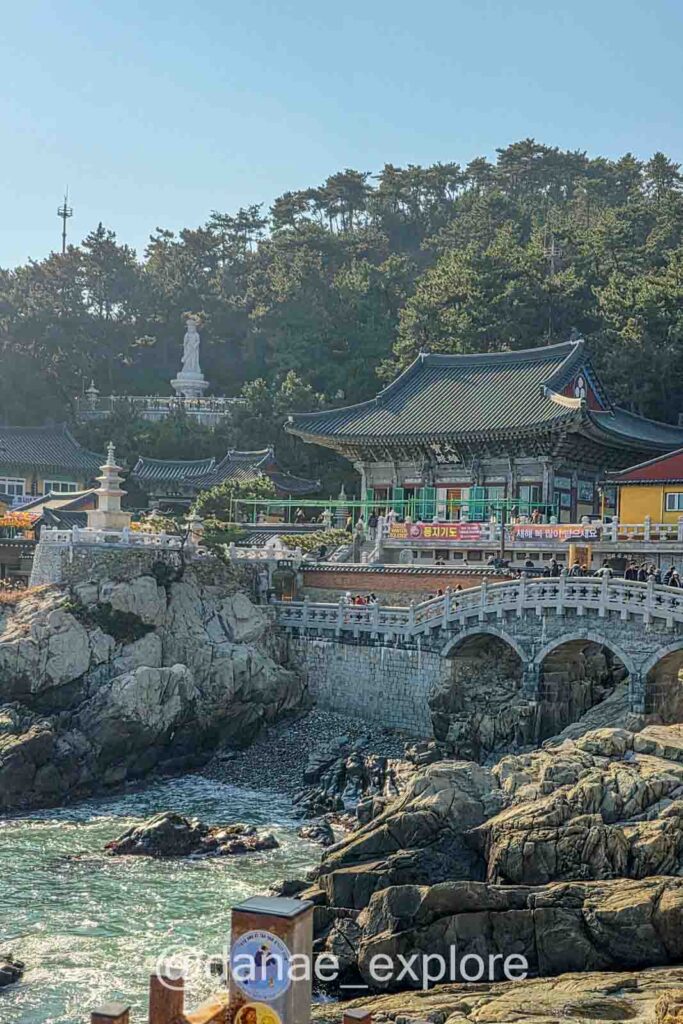
Day 9 – Busan: Haedong Yonggungsa Temple, Songjeong Beach, Blueline Train to Haeundae Beach.
On day 10, we woke up early and flew to our next destination: Sapporo, Japan.
This itinerary in South Korea works really well if you want to combine tradition, modernity, and nature without rushing.
.
.
South Korea ten-day itinerary
For a 10-day trip, I would spend that extra day in Busan. We had a day and a half in the city, and it wasn’t enough — we didn’t manage to see a good part of what was on my must-see list. So a 10-day itinerary would be split into 5 days in Seoul, 2 days in Gyeongju, and 3 in Busan.
Another option for a 10-day trip is to add a day in Seoul to take the DMZ tour — the Demilitarized Zone on the border with North Korea.
.
.
Seven to eight-day South Korea itinerary
If you have 7 or 8 days in South Korea, I recommend leaving out either Gyeongju or Busan. Trying to fit all three cities into a shorter trip can feel very rushed, but if that’s your travel style, go for it.
With a week in South Korea,I would spend 5 days in Seoul and 2 in Gyeongju, leaving Busan out. As I’ve already mentioned on Instagram, Gyeongju was the biggest surprise of the trip. It’s a welcome break from the urban intensity of the capital.
The closest airport to Gyeongju is in Daegu, but Busan isn’t far either. If possible, I recommend flying into Seoul and departing from Daegu or Busan, or vice versa. If that’s not an option, the high-speed KTX train makes it easy — it takes less than 3 hours to travel from Seoul to Gyeongju.
Another option to consider is visiting Gyeongju on a day trip from Busan; there are several tours available, like this one, that take care of transportation and the itinerary for you.
If you’re traveling in the summer, Busan can be a great choice, as it’s a coastal city with a very beachy vibe.
.
.
Getting to South Korea: Smart Flight Strategy
There are several ways to reach South Korea from abroad, and I won’t sugarcoat it: depending on where in the globe you are, you’ll have to face really long flights.
This South Korea itinerary includes one practical detail that makes a real difference: we arrived via Seoul and departed from Busan. Arriving and departing from different cities helps you optimize your time, since you don’t need to backtrack to your starting point. Seoul is home to the country’s largest airport, Incheon (ICN), while Busan, the second-largest city, also has a major international airport (PUS). If your route allows it, I highly recommend doing the same.
.
.
Where to stay in South Korea
Where to stay in Seoul
Seoul is a huge, modern city, well connected by subway and bus. Choosing the right neighborhood makes a difference not just logistically, but also in the overall feel of your trip. In general, I recommend starting by thinking about the style you prefer: something more touristy and central, something more traditional, a younger and livelier area, or simply comfort with good value for money.
.
.
Where to stay in Myeongdong
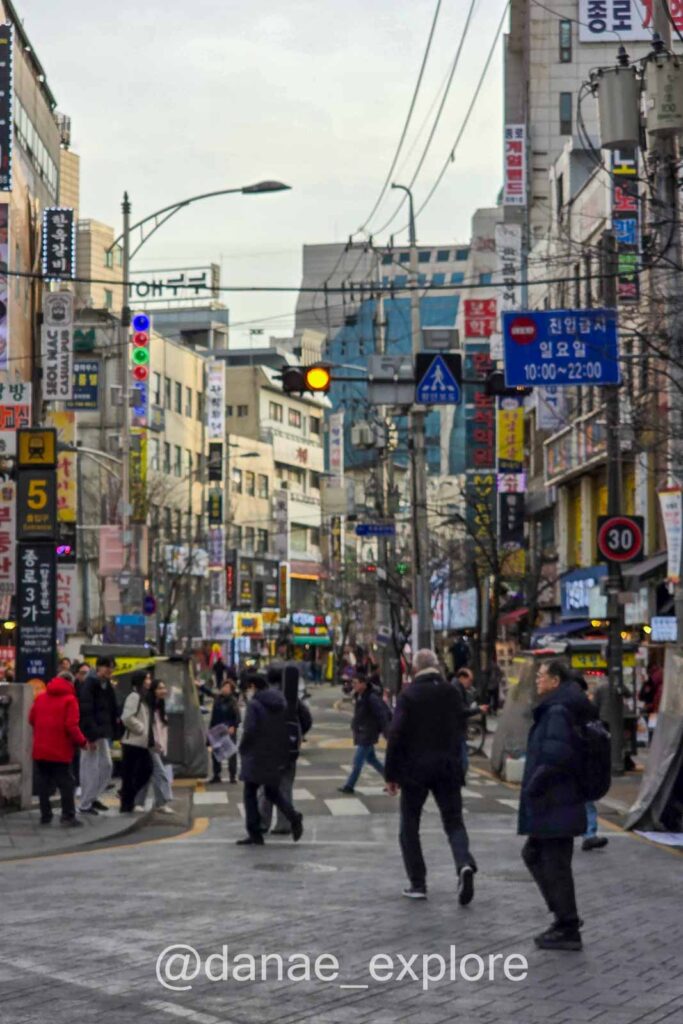
Since it was our first time in Seoul, we chose to stay right in the heart of the action, in Myeongdong. This is one of the most convenient areas to stay in, with easy access on foot to many of the city’s main attractions, plenty of shops, restaurants, and street food, and excellent access to the subway.
We chose Nine Tree by Parnas Seoul Myeongdong 2. It’s very well located, just a few minutes’ walk from Euljiro 3 Station and also close to Myeongdong Station. The rooms were a great size — small but not cramped, functional and comfortable. Our rate did not include breakfast, which wasn’t an issue, as there are plenty of cafés on the surrounding streets.
Nine Tree Myeongdong 2 had two features that were a real lifesaver on this trip: a convenience store on the ground floor and a self-service laundromat in the basement, essential for someone like me, who travels with carry-on only.
There is another hotel from the same chain, Nine Tree by Parnas Seoul Myeongdong 1. It is very close to Myeongdong subway station, but I felt it was right in the middle of the hustle and bustle, and Number 2 had better rates. It’s also a great option, very close to Myeongdong subway station.
Another hotel I considered in the area, with good value for money, was Hotel ShinShin Myeongdong. Another option that combines affordability and comfort is Unit M Hostel, with great value and an excellent location. As for Metro Hotel Myeongdong, it is considered one of the best in the area.
.
.
Where to stay in Insadong
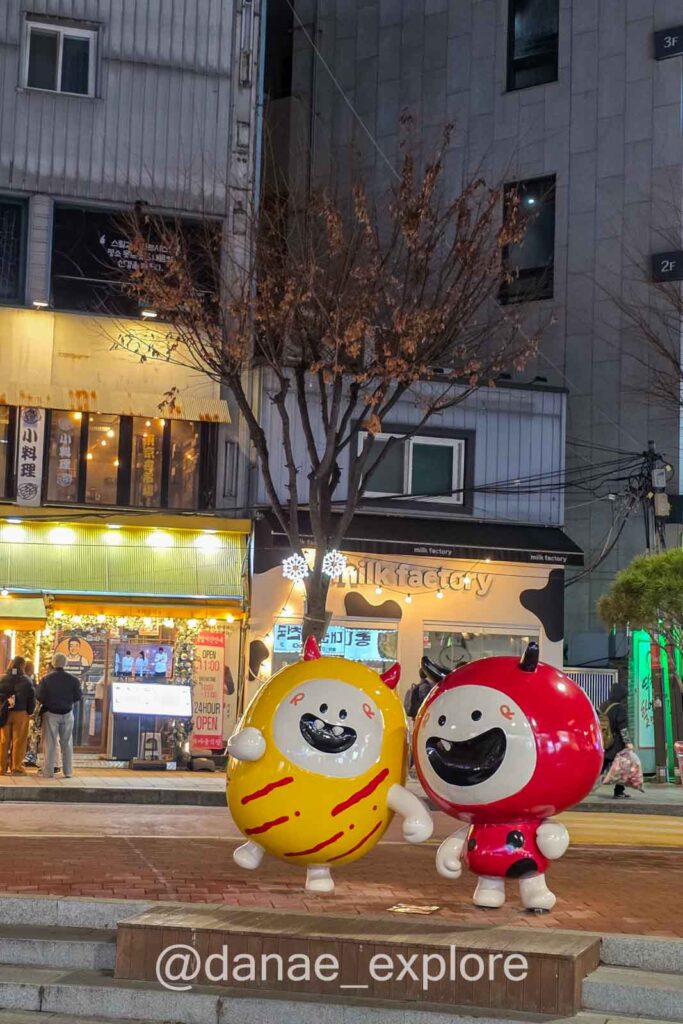
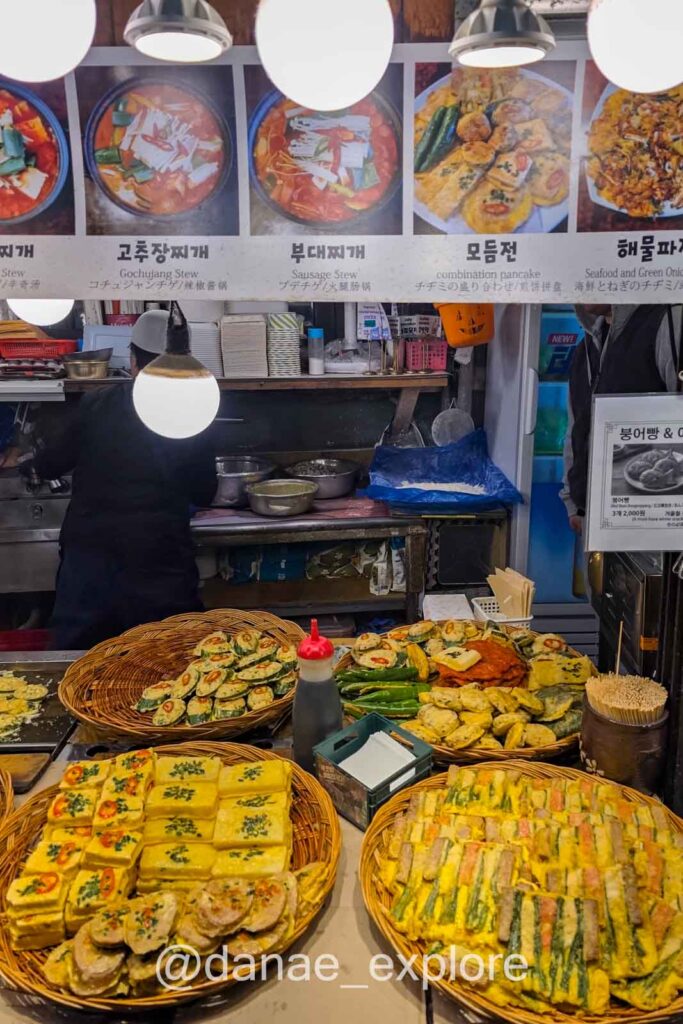
Another great area to stay is Insadong. It’s ideal for those who want to be close to the palaces, Bukchon Hanok Village, and the revitalized Cheonggyecheon stream; it was one of my favorite spots in the city. At night, the area tends to be quieter than Myeongdong, but it’s still very well served by restaurants, convenience stores, and everything else a traveler might need.
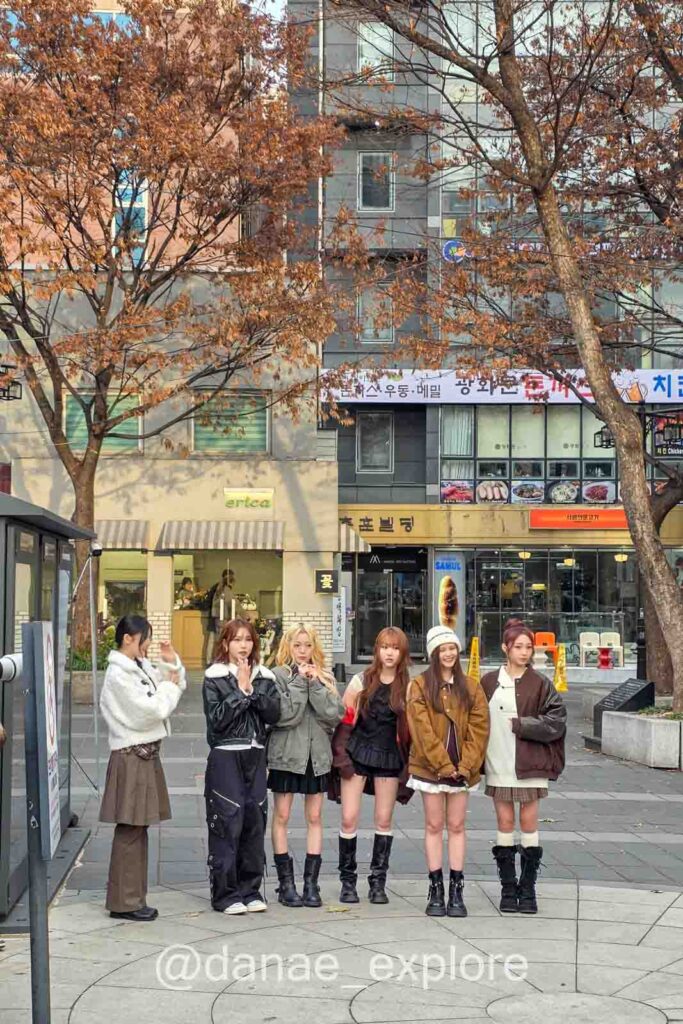
It was on Insadong Street that we watched a few K-pop performances. Even if you’re not a fan of the genre, it’s worth stopping to watch one; it’s a cultural experience in its own right. After all, as I mentioned earlier on Instagram, going to South Korea and not seeing a K-pop performance is like going to Rome and not seeing the Pope.
In Insadong, my suggestions would be Sunbee Insadong Hotel and Urbanstay Boutique Ikseon.
.
.
Where to stay in Hongdae
If you’re looking for a younger, more laid-back atmosphere, Hongdae is an excellent choice. It’s a university area, full of trendy cafés, independent shops, and street performances. We went there in the late afternoon and I loved it. I recommend taking a walk through Gyeongui Line Forest Park, where we also caught a K-pop performance, and stopping at one of the many cafés nearby.
Mercure Ambassador Seoul Hongdae has a great location, as does the 9 Brick Hotel. A budget-friendly option is to stay in a capsule hotel, such as the 82 Capsule Hotel.
.
.
Where to stay in Gangnam
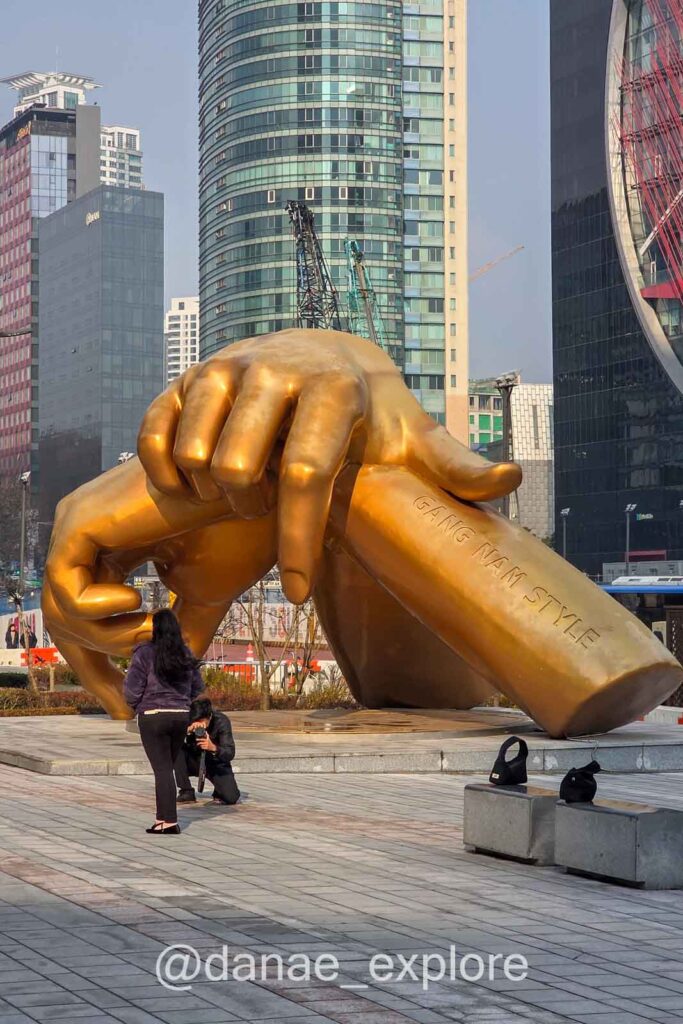
The Gangnam area, south of the Han River, is more modern and considered more upscale. It has a more business-oriented feel, with established hotels, high-rise buildings, and a more corporate atmosphere. It may feel less touristy, but it often offers excellent hotels with very good value for money, especially for those looking for slightly more spacious rooms and an executive standard.
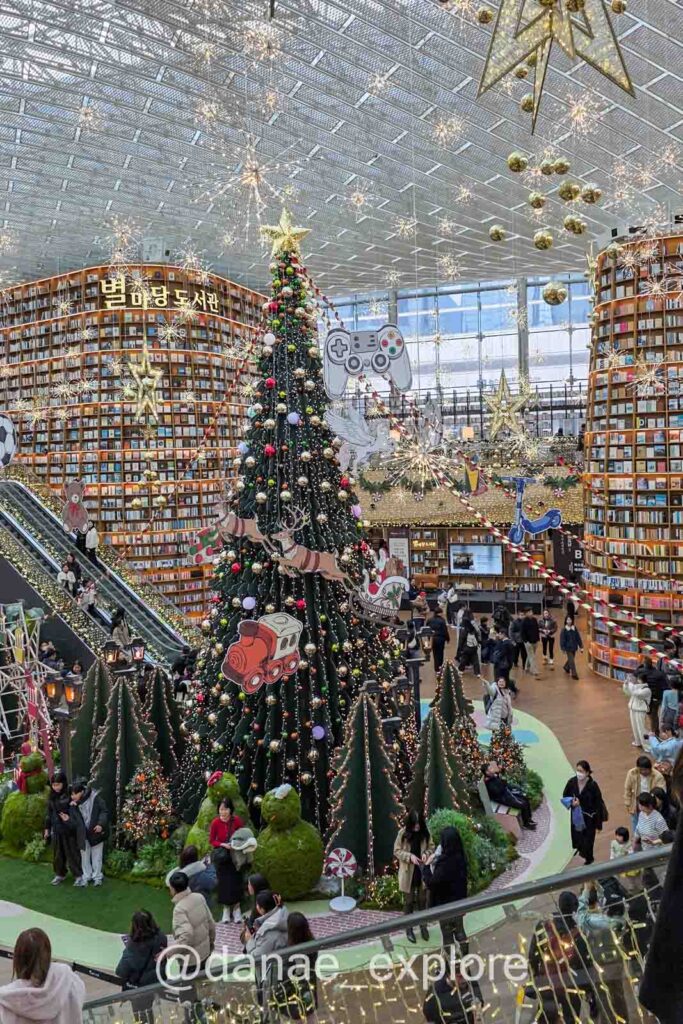
Gangnam is well connected by public transport, although I find it a bit out of the way for first-time visitors. It has great restaurants and, of course, some must-see attractions, such as the famous statue dedicated to the song that made the neighborhood globally known, Gangnam Style. Also worth visiting are the Starfield Library, a beautiful library inside a shopping mall, Bongeunsa Temple, located just across the street, and Lotte World Tower and park.
Some options are Ocloud Hotel Gangnam and Shilla Stay Gangnam Yeoksam.
.
.
Where to stay in Gyeongju
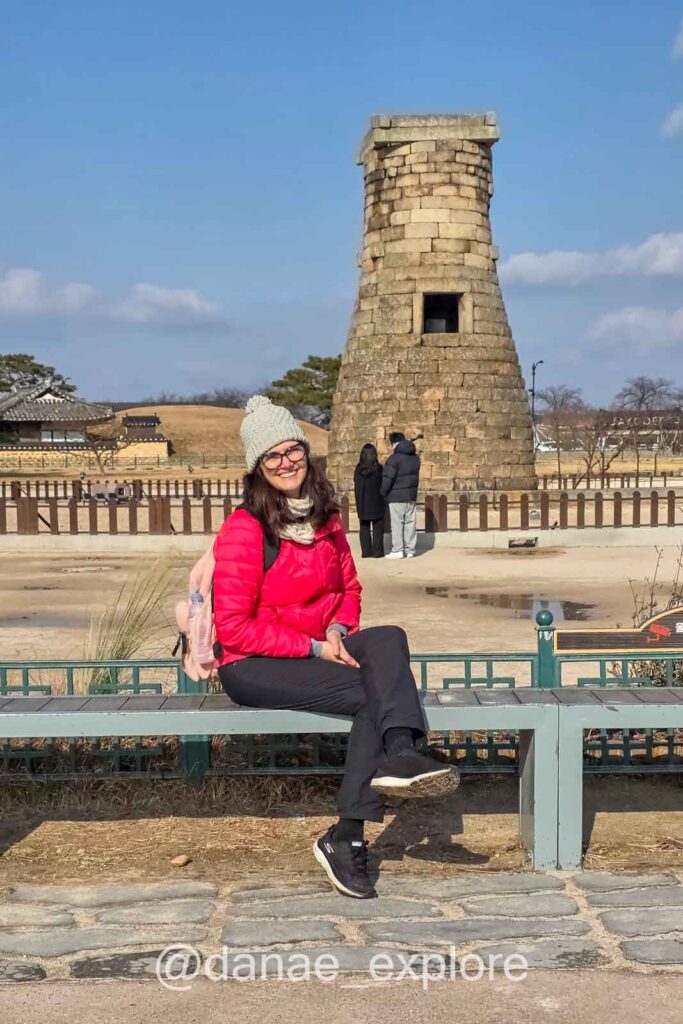
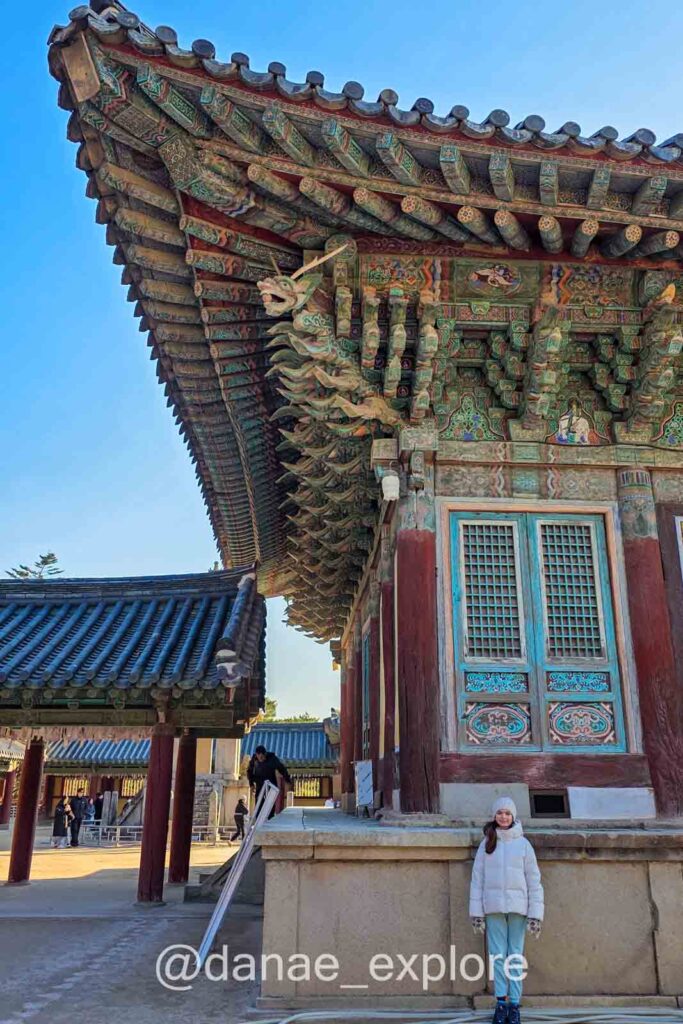
Gyeongju was the biggest surprise of this trip to Korea. It’s a historic city in the south of the country, known as the “museum without walls,” and was the ancient capital of the Silla Kingdom (57 BC – 935 AD).
A large share of Gyeongju’s attractions are concentrated in a relatively compact area; only Bulguksa Temple is further away. Therefore, my recommendation is to stay near the town center to enjoy its wonderful vibe and do a lot on foot.
We stayed at Gyeongju GG Hotel. It’s well located, close enough to the town center to walk there, and has a bus stop right outside, which was very convenient for getting to the high-speed train station and Bulguksa Temple. The rooms were large and very comfortable, and everything was clean and well organized. Our rate did not include breakfast (none of the hotels we stayed at in South Korea did), so we ate at a great café on the way to the town center (this is the name on Google Maps: 단석가찰보리빵 경주본점).
In Gyeongju, I considered staying in a traditional hanok, and the best option I found was Hwangnamguan Hanok Village, but it was no longer available. In the same area as GG Hotel it’s worth checking out Aventa Hotel, Giverny Hotel and, if you’re looking for something more budget-friendly, the Travel Light Hostel Gyeongju.
An important point: the KTX station is located away from the center of Gyeongju. You need to take a bus; the journey takes about 30 minutes (check the options on Naver — it could be bus number 50, 70, or 332). It’s nothing complicated, but it’s worth factoring this into your planning, especially if you have luggage.
.
.
Where to stay in Busan
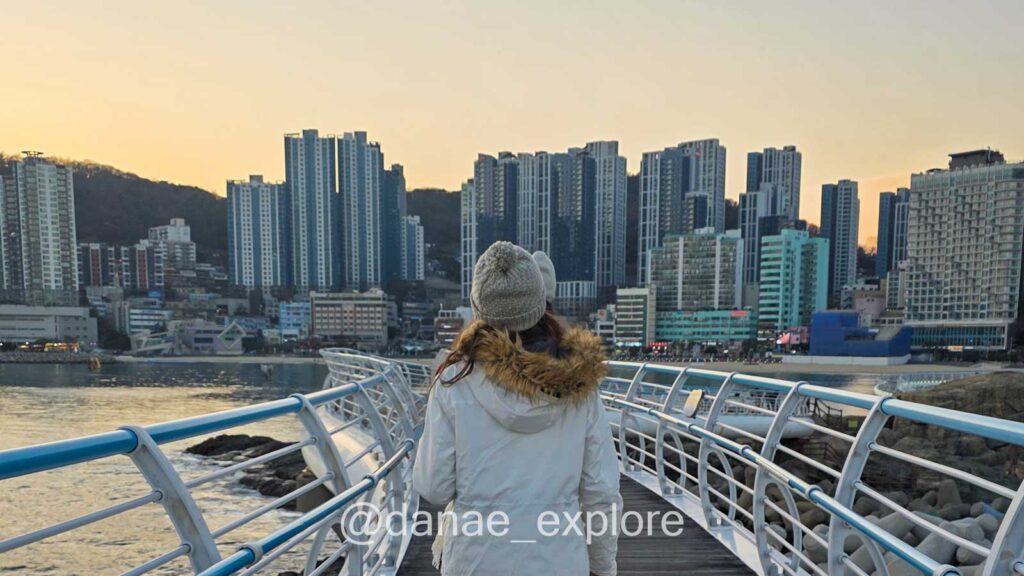
Busan is a large, sprawling city with very different neighborhood profiles. Unlike Seoul, the choice of neighborhood has a significant impact on your logistics, as getting from one place to another can take quite a bit of time.
Since we were traveling in winter, we didn’t need to stay near the beach. We opted for a higher-end hotel in Seomyeon, Lotte Hotel Busan. It was the best hotel of the trip — and it wasn’t even that expensive compared to the others we stayed at. The rooms were huge and very comfortable, the staff was super helpful, and the facilities were excellent. The area is quite central, with great subway connections, many restaurants, cafés, and shops. It worked very well for exploring different parts of the city.
Other options in Seomyeon include Busan Business Hotel and, for a more budget-friendly stay, Green B Hotel Busan Seomyeon and Lion Hotel.
In the summer, I would highly recommend staying in Haeundae, South Korea’s most famous beach and where everything happens on sunny days. The area is well organized, pleasant for walking, and full of restaurants and cafés with a view.
The options I had shortlisted in Haeundae are Marysol by Haeundae Beach and Mipo Oceanside Hotel.
Another interesting alternative is the Nampo-dong area, near the Jagalchi Fish Market and older parts of the city. It’s quite lively and has a more local feel. I couldn’t visit this neighborhood due to lack of time — oh, how I wish I had spent another day in Busan! If you’re considering staying there, take a look at Towerhill Hotel and Urbanstay Boutique Nampo BIFF.
.
.
How to get around South Korea
Rest assured: getting around South Korea is much easier than it seems. If you’re used to using public transportation in large cities, whether at home or anywhere else in the world, getting around South Korea won’t feel intimidating.
What you need is the right app. If you’re already used to Google Maps, it works well for general orientation, finding restaurants and shops, and seeing where things are located. But it’s not reliable for planning routes in South Korea. When it comes to directions, use the NAVER app. It works similarly to Google Maps, has an English interface, and you can rely on the information it provides, which, in our experience, was 100% accurate. In fact, while planning my itinerary, I used NAVER because Google Maps often didn’t display public transport routes properly.
.
How to travel between cities in South Korea
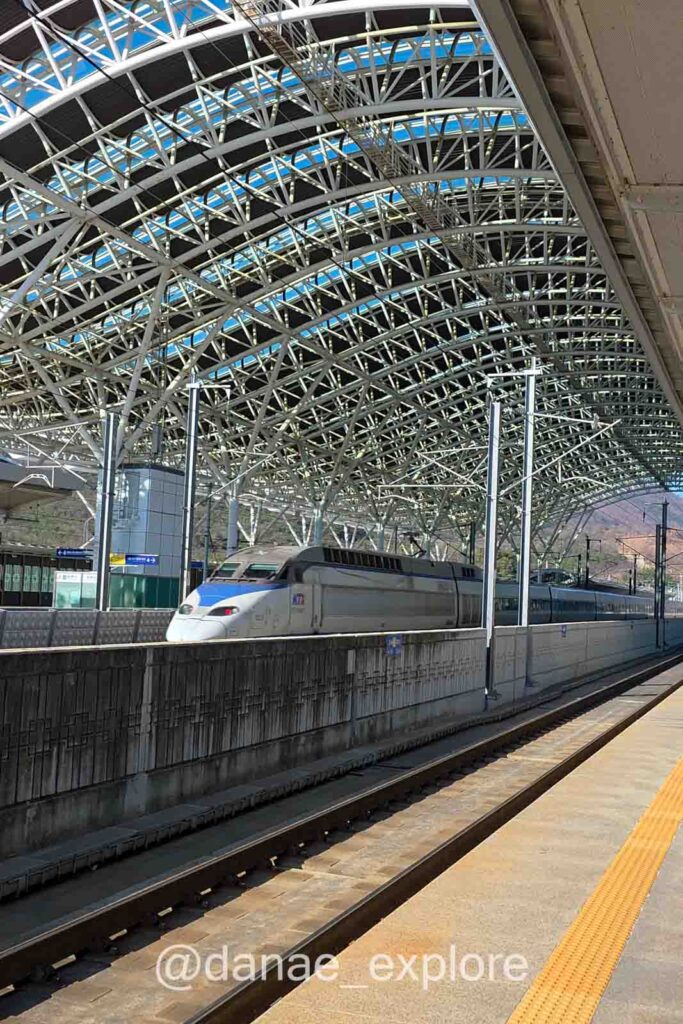
To travel between cities in South Korea, the train system is the best option. Seoul, Busan, and Gyeongju are connected by high-speed rail lines called KTX. Traveling by train is the easiest and most efficient way to organize your South Korea itinerary.
We took the high-speed train from Seoul to Gyeongju. The trip takes just over two hours. I bought the tickets in advance through the official website. Tickets go on sale 30 days before your travel date, so I recommend setting a reminder to book as soon as they become available. That way, you can choose the best departure times, especially if you’re traveling during peak season or on weekends, as we were.
From Gyeongju to Busan, we also traveled by KTX, but this time I bought the ticket the day before, again through the official website. Since it’s a short trip of about 35 minutes, and we could have taken a regular train if needed, I decided to wait and purchase the tickets closer to departure, and everything worked out smoothly.
.
How to get around in Korean cities
In Seoul, we used the metro almost exclusively. The network is extensive, well signposted, including in English, and it covers the main tourist areas very efficiently. It worked perfectly.
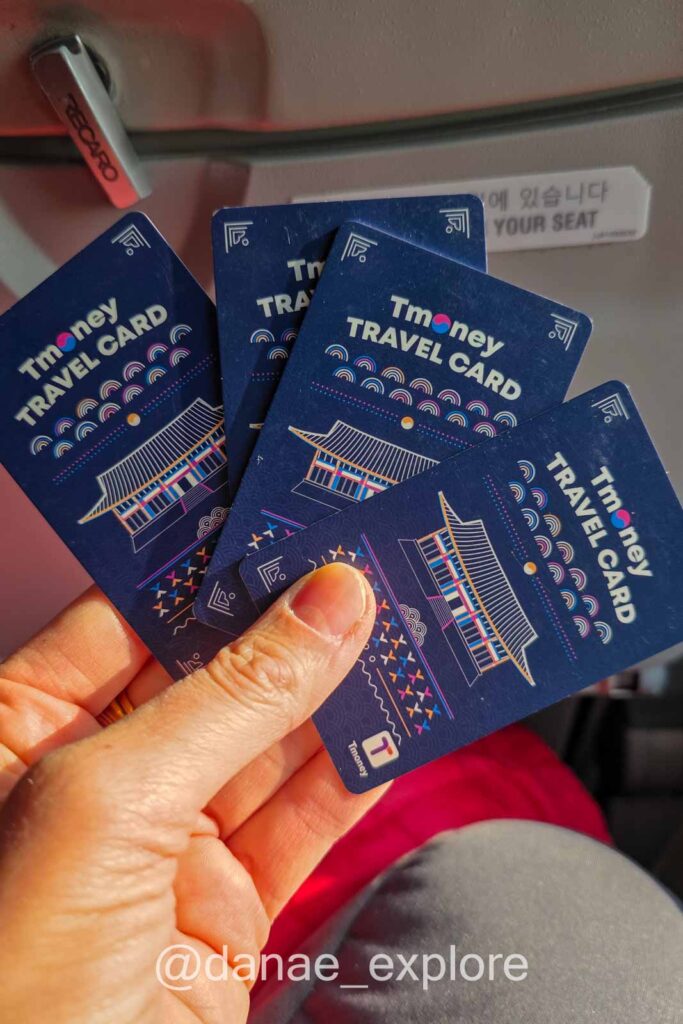
To pay for fares, we used the T-Money card. It works like a prepaid transit card and is accepted in various places, including the ubiquitous convenience stores. We bought one card per traveler at one of these stores and topped them up at the machines inside the stations. We couldn’t use a credit card to reload it, only cash. To use the subway, you simply tap the card at the turnstile when entering and exiting.
From Incheon Airport to our hotel in Seoul, we chose the Airport Limousine Bus. I really like this option and always check if it’s available. After a long international flight, the last thing I want to do is carry luggage through subway stations, change lines, and deal with stairs. The bus is comfortable, has space for luggage, and stops in the main hotel areas of the city. There are several lines; for Myeongdong, ours was number 6015. Just outside the international arrivals area, there are ticket kiosks where you can pay by credit or debit card. Even after nearly 40 hours of travel, buying the ticket was simple. On this link you can find more information.
In Busan, we used Uber quite a bit. The city is fairly spread out, and getting around can take time. Since there were four of us, the price difference wasn’t significant, so we opted for a bit more comfort. Uber works well in South Korea and prices are reasonable. From the train station to the hotel, and from the hotel to the airport, we used the metro.
In Gyeongju, we did almost everything on foot. We only took the bus to and from Bulguksa Temple and to reach the KTX station. For bus lines and schedules, check the NAVER app.
Overall, it’s very easy to travel independently in South Korea, combining high-speed trains between cities with subways, buses, or Uber within them.
.
.
Map of our trip to South Korea (save it to your Google account)
Our South Korea itinerary is mapped out below. Everything is organized to make planning your trip easier. Just click and save it to your Google account so when you start planning your trip to South Korea, you’ll know exactly where to begin.
Whether you’re planning a 7-day itinerary or a longer 10-day trip, the country offers a very balanced mix of history, technology, and authentic cultural experiences.
How to use this map: Click the menu tab in the upper left corner of the map to access different layers, including points of interest and routes. You can toggle layers on and off by checking the corresponding boxes. To see details about specific locations, click on the icons on the map.
To save this map to your Google Maps account, just click the star icon next to the map title. To access it later on your phone or computer, open Google Maps, tap the menu button, go to “Your Places”, select “Maps”, and you’ll find this map saved there.
.
South Korea Travel FAQ
How many days are ideal for a first trip to South Korea?
7 to 10 days is the ideal amount of time to combine Seoul, Gyeongju, and Busan at a relaxed pace.
Is Gyeongju worth including in a South Korea itinerary?
Yes, especially if you want to balance your itinerary with more history and a less urban atmosphere.
Is it easy to travel around South Korea independently?
Yes. Public transportation works very well.
.
Is it expensive to travel in South Korea?
Overall, costs are moderate. Accommodation and transportation are more affordable than in Japan, and local food offers excellent value for money. The final price will depend on the type of hotel you choose.
Do travelers need a visa to visit South Korea?
Visa requirements depend on your nationality. Citizens of several countries can travel to South Korea as tourists for up to 90 days without a visa, provided they meet the entry requirements in effect at the time of travel. Before planning your trip, always confirm the current rules, as they may change. I usually check Sherpa Travel for up-to-date information and, if needed, the official website of the destination country’s embassy.
Is it safe to travel to South Korea?
Yes. South Korea is considered one of the safest countries in the world for travelers, including women traveling solo.
I have more days: where should I go in South Korea?
If I had more time in South Korea, I would visit Jeju Island, famous for its volcanic landscapes and coastal trails. Another option would be to extend your stay in Busan and explore lesser-visited cities such as Andong, known for its traditional heritage, or Sokcho, the gateway to Seoraksan National Park.
.
Here are the websites I always use to plan my trips:
– 🛌 Accommodation: Booking
– ☀️ Tours & activities: Civitatis & Get Your Guide
– 📱 eSIM for mobile data: Airalo e-SIM – use promo code DANAE2375
– 🚗 Car rental: RentCars – use promo code DANAE, or DiscoverCars
All our posts about destinations in Asia, to inspire you and help you plan your trip:
Thailand
Cambodia
- Siem Reap and Angkor Wat, the most spectacular temples in Cambodia
- New Year’s Eve in Siem Reap, Cambodia
Laos
Japan
- 4 week Japan itinerary – the best of Japan for your first visit to the land of the rising sun
- Where to stay in Tokyo
- Tateyama Kurobe Alpine Route – Your ultimate guide to the journey crossing the Japanese Alps
- Nakasendo Road, from Magome to Tsumago, the most beautiful villages of medieval Japan
- The best of Kyoto: What to do in 4 (or 5) days in the former Japanese capital
- Hiroshima: 2-day itinerary, with a day trip to Miyajima
- Sapporo: complete itinerary and tips for skiing in Hokkaido
- 10 things you need to know before traveling to Japan
- Beyond Tokyo: 7 day-trips that live up to the hype
South Korea
.
Did you enjoy these tips? Then follow me on social media:
Instagram @danae_explore
Pinterest @danaeexplore
Have comments or questions? Reach out to me on social media! I love chatting about travel 😉
And before you go, don’t forget to SAVE THIS PIN to your Pinterest account so you can easily find this post on The Complete South Korea Itinerary whenever you need it!