
Andalusia is one of Spain’s most beautiful regions.
In the south of the Iberian Peninsula, where cobbled streets reflect centuries of exchange between Islamic and Christian cultures, creating a unique cultural blend you notice at every turn; where each town is filled with palaces, churches, former mosques converted into churches, towers, and monuments, we spent ten unforgettable days immersed in art and history, indulging in endless tapas paired with local white wines (and fresh orange juice for the kids).
It was July, and it was unbearably hot. We were in the middle of a road trip through Portugal, traveling with another family of friends (who had also traveled with us in Norway — you can read about that trip here). They could only stay for two weeks, so we had to make a decision: the kids had the whole month off, we would stay in Portugal for 14 days, so why not extend the trip and enjoy the European summer a bit longer?
.
First of all, follow me on Instagram @danae_explore – that’s where you can keep up with my trips, find lots of travel tips, and send me a DM anytime. I love chatting about travel!
I had already fallen in love with the south of Spain back in the 1990s, when I was backpacking there on a tight budget — a trip that, besides a handful of printed photos, left me wanting to return. For me, the decision was obvious: to take my husband and daughters on a deeper dive into the history, art, and flavors of Andalusia.
Our road trip was fast-paced, with just ten days. We could easily have stayed much longer, and at the end of this post I’ll share suggestions on how to adjust your itinerary if you have more (or fewer) days to explore this part of Spain.
Here’s our complete Andalusia itinerary, with plenty of tips to help you make the most of your trip to southern Spain. And if you’re considering extending your journey, you can also check the itinerary we followed in Portugal.
.

.
Overview of our 10-day Andalusia itinerary
This part of the trip came right after two weeks road-tripping through Portugal. Since we still had a few days left and the kids were on vacation, we decided to extend the trip and include southern Spain. With just 10 days, we put together a compact itinerary focused on Andalusia’s most iconic destinations, while still leaving enough time to enjoy each stop at a relaxed pace.
Days 1 and 2 – Ronda: one of the most dramatic towns in the region, known for its setting above a deep gorge. I’ve shared all the details of our visit in a dedicated post here on the blog.
👉 Suggested stay: Catalonia Ronda
Days 3 and 4 – Granada: set aside a full day to explore the Alhambra at a relaxed pace — one of the highlights of the trip. There’s also a complete guide here on the blog.
👉 Suggested stay: Carmen de la Alcubilla del Caracol
Days 5 and 6 – Córdoba: don’t miss the impressive Mosque-Cathedral and the Alcázar de los Reyes Cristianos, and take time to wander through the beautiful historic center.
👉 Suggested stay: Hotel Patio del Posadero
Days 7 to 10 – Seville: Seville is packed with things to see, don’t miss the Giralda, the Royal Alcázar, the Metropol Parasol, and, of course, take time to wander through the historic center.
👉 Suggested stay: Las Casas de El Arenal
.
Days 1 and 2 – Ronda
How to get to Ronda
We were wrapping up our road trip through Portugal, in the Algarve. Since I couldn’t find a rental company that would let us pick up a car in one country and drop it off in another, we had to return our Portuguese rental car before crossing the border. We dropped it off in Faro, about 45 miles west of the Spanish border.
From Faro, we took a bus to Seville. There was no border control, just a quick glance at our passports before boarding. About two and a half hours later, we arrived at Seville’s bus station. From there, we took a taxi to the airport, picked up our rental car and set off for Ronda.
The drive from Seville to Ronda is about 130 km (80 miles) and takes roughly 1 hour and 45 minutes by car.
Two days later, we left Ronda for Granada, which is about 180 km east and took a little over 2 hours by car.
.
To rent a car, I always use RentCars, where I usually find the best options, and with the DANAE promo code you still get an additional 5% off. Shall we go?


.
What to do in Ronda
Ronda, one of the “white towns” (pueblos blancos) in Andalusia, is one of the most impressive towns in Spain thanks to its setting. It sits on the edge of a dramatic gorge carved by the Guadalevín River.
I’ve shared all the details in this Ronda travel guide here on the blog. In addition to the beautiful Puente Nuevo (“New Bridge”), which crosses the gorge and connects the two sides of town, there are several viewpoints along both the upper and lower sections of the canyon. I loved walking along the streets that follow the edge of the gorge, stopping here and there for photos, coffee, and ice cream. The way the town blends into the canyon is striking and alone makes it worth the trip.
And then there are the restaurants and cafés. One of the best parts of visiting smaller towns in Europe is enjoying the local cuisine. In my experience, the food tends to be better, and prices are usually lower.
.
Where to stay in Ronda
If you enjoy smaller, charming hotels, one of the best places to stay is Catalonia Ronda. Check this post where I share where we stayed and other accommodation options I loved, or this one, where I explain why I chose Ronda as one of the five small towns you should visit in Europe.
Check availability and rates here:
.

.
Days 3 and 4 – Granada
How to get to Granada
From Ronda, we drove to Granada, about 180 km away, which takes around two hours by car. Driving in Spain is easy. The roads are excellent, you drive on the right (as in the U.S. and most of continental Europe), and the road signs are easy to understand.
To rent a car, I always use RentCars, where I usually find the best options, and with the DANAE promo code you still get an additional 5% off. Shall we go?

.
What to do in Granada
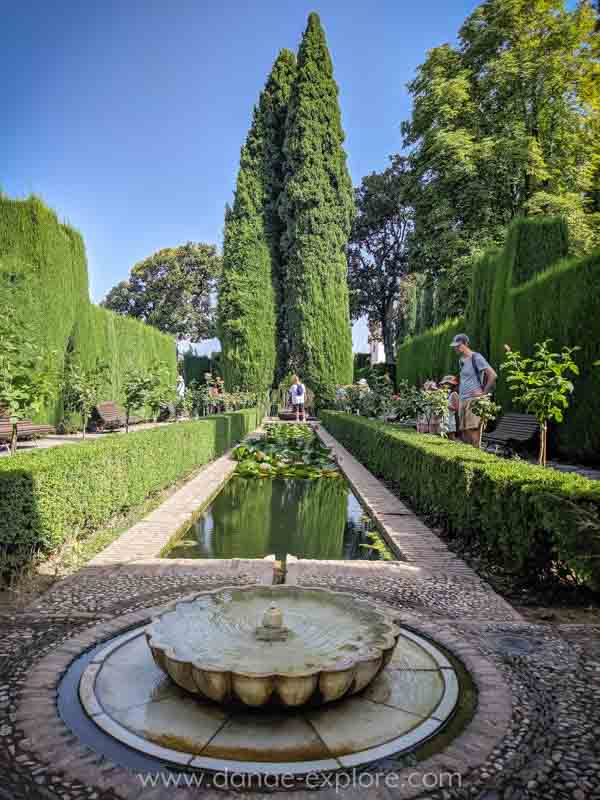
The world-famous Alhambra, one of the most visited attractions in Spain, is located in Granada.
No matter how many photos or videos you’ve seen, it will still take you by surprise when you step into its gardens and palaces. In fact, the more you’ve seen of it, the more emotional it feels to finally experience it in person.
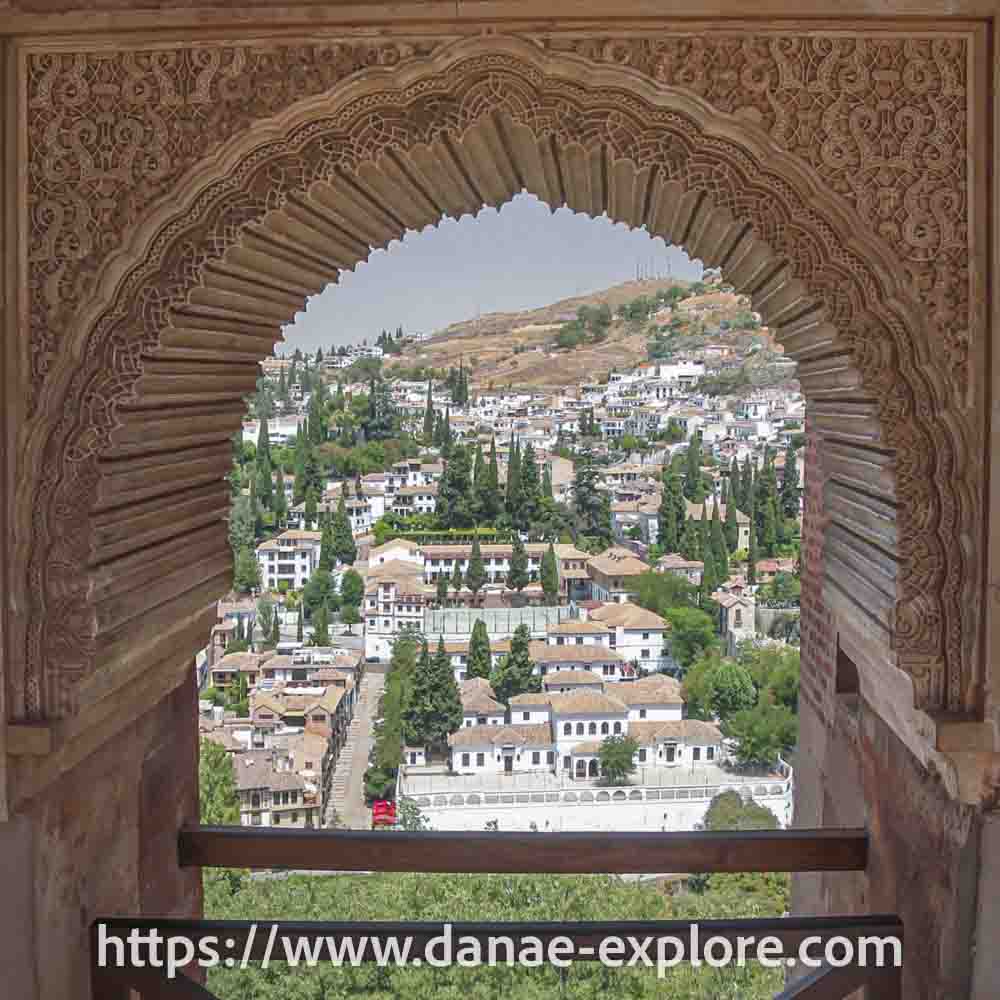
The Alhambra complex includes several buildings, towers, walls, gardens, and even a mosque. However, it’s the intricate carvings, delicate filigree work, magnificent tiled ceilings, graceful arches, and serene courtyards of the Nasrid Palaces that are the true highlight of the visit.
Granada is such a beautiful and distinctive city that I dedicated an entire post to it, where I share everything you can do in two days.
In reality, we ended up spending just a day and a half in Granada. We arrived after lunch and, after stopping by the Alhambra ticket office (I share the full story in my post about what to do in Granada), we explored the city. The next day was dedicated to fully experiencing the Alhambra, and the following day, we headed to Córdoba.
We could easily have spent another full day in Granada to better enjoy the city at a more relaxed pace.
.

.
Alhambra tickets
The Alhambra is divided into two main areas: the Generalife Gardens and the Nasrid Palaces.
You can visit just the gardens or both the gardens and the palaces. I highly recommend seeing both. It’s essential to book tickets in advance, and I recommend booking through the official website, where you’ll find all the necessary information about prices, schedules, and accessibility. If you can’t get tickets, you can try booking a guided tour like this one or this one, which often include skip-the-line access.
For more details on purchasing tickets to the Alhambra, check out our post on what to do in Granada.
Entry to the Nasrid Palaces is timed, and the schedule is strictly enforced — doors don’t open early, and late entry is usually not allowed.
However you choose to visit,I recommend getting the audio guide (available in a wide range of languages). It’s excellent and adds valuable context not just about the Alhambra, but about the region as a whole.
.

.
Where to stay in Granada
On this trip, we chose to stay in an apartment. With the kids a bit older, it’s nice to have a bit more space, so on recent trips, I’ve been prioritizing apartments. We stayed in Barrio del Realejo, which is a great location.
If you prefer staying in a hotel, there’s no shortage of options in Granada. Some of my top picks are Carmen de la Alcubilla del Caracol, a charming small hotel in a historic house with beautiful views of the town, or Casa Morisca Hotel, also set in a historic building (am I the only one who loves hotels in historic houses?). For a more budget-friendly option, consider Hotel Parraga Siete, which is centrally located near several bars and restaurants, or Porcel Navas, also in the same area.
For more details, check our full Granada guide here on the blog.
Now it’s time to find your accommodation in Granada:

.
Days 5 and 6 – Córdoba
How to get to Cordoba
We left Granada early and headed to Córdoba, a journey of about 200 km that took just over two hours. As I mentioned before, the roads in the region are excellent, mostly highways with very light traffic.
.
What to do in Córdoba
Córdoba has two main attractions you shouldn’t miss, and which likely inspired you to include this city in your itinerary: the Mosque-Cathedral and the Alcázar of the Christian Kings.
.
.
Cordoba Mosque-Cathedral
The Mosque-Cathedral of Córdoba is one of the most striking examples of Islamic architecture, and you’ve probably seen photos of its distinctive interior, where rows of columns and red-and-white arches seem to stretch endlessly. The arches are stunning, but the mosque is so much more than that.
Its origins date back to a 6th-century church, which was transformed into a mosque in 786 and later expanded over the centuries. It was groundbreaking for its time, moving away from the vertical emphasis typical of Islamic religious buildings and adopting a more horizontal layout.
In 1236, it was converted into a Christian church, with several structures added inside, including a central nave, choir, dome, and tower. Despite these changes, it remains one of the most important examples of Islamic architecture and art in Europe.
.
.
Visiting the Mosque-Cathedral is a truly impressive experience. Entering through the Patio de los Naranjos, you step into a dimly lit space with a relatively low ceiling. Then suddenly, you find yourself inside an immense cathedral, with all the architectural features typical of Gothic and Renaissance churches.
I recommend getting the audio guide and information leaflet at the entrance (available in several languages, including a version for kids). They really help you understand the different areas of the mosque, its history, and its transformation over time.
If you enjoy guided tours, here are some options.
.

.
Alcazar de los Reyes Cristianos
Another must-see in Córdoba is the Alcázar de los Reyes Cristianos. This fortress, built in the 13th and 14th centuries, was where the Catholic Monarchs, Isabel and Fernando, met Christopher Columbus before his voyage. Be sure to explore the palace gardens while you’re there. Nearby, you’ll also find the Baños del Alcázar Califal, which are well worth a visit.
The Judería (Jewish Quarter), right next to the mosque, is a charming maze of narrow streets and small squares. Its whitewashed buildings, colorful window frames, wrought-iron doors, and leafy courtyards make it a delightful place to wander. Although it’s popular with tourists and has plenty of souvenir shops, it’s still a great spot to stop for a drink or dinner.
And speaking of courtyards (especially if you’re visiting Córdoba in the summer, as we did), take some time to relax in the shade — they offer a welcome break from the heat, which can be intense. It’s also worth visiting the Palacio de Viana, the Association of Friends of the Patios Cordobeses, and the courtyards of San Basilio.
Also close to the Mezquita, it’s worth walking across the Puente Romano (Roman Bridge), and if you’re a flamenco fan, don’t miss the Centro Flamenco Fosforito.
.

.
Where to stay in Córdoba
As in the other stops on this trip, we stayed in an Airbnb in Córdoba as well. It was a two bedroom apartment, very well located and really comfortable — the best apartment of the trip (the one in Ronda was also great, but this one was more spacious).
If you prefer hotels, Cordoba offers several great options.. I recommend Hotel Patio del Posadero, a charming 15 th-century house with a lovely courtyard, or the more modern Hesperia Cordoba. For a more budget-friendly option, check out Cordoba Carpe Diem.
.

.
Days 7 to 9 – Seville
How to get to Seville
From Córdoba to Seville, it’s about 140 km, which took us around an hour and a half. Once we arrived in Seville, we returned our rental car at the airport and took a taxi to our accommodation, which was centrally located.
Seville is the capital of the Andalucía region and the largest city we visited. It was our final stop because it has the largest airport in the region, making it easier (and cheaper) to fly home — we flew with Air Europa, connecting in Madrid.
We picked up and returned the rental car in Seville, so we didn’t have to pay any extra fees for dropping it off in a different location — which can be quite expensive. In Portugal, we did have to pay those fees, since we picked up the car in Lisbon and returned it in Faro — but in that case, it was absolutely worth it, as it made our entire Portugal itinerary, possible and allowed us to combine it with this one in Spain.
.
To rent a car, I always use RentCars, where I usually find the best options, and with the DANAE promo code you still get an additional 5% off. Shall we go?


.
What to do in Seville
We stayed in Seville for 3 days (2 full days and 2 half days), which was enough to see the main attractions. Since we only had 10 days in total for southern Spain, it worked well. That said, the city has a lot to offer, and you could easily spend a few more days here without running out of things to do.
Despite being the largest city on our itinerary, Seville is still very walkable, and you can explore most places on foot.
.

.
Giralda Cathedral and Tower
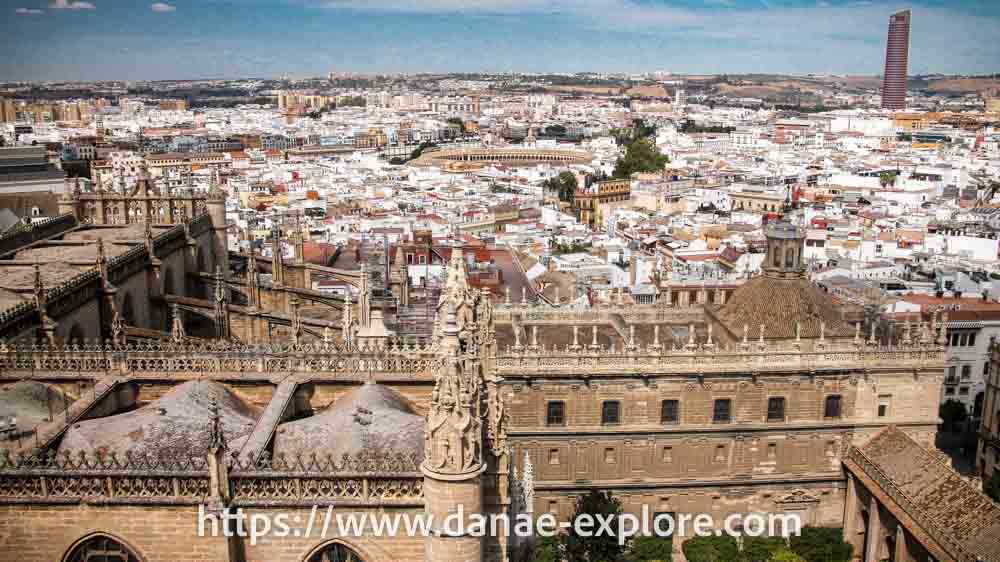
The Cathedral and the Giralda Tower are among Seville’s main attractions. Even if you’re not religious, the cathedral is still impressive. And if you’re someone who enjoys history and architecture, like I do, you’ll be fascinated by the building and everything around it.
Built between 1434 and 1517 on the remains of a former mosque, it is considered (depending on the source) the largest Gothic cathedral in the world.
It’s well worth climbing to the top of the Giralda Tower — you can buy tickets here, or here for a guided tour. Originally the minaret of the mosque on which the cathedral was built, the tower was later adapted and now offers some of the best views over Seville.
Inside the cathedral, don’t miss the monumental tomb of Christopher Columbus, as well as the Capilla Mayor and its stunning altar. In short, whatever your beliefs, this is a must-visit.
.
.
Royal Alcazar of Seville
Another must-see in Seville is the Real Alcázar. After visiting the Alhambra in Granada and the Alcázar de los Reyes Cristianos in Córdoba, I have to admit I thought, “Oh no, another palace-fortress.” But don’t skip it — you’ll be pleasantly surprised. The place is truly impressive. You can buy tickets here.
Game of Thrones fans will recognize several filming locations, which gives you an idea of how spectacular the setting is.
.
Seville Aquarium
Since we were traveling with children, we included a visit to the Seville Aquarium. “Another aquarium?” you might think — I had the same reaction. But it’s worth it. The concept is actually very interesting.
Did you know that Ferdinand Magellan’s expedition — the one that completed the first circumnavigation of the globe — departed from Seville? I didn’t. The aquarium recreates this journey, showcasing the different marine environments encountered along the way. I really enjoyed it. Here’s the link to the Aquarium official website.
.

.
Maria Luisa Park and Plaza de España
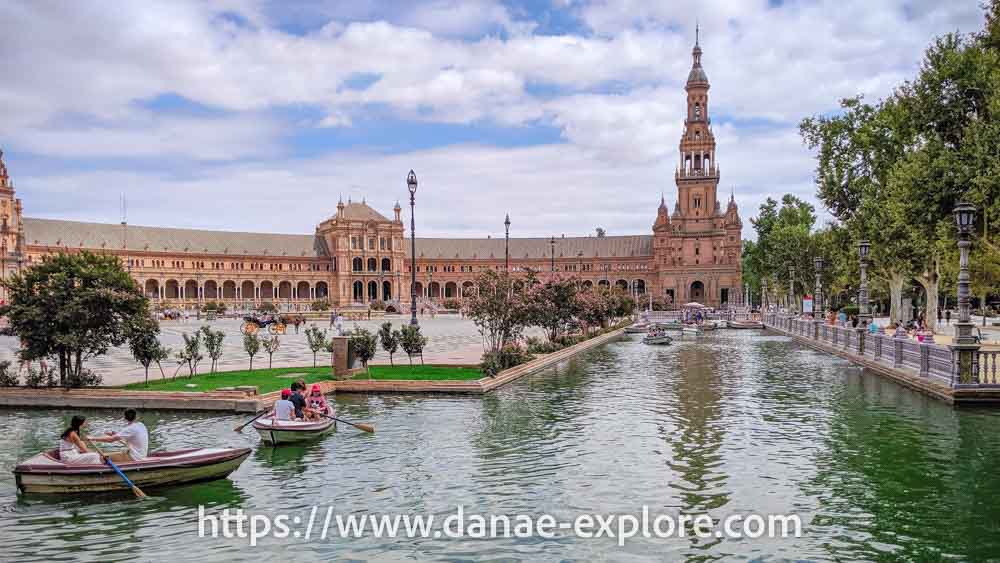
Close to the aquarium, you’ll find Parque de María Luisa, a lovely place for a walk, and Plaza de España, one of the city’s most iconic landmarks. It’s a great spot to stroll around and watch street performers.
.
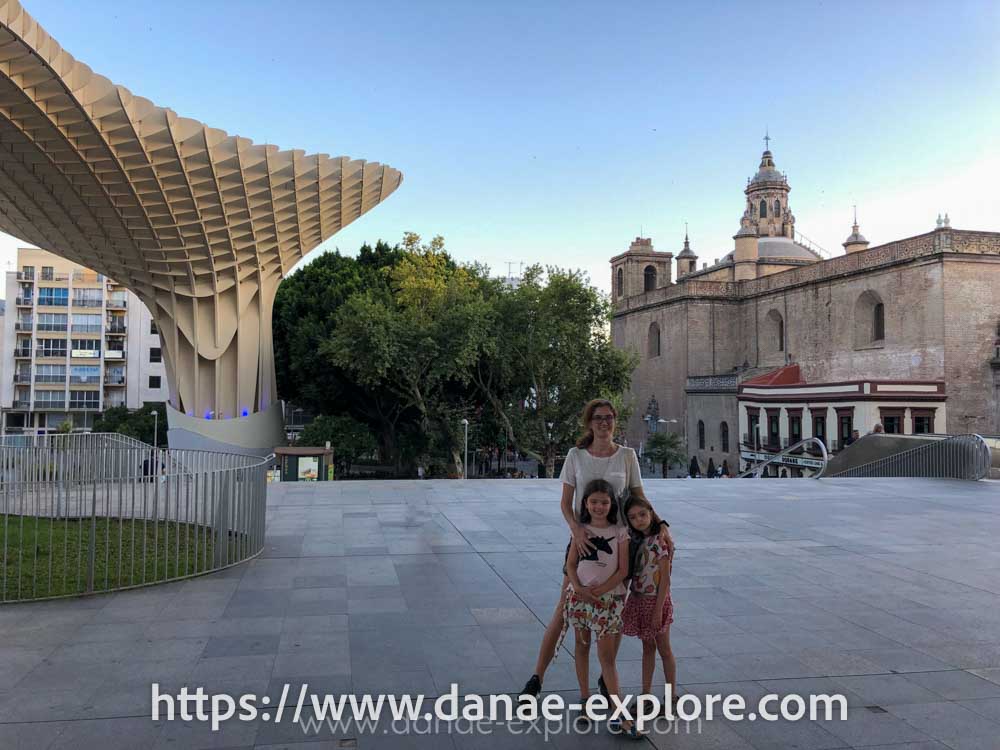
Metropol Parasol – The arrows
Sooner or later, you’ll come across the Metropol Parasol, also known as “Las Setas” (the Mushrooms), a large wooden structure designed by German architect Jürgen Mayer and completed in 2011 at Plaza de la Encarnación. The upper walkway is a great spot for a stroll at sunset, though it can get quite busy.
The city has so much to offer, whether you have 3 days in Seville or a week, wheter you visit Seville with kids or not, you’ll have plenty to do and discover.
.
.
Where to stay in Seville
In Seville, we booked an apartment through at Zentral Suites & Apartments. Specifically, we stayed in a two-bedroom apartment at Morgado 5. The listing includes other apartments in different locations and sizes as well. The location was great, the beds were very comfortable, and having two bathrooms was definitely a plus. That said, this was probably my least favorite stay of the trip. Even so, it still offers good value for money.
If you prefer staying in a hotel, I recommend Las Casas de El Arenal and Casa Romana Hotel Boutique. Both offer excellent value for money. You can check prices and other options on the map below.
.
.
Day 10 – Return home
On our last day in Seville, we made the most of our morning with a good coffee, a walk around the city center, and a quick lunch before heading to the airport for our flight home.
We flew with Air Europa, connecting in Madrid. The journey was smooth and easy. While Seville airport is relatively small and can get quite busy, our flight departed on time.
.
Detailed itinerary of our ten day trip through Andalucia
You can find a detailed map of our trip on Google My Maps. Just click and save it to your Google account so you can easily reference it when planning your next trip to Spain 😉
The map includes details of everything we did, where we stayed, and the places we visited, organized into color-coded layers for each area. The blue line shows the route we drove.
How to use this map: Click the menu tab in the upper left corner of the map to access different layers, including points of interest and routes. You can toggle layers on and off by checking the corresponding boxes. To see details about specific locations, click on the icons on the map.
To save this map to your Google Maps account, just click the star icon next to the map title. To access it later on your phone or computer, open Google Maps, tap the menu button, go to “Your Places”, select “Maps”, and you’ll find this map saved there.
.
What would I change in the itinerary
If we had more time…
I would have loved to have had a few more days (maybe weeks?) to wander around and get to know southern Spain better. Malaga, Cadiz, Sierra Nevada, Baeza, Úbeda and the list goes on. One little city is more beautiful than the other, you can spend months there, whatever the time of year.
If we had one more day, it would be dedicated to Granada. With two extra days, I would split the time between Córdoba and a brief stop in Málaga, especially if you enjoy scenic drives and don’t mind a quick visit to each place.
With three more days on the itinerary, one of them dedicated to Granada and the other two would be or Sierra Nevada (if it were winter) or in Malaga or Costa do Sol (remainder of the year).
.
If we had less time…
It’s tough to cut beloved places from the itinerary. With less time, I would have had to skip the charming city of Ronda for another trip.
Could we have fit everything into one week? Yes, it’s possible. However, I don’t recommend it. Rushing through so many culturally rich, historically significant, and gastronomically delightful places would likely leave you feeling stressed and frustrated. If your time is limited, carefully review what we did, consult other sources, and make thoughtful choices to ensure a more enjoyable experience.
.

.
Here are the websites I always use to plan my trips:
– 🛌 Accommodation: Booking
– ☀️ Tours & activities: Civitatis & Get Your Guide
– 📱 eSIM for mobile data: Airalo e-SIM – use promo code DANAE2375
– 🚗 Car rental: RentCars – use promo code DANAE, or DiscoverCars
.
All our posts about Spain, to inspire and help you on your trip:
- 10 days in Andalucia: Our complete itinerary through southern Spain
- 5 unmissable small towns in Europe
- What to do in 2 days in Granada, Spain
- What to do in Ronda, the most beautiful town in Andalucia
.
And here are our posts about other destinations in Europe, come check them out!
Scandinavia
- What to do in Norway in 12 days – and itinerary suggestions for 7, 10, 15 or 20 days
- Is it expensive to travel in Norway? Simple strategies to reduce the cost of visiting one of the most beautiful countries in the world
- Preikestolen – complete guide to the most beautiful hike in Norway
- Iceland itinerary: complete 5 to 9 day road trip guide
- What to do in Iceland – the best of the south and east of the island
- 5 unmissable small towns in Europe
Greece
- What to do in 2 or 3 days in Athens
- The best itinerary for a 15-day road trip around mainland Greece
Balcans
- Mostar – what to do in the most charming town in Bosnia and Herzegovina
- What to do in Sarajevo: a 1 or 2-day itinerary in the capital of Bosnia and Herzegovina
- 20-day itinerary through the Balkans, in Eastern Europe – Serbia, Montenegro, Croatia and Bosnia-Herzegovina
Portugal
- Portugal in two weeks: our complete itinerary and tips
- One week in the Azores – Complete itinerary with Sao Miguel, Pico and Terceira Islands
- São Miguel, Azores: your complete guide to the largest island in the Azores
- Terceira Island, Azores – tips and the perfect itinerary to explore the island
- Pico Island – complete guide to visiting the most picturesque island in the Azores
.
Did you like these tips? Then follow me on social media:
Instagram @danae_explore
Pinterest @danaeexplore
Comments or questions? Contact me on social media! I love to chat about travel 😉
And before you go, don’t forget to SAVE THIS PIN to your PINTEREST account for easy access to this post on our ten day Andalucia itinerary through Southern Spain whenever you need it!