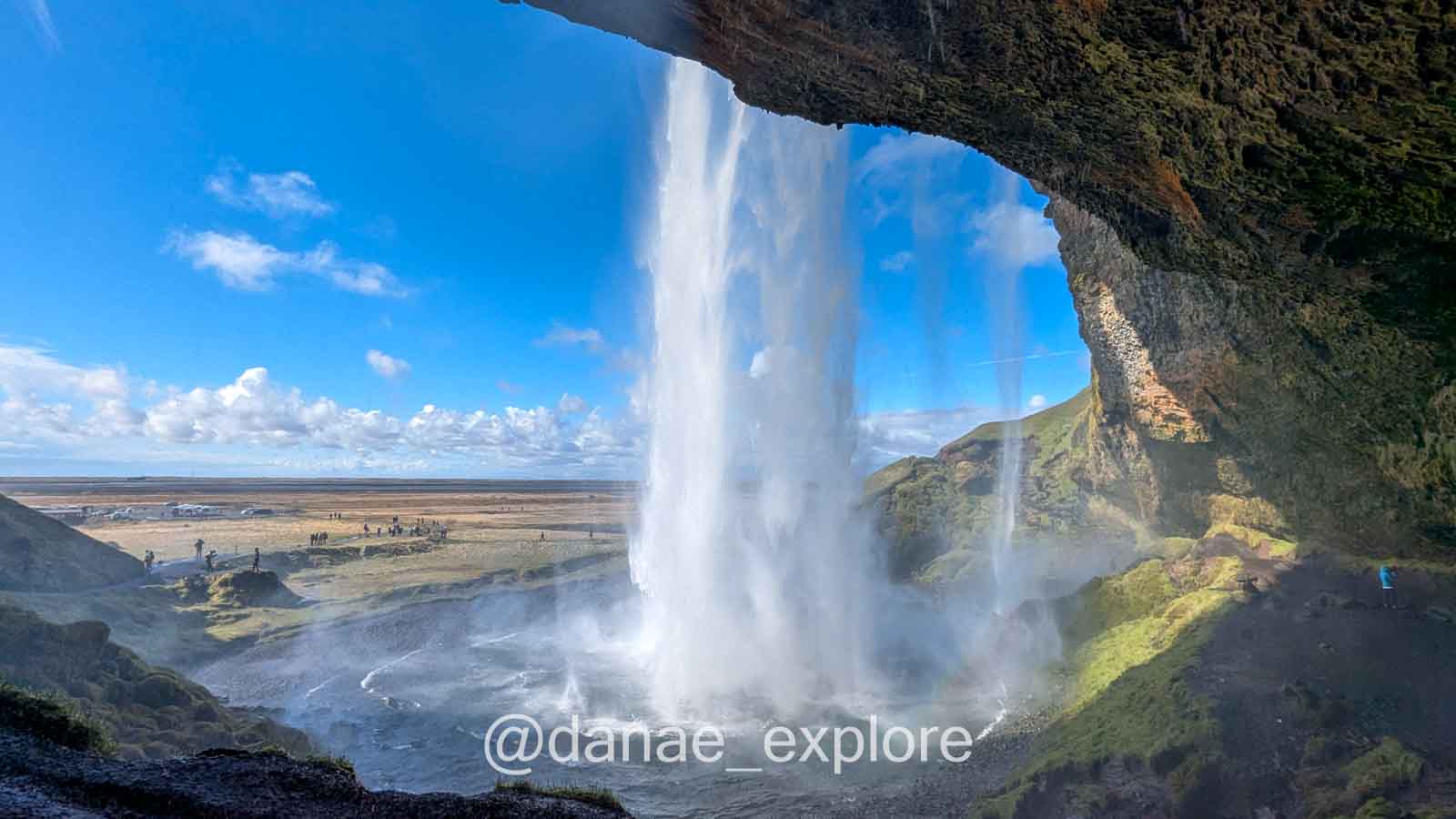

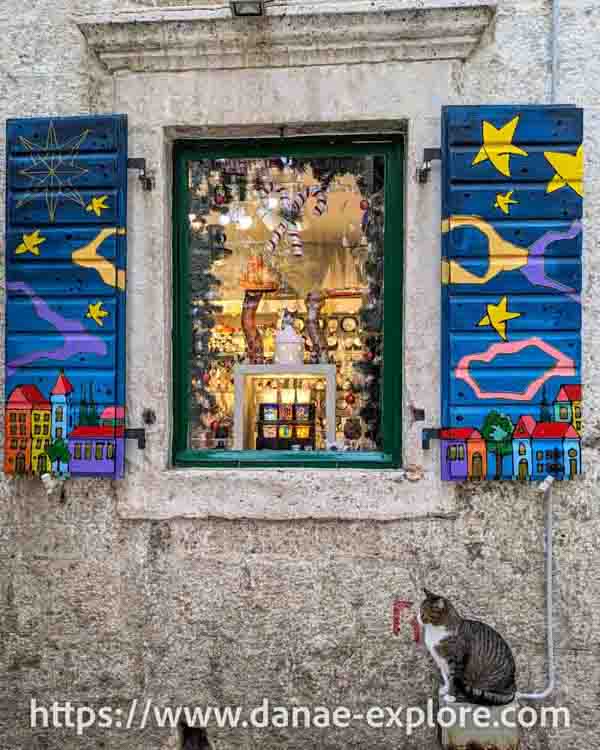
Imagine walking through medieval cobblestone streets, in a town surrounded by mountains that could pass for a fairy-tale fjord, sailing the Adriatic Sea, exploring turquoise-water caves and islands steeped in legends of miracles and hauntings, climbing a lookout in a 9th century fortress, stopping here and there to enjoy excellent restaurants, cafes, and bars, all of this in the company of cute cats, many cats.
Does that sound fun to you? Then come with me to discover Kotor, a European gem still off most people’s radar.
For our 3-week Balkans road trip, we spent 2 days in Kotor, one of the highlights of the whole journey.
First of all, follow me on Instagram @danae_explore – that’s where you can keep up with my trips, find lots of travel tips, and send me a DM anytime. I love chatting about travel!
Where is Kotor?
Kotor is situated on the shores of the homonymous Bay of Kotor, in Montenegro, one of the countries resulting from the dismantling of the former Yugoslavia. After the country broke up in 1991–1992, Kotor became part of the territory of the Republic of Serbia and Montenegro.
It wasn’t until 2006 that Montenegro gained its independence, becoming one of the youngest countries on the planet — my daughters were impressed to learn that the country is practically their age 😍
Kotor is located about 90 km from the capital, Podgorica, the same distance that separates it from Dubrovnik, in southern Croatia, which makes getting there very easy, whether by land or by air — the nearest airports are in Podgorica and Tivat.
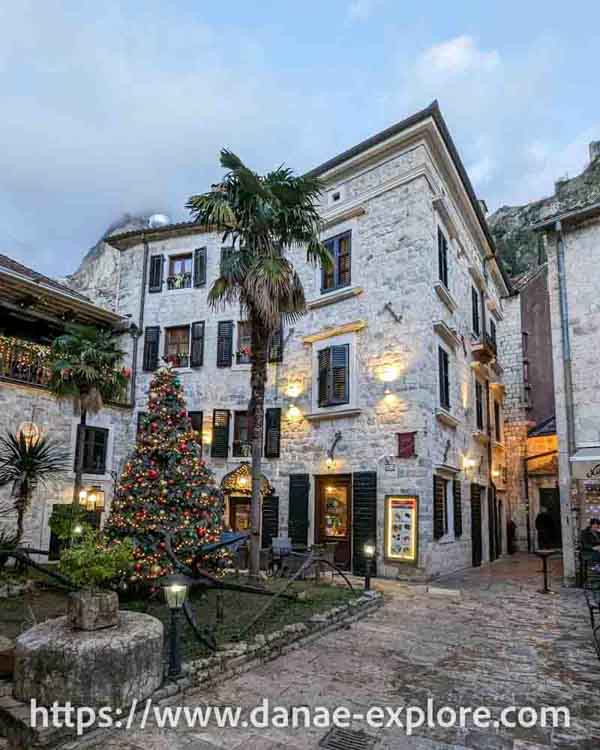
The old town of Kotor has been a UNESCO World Heritage Site since 1979.
.

.
When to go to Kotor?
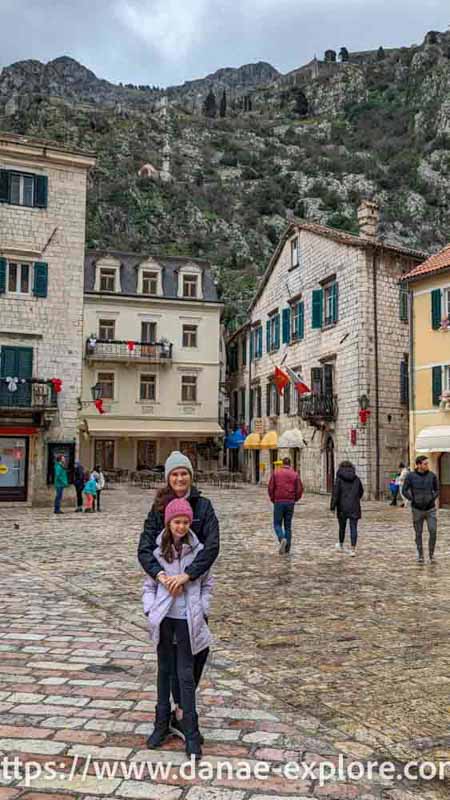
We went to Kotor in winter. In early January, we experienced temperatures ranging from 7°C to 18°C, with cloudy weather but no rain. The town was very calm, with few tourists and no queues. If you don’t mind a quieter atmosphere, winter is a great choice. The only downside is that you can’t enjoy the beaches.
Summer is the high season along the coast, and it gets very crowded. Tourists from all over the world, especially Europeans, flock there to enjoy the beaches of the Adriatic Sea and the country’s affordable prices (compared to other European options). Be prepared: besides the crowds, the heat can be unbearable, and prices tend to be higher.
Spring and autumn can be great times to visit: the weather is still favorable for enjoying the water, the town isn’t as crowded but there’s still some liveliness, and the mild temperatures won’t make you feel like you’re in a branch office of hell.
.

.
What is it like to drive in Montenegro?
Don’t worry, driving in Montenegro is smooth sailing. We opted for renting a car and had no problems whatsoever.
The roads we drove on in Montenegro are single-lane, well-maintained, and well signposted. Driving is on the right (just like elsewhere in continental Europe). We didn’t go through any toll booths, didn’t encounter police checkpoints, and had no issues.
We entered Montenegro via the border with Serbia, through a crossing called Jabuka (Serbian side) and Ranče (Montenegrin side). It was completely straightforward: a standard passport check with no questions asked. We later crossed into Croatia via Debeli Brijeg (Montenegro side) and Karasovići (Croatian side). The line to enter Croatia was very long, the wait was almost an hour. They checked passports, asked a few questions, and we continued on our way. You can find more information about driving and border crossing on this post.
To rent a car, I always use RentCars, where I usually find the best options, and with the DANAE promo code you still get an additional 5% off. Shall we go?
.
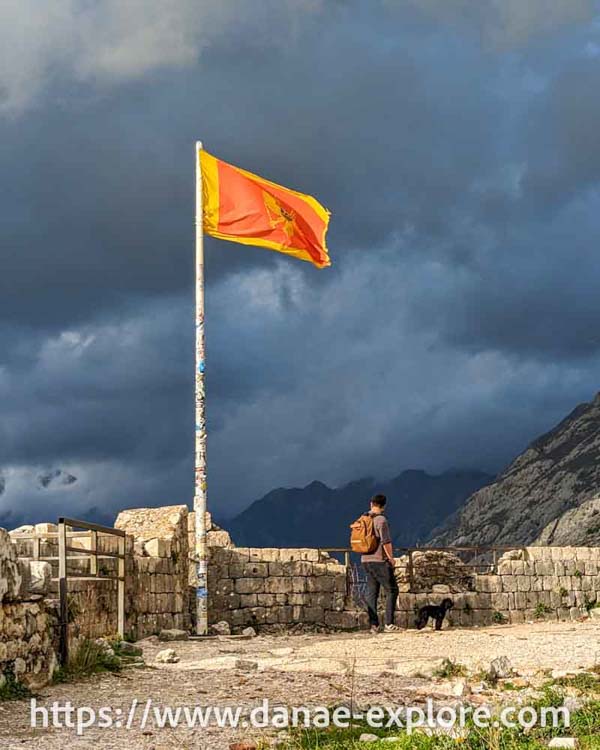
Kotor is the southernmost fjord in Europe – True or False?
We often hear references to the Bay of Kotor as the southernmost fjord in Europe, or “the only fjord in the Mediterranean“, but geologically speaking, the bay doesn’t quite fit the definition of a fjord. Fjords are characterized by deep, narrow valleys carved by glaciers during the last Ice Age.
The Bay of Kotor developed due to tectonic processes, seismic activity, and subsidence of the ground.
But you’ll find that it doesn’t make any difference whether it’s a fjord or not; you can call it whatever you want. What matters is that the place is absolutely stunning!
.
.
Is it expensive to travel to Kotor, Montenegro?
Although not part of the European Union, the official currency of Montenegro is the Euro, which makes things easier for visitors.
We didn’t find Montenegro particularly expensive when compared to eurozone countries. We had been in Italy a few days before, and the costs in Kotor were significantly lower. Obviously, it’s not a cheap destination, but it felt more budget-friendly than traveling within the European Union.
.
Where to stay in Kotor
There are plenty accommodation options in Kotor, as well as in other towns around the bay.
We chose to stay near Kotor’s historic center (Old Town), in the district of Dobrota. We stayed at the Stone Home Kotor, an apartment by the bay, for its easy access, free parking, and extra space for our group of 7. The house was great for a group like ours, the host was wonderful, and the location was excellent; it was quiet and a short walk from the Old Town.
In the same area there are several other apartments for rent. I had pre-selected Marilu Apartments (also right on the bay) and Solaris Lux Apartments. I usually shortlist about 3 or 4 before making a final decision.
Staying in Kotor Old Town must be fantastic! There are many options, both hotels and apartments, making it ideal for enjoying the town after dark. It probably would have been my choice if we hadn’t been renting a car. The options I had selected inside the Old Town were Casa Antica Druško and Hotel Marija.
It is also possible to stay in other towns along the bay. Perast is a great option. It has a beautiful historic center and many options for restaurants, cafes, and bars. The Jelena Palace, overlooking the bay, looks excellent and is very well-rated; while the Hotel Conte, located next to the town’s main square and church, looks like something out of a dream.
Check availability and prices here:
.
What to do in Kotor, Montenegro
Getting lost in the cobblestone streets of the Old Town (Stari Grad)
One of my favorite things to do in Europe is to wander through cobblestone streets surrounded by medieval walls, getting lost in picturesque squares and historic churches, and stopping for a coffee (or a glass of wine) while trying to navigate the medieval labyrinth 😅
If that sounds like you, Kotor won’t disappoint. The town is beautiful, with plenty of small churches, each with its own history, and palaces that hark back to the days when Kotor was part of the Republic of Venice.
One of the main attractions of the old town is St. Tryphon’s Cathedral, consecrated in 1166, but destroyed by several earthquakes and rebuilt even more times.
As you wander through the alleys, you will eventually come across the Church of Saint Nicholas, the tiny Church of St. Luke (my favorite), and the Montenegro Maritime Museum. All worth a visit.
.
.
Climb Kotor Fortress
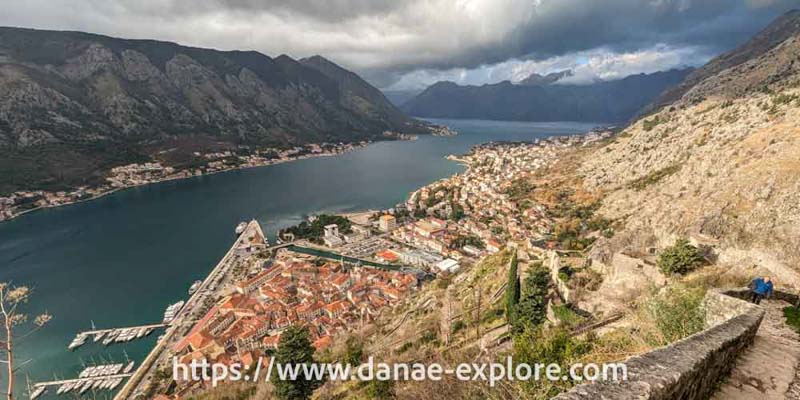
Let’s be honest: it’s not easy to hike up to Kotor Fortress. It’s quite a climb, but it’s manageable, taking a little over 1 hour to ascend, and the reward is well worth it! When in Kotor, push through the laziness, think about the ice cream (or cold drink) waiting for you at the bottom, and go for it.
1,350 steps take you up to 260 meters in altitude, with sweeping views of the Old Town and the Bay of Kotor. There are two entrance points: looking from the old town towards the fortress, one entrance is on the left side (behind the Church of St. Mary Collegiate, close to River Gate) and the other on the right side (in the direction of the Cathedral of St. Tryphon, Square Od Salate). Finding the path is quite easy. The two paths meet at about 1/4 of the way up, and the total distance is roughly the same.
The walls around Kotor were first built in the ninth century and by the fourteenth century encircled the entire town. Upon reaching the Fortress, there are information panels about the history of the site.
.
What to do around Kotor
Bay of Kotor Boat Tour
One of the must-do activities around Kotor is a boat tour of the Bay of Kotor.
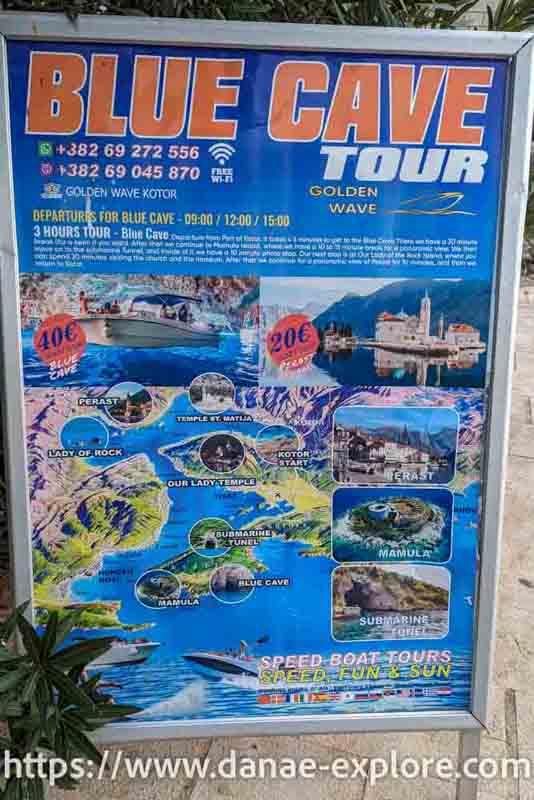
There are two types of boat tour: short and full.
On the short tour, you’ll visit Perast (usually without stopping), Our Lady of the Rocks Island (with a stop), and Sveti Djordje Island (without stopping).
The long tour covers the same points and adds the Blue Cave (where you can take a dive in the turquoise waters), Mamula Fortress (without stopping) and the submarine hideout.
You can book the tour in advance through platforms like Civitatis or Get Your Guide, or you can walk up and book directly at the stalls near the dock. Since we visited during the off-season, we had no trouble arranging the tour in Kotor itself. However, if you’re traveling during peak season, I strongly recommend booking in advance.
.
.
Boat tour to Perast and Our Lady of the Rocks Island
Perast is a village that dates back to the time when the entire region — Kotor, Dubrovnik and beyond — was ruled by Venice, and it has barely changed since. Like Kotor, it is declared a UNESCO World Heritage Site.
The town has just one street, yet boasts 16 churches and 17 palaces (some in ruins, but still beautiful). In the main square, right by the bay, stands the Church of St Nicolas, which began construction in the 17th century and is still not completed to this day. It is possible to climb the tower, and the views from up there must be something else.
.
.
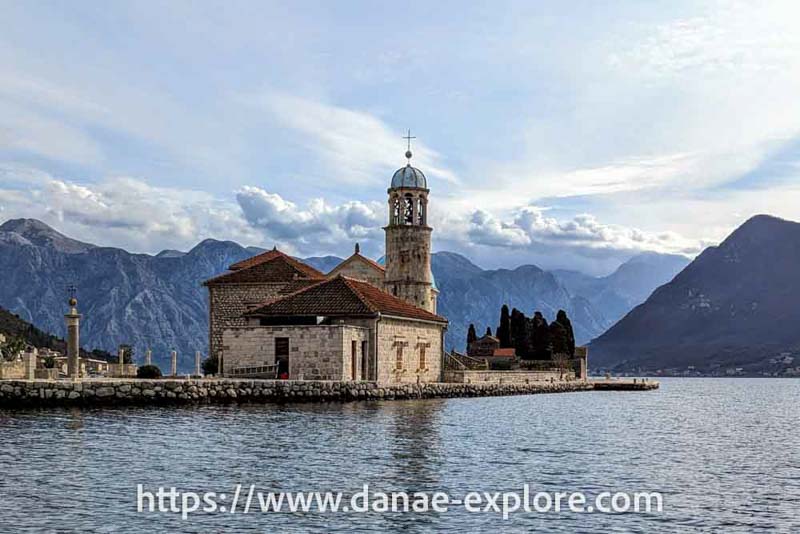
Island and church of Our Lady of the Rocks
The island of Our Lady of the Rocks was artificially created over the centuries, and it has a fascinating story (or perhaps a legend?) behind it:
The story goes that two brothers always went fishing together. On July 22, 1452, while passing by a small rock in the Bay of Kotor, near the town of Perast, they noticed something shining. When they approached, they realized it was an image of Our Lady holding the Child Jesus in her arms. At that moment, a miracle is said to have occurred: one of the brothers was healed from an illness he had suffered from for years.
When local fishermen heard about the miracle, they began a tradition: before heading out to sea, they would throw a small stone onto the rock, asking for protection and a safe journey. On their return, they would place a larger stone there, in gratitude for a safe voyage.
(Text written by me based on what our guide told us. In researching official tourism websites in Kotor, I found no mention of miracles, but the rest of the story is consistent.)
Over time, what started as a small rock eventually became an island. A chapel was built in the early 15th century to house the image found by the fishermen. The church we see today is the result of reconstructions and expansions over time, with its main structure dating back to 1630. It’s free to visit, but the small museum next door costs €1.50.
In summer, several boats run between the island and Perast.
Every year, on July 22nd at sunset, a procession of decorated boats filled with stones and crewed only by men set off from Perast, throwing the stones around the island to strengthen its structure, in an event known as Fasinada.
.
Sveti Djordje Island
The small island of Sveti Djordje is natural and home to a Benedictine monastery, almost hidden among towering cypress trees, and a cemetery, which has given rise to legends of hauntings and the nickname “Island of the Dead.”
Unfortunately, it’s not open to visitors, but from behind the Church of Our Lady of the Rocks, you can see it in one of Montenegro’s most postcard-perfect views.
.
.
In addition to Perast and its two islands, the full boat tour of the bay takes you out to the Adriatic Sea, with the following stops:
.
Blue Cave
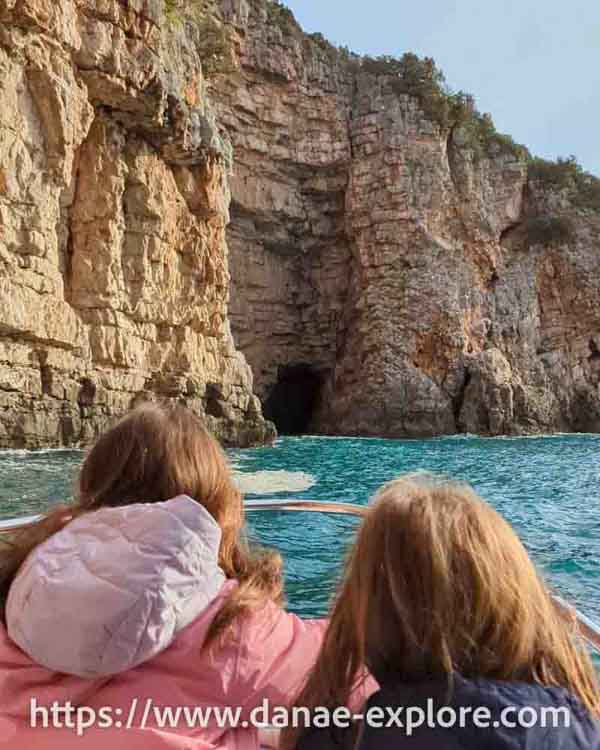
Along the Adriatic coast, there are rock formations that create the so-called Blue Cave, also known as the Blue Grotto. The water here is a striking turquoise blue, a shade that photos simply don’t capture well. As our guide explained, the color comes from sunlight reflecting off the cave’s damp interior walls.
The only way to reach the cave is by sea, on small boats. Once inside, the boats pause briefly, giving you the chance to swim in the turquoise waters. However, given the chilly 8ºC temperature during our visit in early January, no one in our group even considered taking a dip.
On our visit, we shared the cave with only one other boat. However, our guide mentioned that in summer, the cave gets crowded, with boats bumping into each other, making it stressful to swim.
After leaving the Blue Cave, our boat passed by other small caves (or grottos) formed by the rocks, just as beautiful but not accessible by boat.
.
Mamula fortress
Located on a small island at the entrance to the Bay of Kotor, Mamula Fortress was built in 1853, during the Austro-Hungarian rule. The fortress is circular (which is quite unusual), with a single tower, and covers almost the entire island. It was used as a prison during World War I and as a concentration camp during World War II.
After years of abandonment, it has been turned into a high-end, exclusive hotel, the Mamula Island, so you only see it from a distance during the boat tour.
.
Submarine hideouts
On the way back to the Bay of Kotor, the boat tour passes by former submarine hideouts used during the Yugoslav era.
These are large tunnels, with entrances camouflaged by artificial rocks and vegetation, used by former Yugoslavia to hide ships and submarines. The entrance had a movable structure that could be closed, and when viewed from above, it looked like a natural rock wall.
There were several tunnels in the area, connected by land passages, also in the form of tunnels. The one we visited, near the village of Rose, was unknown to local residents until it was decommissioned.
.
.
Budva
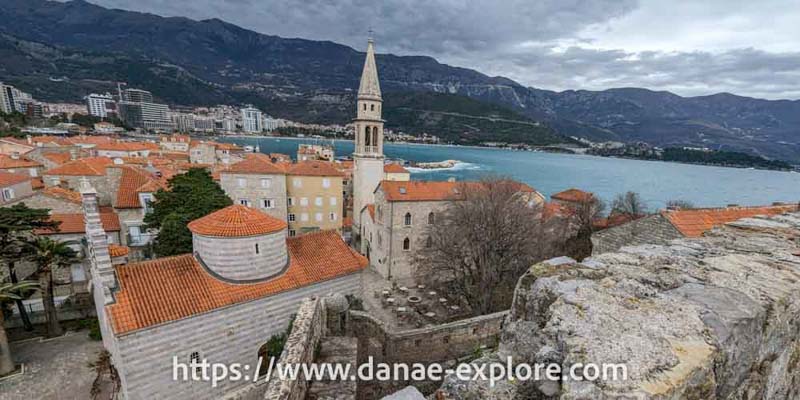
About 25 km south of Kotor, Budva is known for its well-preserved old town, beaches, and lively nightlife. Since we were traveling in winter with the kids, we only got to enjoy the first. We drove there, and it makes for an easy day trip from Kotor.
Budva offers great accommodation options, and in summer, this is where you’ll find some of the best beaches in Montenegro.
.
Sveti Stefan
Just 6 km from Budva is one of Montenegro’s most iconic landmarks: the island of Sveti Stefan.
Connected to the mainland by a narrow isthmus, the island is completely walled and now home to the Aman Sveti Stefan Hotel, a place many dream of visiting, but few can afford.
The island has a fascinating history. Originally a fishing village, its defensive walls were built in the 15th century to protect against Turkish attacks, turning it into a refuge for Adriatic pirates. At first, just 12 families lived there, with the population growing to around 400 by the 19th century. By the early 20th century, however, the number had dropped significantly, reaching just 20 residents by 1954. The Yugoslav government then acquired the island and transformed it into a luxury resort, attracting high-profile politicians and celebrities. Following the breakup of Yugoslavia, the resort declined until Aman Resorts took over in 2007 and opened the hotel in 2009.
Unfortunately, only hotel guests have access to the island, which is a bit disappointing given its rich history.
.
.
Lovćen National Park
We had planned a day trip from Kotor to Lovćen National Park, but as often happens, plans changed.
The park is centered around Mount Lovćen, which, at 1,749 meters, is what gave Montenegro its name: Crna Gora, meaning “Black Mountain.” The park has several hiking trails and is home to the Njegoš Mausoleum, dedicated to Petar II Petrović Njegoš, a 19th-century Montenegrin poet, philosopher, and prince. Climbing the 461 steps up to the mausoleum rewards you with breathtaking views stretching from Croatia to Albania.
Since we had already visited Durmitor National Park, we decided to skip it and enjoy the old town of Kotor at a more leisurely pace.
If you’re short on time and can’t make it to Durmitor, definitely consider Lovćen, it looks amazing.
.

.
Complete itinerary of our Balkans trip
Here is the Google map with our detailed Balkans itinerary – Serbia, Montenegro, Croatia, and Bosnia and Herzegovina, just click to save it to your Google account. When you start planning your next trip to Eastern Europe, you’ll already have a great starting point 😉
To rent a car, I always use RentCars, where I usually find the best options, and with the DANAE promo code you still get an additional 5% off. Shall we go?
How to use this map: Click the menu tab in the upper left corner of the map to access different layers, including points of interest and routes. You can toggle layers on and off by checking the corresponding boxes. To see details about specific locations, click on the icons on the map.
To save this map to your Google Maps account, just click the star icon next to the map title. To access it later on your phone or computer, open Google Maps, tap the menu button, go to “Your Places”, select “Maps”, and you’ll find this map saved there.
Here are the websites I always use to plan my trips:
– 🛌 Accommodation: Booking
– ☀️ Tours & activities: Civitatis & Get Your Guide
– 📱 eSIM for mobile data: Airalo e-SIM – use promo code DANAE2375
– 🚗 Car rental: RentCars – use promo code DANAE, or DiscoverCars
.
All our posts about travel to the Balkans, to help you plan your trip:
- A 20-day Balkans itinerary: Serbia, Montenegro, Croatia and Bosnia-Herzegovina
- The complete guide to Kotor, Montenegro: what to do, where to stay, and when to go
- Mostar – what to do in the most charming town in Bosnia and Herzegovina
- What to do in Sarajevo: a 1 or 2-day itinerary in the capital of Bosnia and Herzegovina
.
Explore more of Europe with us:
Scandinavia
- Is it expensive to travel in Norway? Practical tips for visiting without breaking the bank
- Preikestolen: a hiker’s guide to Norway’s most spectacular viewpoint
- What to do in Norway in 12 days – and itinerary suggestions for 7, 10, 15 or 20 days
- Iceland itinerary: complete 5 to 9 day road trip guide
- What to do in Iceland – the best of the south and east of the island
- 5 unmissable small towns in Europe
Greece
- What to do in 2 or 3 days in Athens
- The best itinerary for a 15-day road trip around mainland Greece
Spain
- 10 days in Andalucia – Our itinerary through Southern Spain
- What to do in 2 days in Granada, Spain
- Ronda, the most charming town in Southern Spain
Portugal
- Portugal in two weeks: our complete itinerary and tips
- One week in the Azores – complete itinerary with Sao Miguel, Pico and Terceira Islands
- São Miguel, Azores: your complete guide to the largest island in the Azores
- Pico Island – complete guide to visiting the most picturesque island in the Azores
- Terceira Island itinerary for first-timers: a perfect Azores adventure
.
Did you like these tips? Then follow me on social media:
Instagram @danae_explore
Pinterest @danaeexplore
Comments or questions? Contact me on social media! I love to chat about travel 😉
And before you go, don’t forget to SAVE THIS PIN to your PINTEREST account, so you can find this post about what to do in Kotor, Montenegro whenever you need it!