

Cape Town deserves a trip all to itself. It’s the kind of place you can return to again and again, and it never gets old.
You know that cosmopolitan city that has a little something for every kind of traveler? It has historical museums, stunning landscapes, plenty of green spaces and wildlife, art galleries and street art, great food and activities for kids of all ages. In short, it’s a city that will surprise you in the best possible way
We visited Cape Town during our 20-day trip to South Africa, when we also spent three days on a safari in Kruger Park — without a doubt one of the highlights of the trip! And in this post I share everything you need to know before going to South Africa. Don’t miss it!
First of all, follow me on Instagram @danae_explore – that’s where you can keep up with my trips, find lots of travel tips, and send me a DM anytime. I love chatting about travel!
Where to stay in Cape Town
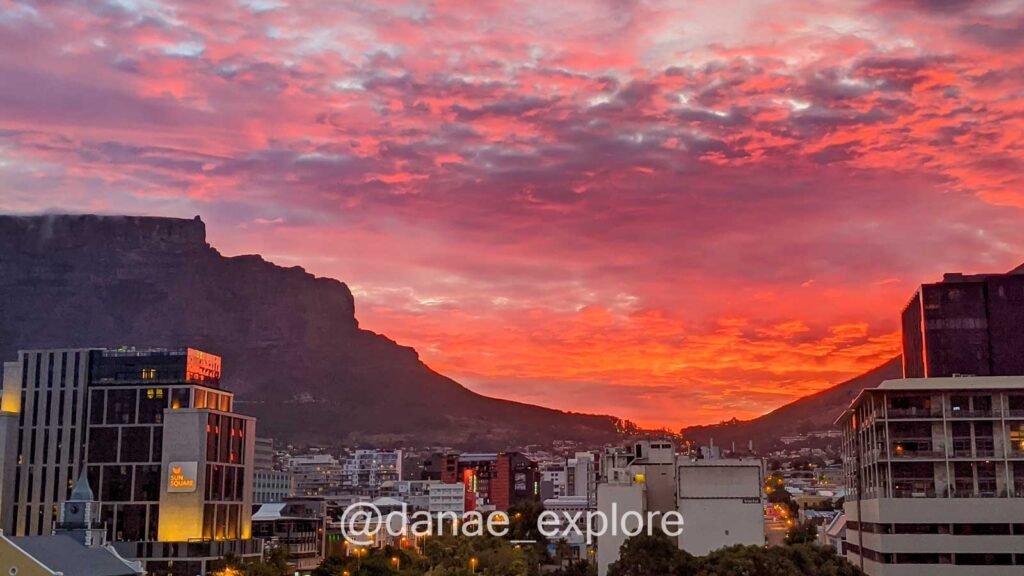
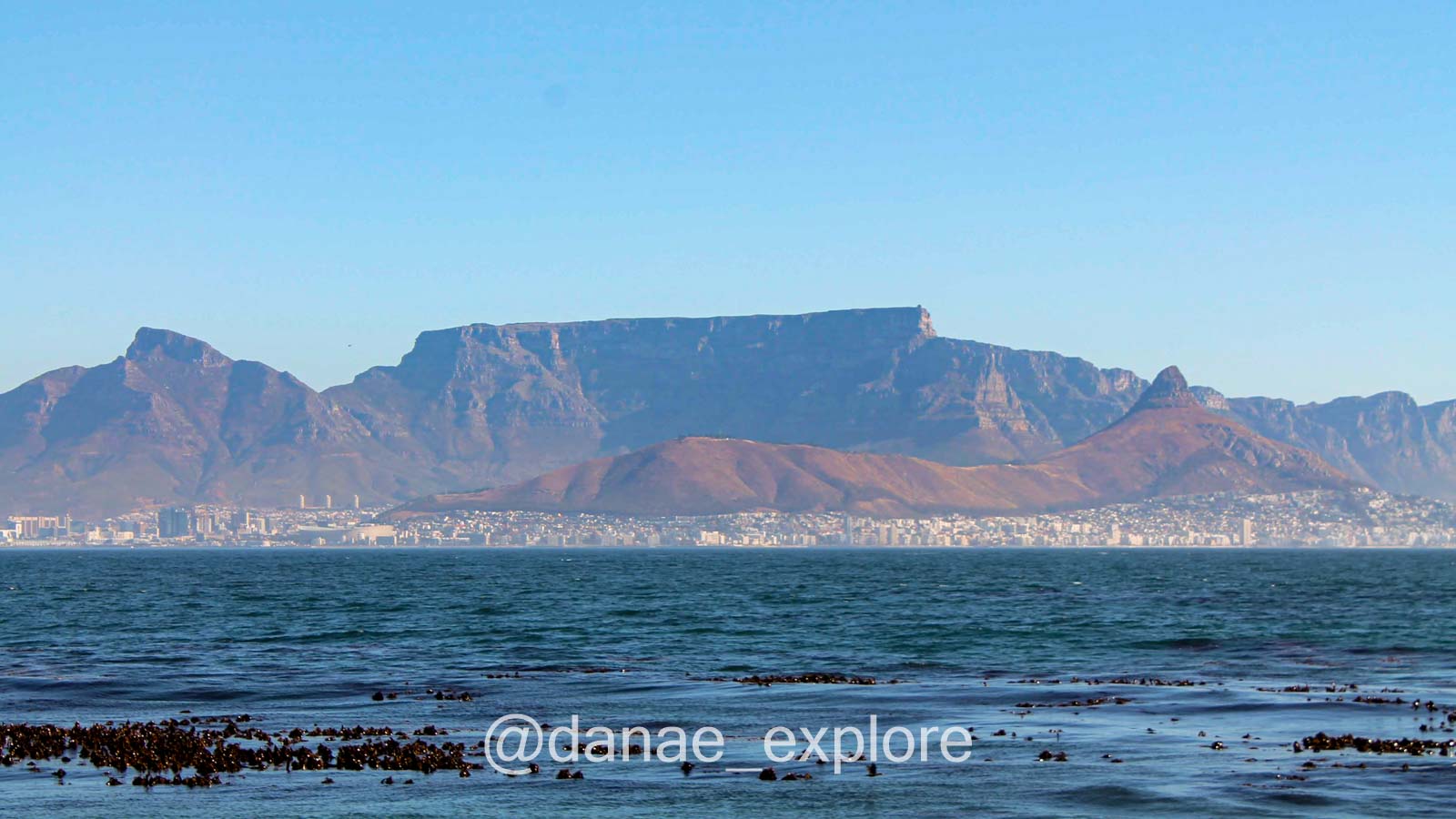
In Cape Town, we stayed in an apartment in the Waterfront area, with a balcony and a view of Table Mountain. The sunsets made it even more special. But be aware, the same listing includes different apartments, some with one bedroom and others with two. If you’re unsure, contact the property to choose the best one for you.
In this same area, another good option is Dockside 1106, which has two bedrooms, and for those who prefer hotels, Southern Sun Waterfront Cape or the One Thibault Hotel.
Camps Bay is a great option, especially if you’re after a beachy vibe. There are several options, from hotels like South Beach Camps Bay Boutique Hotel and The Bay Hotel, to more budget-friendly options like Vetho Villa, Balfour Place Guesthouse and Royal Boutique Hotel.
Getting around Cape Town
We rented a car as soon as we arrived at Cape Town Airport. I think it’s the best way to get around, since the distances are considerable, and the car gives you the freedom to adjust plans based on everyone’s mood and the weather.
As our trip continued for several more days, through the Franschhoek wine region, the Garden Route and Addo Elephant Park (see more details in our complete itinerary in South Africa), we weighed the time and hassle and concluded that it was worth paying a bit more to drop the car off elsewhere. So we picked it up in Cape Town and returned it to Port Elizabeth Airport, where our epic journey home began – click here to get a quote.
To rent a car, I always use RentCars, where I usually find the best options, and with the DANAE promo code you still get an additional 5% off. Shall we go?
In this post I share more details about what it’s like to drive in South Africa, but I can already tell you: it’s left-hand driving!
If, for that reason or others, you’d rather not rent a car, you can easily explore everything with tours and transfer services. Below, I’ve included links to tours for each place we visited (or you can search directly on sites like Civitatis or Get Your Guide, which are the ones I always use and trust).
And for transfers — for example, from the airport to your hotel — you can book through this link.
If you’re looking for other safari destinations, check our Kenya and Tanzania itinerary!
.
How many days to stay in Cape Town
We spent four full days in Cape Town and I think that was ideal to see the city’s main highlights. Of course, I would have loved to stay an extra day or two, but within our limited time in South Africa — we spent twenty days traveling around the country — that was what we could manage.
If you only have three days, that’s great! You can enjoy everything the city has to offer. Just tighten up the schedule I’ve laid out below, and if needed, skip an activity that doesn’t interest you as much — for example, the Two Oceans Aquarium is great if you’re traveling with kids, but perfectly skippable otherwise.
With two days you can also see a lot of the city, but some of the main attractions will probably have to be left out, and you’ll be left wanting more. But if your schedule only allows for two days, go for it, Cape Town is not to be missed!
In reality, we stayed there for five days, but I didn’t include the first day in this itinerary. We arrived in the city one afternoon after waking up early to leave Kruger Park, driving over two hours to the airport, returning the rental car, flying to Cape Town, picking up another rental car, and finally arriving at our accommodation. Phew, just talking about it makes me tired lol.
Whenever we have a travel day like this, I never plan any specific activities, I leave the rest of the day free to wander around the neighborhood where we’re staying, stop by a market (since we were in an apartment, we made the most of it and cooked some meals there), track down a playground for the kids, and simply enjoy being on vacation.
So here we go — four full days of exploring Cape Town are about to begin!
Four-day itinerary in Cape Town
The itinerary is organized by area, focusing on a different part of the city each day. You can change the order of the days as you prefer.
Day 1: Table Mountain and Bo-Kaap
We did this tour on our own, with a rental a car. If you prefer, there is a tour that covers what we did that day.
Table Mountain
Since the day started out clear, we went straight to Table Mountain, and it turned out to be the right call, because on the following days the peak was covered with the so-called “cloth,” a layer of cloud that really does look like a tablecloth draped over the table.
We waited a long time in line for the cable car, so I recommend arriving as early as possible, especially on a sunny day. It’s also possible to hike up; the Platteklip Gorge trail is the most popular, but I wouldn’t recommend it with small children.
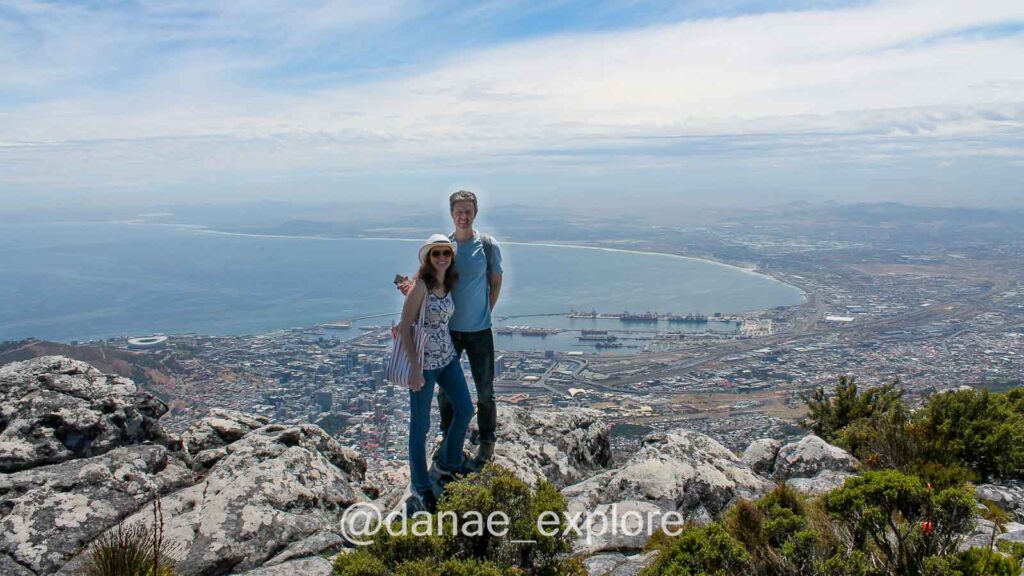
From the top, the views are breathtaking, and you’ll want to stop for photos all the time. There are several trails at the summit, and I’d recommend walking all of them. They are relatively flat, and it’s a great way to enjoy the view from different angles. I can’t imagine going up the mountain without seeing it from every possible point.
It was windy when we were up there, but we didn’t feel cold. A friend of mine had been a week earlier and felt very cold, so it’s worth bringing a light jacket or windbreaker, and plenty of water. At the top of Table Mountain, there’s a small shop, perfect for giving the kids a little pick-me-up with an ice cream. After coming down, we had lunch and then went for a walk in Bo-Kaap.
Between the queue, the cable car ride, the trails, the photo stops, the ice cream, and the descent, we spent about 3 hours on Table Mountain. Here’s the link to the official website, where you can buy your cable car tickets directly.
.
Bo Kaap
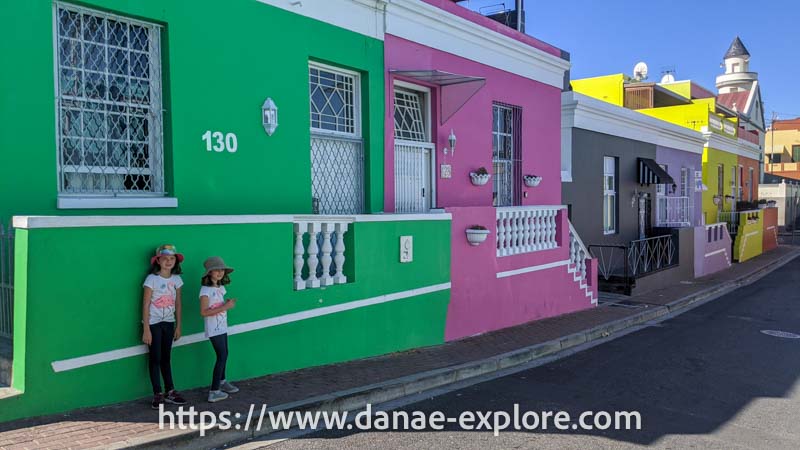
One of the oldest areas in Cape Town, the Bo-Kaap neighborhood is famous for its colorful, low-roofed houses. These days, the streets are packed with tourists hunting for the perfect Instagram shot, often picking a house that matches their outfit. But I recommend going beyond that and really understanding the history of this place.
The history of Bo-Kaap dates back to the 18th century, when it was inhabited by freed slaves from Malaysia and other regions of Southeast Asia. While enslaved, they were required to paint their homes white. After liberation, they painted them in the brightest colors they could find, as a way to celebrate their freedom. There’s also a small museum worth visiting.
District Six Museum
A difficult but essential visit. The District Six Museum is one of Cape Town’s most important places for understanding the impact of apartheid on everyday life. Even if you’ve already visited the Apartheid Museum in Johannesburg, the District Six Museum in Cape Town is still worth a visit.
It is located in what used to be District Six, a vibrant and multicultural neighborhood that, starting in 1966, was declared a “white zone” by the segregationist regime. More than 60,000 residents — black and mixed-race — were forced from their homes, which were then demolished.
The exhibitions bring together photos, testimonies, personal objects, and maps that keep alive the memories of those who lived there, capturing both the cultural richness of the neighborhood and the violence of forced removal.
Here is the official website of the District Six Museum, which also notes that advance tickets can be purchased online through this website.
.
Day 2: Cape of Good Hope and Boulders Beach
We did this entire day by rental a car; however, this private tour or this group tour follows the same route. There are half-day tours as well.
Chapmans Peak Drive
This is a full-day tour to the Cape of Good Hope, with several stops along the way. We started with Chapman’s Peak Drive, a scenic road that winds along the coast, with plenty of spots to pull over, take in the views, and snap photos.
But I admit we made a mistake! Chapman’s Peak Drive runs along the west coast of the Cape Peninsula, with the viewpoints all on the western side. Since South Africa drives on the left, it’s best to do Chapman’s Peak Drive from south to north (that is, on the way back to Cape Town), because then you’ll be on the right side of the road to pull into the lookouts. Since we drove it north to south, at every viewpoint we had to cross the road, and we ended up missing a few.
Cape of Good Hope
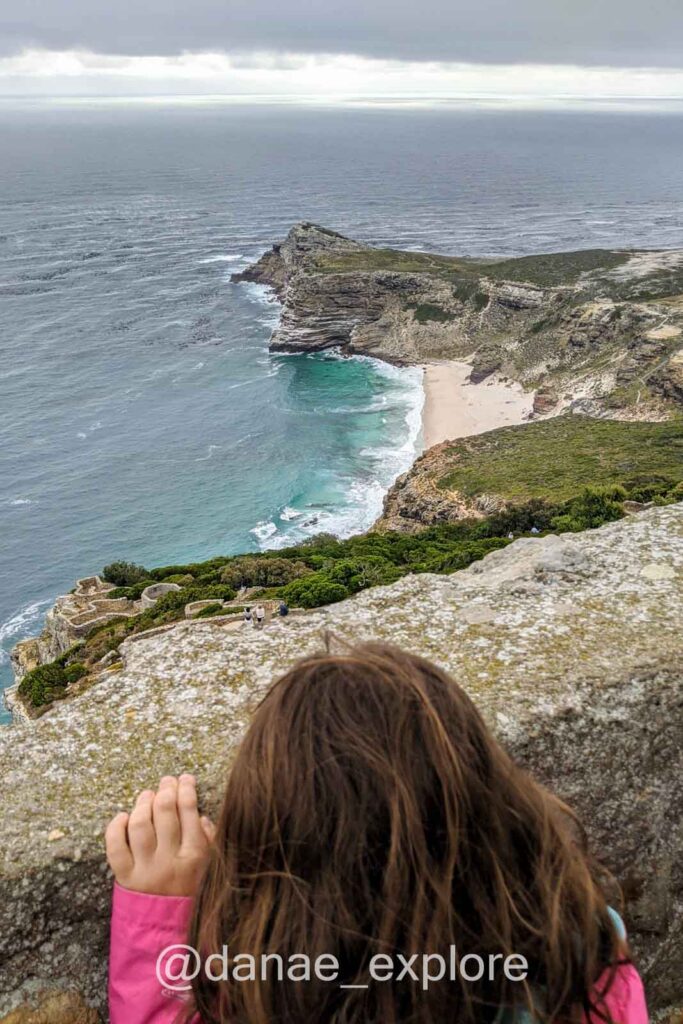
The Cape of Good Hope is part of the Cape Peninsula and lies within Table Mountain National Park, a conservation area that protects not only the coastal landscape but also the local fauna and flora. Come prepared, because driving through feels like a mini-safari: we saw ostriches, elands (a large antelope), zebras, and baboons!
Although it is often said to be the southernmost point of Africa, that title actually belongs to Cape Agulhas, about 150 km further on.
Originally called Cape of Storms, after the violent storms and powerful sea currents in the area, it was later renamed Cape of Good Hope when the Portuguese navigator Bartolomeu Dias managed to sail around it, opening up a new route to the Indies in 1488. A few years later, in 1497, Vasco da Gama passed through the cape and continued on to India, completing the long-awaited sea route between Europe and the East.
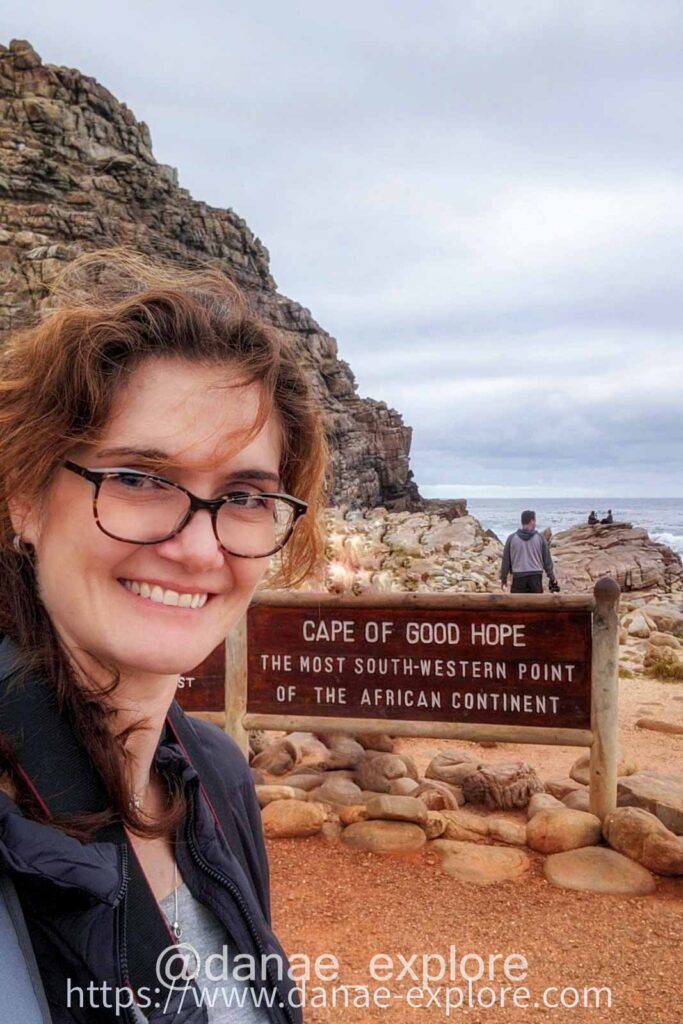
Beyond the famous, endlessly Instagrammable sign marking the spot, I recommend going further and exploring other areas of the park. You can walk or drive to Cape Point and the historic 1860 lighthouse. There’s a funicular up to the lighthouse (for a fee), but you can also walk if you prefer. We went with the funicular, all part of the fun for the kids.
Since this is a National Park, you can find information on the official website Sanparks.org, where you can also buy tickets in advance. We bought ours right away and it was easy. For funicular tickets, as well as details about shops, restaurants, and other services, check this link.
.
Boulders beach
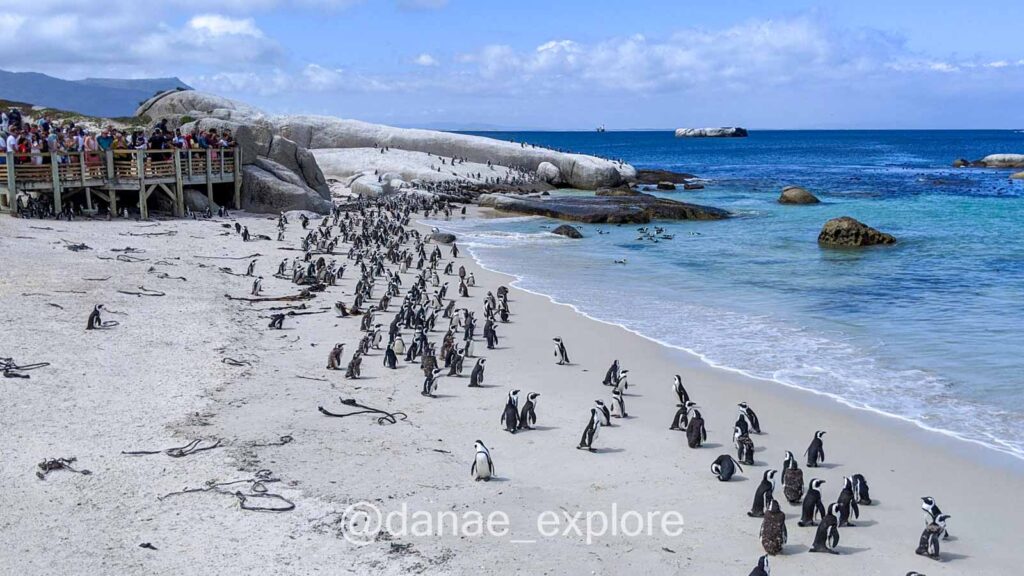
On the way back we stopped at Boulders Beach, the famous penguin beach. What a place! The beach itself is striking, with large rocks, white sand, and deep blue water. But it’s the penguins that turn what would otherwise be just a pretty beach into one of the most extraordinary places in the world.
It is estimated that there are currently around 2,100 birds in the Boulders Beach colony — in 1983, when the site was incorporated into the National Park, there were 3,900 penguins. In May 2010, African penguins were reclassified from a vulnerable species to an endangered species.
The beach has fixed visiting hours (generally from 8:00 am to 5:00 pm, but in some months it is open until 6:30 pm), and you’re required to stick to the designated paths, most of which are wooden walkways. Boulders Beach is also part of Table Mountain National Park, and you can find more information here.
On the way back to Cape Town, it’s worth a stop at Muizenberg Beach, famous for its surf and its row of colorful beach huts, another spot that makes for beautiful photos.
Looking for other safari destinations? Check out our Kenya and Tanzania itinerary!
.
Day 3: Kirstenbosh National Botanical Garden & Camps Bay Beach
Kirstenbosh National Botanical Garden
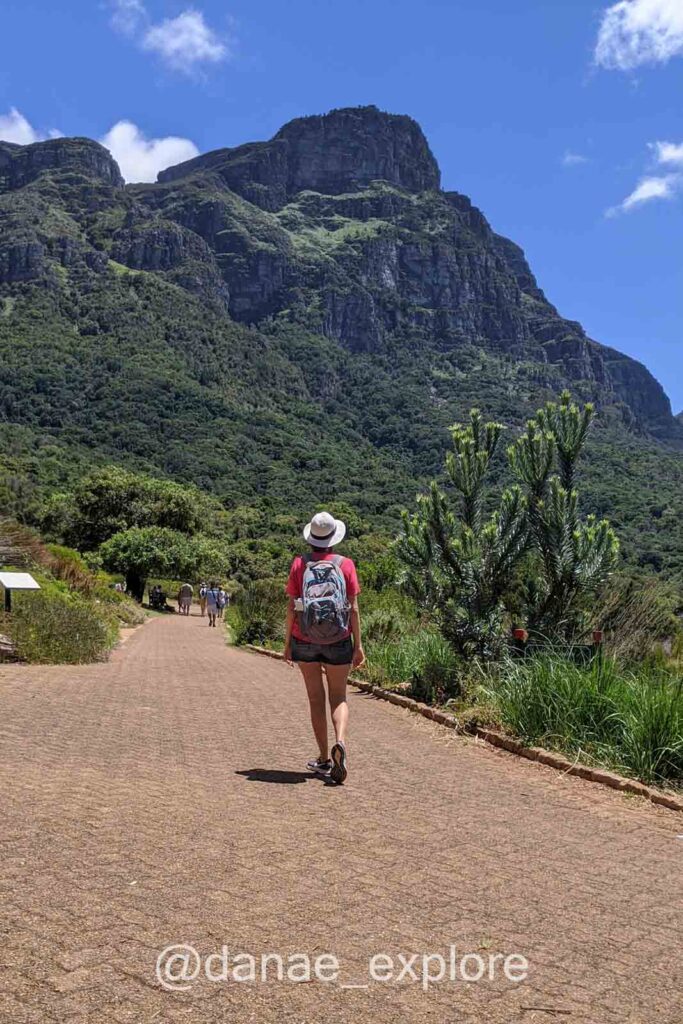
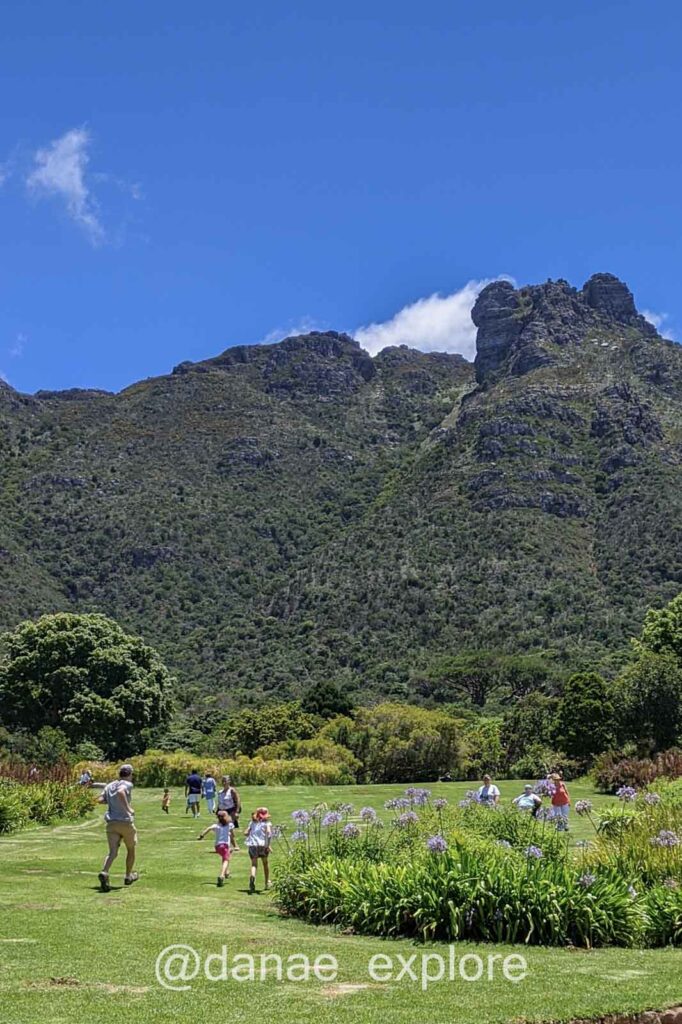
Day three takes us to another part of Cape Town. In the morning we went to the Kirstenbosch National Botanical Garden, located on the slopes of Table Mountain. It’s a wonderfully calm and peaceful visit.
Kirstenbosch National Botanical Garden is considered one of the most beautiful botanical gardens in the world. Located at the foot of Table Mountain, it is dedicated exclusively to South Africa’s native flora, covering five of the country’s six distinct biomes. Walking through feels like exploring a mosaic of landscapes, from aromatic and medicinal plants to endemic flowers found nowhere else.
One of the highlights is the Boomslang, a suspended walkway that weaves through the treetops and offers sweeping views. In addition to its natural beauty, Kirstenbosch also hosts cultural events, especially in the summer — check the official website for more information and tickets.
The Skeleton Gorge trail to Table Mountain also begins inside Kirstenbosch.
Old Biscuit Mall
We left the gardens starving, and when browsing Google Maps (I love it!!!) I saw that a place called the Old Biscuit Mill had several well-reviewed restaurants, so we headed there. We had no idea what to expect, and it turned out to be a wonderful surprise — I love leaving room for these unplanned moments on a trip, they’re what make it.
The Old Biscuit Mill is, as the name suggests, a former biscuit factory transformed into a space for food, art, and design, full of restaurants, independent shops, art galleries, and cafés. If you’re passing through the area, it’s definitely worth stopping by, even if only for a coffee or an ice cream.

.
Camps Bay Beach
It was already mid-afternoon when we arrived at Camps Bay Beach, one of Cape Town’s most iconic beaches, with the dramatic Twelve Apostles mountains as a backdrop.
The water is on the cold side, but the kids didn’t care; they just wanted to play in the sand and take a quick dip. I made a point of lingering there so I could say that our trip to South Africa was complete — it even included the beach!
Even if you’re not up for swimming or playing in the sand, Camps Bay is a delight, with a promenade full of bars, restaurants, and upscale hotels, and one of the best spots in the city to watch the sunset. Once the kids had their fill of the sand, we cleaned up and headed to Codfather, a Japanese restaurant that’s absolutely worth a visit.
.
Day 4: Two Oceans Aquarium and Robben Island
Two Oceans Aquarium
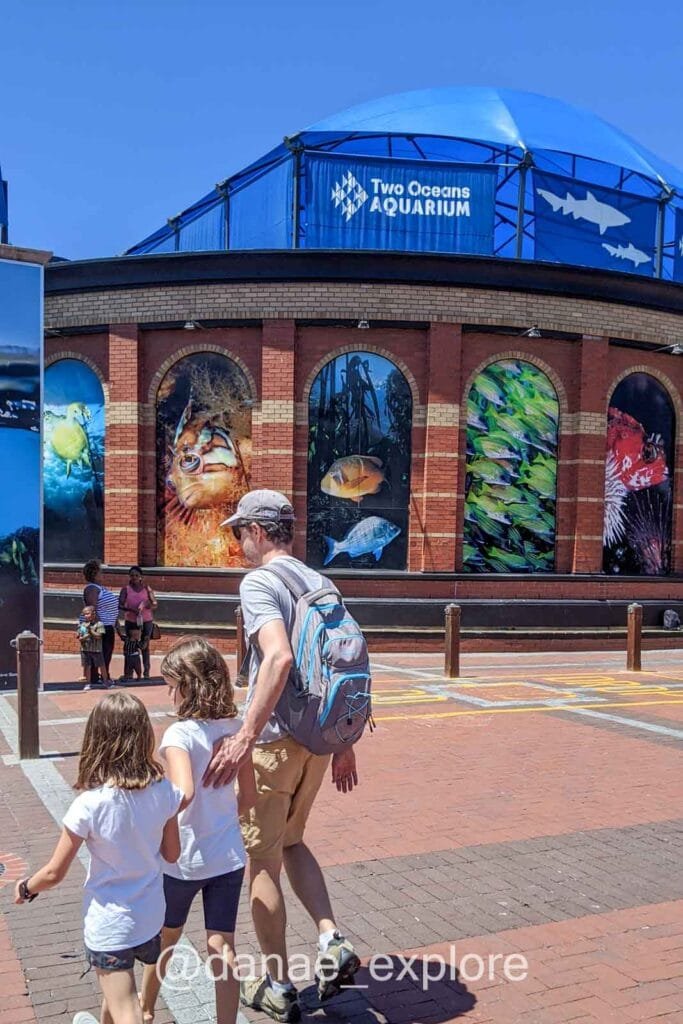
In the morning, we walked to the Two Oceans Aquarium, located at the V&A Waterfront, just a short walk from the apartment where we stayed. It’s a great option if you’re traveling with kids or if you’re really into marine life. I admit I only went for the kids, since I’ve had my fair share of aquarium visits — here on the blog I’ve written about the aquariums in Seville, Lisbon, and the marine aquarium of the Rosario Islands, Colombia (but trust me, I’ve been to many more!).
The aquarium takes its name from the meeting point of two oceans, the Atlantic and the Indian, showcasing the marine life of both ecosystems and the increasingly urgent challenges faced by the oceans. There are giant tanks with sharks, turtles, and thousands of fish in all colors — in short, a well-put-together aquarium that delivers on its promise.
Here is the link to the official website of the Two Oceans Aquarium.
Option: Lion’s Head Trail
If aquariums aren’t your thing, another option is the Lion’s Head Trail, one of the most famous hikes on the continent, with sweeping views along the entire route. Unlike Table Mountain, which has a cable car, the only way to reach the top of Lion’s Head is on foot. Admission is free.
The trailhead is at Signal Hill. It’s not an extremely difficult hike, but it’s certainly not a walk in the park either. The trail is steep, with challenging sections involving chains and ladders, and stretches where you scramble over rocks. From what I’ve read — we didn’t hike it ourselves — the effort is well worth it, and the views are said to be absolutely spectacular. Bring water, and avoid the trail on rainy or humid days.
After the hike (or before), it’s worth driving up to Signal Hill, another spot with gorgeous views over the city. The Lion’s Head trailhead is on the small road that leads up to Signal Hill.
.
Robben Island and the Apartheid Prison Museum
Since you’ll already be at the V&A Waterfront, the Robben Island tour is easy to fit in and I recommend you don’t miss it.
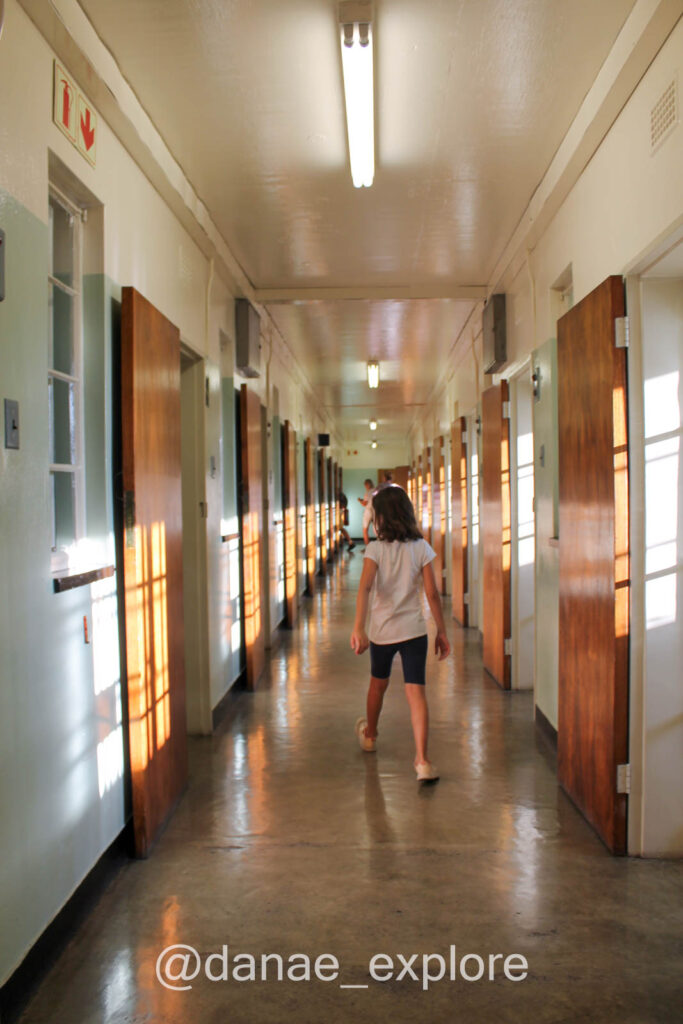
About 12 km off the coast, Robben Island is a UNESCO World Heritage Site and one of South Africa’s most significant historical landmarks. During the apartheid era, the island served as a maximum-security prison for political opponents of the regime. Nelson Mandela was its most famous prisoner, spending 18 of his 27 years of incarceration there.
We joined the guided tour, which is included in the ticket price, and our guide was a former prisoner, an elderly gentleman, remarkably sharp, which gave the experience extraordinary depth.
Here is the link to the official website, and here for a tour with hotel pick-up — but it’s also very easy to get to the V&A Waterfront by taxi or Uber.
Victoria and Alfred Waterfront
When you’re in Cape Town, you’ll likely spend a lot of time at the V&A Waterfront — at least that’s what happened to us. And it’s a delight!
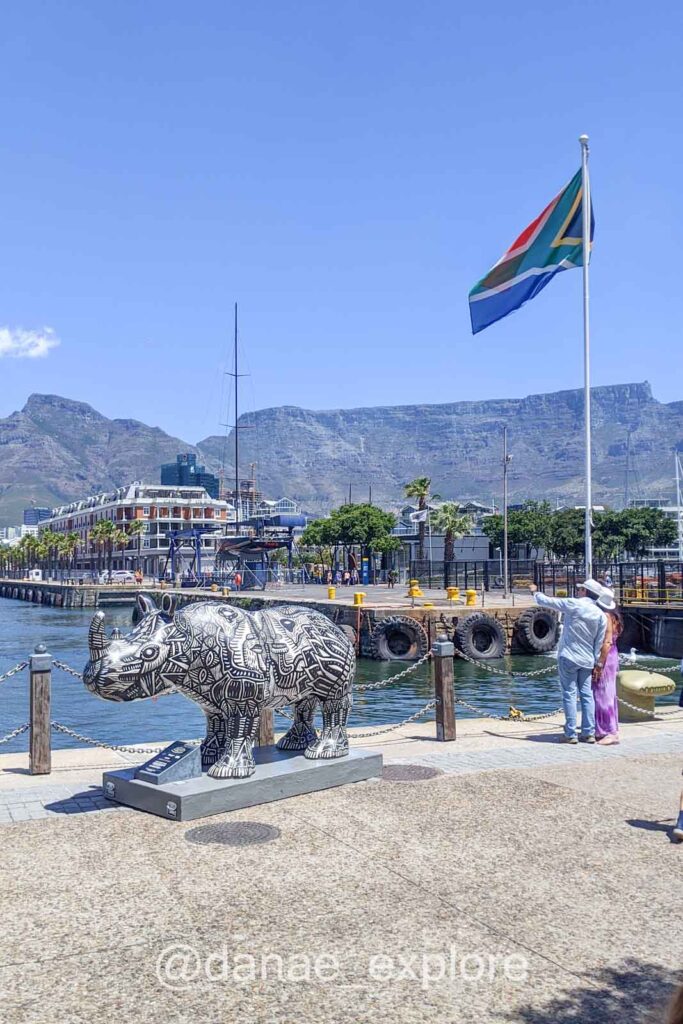
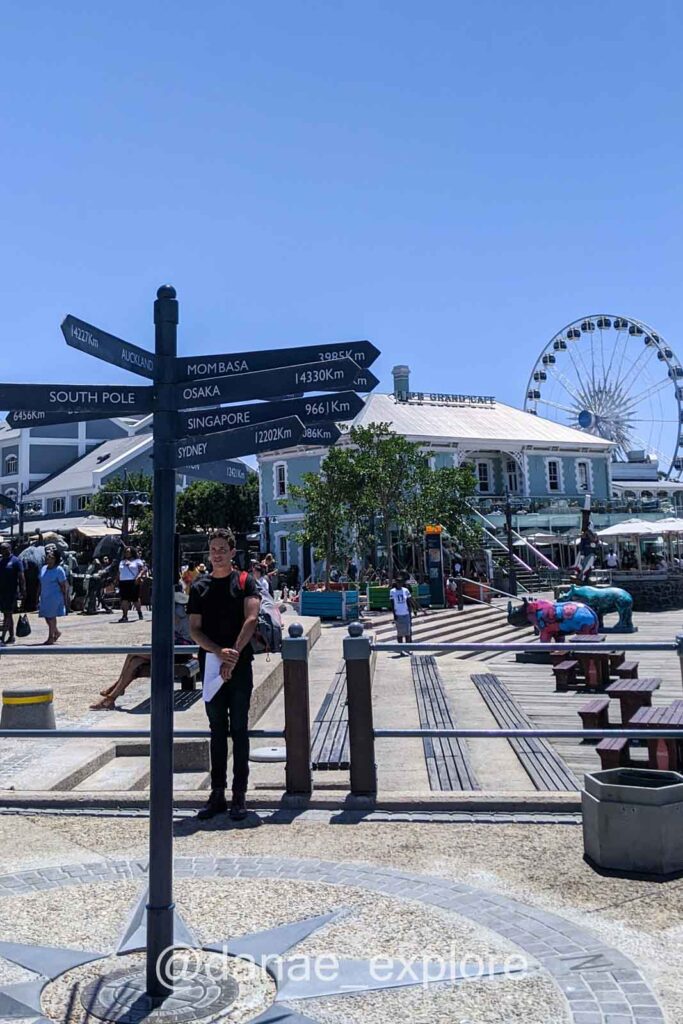
The area was Cape Town’s working harbour, revitalized while preserving its original Victorian architecture, and today it’s a vibrant waterfront complex with plenty of restaurants, bars, shops, and cultural events. In addition to the Two Oceans Aquarium and the Robben Island tour I mentioned, there’s also a Ferris wheel, several outdoor sculptures, and even tours to spot marine life.
.
Other suggestions of what to do in Cape Town and around
Wineries in Stellenbosch, Franschhoek and Paarl
We spent twenty days traveling South Africa — check out our complete itinerary here — and after Cape Town, we went to the country’s wine region, centered around the towns of Stellenbosch, Franschhoek, and Paarl.
We chose to stay two nights in Franschhoek, but many people visit the wineries as a day trip from Cape Town. It’s a great option if you want to enjoy a few glasses without worrying about driving home.
Here are a few tour options worth exploring:
– Four wineries in Stellenbosch and Franschhoek
– Private wine tour in Stellenbosch
– Franschhoek region with the Wine Tram ride
– Wineries in Stellenbosch, Franschhoek and Paarl
.

.
Whale watching
One tour I would have loved to do, had I had more time in Cape Town, is whale watching
Hermanus, a town just over 100 km from Cape Town, is one of the best places in the world to see whales. On some days, you can even spot them from shore!
This full-day tour is a great option, and I highly recommend it! TThe thrill of seeing these giants in the wild is unlike anything else —I finally got to live that dream later, while sailing through the Beagle Channel in Ushuaia and at Kenai Fjords National Park in Alaska.
The best time for whale watching in Hermanus is from June to November, when the southern right whales come closer to the coast to mate and give birth. Outside this period, the chances of spotting them are much smaller, so if whale watching is on your wish list, it’s worth timing your trip around those months.
If you don’t have time for a day trip, you can also take a marine life tour from the V&A Waterfront — with a bit of luck you may see whales, though sightings are less common here than in Hermanus.
.
Safari in private reserves
If you’re in Cape Town and can’t make it to one of South Africa’s national parks for a safari — like Kruger Park or Addo Elephant Park (click on the links to read our posts about visiting each one), a safari in one of the private reserves near Cape Town is well worth considering. It may not be the same as a national park, but it’ll be a memorable experience all the same. After all, coming to South Africa and not going on safari is kind of like going to New York and not seeing the Empire State Building, right?
The main option close to Cape Town is the Aquila Reserve, which offers lots of tour options. These private reserves are also malaria-free, which is a real plus for families traveling with kids.
If you’re looking for other safari destinations, take a look at our Kenya and Tanzania itinerary!
Complete itinerary of our South Africa tour
Our twenty-day South Africa itinerary is detailed on the map below, just click to save it to your Google account. When the time comes to plan your next trip to South Africa, you’ll know exactly where to start!
.
How to use this map: Click the menu tab in the upper left corner of the map to access different layers, including points of interest and routes. You can toggle layers on and off by checking the corresponding boxes. To see details about specific locations, click on the icons on the map.
To save this map to your Google Maps account, just click the star icon next to the map title. To access it later on your phone or computer, open Google Maps, tap the menu button, go to “Your Places”, select “Maps”, and you’ll find this map saved there.
.
All our posts about traveling in Africa:
South Africa
- 20-day South Africa itinerary, with the best of the country for your first visit
- What to do in Cape Town: 4-day itinerary with the best of the best
- South Africa: what you need to know before you visit
- Complete guide to going on safari in Kruger Park without spending a fortune!
Kenya and Tanzania
- Kenya and Tanzania Itinerary – with safari in the Serengeti and beaches in Zanzibar
- Complete guide to visiting Zanzibar: itinerary and tips
Morocco
- 10-Day Morocco itinerary: the best for your first visit to the country
- Everything you need to know about traveling to Morocco: when to go, what to wear, safety and more
.
Did you like these tips? Then follow me on social media:
Instagram @danae_explore
Pinterest @danaeexplore
Comments or questions? Contact me on social media! I love to chat about travel 😉
And before you go, don’t forget to SAVE THIS PIN to your PINTEREST account for easy access to this post on what to do in Cape Town: the perfect four-day itinerary, whenever you need it!