Looking for a destination that really has it all? Great food, welcoming people, easy logistics, and a trip that won’t break the bank?
South Africa! We traveled across the country from east to west and if I said we really liked South Africa, that would be an understatement. We absolutely LOVED it; it was one of the most memorable trips of our lives and holds a very special place in my heart.
First of all, follow me on Instagram @danae_explore – that’s where you can keep up with my trips, find lots of travel tips, and send me a DM anytime. I love chatting about travel!
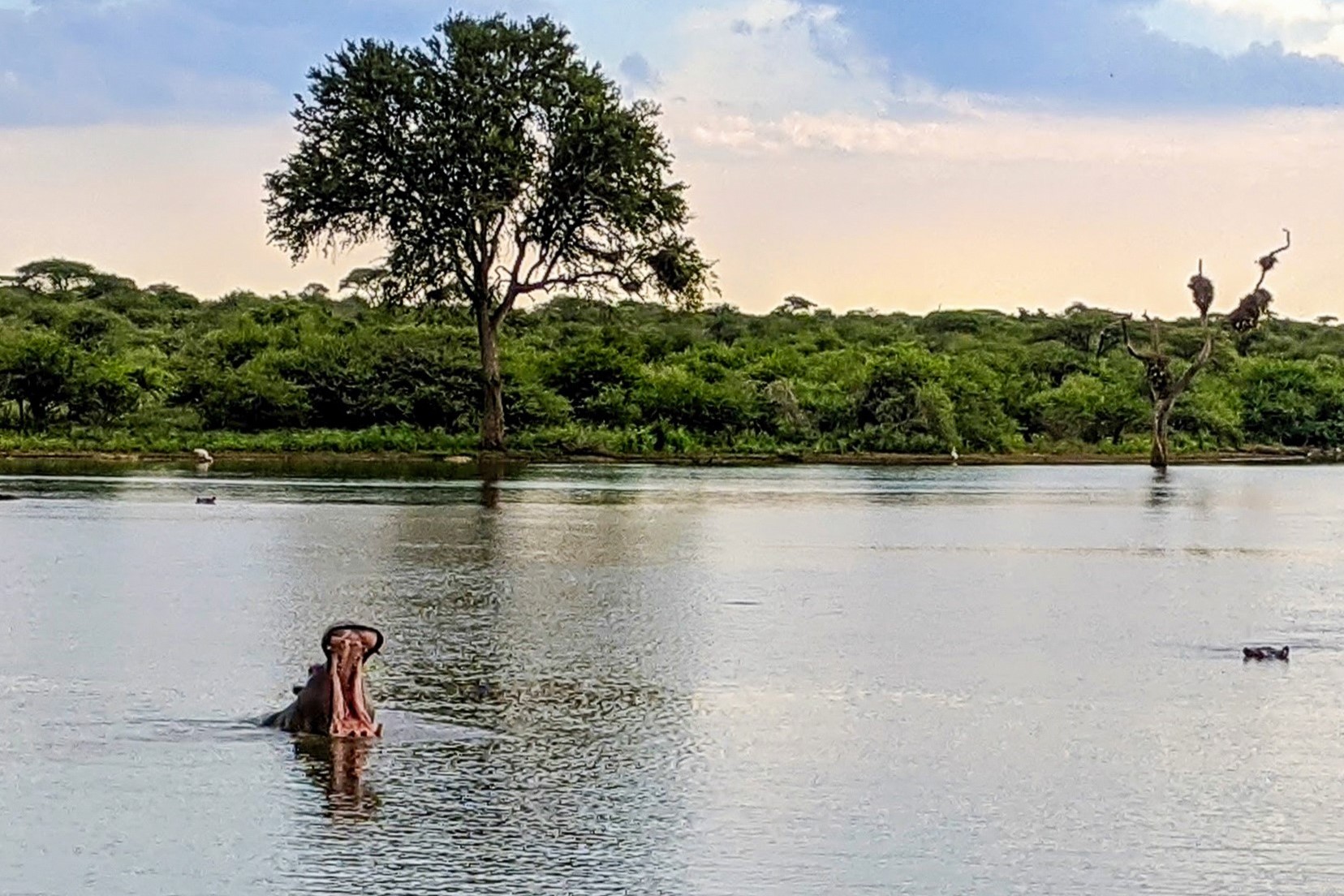
Of all the countries I’ve visited (and there are more than 50), when someone asks me for a destination that has it all – from museums to bungee jumping, wildlife to nightlife, wineries and beaches, hiking and stunning landscapes, and that is also easy to reach and budget-friendly – my answer is always the same: South Africa.
Here on the blog, you’ll find plenty of content about South Africa: our complete itinerary, a detailed guide to what to do in Cape Town, information on how to go on safari in Kruger Park, and this post with everything you need to know before visiting South Africa. Check it out!
If you’re looking for another safari destination, check out our post on Kenya and Tanzania!


What to do in South Africa
South Africa is one of the largest countries in Africa, so you’ll need to carefully plan your itinerary to make the most of your time there.
But even with limited time, good planning makes it possible to see a lot and turn those long-held dreams into reality. Check out our 20-day South Africa itinerary and our detailed Cape Town guide: it covers landscapes, safaris, beaches, wineries, museums, and plenty of experiences for all interests.
In my opinion, a trip to South Africa should include:
– wildlife on safaris in national parks such as Kruger and Addo;
– culture and food in the country’s main cities, Johannesburg and Cape Town;
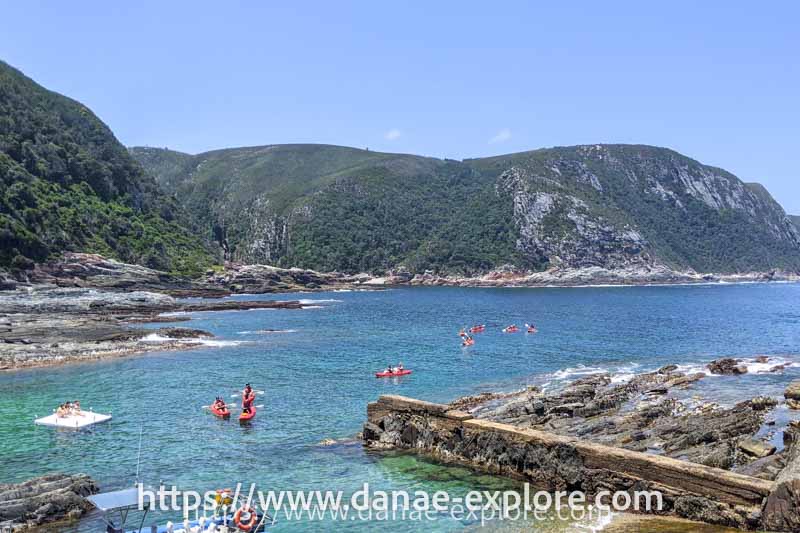
– stunning scenery along the Blyde River Canyon (Panoramic Route) and the Garden Route;
– visiting one of the world’s best wine regions: Franschhoek, Stellenbosch, and Paarl.
.

.
Things to know before visiting South Africa
How to get to South Africa?
There are many international flights to Johannesburg and Cape Town from major hubs in Europe, the Middle East, and Africa. There are also direct flights from South America. Routes change often, so it’s always best to check when planning your trip.
On this trip, we flew with TAAG via Luanda (Angola) to Johannesburg. It was the worst airline experience I’ve ever had (and I’ve visited over 50 countries and flown with some pretty unusual carriers). The planes were very old, cabin maintenance was poor, and I honestly wasn’t sure I’d make it to my destination. In the end, everything turned out fine and here I am telling the story. Would I fly with them again?Let’s just say that if I had other options, I wouldn’t choose TAAG again. For context: their last recorded fatal accident was in 2007, so in the end, it comes down to personal choice.
Other options include Ethiopian Airlines (with a stopover in Addis Ababa; we flew with them on our trip to Kenya and Tanzania), as well as airlines with hubs in Europe and the Middle East. We’ve also flown with Emirates on trips to Japan and Southeast Asia. You’ll find reviews of these airlines in the linked posts.
In summary: flights to South Africa are available from all over the world, either direct or with connections. Routes are constantly changing, so always double-check options when booking.
.

.
Best time to visit South Africa
South Africa is a year-round destination. As I always say, the best time to visit a place is when you can go! So don’t miss out on South Africa just because your available dates don’t match what others recommend. The best trip is the one you actually take.
But if you have flexibility, the best time to go to South Africa depends on the kind of experience you’re looking for.
In general, the best seasons to visit are spring (September to November) and autumn (March to May), when the weather is milder and there are fewer crowds. During these months, cities like Cape Town (see our complete Cape Town itinerary) have pleasant days and less wind, and national parks offer good conditions for wildlife viewing.
.
.
In summer (December to February), visitor numbers go up, especially in Cape Town and along the Garden Route. It is also the rainy season in the northeast, where Kruger National Park is located (here are our tips for going on safari in Kruger) and in other reserves. Safaris still run, with the added bonus that this is when many cubs are born. We went on safari in Kruger and Addo in January: the vegetation was green and lush, and we saw countless animals. It was our first safari experience in Africa and unforgettable.
Winter (June to August) brings cooler weather, especially at night and in the mountains, but it’s the best time for safaris, since the dry vegetation makes it easier to spot animals near rivers and waterholes. On another trip, we went on safari in July in the Serengeti (Tanzania), and found that the dry season really does make animal sightings easier. If that’s your main goal and you have flexibility, I recommend traveling in the dry season.
In the end, the decision of when to visit South Africa depends on your goals and availability. We were there in the summer, between December and January, and we really enjoyed it — even while sharing Cape Town with many other tourists.
.

.
How to get around within South Africa?
The best way to travel within South Africa is by renting a car for short and medium distances, or by flying for long distances.
On our twenty-day South Africa trip, we explored two major regions of the country. First, we visited the northeast, where we rented a car to visit Johannesburg, Pretoria, the Panoramic Route (Graskop and Blyde River Canyon), and Kruger Park. We then flew south to Cape Town, rented another car, and continued overland to Port Elizabeth, passing through the Stellenbosch wine region, the Garden Route, and Addo Elephant Park.
To rent a car, I always use RentCars, where I usually find the best options, and with the DANAE promo code you still get an additional 5% off. Shall we go?
For the first part of the trip, we rented a car on our last day in Pretoria and returned it at Nelspruit Airport (the closest airport to the Crocodile Bridge entrance of Kruger National Park. For the second part, we picked up another rental car at Cape Town Airport and returned it at Port Elizabeth Airport at the end of the trip. Click here to see our full Cape Town itinerary.
We flew from Nelspruit to Cape Town with South African Airways on a direct Embraer 190 flight, manufactured in my hometown, São José dos Campos. At the end of the trip, we flew from Port Elizabeth to Johannesburg with British Airways, and from there, another saga began with TAAG on our way back to São Paulo — two terrifying flights on very old planes, but we arrived safe and sound.
.
.
Is it worth renting a car in South Africa?
Yes, it is definitely worth renting a car in South Africa.
Except for the days you spend in Cape Town and Johannesburg, where you can easily get around with public transport, Uber, or taxis, I don’t see how you could visit South Africa with a minimum level of comfort without a rental car.
If you’re not in a hurry, you can travel at a slower pace using public transport and transfers. But if, like us, you have limited vacation days and want to make the most of them, renting a car is definitely the best option – especially if you’re traveling with more than two people. Do the math and see what works best for your trip.
.
.
Another option is to use major cities as bases and take day trips, traveling between them by bus or plane. There are several day trip options starting from Johannesburg or Cape Town. Have a look below and see if this works for you:
.
What it’s like to drive in South Africa
In South Africa, traffic follows left-hand driving: you drive on the left side of the road, and the steering wheel is on the right side of the car. For us, it was quite an experience, the first few kilometers can be challenging! In our case, my husband took on the driving, but having a good co-pilot is essential, because your natural instinct is to take the first turn and end up on the wrong side of the road (yes, it happens!). The adjustment comes quickly, though. Driving slowly and staying extra alert in the first few days makes a big difference until the “upside-down” world of left-hand driving starts to feel natural.
Another challenge is getting used to roundabouts: you must always enter from the left side and drive clockwise — in other words, the opposite of what most of us are used to. It feels completely counterintuitive at first, but after a few mistakes and lots of laughs, you’ll be handling these reversed roundabouts like a pro.
Overall, the roads are good and well-signposted. In urban areas, especially Johannesburg and Cape Town, it’s important to pay close attention, just as you would in any big city: lots of cars, pedestrians crossing outside the crosswalk, unclear signage, traffic lights not working — in short, the usual urban chaos.
Using Waze or Google Maps is essential. Download offline maps before your trip, and if your mobile plan doesn’t include international coverage, get an eSIM (virtual SIM card). Internet access and Google Maps are things you really don’t want to be without on this trip. Use my coupon code DANAE2375 on Airalo for $3.00 off.
See our itinerary and suggestions here what to do in 4 days in Cape Town!

.
Is it expensive to travel in South Africa?
The South African currency is the rand. IAt the time of the latest update of this post, the exchange rate is around US$1 = 16.42 rand.
In general, we found that South Africa isn’t as expensive as many other popular international destinations for a similar level of travel.
Cities like Johannesburg and Cape Town tend to have higher prices for accommodation and restaurants. Even so, it’s possible to find good value for money, especially compared to major cities in Europe or North America.
We brought some US dollars in cash, which we exchanged for rand at exchange offices, but we paid for most expenses with multi-currency cards (we use Wise and Revolut), which are widely accepted. Cash was only needed for small purchases, street food, and a few places that didn’t accept cards.
.
Is it safe to travel in South Africa?
Overall, we found South Africa to be a safe country to visit. We didn’t have any problems during our trip. From what we’ve heard from friends who traveled before and after us, their experiences were also positive, especially in tourist areas such as Cape Town (check out what to do in Cape Town here), the Garden Route, and the national parks. In fact, in the parks and private reserves, everything feels very calm and safe, since visitors are there specifically to see wildlife.
Even so, it is essential to take the same precautions you would anywhere in the world: avoid walking in deserted areas at night, don’t leave valuables visible inside the car, avoid wearing flashy jewelry or accessories, and stay alert for pickpockets in crowded places. At night in Cape Town, we used Uber (which works very well) or drove our rental car, both without issues. I don’t recommend driving on roads after dark, as there is a real risk of animals crossing unexpectedly.
According to official data from the South African Police Service (SAPS), the country has higher crime rates than the world average, but incidents are mainly concentrated in peripheral areas that tourists rarely visit. The U.S. Government Travel Advisory indicates that crimes against tourists in well-known areas are uncommon.
In practice, with care and common sense, it is possible to travel around the country safely and enjoy the experience.
Check out our tips for planning a safari in safari in Kruger Park – we’ve been, and it’s an experience I’ll never forget.

.
Traveling to South Africa with kids
Yes, South Africa is a great destination for families!
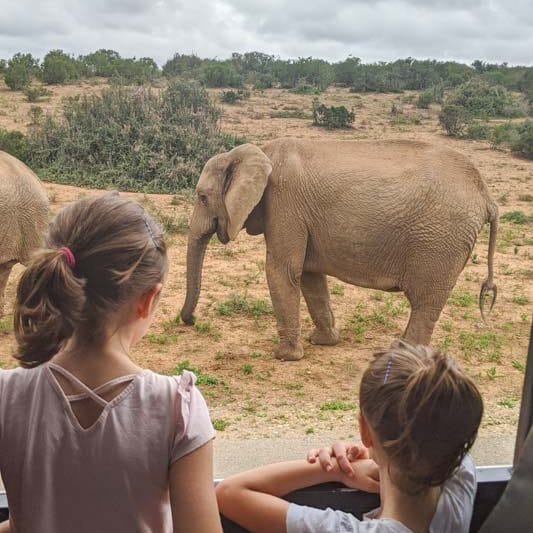
When we traveled with our daughters, who were 7 and 8 years old at the time (here is our complete itinerary), they loved every moment of the trip. The country offers activities for kids of all ages, making it an exciting experience to share as a family.
Imagine your child’s reaction to seeing, in the wild and just a few feet away, the same animals they see in storybooks and as stuffed toys in their bedroom. I’m not sure who was more excited, my daughters or me, watching their reactions.
In national parks managed by SanParks (the official South African national parks authority), the minimum age for joining official game drives is 6 years old. However, you can also visit the parks in your own car, and in that case there is no age limit. This means you can enter parks like Kruger and Addo with children of any age in your vehicle, drive along the internal roads, and you’ll see lots of animals — really, a lot. Click here for our post on how to go on safari in Kruger Park, where I share more details about the safari experience.
At accommodations inside the national parks, like the ones we stayed at in Kruger and Addo, there is no minimum age. We saw plenty of families there with babies and young children. For private reserves and hotels, I recommend checking the rules for each place in advance.
Want more suggestions for safaris in Africa? Check out our Kenya and Tanzania itinerary, where we went on safari in the Serengeti and Ngorongoro.

.
To find out more about our South Africa itinerary
Here you’ll find a detailed account of our 20-day South Africa trip, and just below is the Google Maps map with our complete route to help you plan your own trip.
How to use this map: Click the menu tab in the upper left corner of the map to access different layers, including points of interest and routes. You can toggle layers on and off by checking the corresponding boxes. To see details about specific locations, click on the icons on the map.
To save this map to your Google Maps account, just click the star icon next to the map title. To access it later on your phone or computer, open Google Maps, tap the menu button, go to “Your Places”, select “Maps”, and you’ll find this map saved there.
.
Here are the websites I always use to plan my trips:
– 🛌 Accommodation: Booking
– ☀️ Tours & activities: Civitatis & Get Your Guide
– 📱 eSIM for mobile data: Airalo e-SIM – use promo code DANAE2375
– 🚗 Car rental: RentCars – use promo code DANAE, or DiscoverCars
.
All our posts about traveling in Africa:
South Africa
- 20-day South Africa itinerary, with the best of the country for your first visit
- What to do in Cape Town: 4-day itinerary with the best of the best
- South Africa: what you need to know before you visit
- Complete guide to going on safari in Kruger Park without spending a fortune!
Kenya and Tanzania
- Kenya and Tanzania Itinerary – with safari in the Serengeti and beaches in Zanzibar
- Complete guide to visiting Zanzibar: itinerary and tips
Morocco
- 10-Day Morocco itinerary: the best for your first visit to the country
- Everything you need to know about traveling to Morocco: when to go, what to wear, safety and more
Did you like these tips? Then follow me on social media:
Instagram @danae_explore
Pinterest @danaeexplore
Comments or questions? Contact me on social media! I love to chat about travel 😉
And before you go, don’t forget to SAVE THIS PIN to your Pinterest account so you can easily come back to this post on everything you need to know before visiting South Africa whenever you need it!