.
Sarajevo was one of the final stops on our 20-day road trip through the Balkans, which, in addition to Bosnia and Herzegovina, also took us to Serbia, Montenegro e Croatia.
On one hand, I was eager to visit Sarajevo, a city that has witnessed some of the most pivotal moments in human history and sits at the crossroads between East and West. On the other hand, I worried I’d find a city still shadowed by war, scarred and largely forgotten. After all, Sarajevo is one of Europe’s least-visited capitals. Having grown up in the 90s, I couldn’t help but associate Sarajevo with one of the most brutal conflicts on European soil, always paired in my memory with that haunting U2 song.
How wrong I was! Sarajevo is vibrant, welcoming, and authentic, filled with some of the friendliest people we came across on the whole trip. The food is delicious, and the city is surprisingly well-equipped for tourists. Above all, Sarajevo invites reflection, reminding you just how much there is to be thankful for.
Because it’s off the beaten track in Europe, Sarajevo offers everything you could want in a European capital: culture, great food, affordable prices, and none of the crowds that plague more popular destinations.
Of all the stops on the Balkans trip, Mostar and Sarajevo, in Bosnia and Herzegovina, were easily the highlights.
First of all, follow me on Instagram @danae_explore – that’s where you can keep up with my trips, find lots of travel tips, and send me a DM anytime. I love chatting about travel!

.
Where to stay in Sarajevo
Sarajevo is a compact city, and the best area to stay in is the central district, known as Baščaršija. This historic neighborhood is perfect for exploring the city on foot, with its lively alleyways, charming cafés, and craft shops.
During our trip, there were seven of us — four adults and three children — and we stayed for three nights in Sarajevo. We opted for a house within walking distance of Baščaršija, which provided plenty of space for all of us and offered sweeping views of the valley and surrounding mountains. The proximity to the main attractions made our stay even more enjoyable.
If you prefer the comfort of a hotel, a great option is the Isa Begov Hamam Hotel, located near the Latin Bridge. This hotel occupies a former Turkish bath, originally built in 1462 and lovingly restored in 19th-century style.
For something more modern, there’s the Hotel Sana, just steps away from Baščaršija, featuring sleek decor and bright rooms. Another option is Hotel Aziza, slightly further from the center but still within easy walking distance.
Outside of Baščaršija, but still in a great location, is the Hotel Holiday. Along with all the amenities you’d expect from a large upscale hotel, it’s also a historical landmark, known for the role it played in press freedom during the war. The hotel was completely renovated in 2017.
.

.
How to get around Sarajevo
The best way to explore Sarajevo is on foot.
The old town, centered around the Baščaršija district, is mostly pedestrian streets and charming alleyways lined with small shops, restaurants, and cafés. The main attractions are all within walking distance of each other, and getting around on foot makes it easy to alternate between sightseeing and stops for coffee and something sweet — which, as you’ll soon discover, are hard to resist.
However, Sarajevo also has several must-see attractions outside the city center. The Tunnel of Hope, the National Museum, the old bobsled track, and the beautiful Trebević region are just a few highlights beyond the center. If you don’t have a car, you can easily get there by taxi, Uber, or local bus and tram. You can also take the cable car up to the bobsled track and Trebević — well worth it for the views of the city and valley alone.
Whichever option you choose, public transport in Sarajevo is efficient, affordable, and safe.
.

.
What to do in Sarajevo in two days
During our 20-day roadtrip through the Balkans, we spent two days in Sarajevo — arriving on the afternoon of the first day, spending a full second day, and leaving on the morning of the third.
To give you a clear overview, I’ve combined the afternoon of day one and the morning of day three into a single itinerary day, to make it easier to follow.
.
.
Our two-day itinerary in Sarajevo was as follows:
Day 1: Tunnel of Hope in the morning, Trebević in the afternoon
.
For this itinerary, you’ll need either a rental car (as we did), or you can grab a taxi or Uber. Public transport is also an option — just check Google Maps for routes and schedules, which is reliable in Sarajevo.
Tunnel of Hope
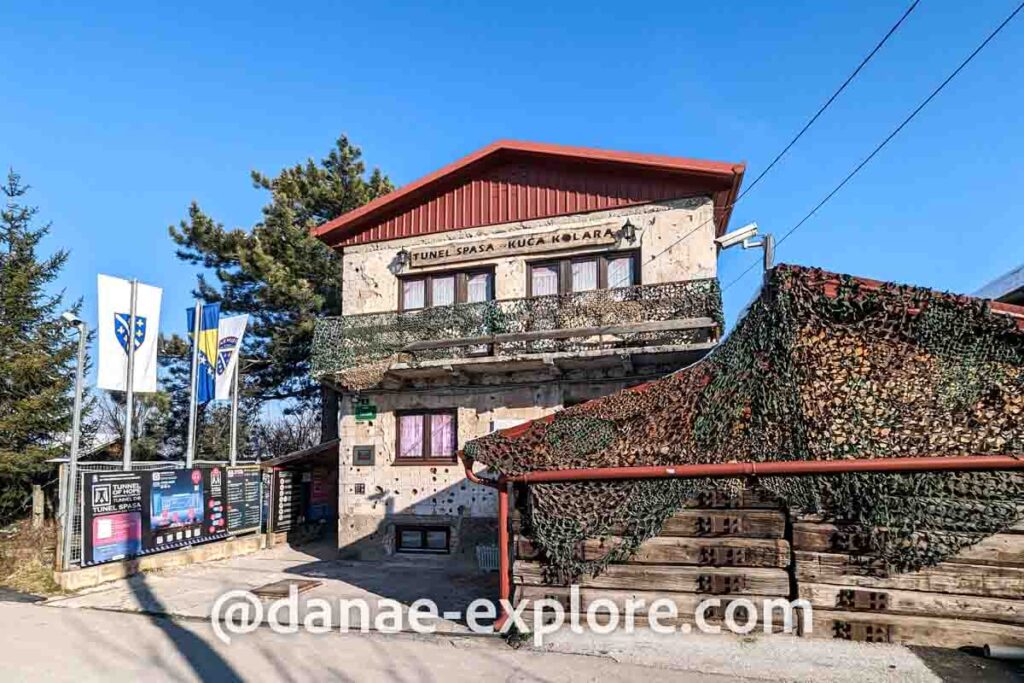
Start your day with a visit to the Tunnel of Hope, located next to Sarajevo International Airport. If you’re arriving or departing by plane, it’s easy to fit this in on your way to or from the airport. Plan to spend around 1 to 1.5 hours there.
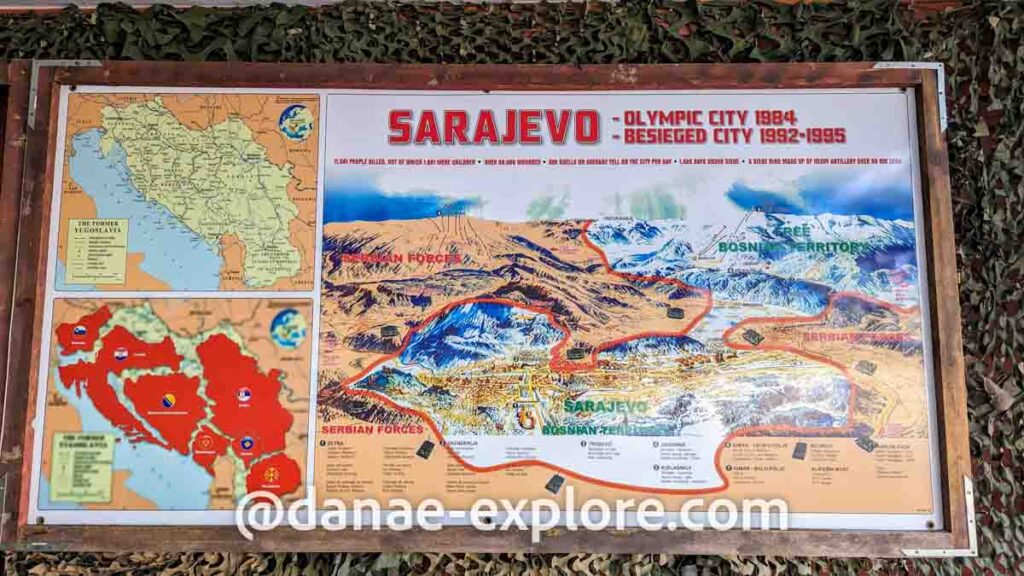
Sarajevo endured one of the most tragic events of the 20th century. During the Bosnian War,the city was besieged by Serbian forces from April 5, 1992 to February 29, 1996 — 3 years, 10 months, and 24 days — completely cut off from the outside world. This was the longest siege of any city in modern history. The only connection between Sarajevo’s 440,000 residents and the outside world was a tunnel built beneath the airport runway.
.
.
The tunnel, accessible through the back of a private house, was 800 meters long, 1 meter wide, and 1.6 meters high. During the siege, it became the city’s lifeline, transporting food, medicine, fuel, electricity, telephone cables, weapons, humanitarian aid, love letters, people, and government officials — essentially, everything needed to sustain life and provide hope for better days.
Today, only a short section near one of the entrances is open to visitors. There is an exhibition with videos explaining the construction of the tunnel and what life was like in the city during the siege, along with a small museum displaying war artifacts and items related to the tunnel’s use. You can also walk a short section of the tunnel that remains under the house.
It’s a tough visit, but a necessary one. Don’t miss it.
Can you visit with children? There’s no age limit for visiting the Tunnel of Hope. When we visited, my daughters were 11 and 12, and my niece was 10. I believe it’s important for children to be introduced to the realities of the world they live in, including what has happened in the past, to help them make sense of the world. We’ve taken them to the Peace Memorial Museum in Hiroshima and the Slave Market in Zanzibar as well, and I’d encourage you not to pass up these opportunities. Talk to your children in age-appropriate terms, and explain what war means and what the people of Sarajevo endured. Difficult questions may arise, but if you’re in Sarajevo, it’s impossible to avoid them.
.
.
Trebevic, Bobsled Track and Cable Car
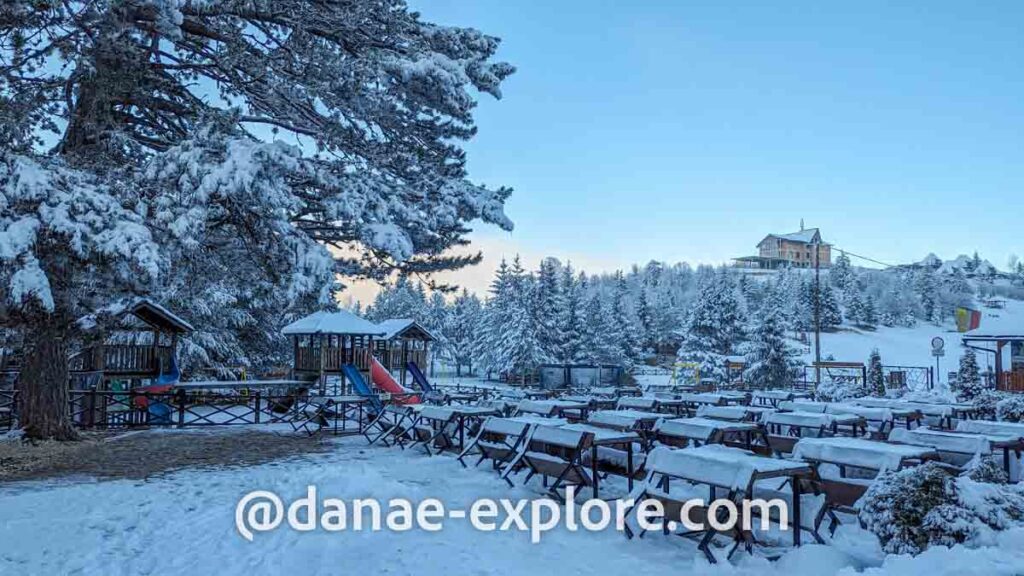
This is how we spent the afternoon of the day we arrived in Sarajevo After breakfast in Mostar, we headed to Sarajevo and arrived just in time for lunch at Restaurant Brus in Trebević. It was mid-January, and the kids were ecstatic about the snow — a real treat for kids who’d grown up in the tropics, and one of the trip’s most unforgettable moments.
Here’s a tip: if you’re visiting in winter and hoping to find snow, this is the place. There are two ski resorts near Sarajevo: Jahorina and Bjelašnica, where some events of the 1984 Winter Olympics took place, when the area was still part of Yugoslavia.
Trebević is also home to the bobsled track used in those Olympics — or rather, what’s left of it. After the fall of communism, the disintegration of Yugoslavia, and the armed conflict in the area, the track was abandoned. Today, it still stands, seemingly held together by layers of graffiti paint.
Next to the track is the upper station of the cable car, which connects the Saravejo’s center to Trebević in just nine minutes. If the weather is nice, stick around for the sunset from the viewpoint.
From there, we headed back to Sarajevo’s city center, checked into the house we’d rented through Booking, and headed out to explore Sarajevo after dark, starting in the Baščaršija district. We topped off the evening with a well-deserved drink. By the way, no need to worry — despite Bosnia and Herzegovina having a large Muslim population, alcohol is freely available and enjoyed by locals and tourists alike.
.


.
Day 2: Explore the attractions of Baščaršija
We dedicated this entire day to exploring the attractions in and around the Baščaršija district. You can easily walk to most places, except for the National Museum, the Historical Museum, and Sniper Alley — we took the tram, which was straightforward.
Most stops outside the museums are quick, twenty minutes or less. The plan is to alternate sightseeing with stops for coffee, dessert, lunch, and yes, more dessert.
For lunch, I recommend trying an authentic Bosnian dish: ćevapi, small grilled sausages served with somun (a type of bread), onions, and kaymak (similar to sour cream). One of the most traditional restaurants in Baščaršija is Ćevabdžinica Željo. We arrived at peak time and ended up sharing a table with a friendly group of locals who taught us that ćevapi is eaten with your hands. They also introduced my daughters to lokum, the traditional local sweet.
Main attractions of Baščaršija
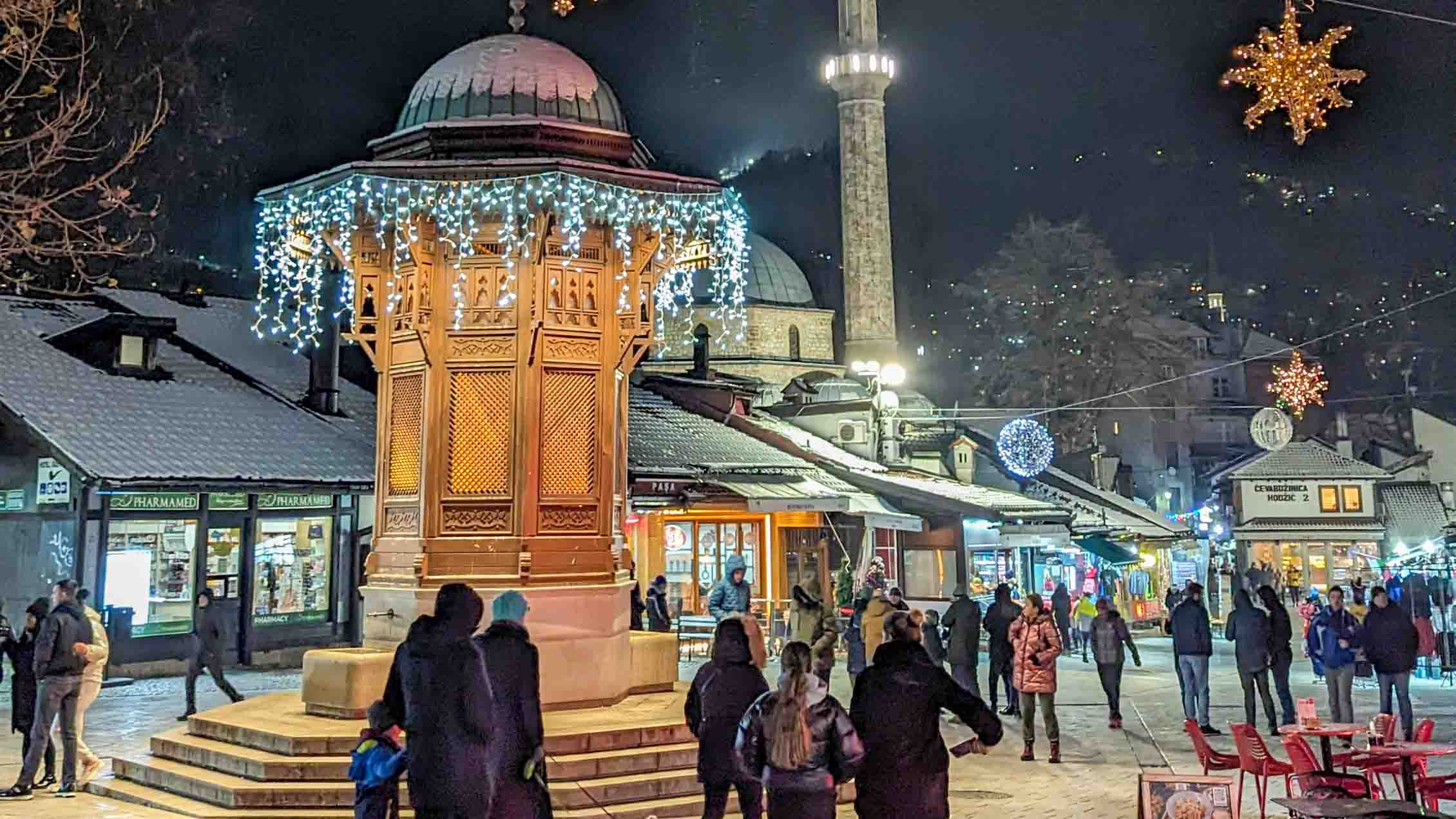
One of Sarajevo’s most famous landmarks is the Sebilj Fountain, built in 1752. According to local legend, anyone who drinks from this iconic wooden fountain will one day return to Sarajevo. Needless to say, I drank and filled my water bottle! It’s a perfect spot for photos and a great introduction to the city’s atmosphere, with minarets in the background and the call to prayer ringing out.
From there, head toward the Miljacka River, where you’ll find yourself in the heart of the Baščaršija market, full of craft shops, local produce, and cozy cafés.
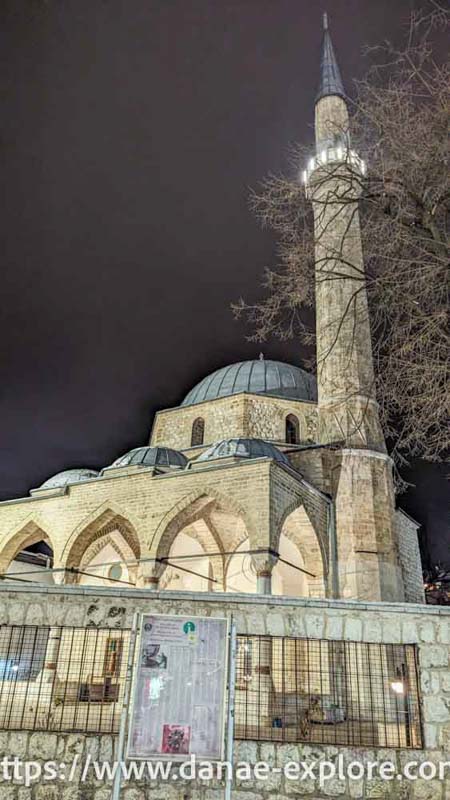
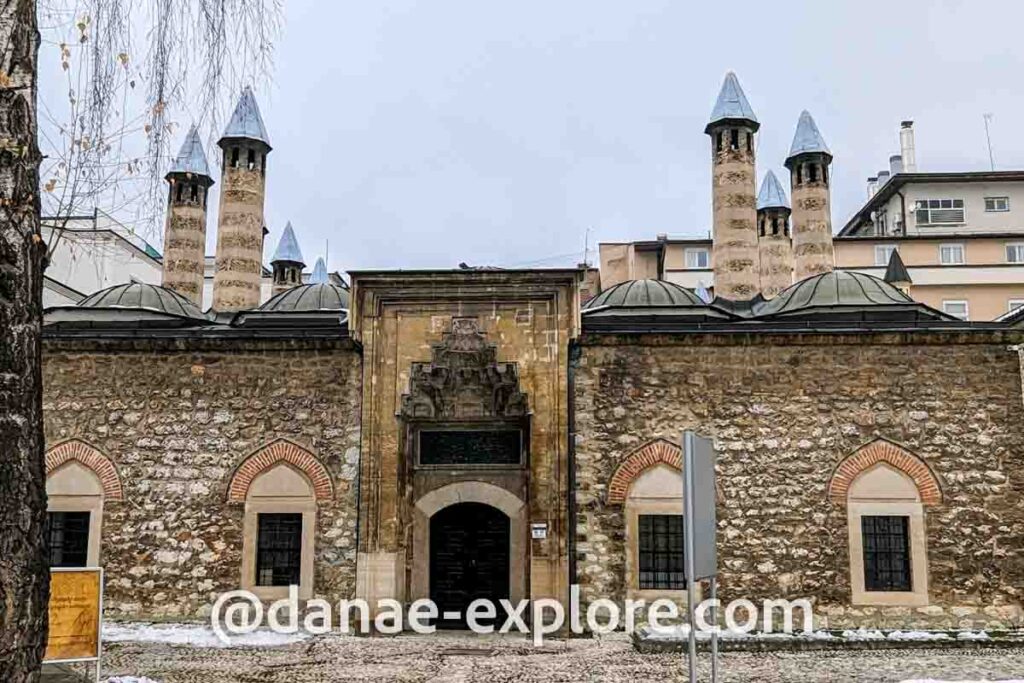
Turn right, and you’ll easily spot the Gazi Husrev-beg Mosque, the city’s most important mosque, built in 1531. Its 45-meter minaret is hard to miss. Even if you don’t go inside to admire the interior, it’s worth walking around the peaceful gardens and fountains.
.
.
Follow the narrow streets of Baščaršija, or if you prefer, take Obala Kulina Bana, the road running along the Miljacka River, all the way to Latin Bridge. On this fateful corner in 1914, Archduke Franz Ferdinand was assassinated, sparking the First World War. Right there, you’ll find the Sarajevo Museum 1878-1918, which focuses on the Austro-Hungarian period and the infamous assassination.
Another notable spot in Sarajevo is at the beginning of Ferhadija Street, the bustling pedestrian shopping street. Here, you’ll find the Sarajevo Meeting of Cultures, a marker symbolizing the confluence of East and West. I wasn’t feeling particularly inspired with my photos, but it makes for a great shot.
.

.
Museums of Baščaršija
Sarajevo is rich in museums, especially in the Baščaršija district, offering a rich window into the history of Bosnia and Herzegovina.
I already mentioned the Sarajevo Museum 1878-1918, a small exhibit on the corner where Archduke Franz Ferdinand was killed. It covers the time when the city was part of the Austro-Hungarian Empire and the assassination that ignited World War I.
Next to the Gazi Husrev-beg Mosque is another museum on our route: Bruza Bezistan. This historic Ottoman-era building now houses a museum dedicated to the city’s history. A quick visit, but worthwhile if you want to understand how many layers Sarajevo’s history has.
Wandering deeper into Baščaršija, near the Sacred Heart Cathedral, you’ll find the Museum of Crimes against Humanity and Genocide. This museum presents, through powerful videos, photos, and personal belongings, the atrocities that occurred across Bosnia and Herzegovina during the 1990s war, alongside harrowing personal testimonies.
Just two blocks away is the Jewish Museum, housed in the city’s oldest synagogue. During the Ottoman period, Sarajevo welcomed refugees, including those fleeing the Spanish Inquisition. Sadly, the majority of Sarajevo’s Jewish population was either killed or forced to flee during World War II.
.


.
Not far from there is Galerija 11/07/95 and the Srebrenica Genocide Memorial, both dedicated to documenting one of the darkest chapters in Bosnia’s recent history: the Srebrenica genocide.
Just a few blocks from Sebilj but outside Baščaršija, you’ll come across the War Childhood Museum, one of the most touching museums in Bosnia and Herzegovina. The war is portrayed through the eyes of the children who lived through it, and the personal stories on display are as illuminating as they are devastating. If you only visit one museum to learn about this period in the country’s history, make it this one.
Close to the War Childhood Museum is Svrzo House, an oasis of whitewashed walls, cobbled courtyards, and dark timber. This 18th-century house museum takes you back to life in Sarajevo during the Ottoman period. Unfortunately, it was closed during our visit.
For the best sunset views in the city, head to the Yellow Fortress, just a short walk from Baščaršija.
.


.
Museums outside Baščaršija
If you still have time and energy, it’s worth hopping on a bus or tram to visit the National Museum of Bosnia and Herzegovina. The museum features several wings with exhibits about the region’s history, as well as a botanical garden. We specifically went to see the “Sarajevo Haggadah,” an important Jewish manuscript dating back to the 14th century. It is one of the oldest and most richly illustrated depictions of Jewish Passover (Pesach) traditions. What’s even more fascinating than the book itself is its history: it survived the Inquisition, two World Wars, and the Bosnian War, thanks not only to Jews but also Catholics and Muslims. Unfortunately, the room housing it was under renovation, so we didn’t get to see it.
Across from the National Museum is the Holiday Hotel, formerly known as the Hotel Holiday Inn, which served as headquarters for journalists covering the Bosnian War and the Siege of Sarajevo. The avenue separating the two buildings, now a bustling street lined with shops and businesses, was once infamous as “Sniper Alley,” where Serbian snipers targeted anyone who dared to cross.
On the same corner stands the Historical Museum of Bosnia and Herzegovina, an impressive modern structure of glass and concrete. We ended up there by accident, mistaking it for the National Museum. Nevertheless, it was worth the visit, especially for the exhibit on the Siege of Sarajevo, which I found more engaging and accessible than the one at the Museum of Crimes against Humanity and Genocide.
.

.
What to do in Sarajevo in 1 day
If you only have one day to explore Sarajevo, get ready: wake up early, put on your most comfortable shoes, and let’s go — there’s a lot to cover.
I recommend starting your day at the Tunnel of Hope. Check the opening hours on the official website, and get there as early as you can.
Afterward, follow the itinerary for Day 2, soaking up as much of Baščaršija as you can.
If you still have some energy left, or if you’re visiting during the long summer days, you might even have time to take the cable car and catch the sunset from the Trebević viewpoint. Be sure to check the schedule on the official website.
One day in Sarajevo is enough to leave a lasting impression. The blend of Ottoman and Western cultures, the city’s deep historical roots, the vibrant streets of Baščaršija, the warmth of the people, delicious local cuisine, and sweeping views from the surrounding hills all make Sarajevo unlike anywhere else in Europe.
.
Map of our roadtrip through Eastern Europe
Our almost three-week road trip through Eastern Europe took us through 4 countries: Serbia, Montenegro, Croatia, and Bosnia and Herzegovina. We covered 1,960 km in 18 days, with the first and last days spent getting to and from the airport
Check out the map below for the full details of our itinerary. You can click and save it to your Google account, and when you’re planning your next trip to the Balkans, you’ll know exactly where to start.
How to use this map: Click the menu tab in the upper left corner of the map to access different layers, including points of interest and routes. You can toggle layers on and off by checking the corresponding boxes. To see details about specific locations, click on the icons on the map.
To save this map to your Google Maps account, just click the star icon next to the map title. To access it later on your phone or computer, open Google Maps, tap the menu button, go to “Your Places”, select “Maps”, and you’ll find this map saved there.
Here are the websites I always use to plan my trips:
– 🛌 Accommodation: Booking
– ☀️ Tours & activities: Civitatis & Get Your Guide
– 📱 eSIM for mobile data: Airalo e-SIM – use promo code DANAE2375
– 🚗 Car rental: RentCars – use promo code DANAE, or DiscoverCars
.
All our posts about travel to the Balkans, to help you plan your trip:
- A 20-day Balkans itinerary: Serbia, Montenegro, Croatia and Bosnia-Herzegovina
- The complete guide to Kotor, Montenegro: what to do, where to stay, and when to go
- Mostar – what to do in the most charming town in Bosnia and Herzegovina
- What to do in Sarajevo: a 1 or 2-day itinerary in the capital of Bosnia and Herzegovina
.
Explore more of Europe with us:
Scandinavia
- Is it expensive to travel in Norway? Practical tips for visiting without breaking the bank
- Preikestolen: a hiker’s guide to Norway’s most spectacular viewpoint
- What to do in Norway in 12 days – and itinerary suggestions for 7, 10, 15 or 20 days
- Iceland itinerary: complete 5 to 9 day road trip guide
- What to do in Iceland – the best of the south and east of the island
- 5 unmissable small towns in Europe
Greece
- What to do in 2 or 3 days in Athens
- The best itinerary for a 15-day road trip around mainland Greece
Spain
- 10 days in Andalucia – Our itinerary through Southern Spain
- What to do in 2 days in Granada, Spain
- Ronda, the most charming town in Southern Spain
Portugal
- Portugal in two weeks: our complete itinerary and tips
- One week in the Azores – complete itinerary with Sao Miguel, Pico and Terceira Islands
- São Miguel, Azores: your complete guide to the largest island in the Azores
- Pico Island – complete guide to visiting the most picturesque island in the Azores
- Terceira Island itinerary for first-timers: a perfect Azores adventure
.
Did you like these tips? Then follow me on social media:
Instagram @danae_explore
Pinterest @danaeexplore
Comments or questions? Contact me on social media.! I love to chat about travel 😉
And before you go, don’t forget to SAVE THIS PIN to your PINTEREST account for easy access to this post on what to do in Sarajevo: 1 or 2 day itinerary in the capital of Bosnia and Herzegovina, whenever you need it!