I had always wanted to travel to Morocco — but I also had a million doubts. Is it safe for a woman to travel alone? What should I wear? When is the best time to visit? Do I really need a guide? How much does it cost? Is the harassment from vendors bad? What’s the food like? What about money, credit cards, roads — the list went on and on.
Countless questions ran through my head, but we went ahead and made it happen, and ended up with a fantastic ten-day itinerary! Good thing you found this post, because I’ll walk you through everything you need to know before going to Morocco, and I hope that by the end, you’ll feel confident that it’s all going to work out. Because it will, and it’ll be a trip you won’t forget.
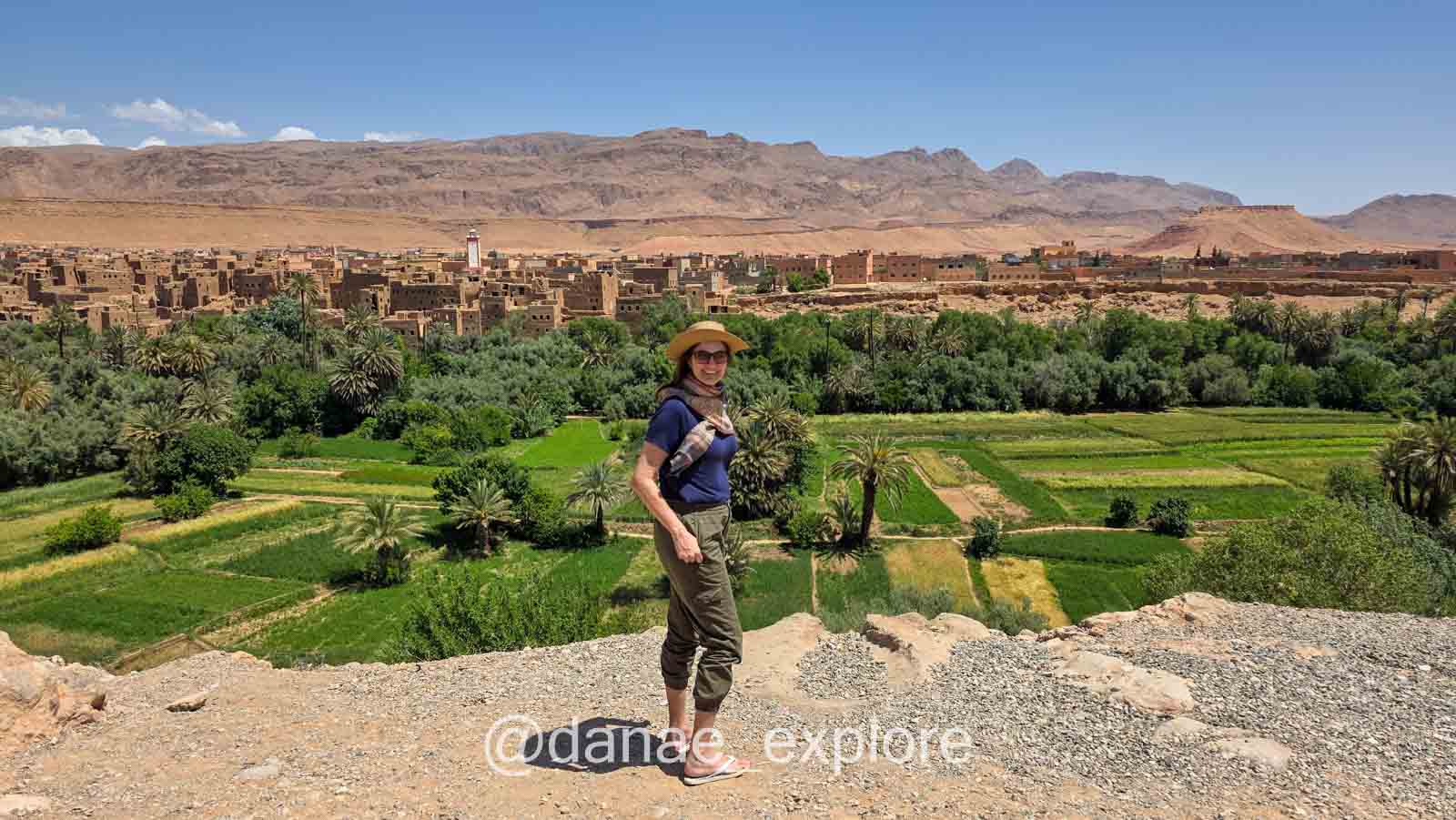
I traveled to Morocco with a friend, and we put together an amazing itinerary. In ten days, we covered Rabat, Chefchaouen, Fès, Meknes, Volubilis, Marrakesh, and the Sahara desert in Merzouga. Check out our full Morocco itinerary, plus tips on where to stay in each city and all the details you need to plan the perfect trip, because nothing beats travel advice from someone who’s actually been there.
First of all, follow me on Instagram @danae_explore – that’s where you can keep up with my trips, find lots of travel tips, and send me a DM anytime. I love chatting about travel!
.
When to go to Morocco
The best times to visit Morocco are in the mid-seasons: spring (from March to early June) and autumn (September to December). During these months, the weather is usually more pleasant, with milder temperatures. However, this is also when there tend to be more tourists.
We went in May and I thought it was great: beautiful days, lots of sun, blue skies, and manageable heat. In the last few days (towards the end of May), Marrakech was very hot, but nothing that interfered with our sightseeing.
It’s worth remembering that Morocco’s climate varies greatly from region to region. In the desert, the temperature range is quite extreme: it can be very hot during the day and surprisingly cold at night. It’s best to be prepared.
If you’re planning to travel in winter (from late December to February), it can be quite cold, especially in the mountainous areas (the High and Middle Atlas ranges). Ifrane, near Fez, is the country’s main winter sports destination — yes, you can ski in Morocco!
I would avoid visiting Morocco in the summer (from June to September) because, as you can imagine, it gets very hot. Even our guide said it’s not the best time to go. I’ve been to southern Spain in the summer and experienced extremely high temperatures, the kind that make walking around uncomfortable, I imagine Morocco can be just as hot, if not hotter.
.
Traveling to Morocco during Ramadan
When planning your trip to Morocco, it’s important to check whether it will coincide with Ramadan, the holy month for Muslims. During this period, Muslims fast from dawn to dusk. Known as Sawm, fasting is one of the five pillars of Islam and is meant to bring believers closer to God while reminding them of the suffering of those less fortunate.
Ramadan falls in the ninth month of the Muslim lunar calendar, so its dates vary on the Gregorian calendar. When we went to Morocco, our original plan was to travel in March, but we quickly changed our minds when we realized it would be Ramadan that year. We postponed the trip to May.
There are no formal restrictions on traveling to Morocco during Ramadan. However, you’ll find the streets less busy, businesses with reduced opening hours, and in some cases, fewer lunch options available.
The key is to be aware of whether your trip will fall during Ramadan, so you can adjust your expectations and avoid any surprises.
.
.
What it’s like to travel as a woman (solo) in Morocco
This was the question that concerned me the most. Although I’ve visited more than 50 countries, in most of them I was accompanied by my husband and my daughters. I’ve traveled alone or with friends (as we recently did in the Azores), but I had never been to an Arab-Muslim country — which is exactly why I was so eager to visit Morocco.
Deep down, I was confident everything would be fine. Still, after talking it over with my travel partner, we decided it would be wise to hire a guide and driver to accompany us throughout the trip. We compared options and costs and chose a private tour, which we booked through a local travel agency.
This is NOT a sponsored post. We paid for all travel expenses ourselves.
Hassan, our driver, and Abdul, our guide, were with us for the entire trip. If it fits your budget, I highly recommend exploring Morocco with this kind of support,, even if you’re traveling with a man. The exchange and insights you gain from locals enrich the experience in ways you’d hardly get traveling on your own. On platforms like Civitatis and GetYourGuide you’ll find several guided tour options. I’ve booked tours through them in other destinations (such as Kenya, Alaska and Terceira Island, Azores) and have always had excellent experiences.
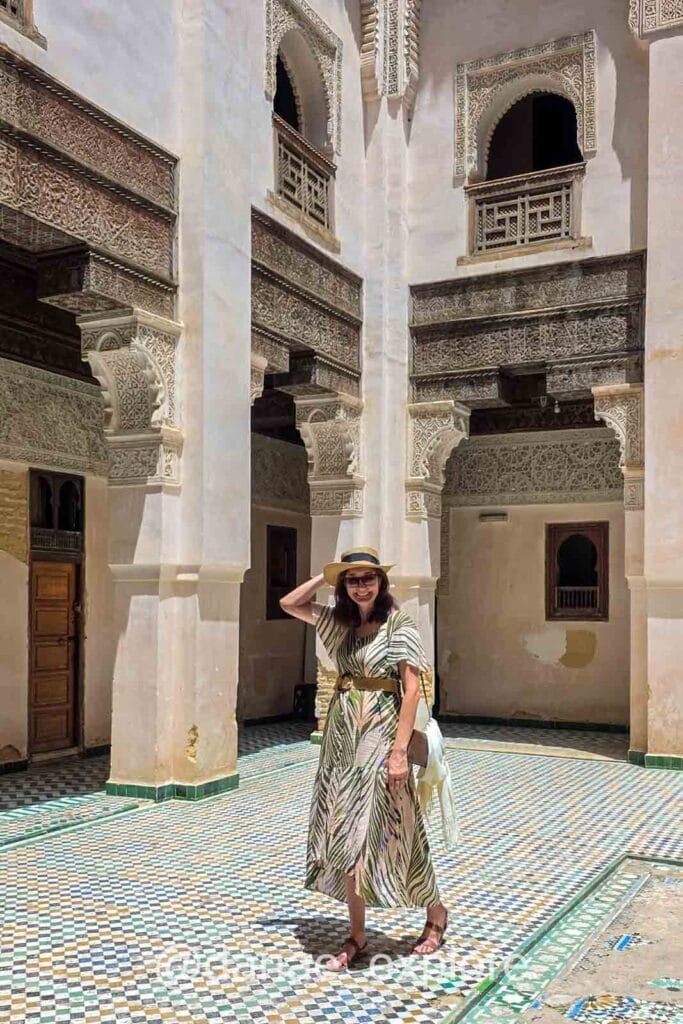
Even with a guide, there were many moments during the trip when it was just the two of us, two women walking alone the streets of Morocco. Once the day’s visits and activities ended (usually around 5 p.m.), the driver would drop us off at the hotel, and we were on our own.
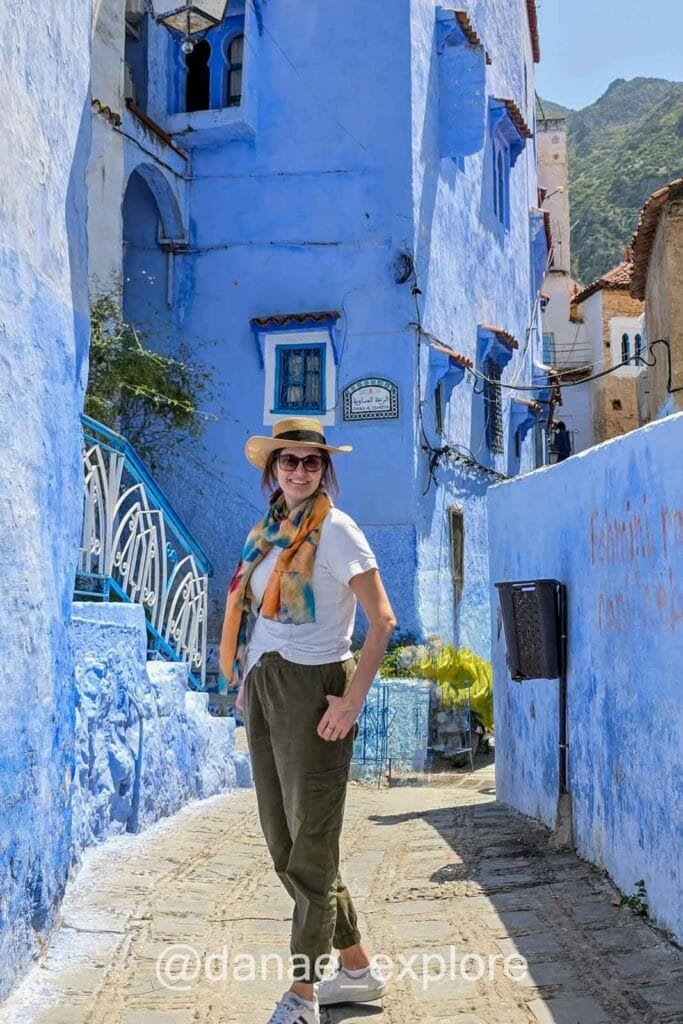
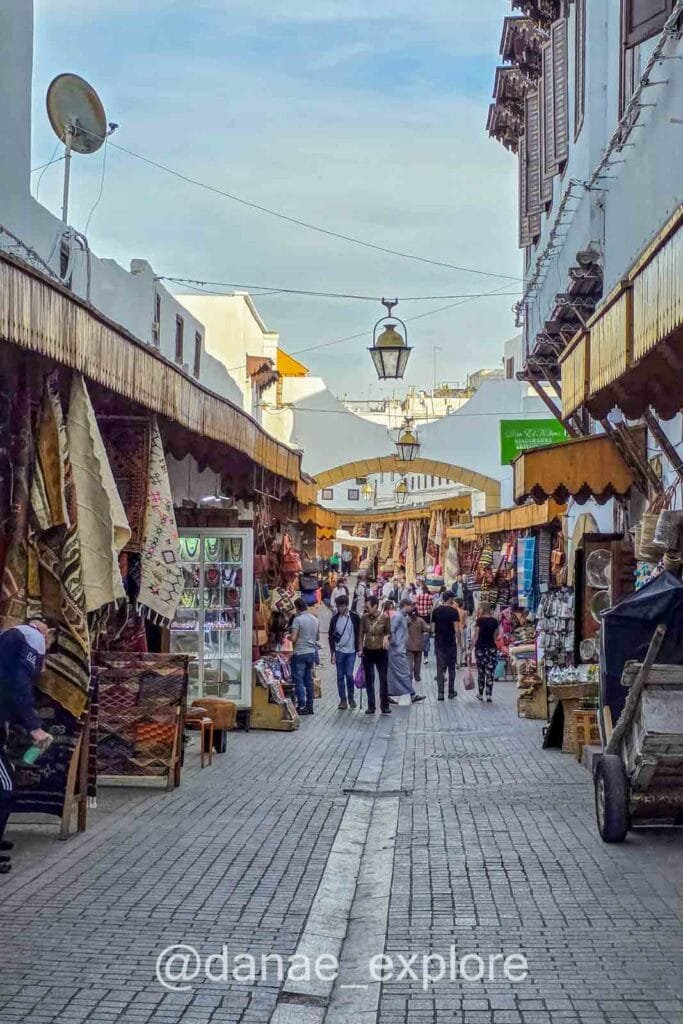
We explored Rabat, Chefchaouen and Marrakech on our own in the late afternoons and evenings. As I mentioned in the post with our complete Morocco itinerary, we wandered through the medinas, shopped, ate out, basically the same kind of strolling we do in any city in the world, without any harassment that made us feel uncomfortable.
.
.
What to wear in Morocco
Dress modestly and respect local traditions!
Morocco is a predominantly Muslim country, and local women dress in accordance with religious guidelines.The vast majority wear their hair covered with a hijab (scarf) or niqab (which leaves only the eyes visible). Most women, and many men as well, wear traditional clothing: a long, loose-fitting robe with sleeves and a hood, called a djellaba or abaya.
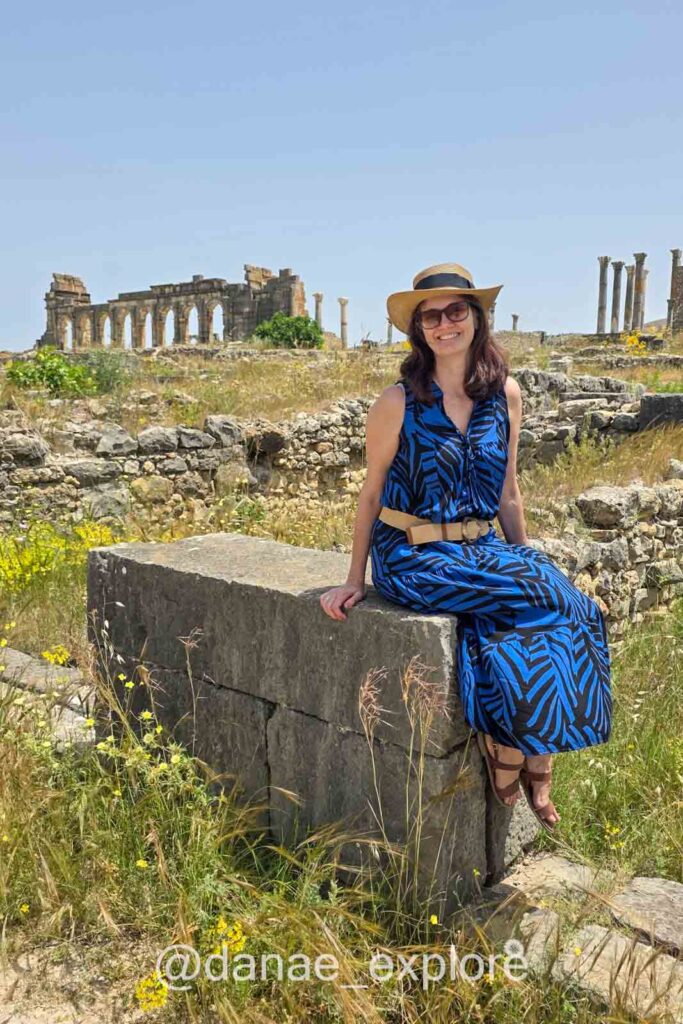
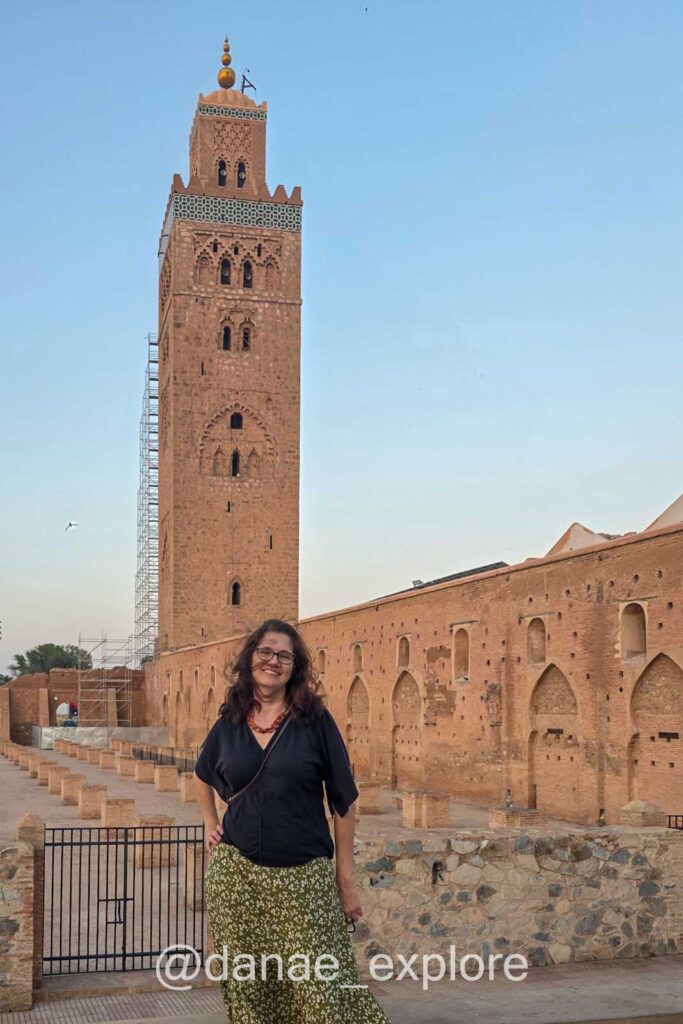
That said, as Morocco is considered one of the more liberal countries in the Arab world, there’s no specific dress code for tourists. However, I think it’s good manners — and I recommend it to everyone — to show respect for local customs. After all, we’re visitors here, and just as we wouldn’t appreciate foreign tourists causing trouble or disregarding our own culture and traditions, I try to respect the dress norms of the places I visit as much as possible..
Of course, if it’s not mandatory, I’m not going to wear a scarf or niqab, but I see no issue with dressing conservatively. I consider it a gesture of appreciation toward a country that welcomes me warmly and gives me such rich experiences and beautiful memories. It’s a small effort that costs me nothing.
That said, I saw plenty of tourists, especially in Marrakech, wearing shorts, tank tops, short dresses, and sleeveless tops. From what I observed, they seemed relaxed and enjoying themselves, but I can’t say whether they experienced any harassment or awkward situations — I hope not! My advice is to think carefully about your clothing choices when packing and aim to show as much respect as possible to your destination.
.
What I packed for Morocco
As you already know I only travel with a carry-on, so I put together a compact wardrobe that worked perfectly for this ten-day trip to Morocco, proving that you can respect local customs, travel light and keep your personal style, all while being comfortable:
- two pairs of pants (one wide-leg and one cargo — the cargo was my most-used!)
- seven short sleeve t-shirts
- two below-the-knee dresses (one of them sleeveless)
- one long skirt
- one pashmina
- one silk scarf
- one pair of sneakers
- one pair of sandals
- one swimsuit
- underwear and socks
- one down jacket (used mainly on the plane)
- a hat (essential!!!)
And don’t forget sunscreen!
We traveled in spring, with very sunny and warm days.
Documentation for traveling to Morocco
Most nationalities do not need a visa to visit Morocco, but you need to check it beforehand – I always have a look at joinsherpa.com to begin with.
A yellow fever vaccine is not mandatory, but if you haven’t had it yet, I recommend getting it as soon as possible. A single dose provides lifelong protection. Afterward, request your International Vaccination Certificate and clip it (don’t staple!) to your passport — that way it will always be with you, ready, and you’ll never have to worry about it again.
Immigration: We went through immigration at Casablanca Airport. There was a bit of a line, and each traveler had to go individually to speak with the border officer. The usual questions were asked: What are you going to do in Morocco? How long will you be staying? (Here is where we showed our itinerary), Where will you be staying? How much money are you bringing? Nothing very different from what usually happens in other countries.
I always recommend having PRINTED proof of your accommodation booking (at least the first few nights), and the return ticket, as well as your travel insurance policy. We keep all of this on our phones too, but there’s nothing like the good old analog method to make sure that, even without battery or Wi-Fi, everything will be fine.
.
.
How to take money to Morocco
The local currency is the Moroccan dirham (Dh). At the time of writing, 1 USD was equivalent to 9 Dh.
For bringing cash, euros are the best optionalthough exchange offices also accept US dollars, British pounds, and some currencies from neighboring countries. You’ll find currency exchange offices easily in tourist areas, but always choose authorized establishments — never exchange money with strangers on the street.
In shops, euros and dollars are generally not accepted, but it’s common to tip guides in these stronger currencies. Some hotels, especially higher-end ones, may accept payments in them as well.
Credit and debit cards are only accepted in certain establishments. I brought my Wise multi-currency card, but most of my expenses were paid in cash. So, either bring euros or dollars to exchange (my choice) or plan to make withdrawals with your card — checking your limits and fees before you leave home.
.
Power outlets and internet in Morocco
Internt:I used an Airalo e-Sim and it worked perfectly — even at the Sahara Desert camp. The main operator is Maroc Telecom.
Power outlets: utlets in Morocco are type C and E, with two round pins (similar to those in most European countries) and a voltage of 220V. When in doubt, I always carry a universal adapter and a T-adapter.
.
What it’s like to fly with Royal Air Marroc
With nonstop flights to Casablanca from major cities in Europe, the Middle East and the Americas, Royal Air Maroc is one of the most convenient ways to reach Morocco.
It was my first time flying with Royal Air Maroc, and I found it perfectly fine: the aircraft was new, the service was average (nothing exceptional, but nothing worse than other airlines), and being a direct flight, it was the fastest and most economical way to get there. I highly recommend this route for its convenience and value for money.
Other usual options include flights with connections in Portugal (Lisbon or Porto), Spain (Madrid) or France (Paris).
.
You have to negotiate and bargain – a lot!
Bargaining is part of the local culture — not only is it customary, but it’s expected.
I’ll admit, I’m not a big fan of this ritual. Being terrible at the art of negotiation, I prefer when prices are fixed and the same for everyone, without depending on whether the seller thinks you look like a “wealthy foreigner” or understands that you’re just a regular girl with a PhD in stretching her salary until the end of the month.
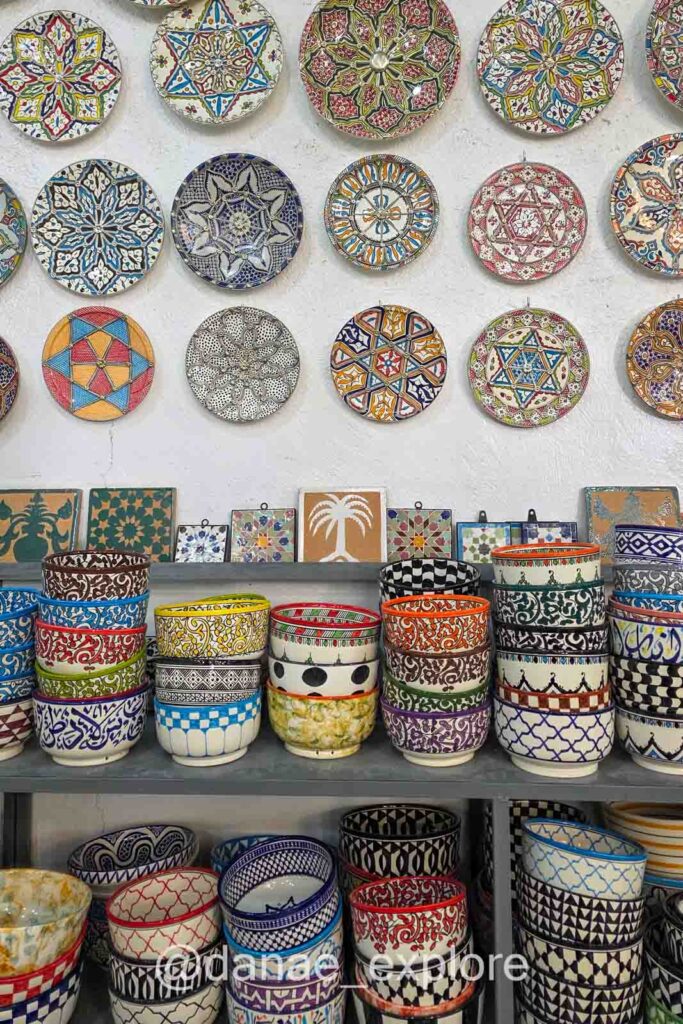
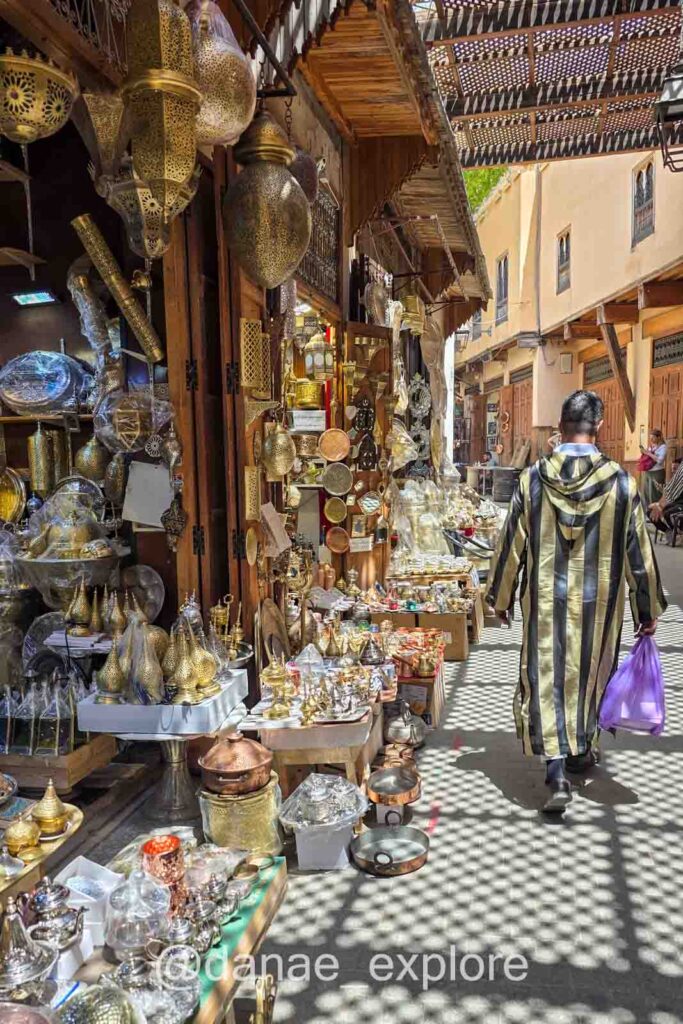
I went to Morocco prepared to bargain until the end of time, but I found it much more relaxed than I expected: The starting prices weren’t outrageous, and negotiations were quick. With the exception of a few fixed-price stores, all others expect you to make a counteroffer lower than the asking price. I don’t usually shop much when traveling, but the few things I bought ended up costing about 60–70% of the initial price.
A good way to know if you’re overpaying is to first visit a fixed-price store. In Marrakesh for example, we went to Dar Bouchaib, to get a realistic idea of prices and use it as a reference for bargaining. In the end, I bought most of my “souvenirs” at this fixed-price shop.
.
Complete map of our 10-day Morocco itinerary
Our ten-day Morocco itinerary is detailed on the map below — just click and save it to your Google account. When you start planning your own trip to Morocco, you’ll already have a great starting point 😉
How to use this map: Click the menu tab in the upper left corner of the map to access different layers, including points of interest and routes. You can toggle layers on and off by checking the corresponding boxes. To see details about specific locations, click on the icons on the map.
To save this map to your Google Maps account, just click the star icon next to the map title. To access it later on your phone or computer, open Google Maps, tap the menu button, go to “Your Places”, select “Maps”, and you’ll find this map saved there.
Here are the websites I always use to plan my trips:
– 🛌 Accommodation: Booking
– ☀️ Tours & activities: Civitatis & Get Your Guide
– 📱 eSIM for mobile data: Airalo e-SIM – use promo code DANAE2375
– 🚗 Car rental: RentCars – use promo code DANAE, or DiscoverCars
.
All our posts about traveling in Africa:
South Africa
- 20-day South Africa itinerary, with the best of the country for your first visit
- What to do in Cape Town: 4-day itinerary with the best of the best
- South Africa: what you need to know before you visit
- Complete guide to going on safari in Kruger Park without spending a fortune!
Kenya and Tanzania
- Kenya and Tanzania Itinerary – with safari in the Serengeti and beaches in Zanzibar
- Complete guide to visiting Zanzibar: itinerary and tips
Morocco
- 10-Day Morocco itinerary: the best for your first visit to the country
- Everything you need to know about traveling to Morocco: when to go, what to wear, safety and more
.
Did you like these tips? Then follow me on social media:
Instagram @danae_explore
Pinterest @danaeexplore
Comments or questions? Contact me on social media! I love to chat about travel 😉
And before you go, don’t forget to SAVE THIS PIN to your PINTEREST account, so you can easily find this post and all the tips you need to plan your trip to Morocco, whenever you need it!