
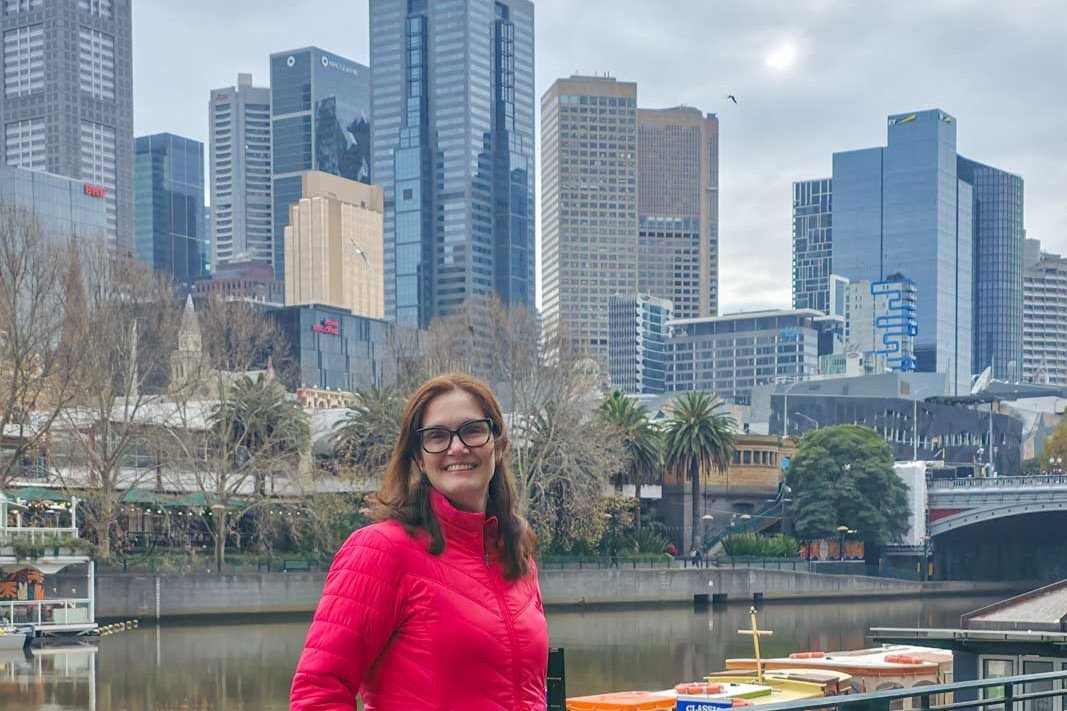
I have to admit that Australia snuck its way into on our first trip to Oceania. The plan was to visit only New Zealand, but that old familiar “since we’re already going” gave us a little push: since we’re traveling that far, couldn’t we squeeze in Australia too?
I don’t need to dwell on the decision-making. Once we’d counted up our free days and our money and checked the flight connections, it was settled: Melbourne, here we come!
Melbourne wasn’t chosen for being Australia’s cultural capital, or for being one of the cities with the best quality of life in the world, or for the beautiful landscapes around it. I’ll admit that Melbourne made it onto our route simply because the flights were cheaper and the connections better. I don’t know about you, but that’s how it always goes around here: it’s how we ended up in Nairobi, Kenya, and Belgrade, Serbia.
First of all, follow me on Instagram @danae_explore – that’s where you can keep up with my trips, find lots of travel tips, and send me a DM anytime. I love chatting about travel!
But one step into Australia’s second-largest city and I realized my heart already had a new owner: Melbourne is a joy to explore, with a lively, cosmopolitan downtown, easy public transport, countless parks and green spaces, great museums, excellent food, and the best coffee I had in a whole month around Oceania.
We spent seven days in Australia, split into four days in Melbourne and three days on the road, two of them along the Great Ocean Road – I don’t have a post about that roadtrip on the blog yet, but you can check the feed and highlights on my Instagram @danae_explore, which already give you a good taste of what’s coming.
So here we go: this is the complete guide to Melbourne, where to stay, how to get around, how many days to spend, and what to do in the city and around it. I’m sure that, just like me, you’ll fall in love and say goodbye to Melbourne with that wanting-more feeling.
.
.
What to do in Melbourne – an overview
Four intense days in Melbourne! Our flight landed at 5:40 a.m. (we flew LATAM from São Paulo, with a stopover in Santiago, Chile), we dropped the bags at the hotel, and by seven in the morning we were already out exploring the streets.
Broadly, our days in Melbourne went like this:
1️⃣ Exploring the CBD – Central Business District, Melbourne’s compact downtown
2️⃣ St. Kilda and Brighton beaches, with the famous Brighton Bathing Boxes
3️⃣ Parks, museums, and the market: Royal Botanic Gardens, Melbourne Museum, Fitzroy Gardens, and Queen Victoria Market
4️⃣ day trip to Phillip Island (highly recommended!)
The order of the days is up to you.
We visited Phillip Island on the last day because we only picked up the rental car that day (for the first three, in Melbourne, it would have been completely unnecessary and would only have cost us parking), and from there we drove on along the Great Ocean Road, returning the car at the airport on the day we left for New Zealand.
.
To rent a car, I always use RentCars, where I usually find the best options, and with the DANAE promo code you still get an additional 5% off. Shall we go?
.
Where to stay in Melbourne
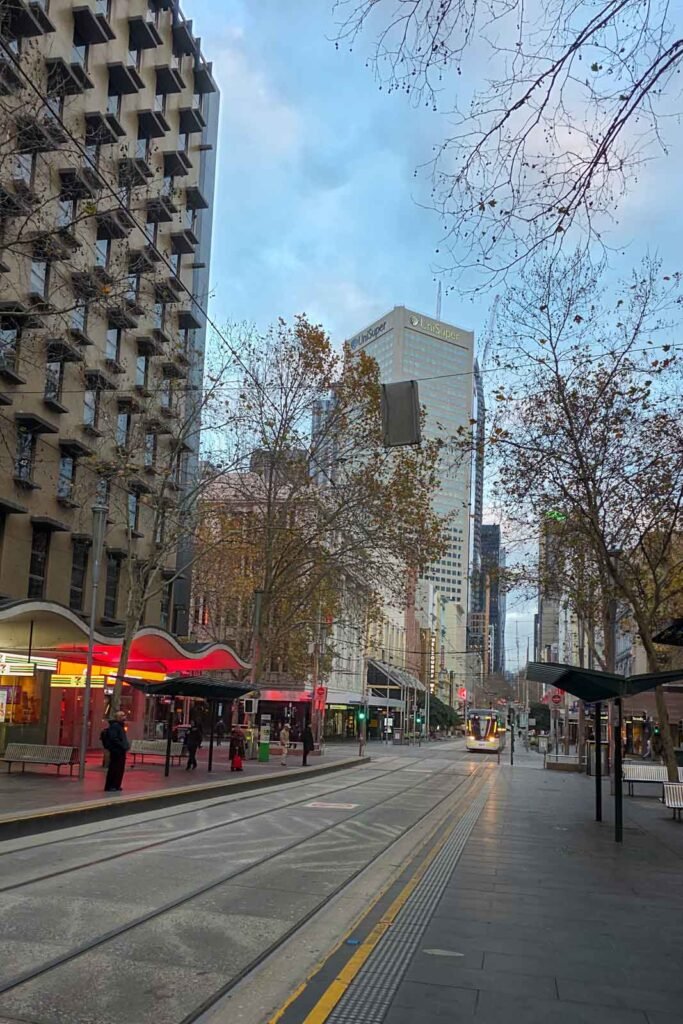
The general tip is simple: stay in the CBD (Central Business District), the city’s compact center.
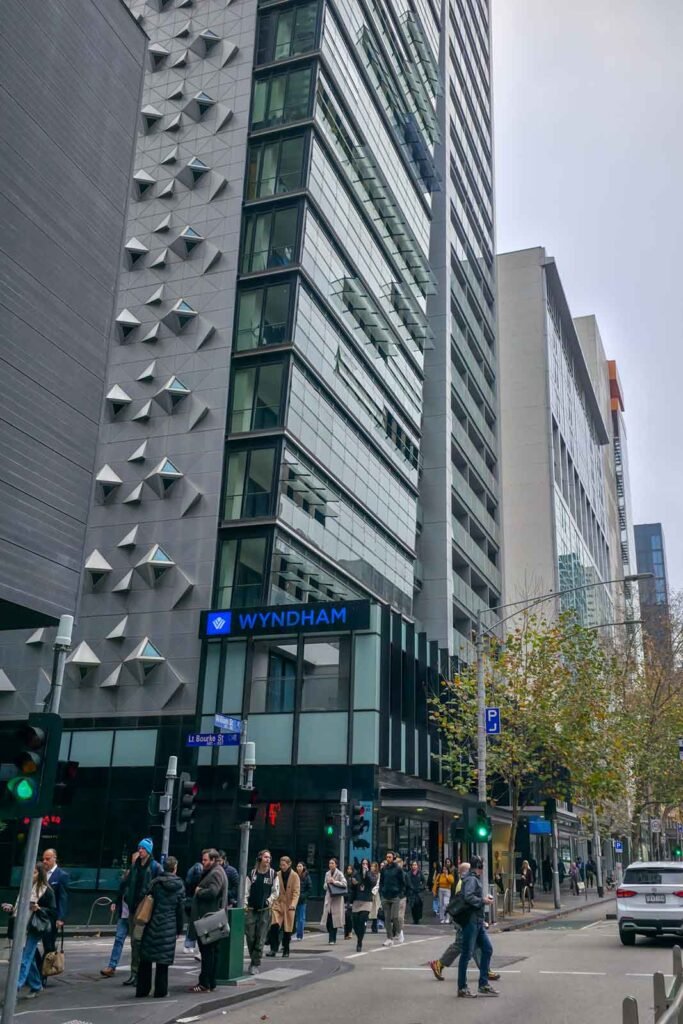
We spent four nights in Melbourne at the Wyndham Hotel Melbourne and I highly recommend it. Excellent location in the CBD, with a tram stop right in front of the hotel – and the tram is free for trips inside the CBD area. We took the family apartment, with two bedrooms (one with a queen bed and the other with two singles), one bathroom, a living room, and a compact kitchen. It was perfect, since traveling with two teenagers puts us right on that threshold between letting the kids fend for themselves and needing to be right next door, or it all turns to chaos.
As I mentioned on Instagram @danae_explore, staying in the CBD area is well worth it. Beyond being close to the main attractions and having easy access to the free tram system, the area is lively, with plenty of restaurants and cafés and all the local shops a traveler needs. I loved it and, when I go back to Melbourne, I’ll certainly stay in the CBD again.
In the original trip plan, our last night in Australia would have been in Melbourne again, at the Novotel Melbourne Central. Then I revisited the plans and we decided to spend one more night on the Great Ocean Road (we stayed in the town of Lorne, at this hotel), which turned out to be a wise call.
Other options I’d considered were the Oaks Melbourne on Collins Suites and the Causeway 353 Hotel. For a tighter budget, the Ibis Styles Kingsgate Melbourne has a great location and is worth a look.
.
.
How to get around Melbourne
How to get from the airport to downtown Melbourne by public transport
We took the bus from the airport to our hotel in the CBD. After landing, just follow the signs in the terminal and catch the Skybus (official website link and GetYourGuide link at the same price), the bus that runs straight to Melbourne’s central station.
Our flight landed at 5:40 a.m., we caught the bus at 6:20 and it took less than half an hour to reach the station, plus about five minutes on foot to our hotel. It costs AUD$ 25.90 per adult, AUD$ 6.60 per child up to 16, or AUD$ 43.40 / AUD$ 11.00 return. We bought the ticket on the spot, at a kiosk in the airport, but you can also buy online in advance.
.
How to get around the city of Melbourne
In the city center, the CBD, you can do everything on foot. In my opinion, walking is the best way to get to know anywhere.
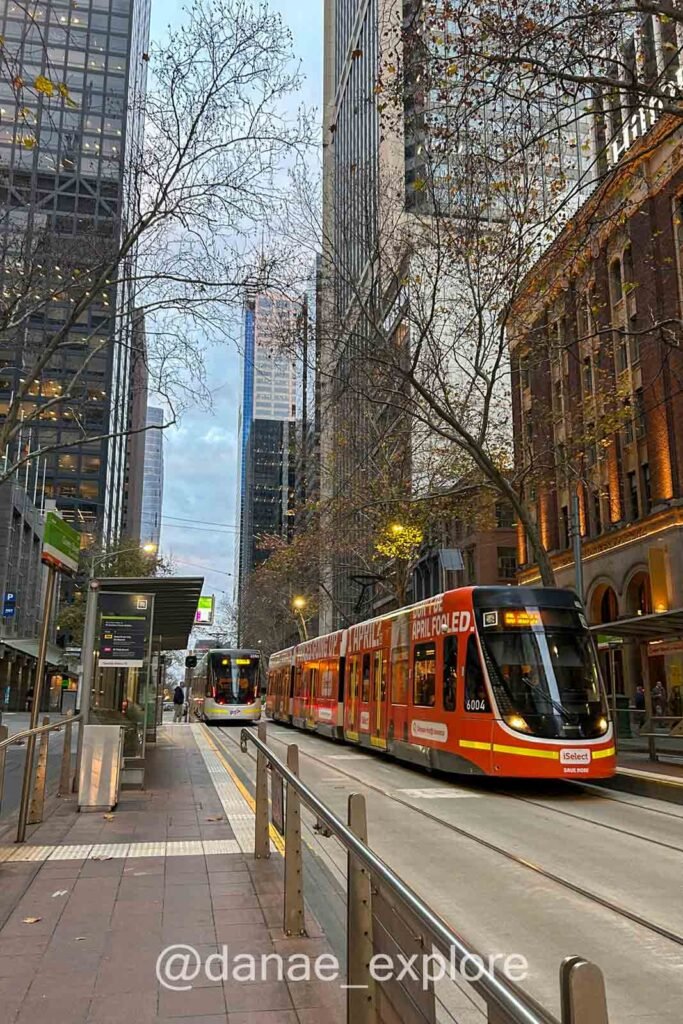
But when tiredness hits, or if you need to go somewhere farther out, Melbourne’s tram system is excellent! Trips inside the CBD are free: just get on and off within the limits of the central area. The stops show where the free zone is, and when the tram leaves that area it’s announced over the speakers, so there’s not much room for error.
To use the trams outside the CBD, you have to pay the fare. There are two fare classes, but if you start your trip in the CBD and end it outside, you’ll be on the higher one, AUD$ 2.85, which gives you unlimited travel for two hours. You can pay with any contactless credit card: just tap the card (or your phone) on the little machine by the door and off you go. Another option is the myki card, a prepaid transport card you can buy at any train station. It lets you travel without limits for seven days for AUD$ 28.50 (there are packages for longer periods), which works out well if you’re staying in the city for a while. The official website has more information.
Children up to 18 travel free, but for that they need the myki youth card. We bought ours at a counter in Flinders Station, it costs AUD$ 5 and that’s it, you just tap it on the readers when you board. It’s valid for tram, bus, train, and metro (we didn’t use the metro).
We took the bus from St. Kilda to Brighton and, at the time we went, contactless card payment hadn’t been rolled out on buses yet. Payment is by cash or myki card, and since we had neither (🙈), the driver let us ride for free 😂.
.
.
How to get from Melbourne to Phillip Island
We chose to make the trip to Phillip Island by rental car, for the flexibility and because we were going to rent one anyway for the following days.
You can also visit Phillip Island on tours leaving from downtown Melbourne (here’s one good option), but we did the math and decided that, for us, the flexibility of having a car mattered more.
Fair warning: Phillip Island isn’t all that close to Melbourne, and it ends up being a very tiring day. Weigh up what works best for you.
Another option for comparing car rental prices is DiscoverCars.com, which brings together deals from a wide range of companies, including local car rental providers. I found some great rates there on my last trip.
.
What to do in Melbourne in one day
If you only have one day in Melbourne, put on your most comfortable shoes and make the most of it exploring everything you can in the Central Business District.
Here’s our route, with the main sights in bold, but you can adapt it however you like. To give you an idea, we clocked more than 20,000 steps that day – and still left a few sights out, purely from exhaustion.
We dropped the bags at the Wyndham Hotel Melbourne and went for coffee at Patricia Coffee Brewers, voted the best coffee of the trip – we went back several times, not least because it was pretty much right across from our hotel. There’s nowhere to sit (they improvise benches out of crates on the street in front, something we saw elsewhere in Melbourne too), and the food options are limited (a few croissants, muffins, and the like), but the coffee really is very good. It’s worth going, even if you’re staying somewhere else in the CBD.
.
Federation Square and Southbank
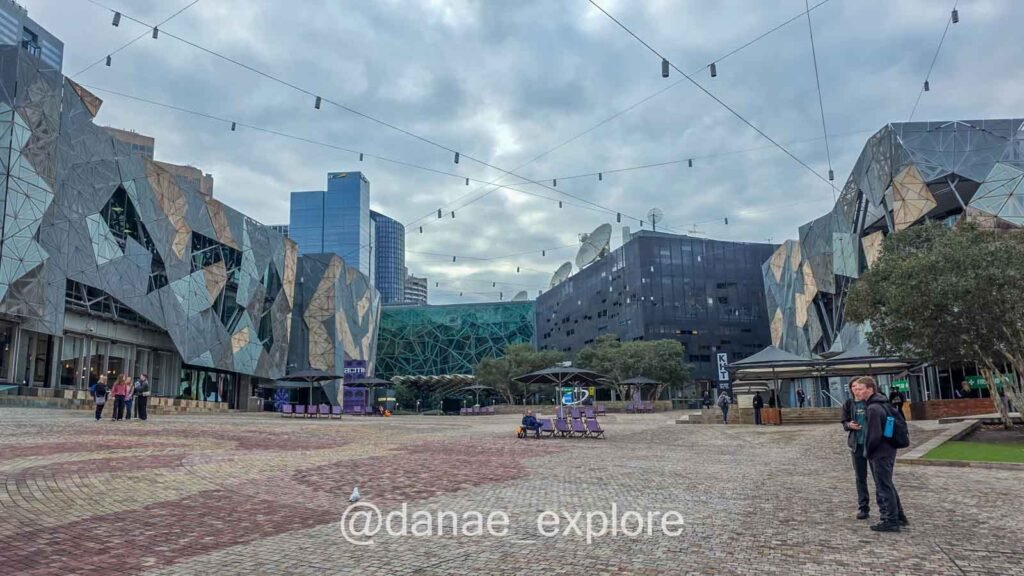
We walked to Federation Square, the hub of Melbourne, with its modern buildings and events happening throughout the year.
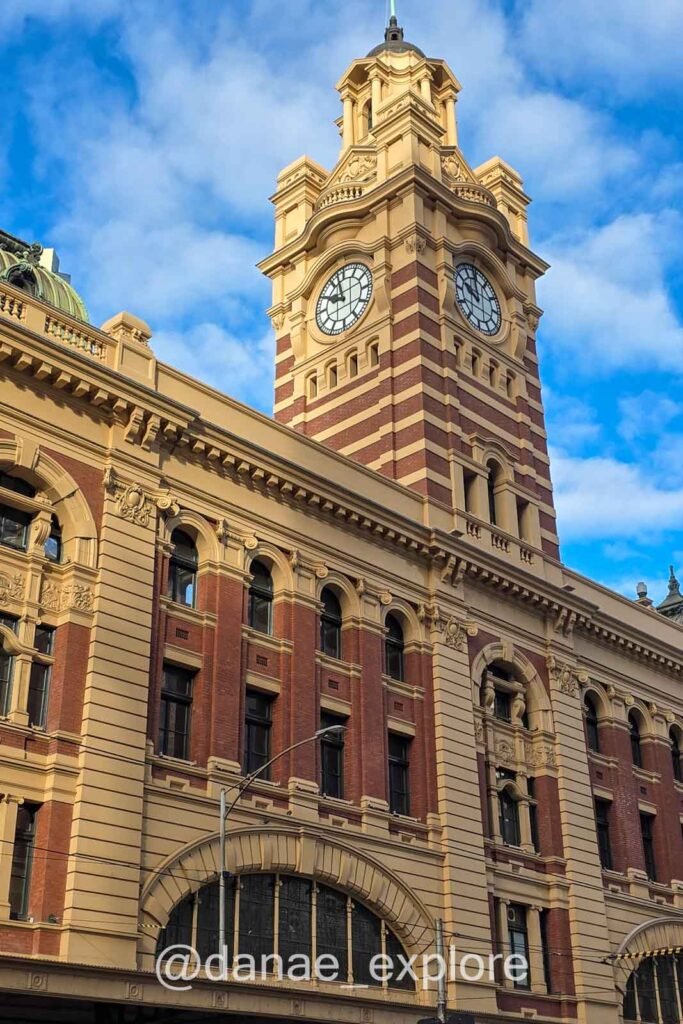
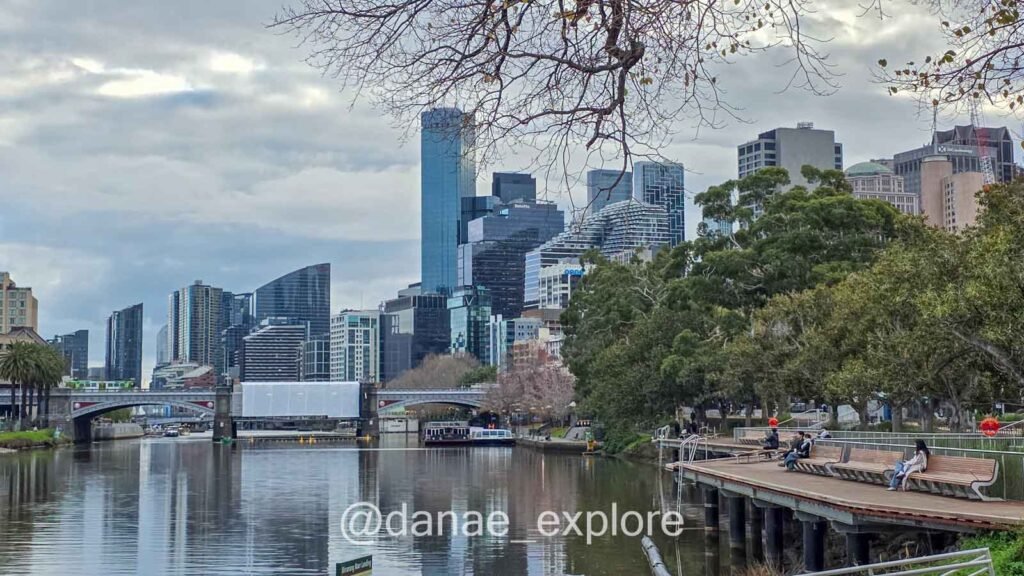
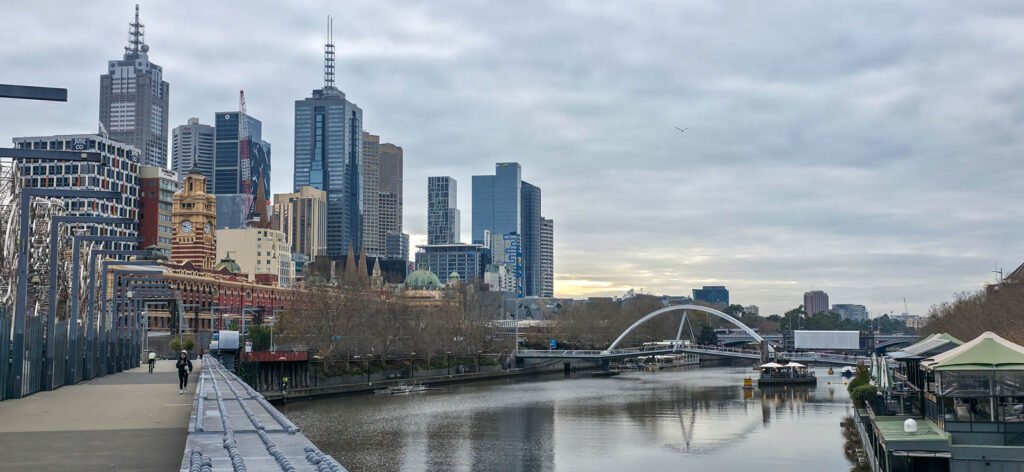
Right across from it are Flinders Street Station, the oldest train station in Australia, and St Paul’s Cathedral, consecrated in 1891. We crossed Princes Bridge and walked along the Yarra Riverbank to Queens Bridge via the Southbank Promenade, which has the best views of the Melbourne skyline.
On the way back we crossed the river again over Sandridge Bridge, a former railway bridge now reserved for pedestrians, which houses the Travelers exhibit, with sculptures and information panels telling the story of where Melbourne’s population came from, from the arrival of the First Nations peoples to immigrants from all over the planet.
Southbank is home to the Eureka Tower, Melbourne’s tallest building. You can go up to the Melbourne Skydeck, the observation deck on the 88th floor, for panoramic views of the city, and step onto the glass floor, which has become a bit of a cliché lately but still gives you butterflies. At that point in the walk – bearing in mind we’d come straight from the airport, wrecked by the jet-lag and on our feet since seven in the morning, we decided that someday, maybe, who knows, when we come back to Melbourne, we’ll do that one.
Nearby is the Sea Life Melbourne Aquarium, one of the largest aquariums in Australia. I skipped that one too, since I’ve already filled my lifetime quota of aquarium visits, but if you (or your kids) are into it, the place comes highly recommended.
If you’re into aquariums, on the blog I write about our visits to the Two Oceans Aquarium in Cape Town, the Seville Aquarium in Spain, the Las Islas del Rosario Oceanarium in Cartagena, Colombia, and the Alaska Sealife Center in the United States – and I’ve been to plenty of others besides, believe me! What I really recommend, though, are the natural aquariums, because nothing beats seeing animals living free in their own habitat, right? On the blog you’ll find Bonito, Brazil, Zanzibar, in Tanzania, and Koh Samui, in Thailand.
.
Melbourne’s lanes
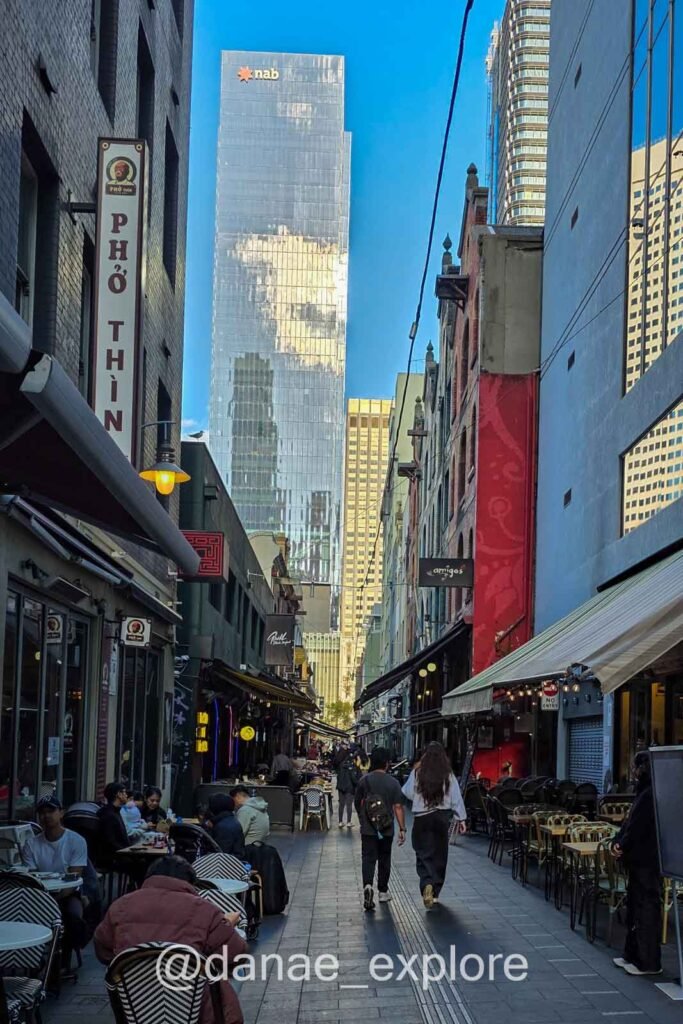
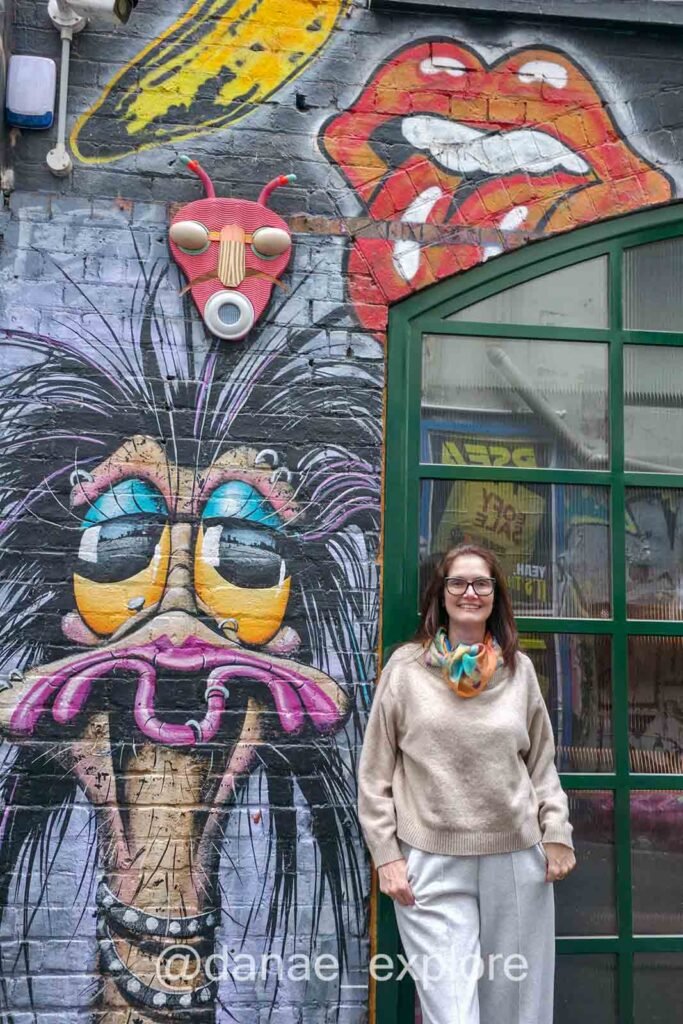
Melbourne is famous for its lanes, the narrow streets connecting the main avenues, each with a charm of its own: some packed with bars and restaurants with little tables outside, others taken over by street art and graffiti. We started with Degraves Street, which has lovely cafés – we had breakfast there twice, once at Degraves St. Laneway (great) and once at Xpressomondo (good). Almost a continuation of Degraves, Centre Place Lane is also café after café after bar; next to it, Scott Alley has some cool graffiti.
We carried on through The Block Arcade Lane, cut across the beautiful Royal Arcade Lane, and reached Hardware Lane, another laneway with one restaurant after another. We had lunch at Khao Man Gai, a very traditional Thai place.
Beyond those, I recommend AC-DC Lane, with the coolest graffiti in the city, and Hosier Lane, also covered in it, both very close to Federation Square. We passed through them on day two of our route, but it’s a quick stop, so you can fit them in wherever it makes most sense in your schedule.
We stopped for a bit of shopping at UNIQLO, I love that store for winter clothes, they’re great and the price is excellent – on the blog I have my guide to traveling with only a carry-on and Uniqlo is a huge ally there, the cold-weather pieces are light and technical and take up almost no space in the bag, without them I don’t know what would have become of my light packing 😅
Considering we did all of that straight from the airport and completely scrambled by the time zone (here are my techniques for avoiding jet lag), that first day was a success. We called it a day, headed back to our hotel, and collapsed into bed.
One good idea is to explore the CBD on a free tour. I’d even booked one, but ended up canceling because I figured we’d be too tired to keep up. Looking now at everything we did that day, the free tour would have worked out perfectly, and we’d certainly have heard fascinating stories about the city and met some people. Well, lesson learned: never underestimate ourselves when it comes to travel 😉
.
What to do in Melbourne in two days
With two days in Melbourne, combine day one (the CBD, just above) with a second day devoted to the region’s most famous beaches, St. Kilda and Brighton.
We went to Australia in winter (late June) and got beautiful but cold days. As you’d expect, the beaches were empty and there was no way anyone was going into the water. In summer the whole place changes vibe, with far more life and outdoor activities. Even so, we loved the day: we had St. Kilda, the liveliest beach around, all to ourselves; we walked slowly along the sand, no crowds, pure contemplation.
St. Kilda is easy to reach from downtown Melbourne: we took tram 96 in front of Southern Cross Station and got off at Luna Park. We paid by credit card inside the tram, and the kids used the myki youth card (see the “how to get around Melbourne” section for more details). It’s always worth checking Google Maps for the best route from wherever you are, which is what we did on the spot and it worked perfectly.
.
.
What to do in St. Kilda
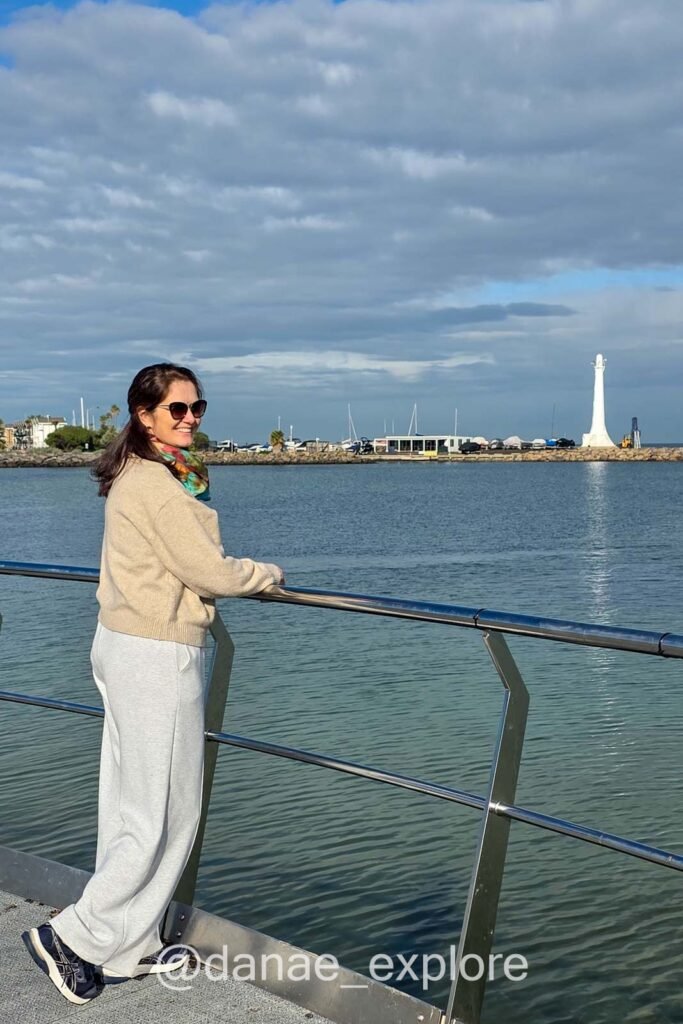
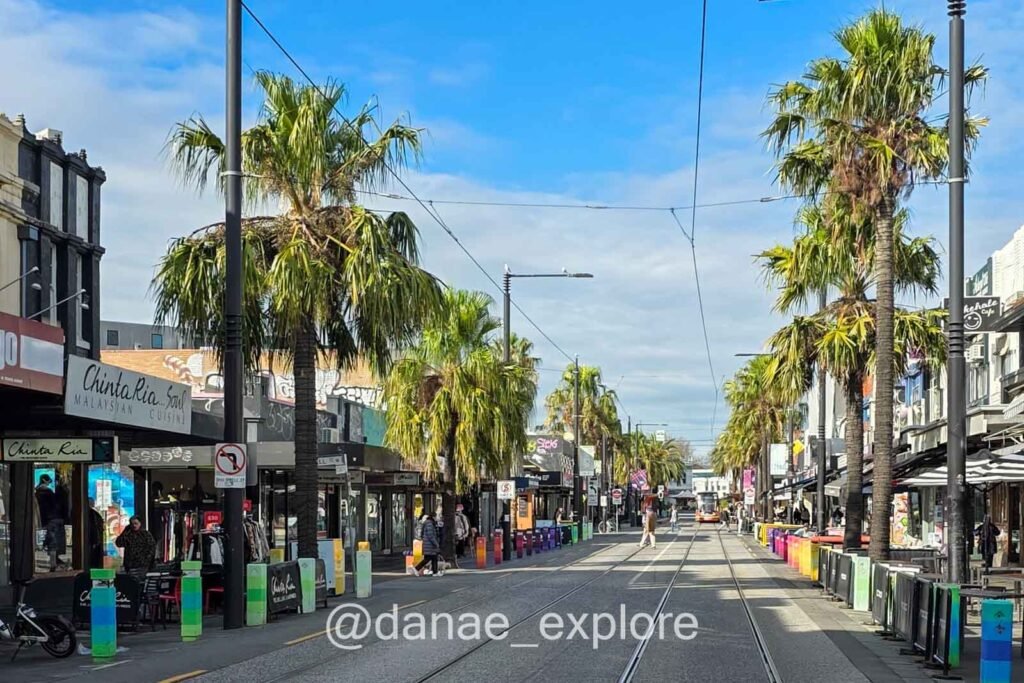
St. Kilda’s main attractions, besides the beach, are Luna Park and the Palais Theatre, which sit side by side a block away from the famous sand. In summer the beach buzzes, with festivals and events happening all the time; the day we went it was empty, but the walk along the waterfront and the pier was lovely anyway.
The Palais Theatre opened in 1927 as part of a new entertainment district, and it still keeps the art deco style typical of the era. It ran as a cinema until the 1950s, when it was remodeled for live dance and theater performances as well as concerts – it has hosted the Rolling Stones, Bob Dylan, Ed Sheeran, Tom Jones, Florence & The Machine, Sting, Kylie Minogue, and so on.
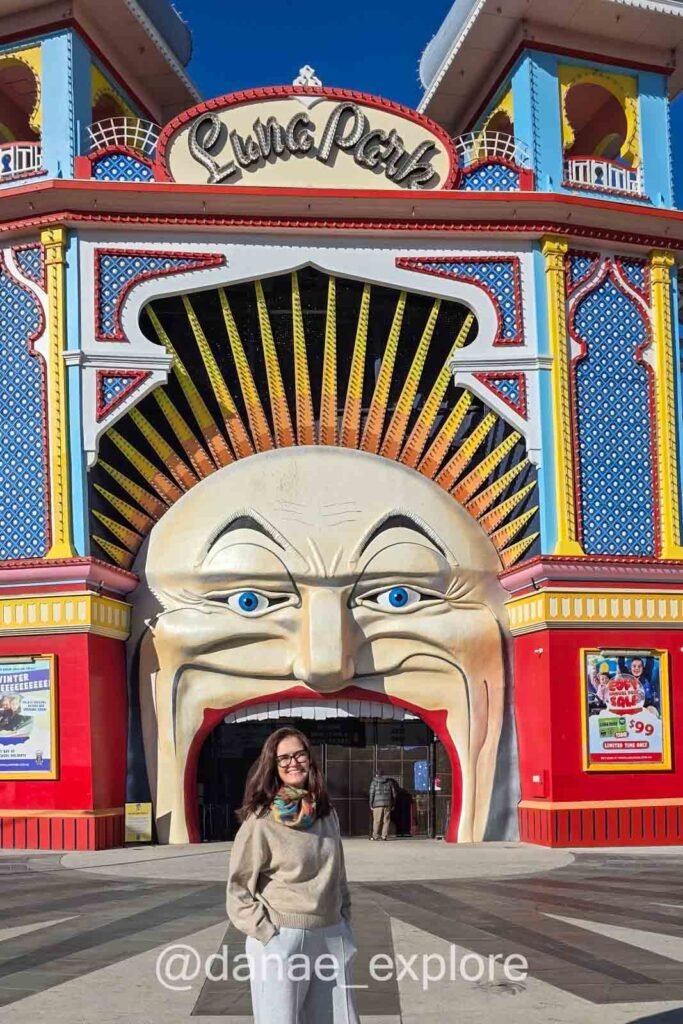
Opened on December 13, 1912, Luna Park Melbourne was Australia’s first amusement park and the oldest in continuous operation anywhere in the world. It was created by the same team behind the 1903 park at Coney Island in New York (here’s our complete New York guide). You go in through the mouth of Mr. Moon, a giant face that became a symbol of the city, and the main attraction is the Great Scenic Railway, the oldest wooden rollercoaster still running in the world. I would have loved a ride on it, but it was a Tuesday and the park was closed.
.
.
Next to Luna Park we came across one of those places that show up on nobody’s route, that nobody recommended and no influencer has posted about, but that turned into one of the best finds of the day. A community garden-allotment-studio called Veg Out Community Gardens St Kilda. We wandered through the gardens with their sculptures made from recycled materials, saw an exhibition by a local artist, had a coffee and some cookies on Acland Street, and headed for Brighton Beach.
We went from St. Kilda to Brighton by bus, but only after boarding did we find out that buses didn’t take contactless card payment yet. We rode along in complete irregularity 😂, so before you go, check whether buses have been brought into the system (it’s expected soon); if not, buy a myki card or carry cash.
.
.
What to do in Brighton Beach
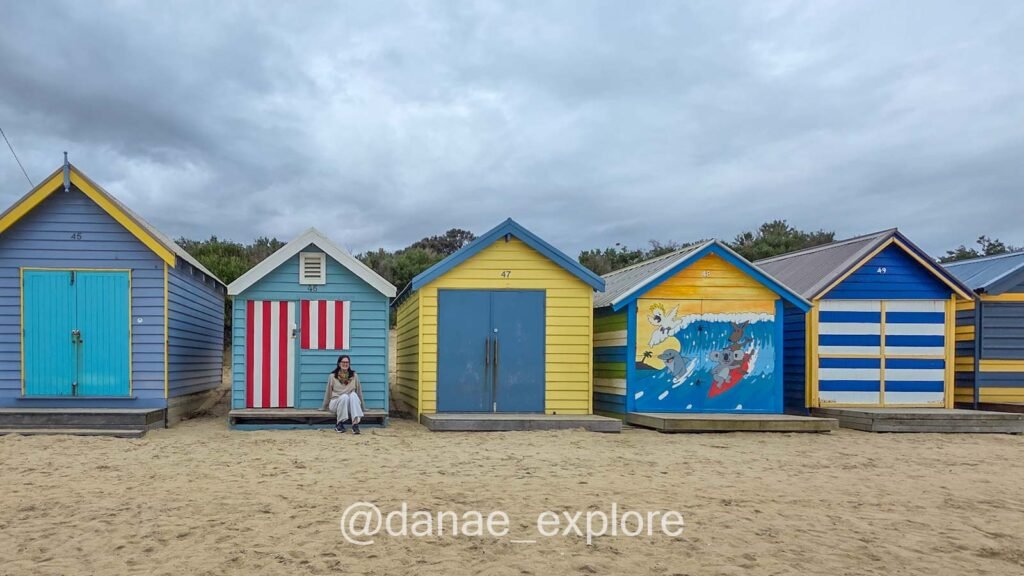
Brighton is another beach that buzzes in Melbourne’s summer but, as we can confirm, goes to sleep in winter. We walked along the sand, which has a beautiful view of the city, and reached the stretch that holds the very famous Brighton Bathing Boxes. Even if you’ve never looked up a thing about Melbourne, I’m sure these little huts have already turned up in your social media feed.
There are around 90 wooden sheds, the first built in the 1860s so that women bathers could change with some privacy – different times, right? They’re privately owned and only Brighton residents can buy one. They have no running water and no electricity, you can’t sleep in them or do anything else you might be thinking. They work purely as storage and, from what I looked up, they go for more than AUD$ 350,000 (about US$ 230,000). That’s life, isn’t it? Some people have a six-figure Instagrammable shed with a sea view; mine looks out onto the cars parked on level two of the garage.😅
Even though it was winter and the beach was empty, the stretch of sand where the huts stand was busy. Not packed, I’d say, but it was where we saw the most people that day. I imagine that in high season it must be tricky to get a photo like this one, alone among the huts, so let’s hear it for the glories of off-season travel!
On the way back, from Brighton to the CBD, we took the train and it was perfect: we paid by credit card and the kids rode “for free” with the myki youth card.
.
.
What to do in Melbourne in three days – Phillip Island
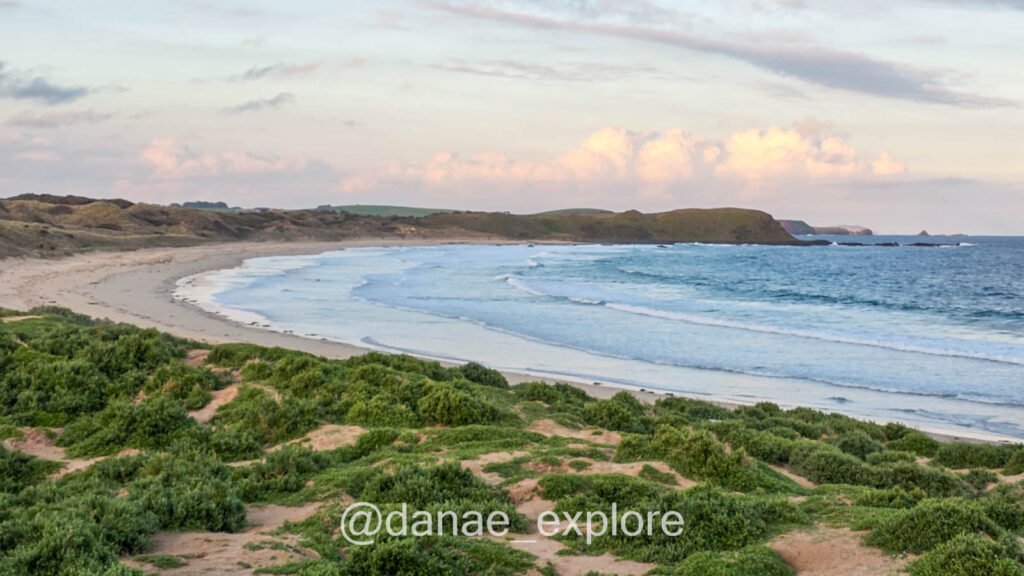
With three days in Melbourne, I recommend doing what I suggested for days one and two and dedicating the third to Phillip Island, one of the highlights of our trip to Australia.
As I mentioned, we did this on day four to simplify the car rental: for our first three days in Melbourne we didn’t use a car, we picked it up on the fourth day, drove to Phillip Island, and the next day set off on the Great Ocean Road roadtrip. But of course, do whatever fits your own schedule best.
We got to the island, wandered around the small town center, had lunch at Cozy Island (Vietnamese), stretched our legs on Cowes Beach, and had a coffee at Cafe Lugano. In the afternoon we visited the two places that had brought us to Phillip Island: the Koala Conservation Reserve and the Penguin Parade.
.
.
Penguin Parade
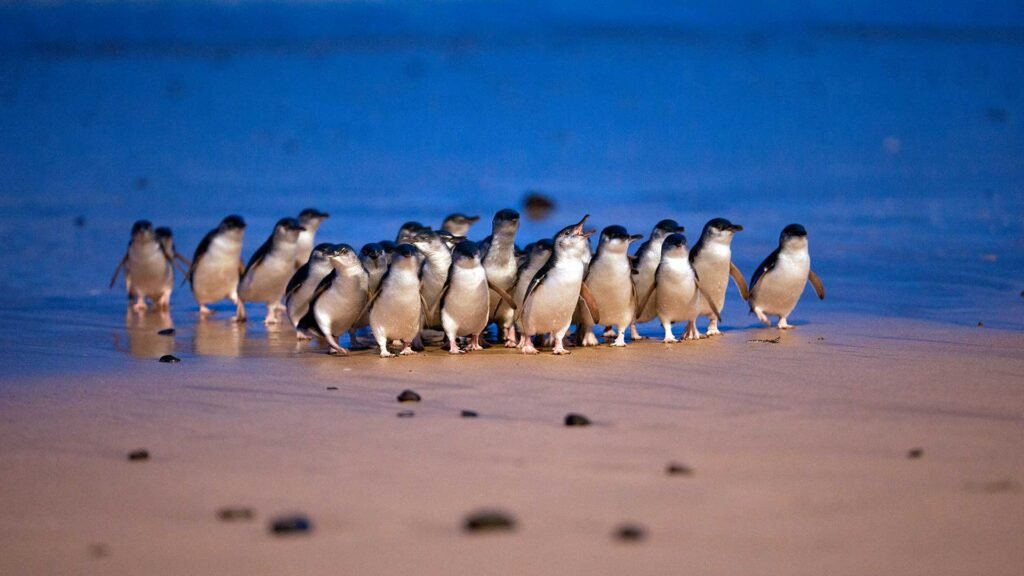
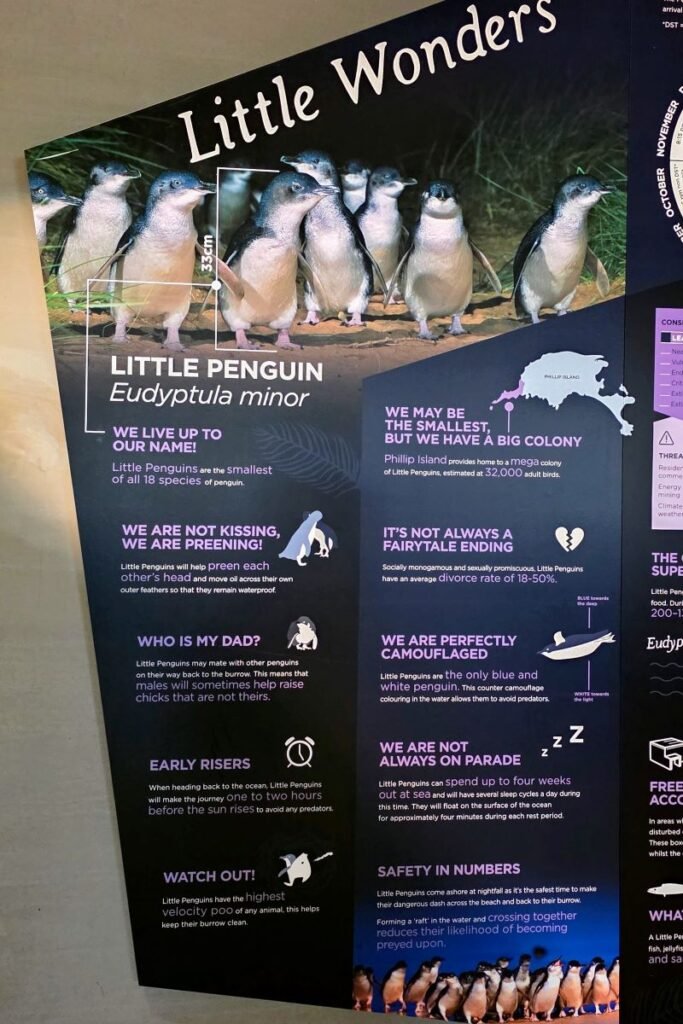
Phillip Island’s main attraction is the Penguin Parade. The island is home to the world’s largest colony of little penguins, around 40,000 of them. Every day at sunset, some of them come out of the sea and head back to their burrows on the beach, the loveliest thing to watch. Out of respect for the owners of the sand, photographing them at that moment is forbidden, because the light from a phone disorients them (the photo above is an official image, free to download during the visit).
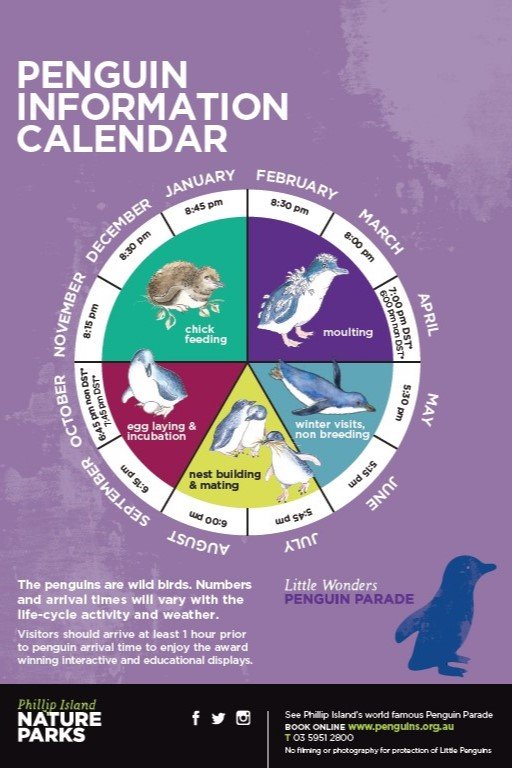
The Penguin Parade time changes through the year, since it follows sunset, right? We went in June, winter in Australia, when it happens around 5:30 p.m. The image below has the expected return time for each month of the year, and what you’ll find according to the life and breeding cycle of these ridiculously cute birds.
.
.
At the Visitor Center there’s an exhibition about the animals, a souvenir shop, a café, restrooms, and every facility you could possibly imagine.
On the beach where the penguins usually come ashore, they’ve installed bleachers – that’s right, bleachers, as if it were a stadium. There’s a premium plus area (AUD$ 93), a premium area (AUD$ 85), and a general area for the rest of us (AUD$ 34). We went with general admission, since I found the other prices outrageous. The premium section sits in a corner of the beach that, as they explained, is the penguins’ favorite; general is way off at the other end. Check the official website for current prices.
Although the colony living there is huge, not all of them come back to dry land at the end of the day. And it’s true, most head for the corner of the beach where the premium bleachers are. On our side, we saw few penguins, but enough to have me rooting for the little guys as if my life depended on it (and, in the end, the penguin’s life does depend on finishing the job).
It may look easy, but getting out of the water is really hard for the penguins. They go back and forth a few times, carried by the waves, the seagulls get in the way, and just when one is almost there a stronger wave comes and takes it back out to sea; they leave the water in groups, and if one gets swept back, the others stop and wait, showing a team spirit that many of us lack.
.
.
.
Koala Conservation Reserve
One of my priorities for this trip to Australia was seeing koalas. I figured it would be hard to see one in the wild, but I was hoping we’d come across them on the Great Ocean Road – which, I’ll tell you now, didn’t happen.
So to be safe, I made a point of visiting the Koala Conservation Reserve on Phillip Island, and it was perfect, I highly recommend it even if you go on to find them in the wild afterwards. Here’s the reserve’s official link, and here’s a tour that includes both the reserve and the penguins.
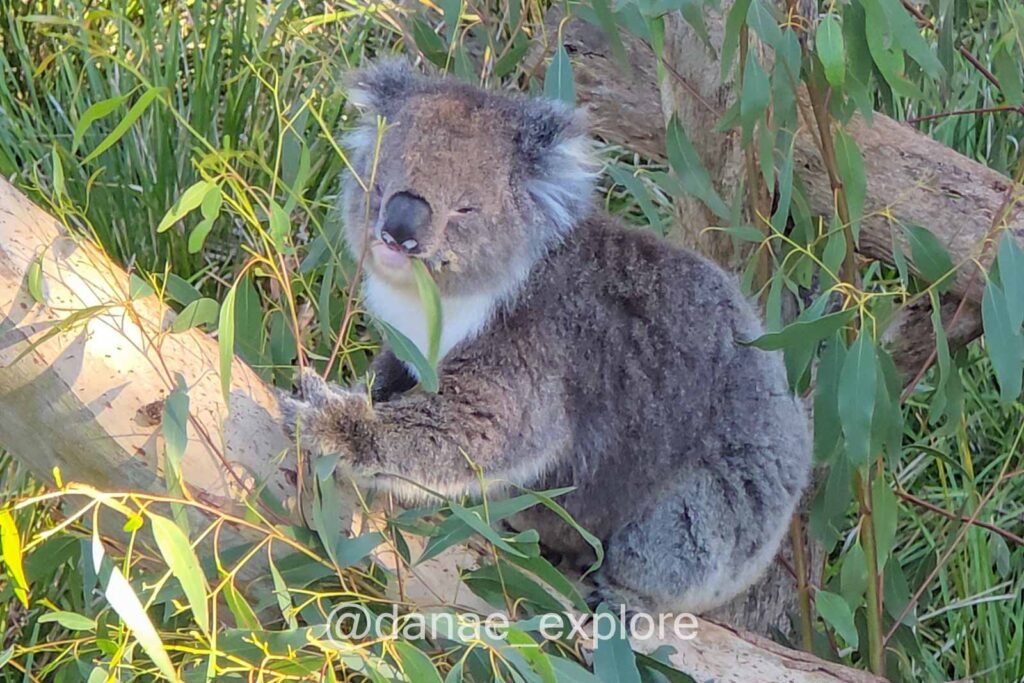
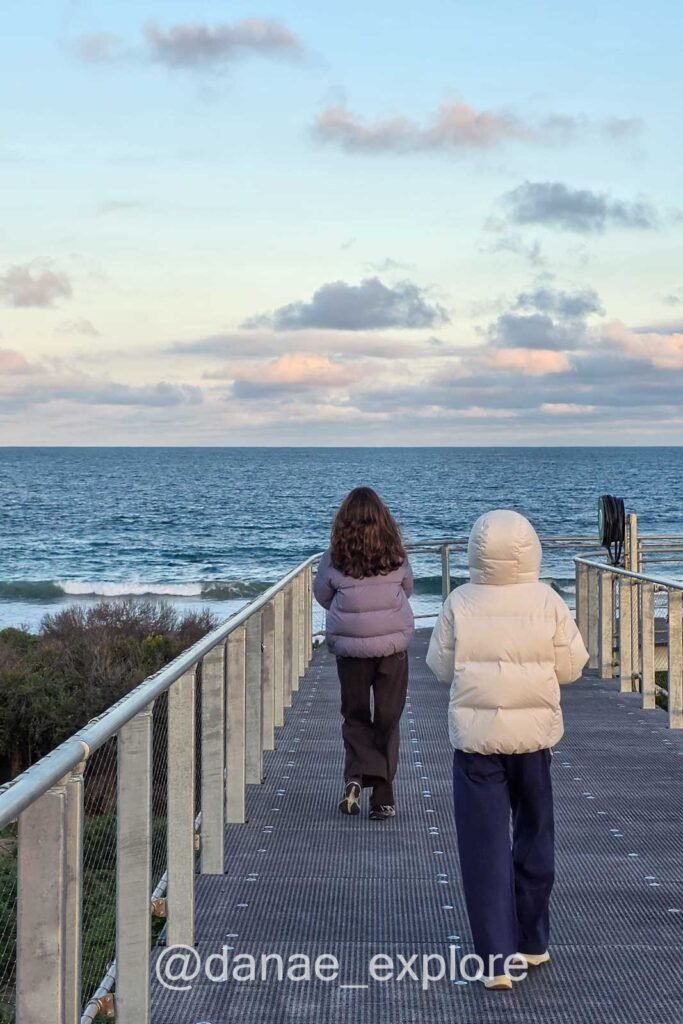
The reserve is home to around 16 koalas living in an environment very close to their natural habitat, spread across three large areas. Each one has raised walkways for visitors, which bring you closer to the animals and make them easier to watch. I thought it was excellent, because you can see the koalas up close without invading their space. Naturally, you can’t interfere in any way: touching or feeding them isn’t allowed, and staying quiet is recommended.
At the Visitor Center there’s a small exhibition with panels explaining the life cycle, behavior, and conservation of the species. Koalas sleep around 20 hours a day and spend the other four eating; we were lucky enough to see two awake and eating, the cutest thing in the world.
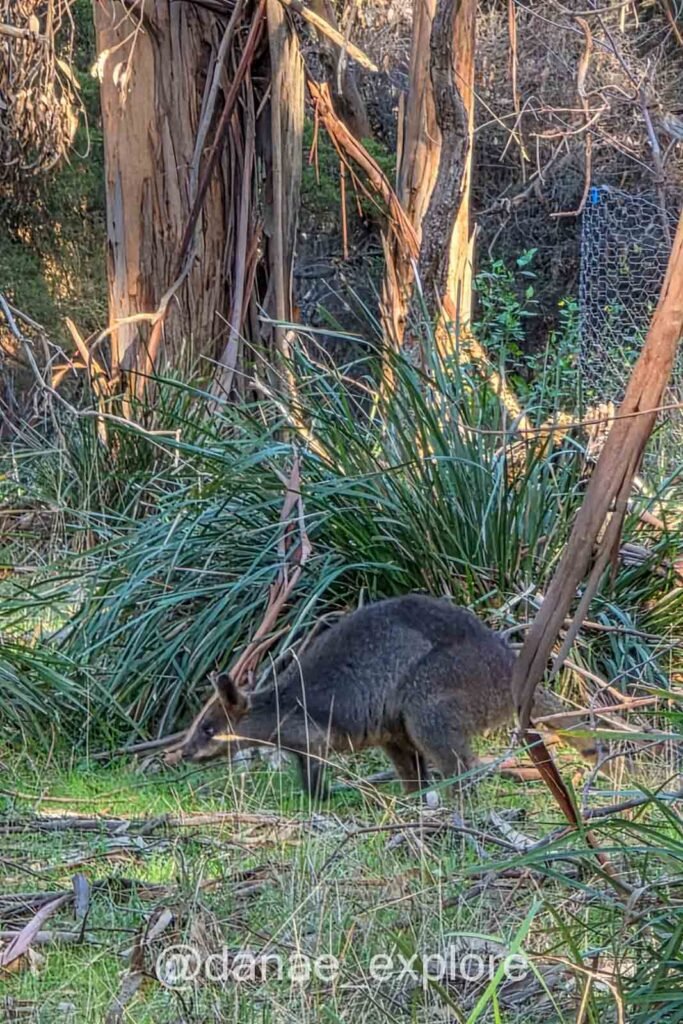
Besides the koalas, we also spotted a kangaroo and a wallaby, both wild animals that had wandered onto the reserve’s grounds on their own, plus plenty of birds. The visit took us about an hour and a half, and we only left because we didn’t want to be late for the Penguin Parade.
.
.
How to visit Phillip Island from Melbourne
It’s possible – and common – to do the Phillip Island day trip on tours leaving from Melbourne, which include other stops on the island.
I looked into the options and, weighing cost (higher with a tour) against flexibility (higher with a car), we decided to rent a car and do it ourselves. The downside is that it was very tiring. We got back to Melbourne around 11 p.m., completely done in. But bear in mind we’re four people; if you’re traveling alone, taking the tour may well be worth it, weigh it up.
Here are the costs of the do-it-yourself Phillip Island: we rented a car (standard SUV, AUD$ 80/day, there are cheaper options) + Penguin Parade ticket (AUD$ 34 per person) + Koala Conservation Reserve (AUD$ 43.75 for the family ticket) = AUD$ 65 per person (there are four of us).
We did the trip at our own pace and enjoyed it without stress. We ate when we felt like it, stayed longer where we wanted to and less where it wasn’t much fun.
I’m an affiliate of GetYourGuide and Civitatis and I do recommend these sites. But these middlemen aren’t always the best option and are usually more expensive than buying on the spot, straight from the local operator. Always look into the alternatives and don’t be afraid to do things yourself: you make your hard-earned money go further and come home with far better stories to tell.
Heads up: Some tours include a stop at the Moonlit Sanctuary Wildlife Conservation Park, which calls itself a wildlife conservation park but allows interaction with the animals: you can feed the koalas, pet them, and get the full “sanctuary” package from a place that is nothing of the sort. I’m completely against this kind of practice and don’t visit places that let you touch the animals. After looking into it, I chose the Koala Conservation Reserve, which struck us as more ethical and which, as we confirmed on the ground, doesn’t allow any interaction with the animals.
.
.
What to do in Melbourne in four days
With four days, add a day for the attractions outside the Central Business District: there are parks, museums, and very charming neighborhoods. We did all of that and still walked through the parts of the CBD we hadn’t had time (or energy) for on the first day.
.
Carlton Gardens, Royal Exhibition Building, and Melbourne Museum
We started the day at Carlton Gardens, home to the Royal Exhibition Building and the Melbourne Museum. The Royal Exhibition was built in 1880 for the Melbourne International Exhibition and housed the first Australian parliament. Today it’s used for events and exhibitions; when we went there was nothing on.
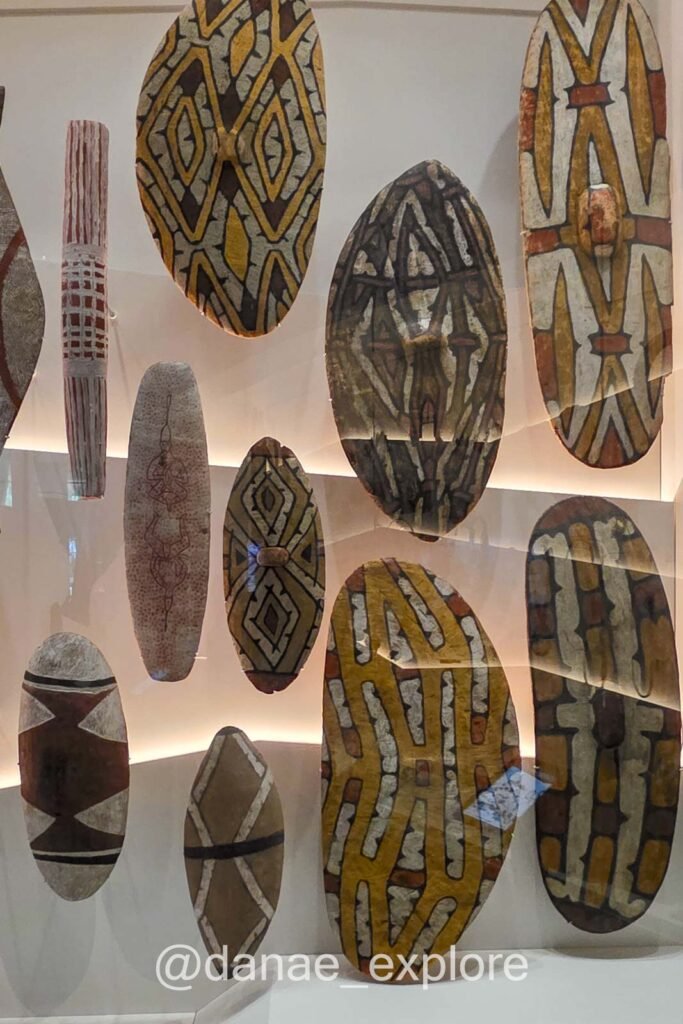
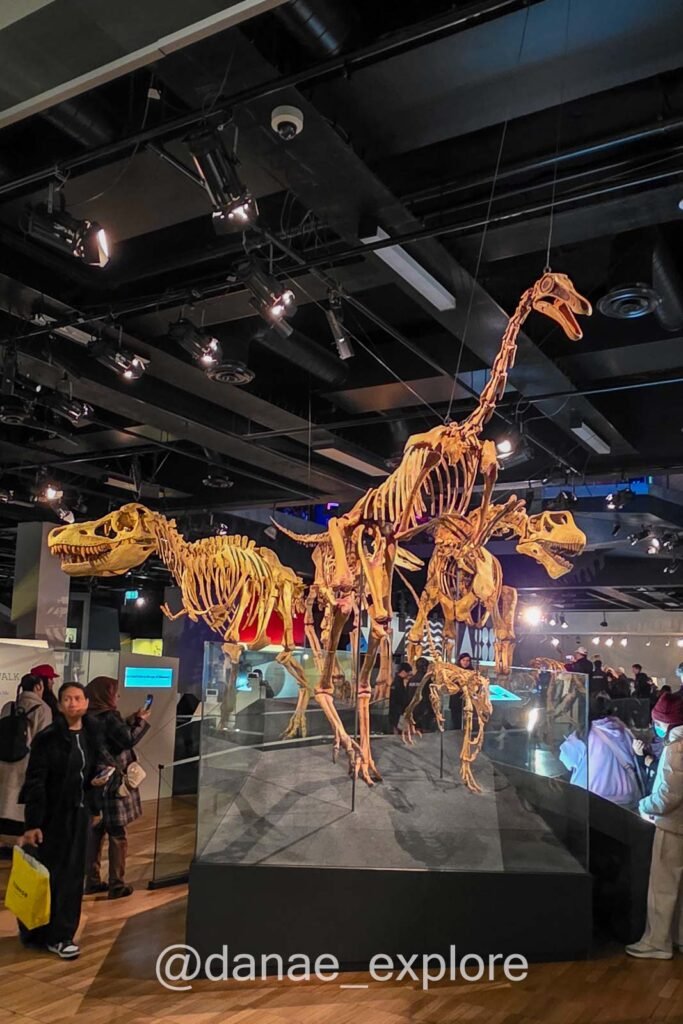
Next door is the Melbourne Museum, and I highly recommend it. The museum has several wings, with exhibitions on dinosaurs, planet Earth and the Universe, on Australia’s First Nations peoples (the part I most wanted to see), on the history of Melbourne, an area that recreates the forests of the Melbourne region, and temporary shows on art and culture. It’s one of those museums where you could spend a whole day exploring, and it appeals to everyone from eight to eighty.
Melbourne Museum tickets cost AUD$ 18 per adult and children under 16 go free. We bought ours on the spot, but you can buy in advance on the official website, where you can also check opening hours.
.
.
We had lunch nearby on Lygon Street. There are plenty of restaurants, one next to the other, and we nearly fell for a scam! We stopped to look at the menu displayed at the entrance of one place, and the host came over all friendly, didn’t really let us think about it, sat us at a table, brought the menus, and we were already ordering when we noticed that the prices on the menu were different from the ones displayed outside, and the drinks section was missing. We’d already fallen for something very similar in Dubrovnik, so we got up right away; the waiter tried to explain that he’d charge the prices from the display menu, but once bitten, twice shy, and we don’t put up with that kind of trickery.
We went to the place next door, called Piccolo Mondo. The food was okay, nothing special, but at least the prices were right and the drinks were reasonable.
Further north is the Fitzroy neighborhood: my original idea was to go there for ice cream and coffee. It’s an area full of independent shops, vintage stores, and hip cafés, and on weekends the Rose Street Artists Market takes place. But we did the math on the time we had left and saved that one for the next time in Melbourne. Coffee ended up being at a lovely place we found almost opposite the tram stop, called Mid Square Coffee, which I recommend.
.
Fitzroy Gardens and Cooks’ Cottage
Another park worth suggesting in Melbourne is Fitzroy Gardens, right on the way between the Melbourne Museum and the Royal Botanic Gardens.
Fitzroy Gardens is home to Cooks’ Cottage, the family home of Captain James Cook, built in England in 1755 and brought brick by brick to Melbourne in 1934; it’s said to be the oldest building in Australia. We didn’t have time to visit, so it’s on the list for next time.
.
.
Royal Botanic Gardens and Shrine of Remembrance
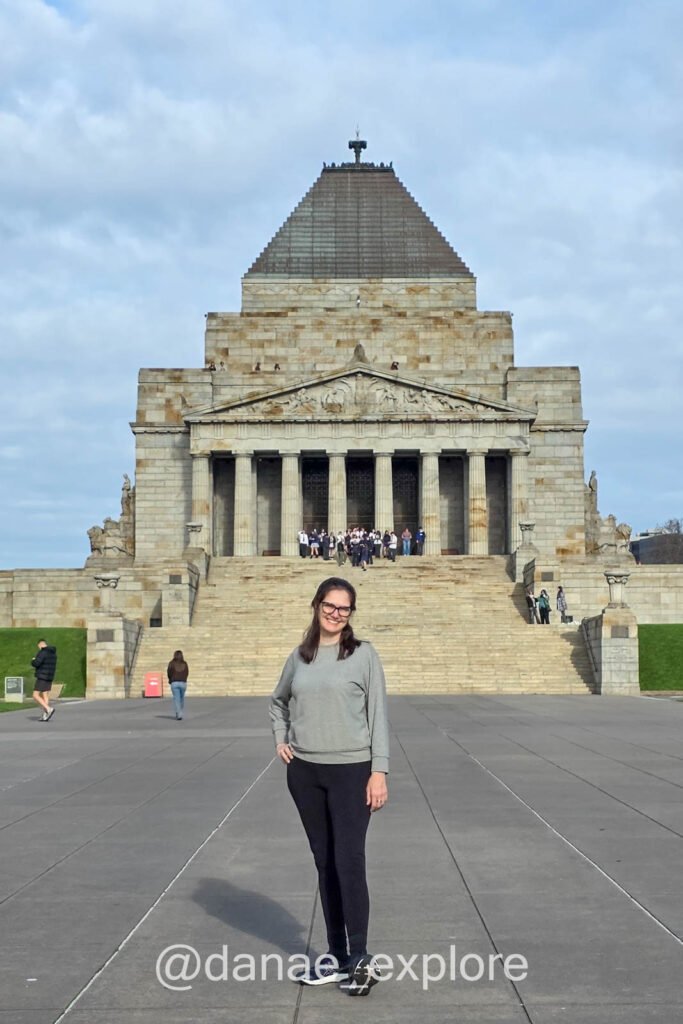
We took a tram to the Royal Botanic Gardens Victoria and the Shrine of Remembrance, a monument built in honor of the Australian soldiers who served in the First World War, later expanded to include the Second World War and other events in Australia’s military history. Entry is free, but if you prefer there are guided tours, which must be booked through the official website.
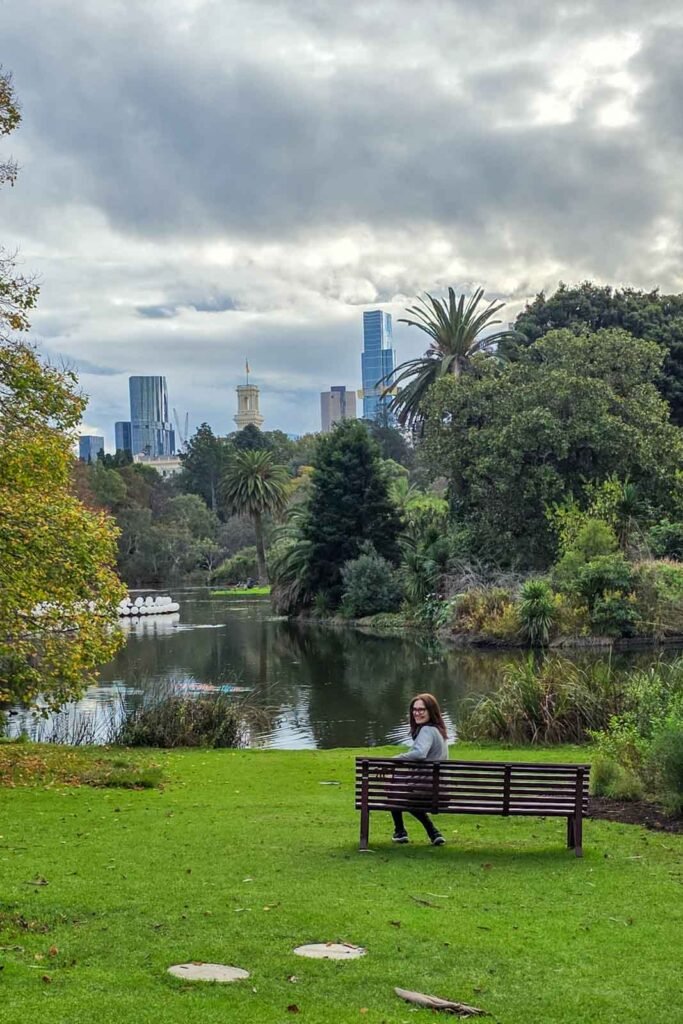
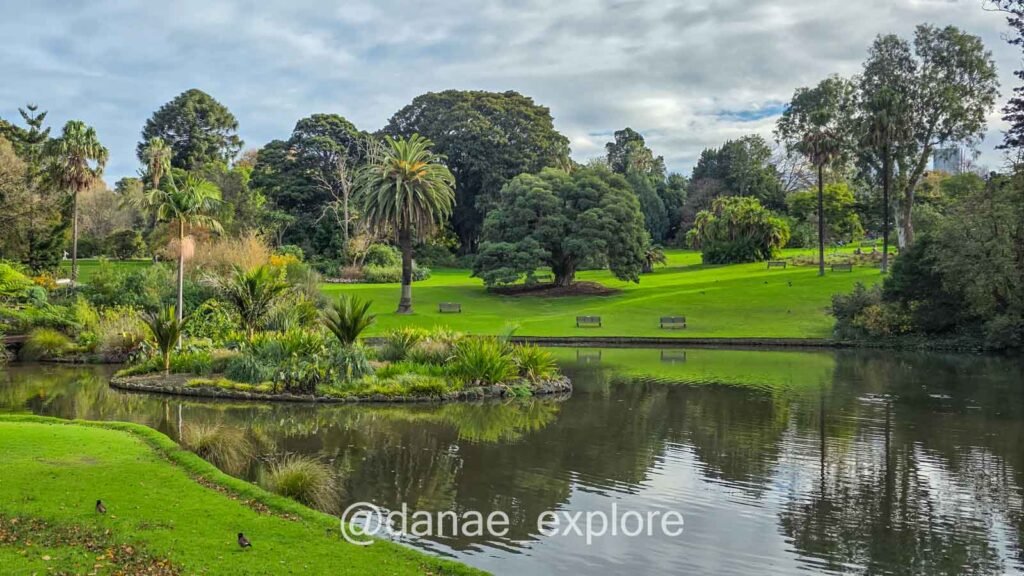
The Royal Botanic Gardens were the most beautiful green space I visited in Melbourne. We got in shortly before closing time (Google Maps got that one wrong), but we still managed to walk the paths, take in the views, and switch off a little from the city’s fast pace.
The gardens opened in 1846 and hold more than 8,500 different plant species, both native to Australia and exotic, spread over 360,000 square meters. They’re open all year and entry is free. More information on the official website.
From there we walked back to the CBD through the gardens along the banks of the Yarra River; I imagine the route we took is part of Melbourne Park.
.
.
State Library Victoria
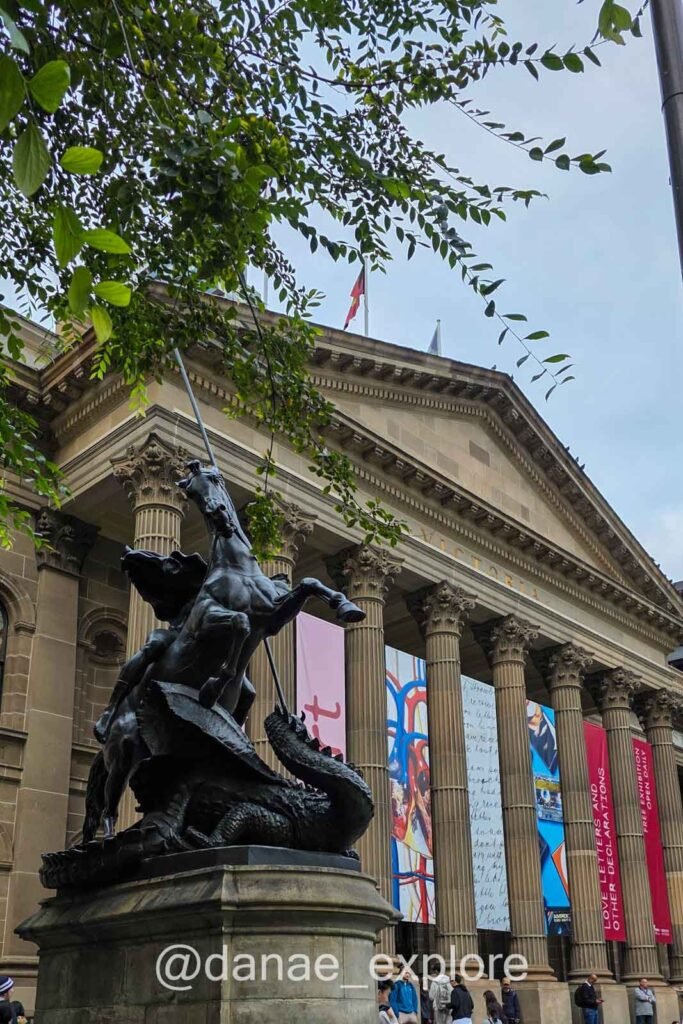
After many photo stops, a few coffees, and some sweets to keep the kids going, we reached the State Library Victoria.
Opened in 1856, it’s one of the city’s most iconic buildings. It’s the oldest public library in Australia and one of the first of its kind in the world. Today it’s the busiest library in the country and, according to 2023 figures, the third busiest in the world! It holds more than 5 million items: besides books, there are manuscripts, paintings, maps, photographs, newspapers, and every kind of printed material.
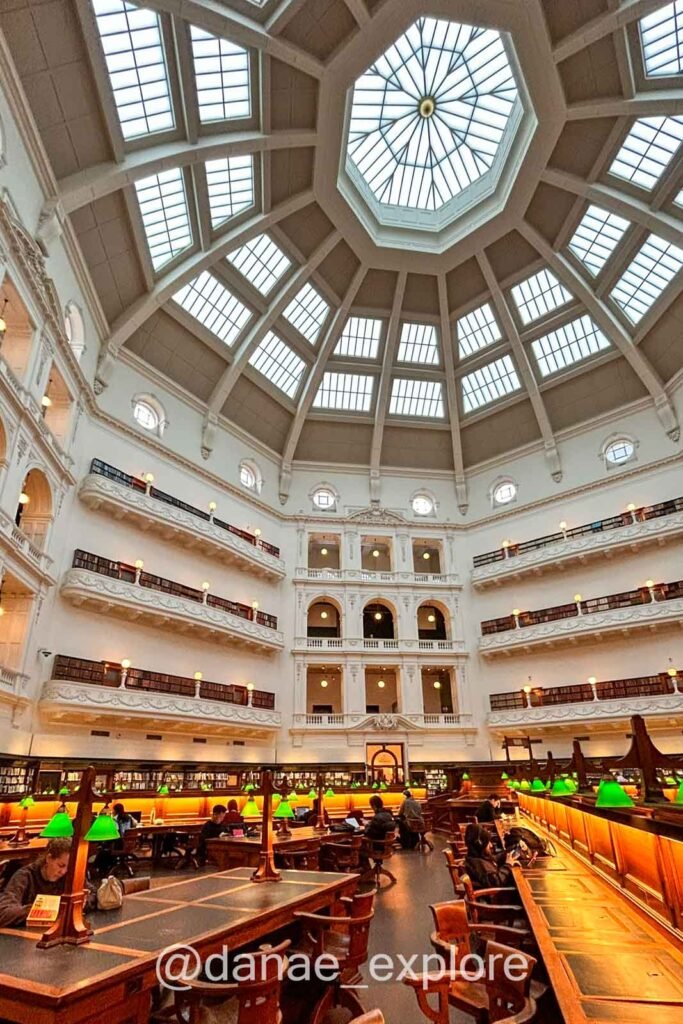
The building’s highlight is the La Trobe Reading Room, an octagonal reading room with an enormous dome. Opened in 1913, it stands six floors high and can store more than 32,000 books and seat 320 readers.
On the fourth floor of that octagonal room is the “World of the Book” exhibition, which tells the history of books and literature in Australia and around the world. Unfortunately it was closed for renovation when we visited.
If you’re traveling with kids, make sure you go to the library. The children’s section is fantastic, with toys, activity areas, and lots and lots of books.
Outside there’s a very inviting lawn; we went in winter and it was full of people hanging out, chatting, soaking up a bit of sun to warm up. In front of the steps there’s one of those giant chess sets, my daughters even tried to join in but the line was far too long.
Other museums in Melbourne include the Immigration Museum, the National Sports Museum, the National Gallery of Victoria, and the Australian Centre for the Moving Image (ACMI).
.
.
Queen Victoria Market
We finished the day at the Queen Victoria Market, a historic market that sells everything: fruit and vegetables, dry goods, food of every kind, clothes, souvenirs, and so on.
We’d tried to go first thing in the morning, for breakfast, but found the doors shut: it closes on Wednesdays. What we discovered instead was much better: on Wednesday evenings there’s a night market. We turned up and not only was the market in full swing, the Winter Festival was on too, with live music, food, drink, and plenty of people enjoying the chill of June nights.
.
.
Great Ocean Road – the perfect complement to a visit to Melbourne
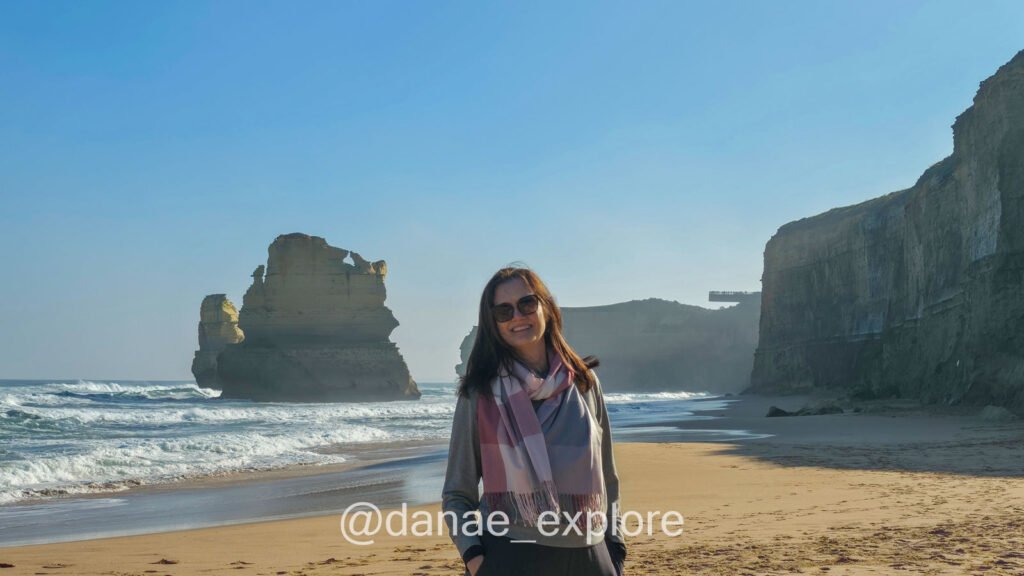
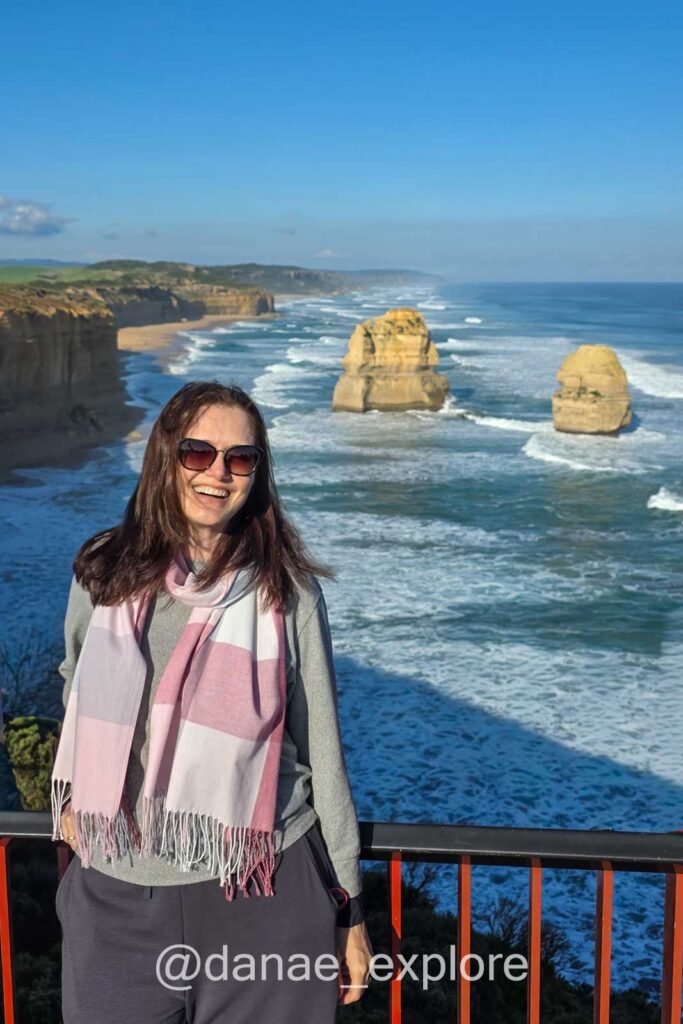
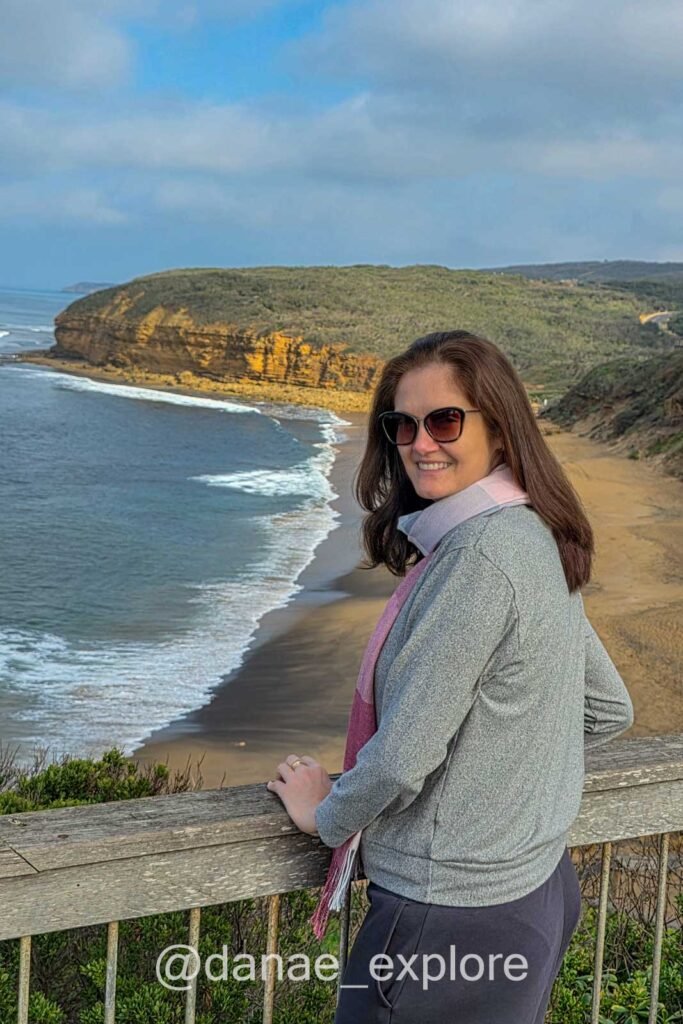
Once you see the Great Ocean Road you’ll understand why it turns up in 12 of the 11 lists of the 10 most beautiful roads in the world, of the 9 road trips you need to do in your lifetime, and of the 8 places you’ve probably never heard of but that are worth the trip. I’m not a fan of that kind of post, but I have to admit that, if I ever made a list like that, the Great Ocean Road would certainly have a place of honor on it.
Some people recommend doing it as a day trip from Melbourne, but don’t make that mistake. We drove the road in two days and it felt rushed: I recommend setting aside three. And of course, if you have more time, use it, traveling through beautiful places without rushing is the best thing in life!
Take a look at my Instagram @danae_explore: there are posts and a dedicated highlight about this drive.
.
.
Visas and paperwork for entering Australia
Do you need a visa for Australia?
A good traveler knows that planning a trip isn’t just about choosing hotels and attractions. We can’t forget the paperwork, it’s boring, yes I know, but without it there’s no trip.
Everyone needs some form of visa to enter Australia – there’s no visa-free entry for tourists, only faster and slower ways of getting one. Which one applies to you depends on the passport you hold, not on where you live.
If you hold a US or Canadian passport (or Japanese, Singaporean, South Korean, Malaysian, Hong Kong, or Brunei), yours is the ETA, Electronic Travel Authority, subclass 601. There’s no visa charge, but there’s an AUD$ 20 service fee, and you can only apply through the official Australian ETA app. You scan your passport chip with your phone, take a photo of yourself, pay, and most applications come back within minutes.
If you hold a European passport (EU countries plus the UK, Norway, Iceland, Switzerland, and a few microstates), yours is the eVisitor, subclass 651, and it’s free. You apply through ImmiAccount on the Home Affairs website, and grants are usually immediate too.
Both give you the same thing: as many visits as you like over 12 months, staying up to three months each time, for tourism or business, with no right to work. You have to be outside Australia when you apply.
Not sure which one is yours? The Home Affairs Visa Finder tells you in a couple of clicks, and it’s the only source I’d trust. The rules change, and there are plenty of middleman sites charging for something the government does for free or for AUD$ 20.
One note from my own experience: I travel on a Brazilian passport, so neither of these was open to me. I had to do the full Visitor visa (subclass 600), a tedious online form that takes a good half hour per person, and my daughters’ visas took three weeks to come through. If your passport isn’t on the electronic lists, apply well ahead – two months before departure is a sensible minimum.
.
Yellow fever vaccine
Australia may ask for a yellow fever vaccination certificate, and whether that applies to you depends on where you’ve been, not on where you’re from. The requirement is tied to arriving from, or having recently passed through, a country where yellow fever is present – which covers much of South America and sub-Saharan Africa.
Check before you go on the official Australian government website or with the Australian embassy or consulate in your country. Those are the only sources worth relying on.
For what it’s worth: I flew from Brazil, where the certificate is mandatory. Nobody asked for mine, not leaving São Paulo nor arriving in Melbourne. I’d still never travel without it. And one thing worth knowing whatever your passport: the vaccine only becomes valid ten days after it’s given, so it isn’t something you can sort out the week before you fly.
.
All prices and visa requirements mentioned in this post were checked in August 2026.
Map with our Melbourne recommendations
Our Melbourne route and tips are marked on the map below, including the Great Ocean Road roadtrip, with every point organized to make planning your trip easier. Just click, save it to your Google account, and use it when planning your next Australian adventure.
How to use this map: Click the menu tab in the upper left corner of the map to access different layers, including points of interest and routes. You can toggle layers on and off by checking the corresponding boxes. To see details about specific locations, click on the icons on the map.
To save this map to your Google Maps account, just click the star icon next to the map title. To access it later on your phone or computer, open Google Maps, tap the menu button, go to “Your Places”, select “Maps”, and you’ll find this map saved there.
A trip to Melbourne in quick questions and answers
How many days should you spend in Melbourne?
Three to four days: two or three for the city and one for Phillip Island.
.
Is Melbourne worth including in an Australia itinerary?
Yes, without a doubt! Melbourne is a cosmopolitan city with plenty of attractions for every kind of traveler, and great day trip options nearby. Not to mention the Great Ocean Road, one of the most beautiful roadtrips in the world!
.
Where to stay in Melbourne?
Stay in the Central Business District – CBD. You’re inside the free tram zone, close to the attractions, and surrounded by restaurants and cafés. We stayed at the Wyndham Hotel Melbourne and I recommend it.
.
When is the best time to visit Melbourne?
It depends what you want. We went in winter (late June) and got beautiful, cold days, empty beaches, and the Winter Festival at the Queen Victoria Market. In summer, St. Kilda and Brighton change vibe completely.
.
Do you need to rent a car in Melbourne?
In the city, no, it would only cost you parking. We rented a car only on the fourth day, to visit Phillip Island and then continue along the Great Ocean Road.
.
How do you get from Melbourne airport to downtown?
By Skybus, which goes straight to the central station in less than half an hour. It costs AUD$ 25.90 per adult and AUD$ 6.60 per child up to 16.
.
Is the Phillip Island day trip worth it?
It is, but it’ll be a long day: we got back to Melbourne at 11 p.m., completely done in. By car it came to AUD$ 65 per person for four of us. Traveling alone, the tour from Melbourne is the better deal.
.
.
Where can you see koalas near Melbourne?
At the Koala Conservation Reserve on Phillip Island: the animals are kept in their natural environment and viewed from raised walkways. Touching and feeding them isn’t allowed, which is why I chose this place.
.
Do you need a visa for Australia?
Yes, everyone does. US and Canadian passports use the ETA (subclass 601, through the Australian ETA app); European passports use the free eVisitor (subclass 651). Check yours on the Home Affairs Visa Finder.
.
Do you need a yellow fever vaccine to enter Australia?
Only if you’re arriving from or transiting a country where yellow fever is present, check the official Australian government site.
.
I have more days: where should I go from Melbourne?
Do a roadtrip along the Great Ocean Road! My Instagram @danae_explore has lots of tips. If you still have time, the Yarra Valley wine region and the Mornington Peninsula are the most popular day trips.
.
Here are the websites I always use to plan my trips:
– 🛌 Accommodation: Booking
– ☀️ Tours & activities: Civitatis & Get Your Guide
– 📱 eSIM for mobile data: Airalo e-SIM – use promo code DANAE2375
– 🚗 Car rental: RentCars – use promo code DANAE, or DiscoverCars
Enjoyed these tips? Then follow me on social media:
Instagram @danae_explore
Pinterest @danaeexplore
Comments or questions? Message me on social media! I love talking about travel 😉
Now, after all these great tips, SAVE THIS PIN to your PINTEREST account, so you can find this post on what to do in Melbourne whenever you need it!
.