I have a confession to make: I avoided traveling in an RV for years. “It’s just going to be a hassle,” I thought. “That’s for campers,” or “I don’t want to be working while I’m on vacation.” Haha, how wrong I was!
We ended up traveling over 2,000 miles through Alaska in an RV over two weeks — our very first trip of this kind — and we loved every minute of it! We hadn’t even finished the journey and were already dreaming about the next trip.
In this post, I’m sharing my thoughts on what it’s like to travel by motorhome in the United States, along with some tips to help you push past any doubts that might be holding you back from enjoying a trip that’s as fun as it is unforgettable.
Of course, there were a few hiccups along the way, and yes, traveling in a motorhome does have its downsides (nothing’s perfect, right?). But overall, it was a trully positive experience.
So come along and check out everything we did — what I’d recommend, and what I’d skip — on a motorhome road trip through the U.S.
First of all, follow me on Instagram @danae_explore – that’s where you can keep up with my trips, find lots of travel tips, and send me a DM anytime. I love chatting about travel!
.
Which RV did we rent in the USA?
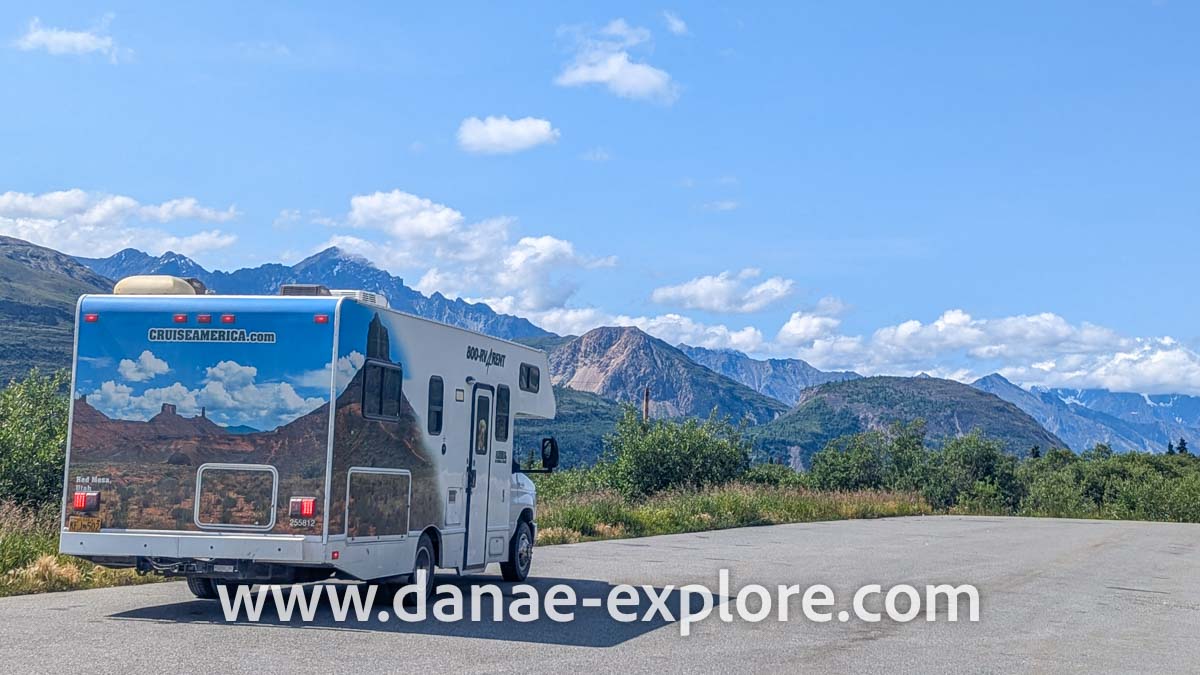
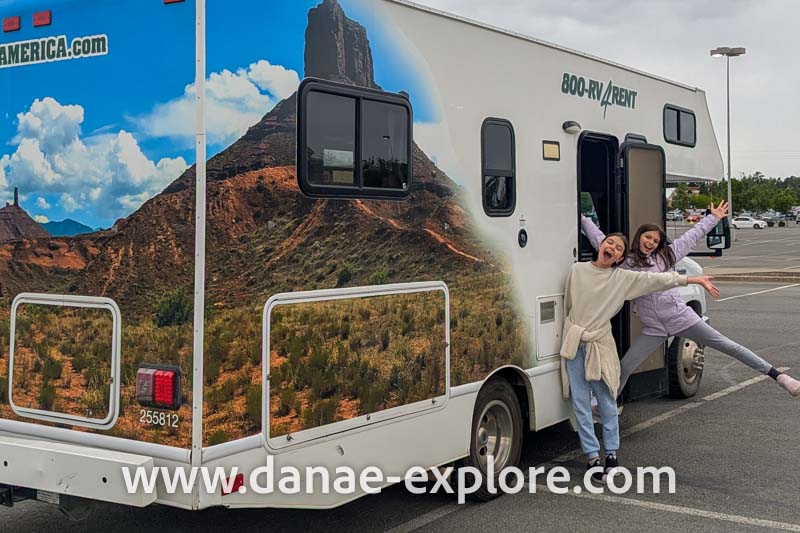
We’re a family of four— two adults and two girls, aged eleven and thirteen at the time of the trip. We chose a Cruise America C25 model, designed for up to five people. The “25” refers to its length: 25 feet, or about 7.6 meters.
From the outside, it looks like an oversized pickup truck — it’s actually built on a Ford F-350 chassis, with a camper unit mounted on the back instead of a regular truck bed. From what I understand, all Cruise America RVs share the same layout and features. Every unit looks and feels the same — same furniture, same finishes, same overall design.
.
.
What’s the inside of the RV like?
.
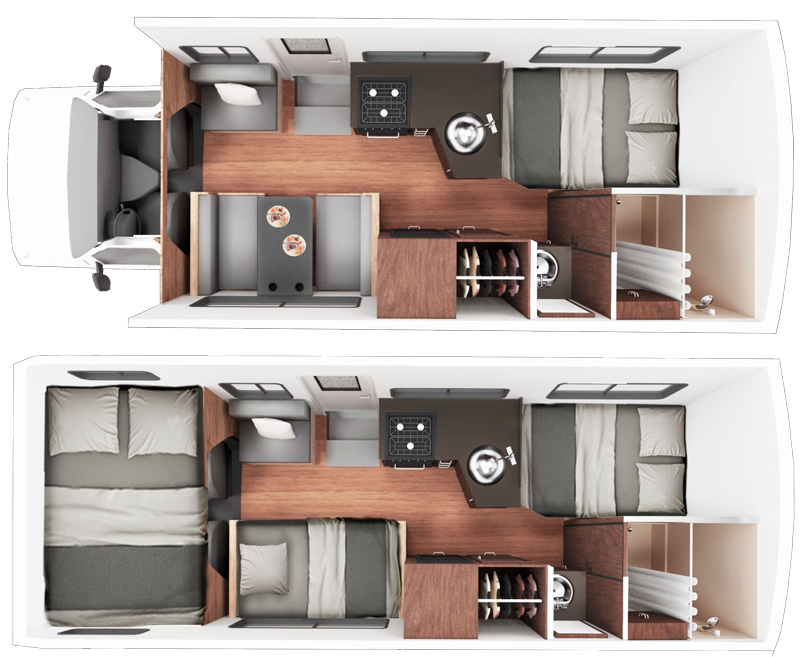
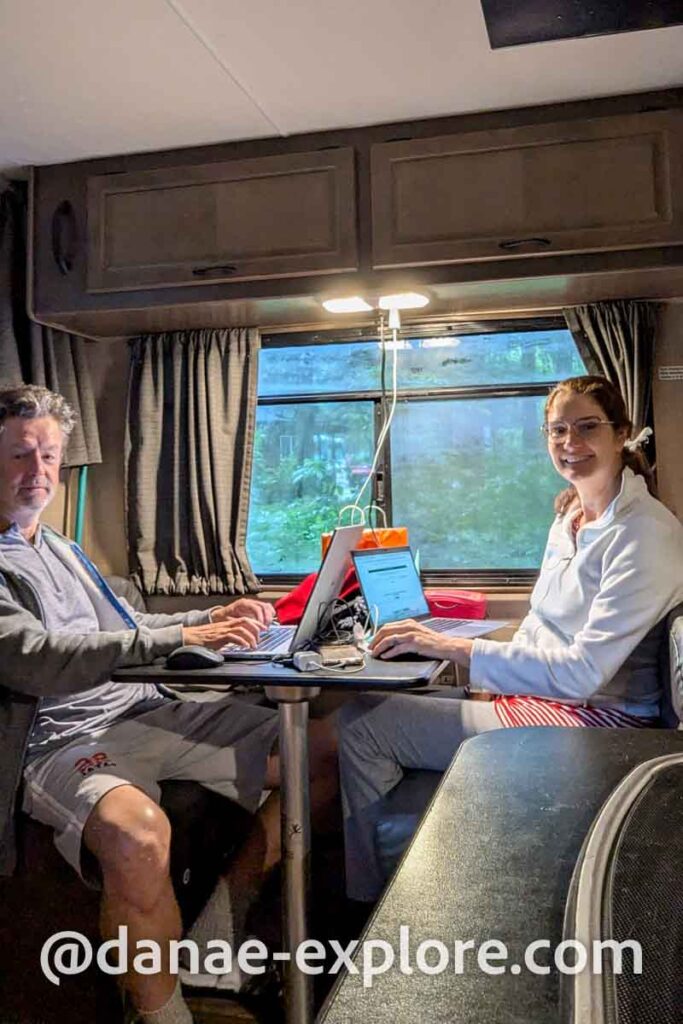
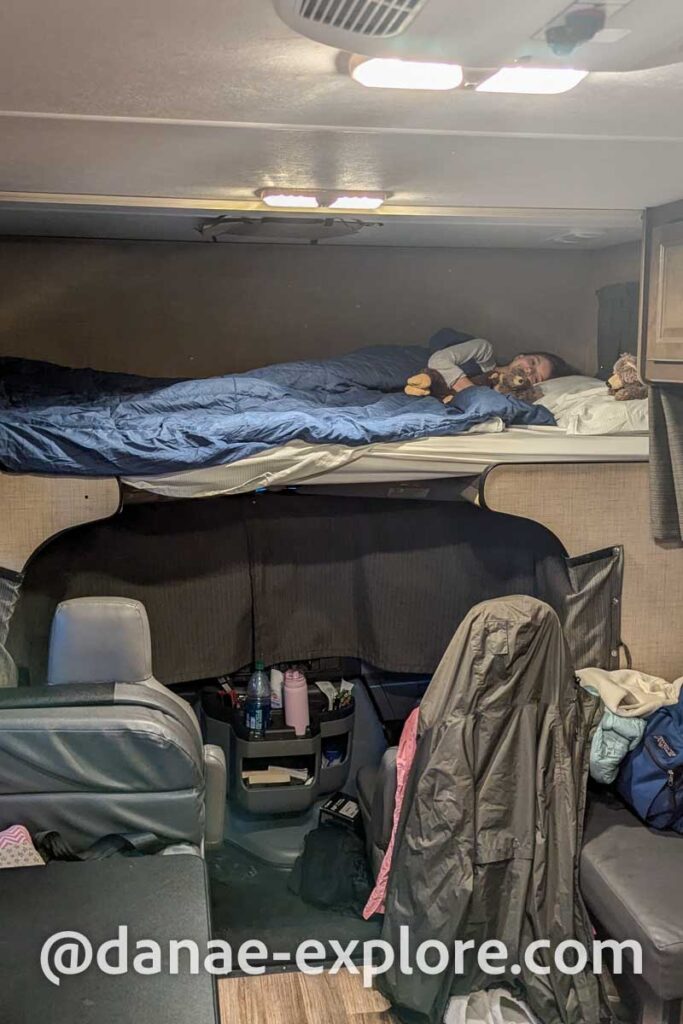
The photos above show the interior of the Cruise America C25, both in its daytime and nighttime configurations. Although it technically sleeps five, I’d say it’s ideal for four.
The best bed is the one at the back. It’s slightly smaller than the one over the driver’s cabin, but it’s more comfortable and easier to access — a solid choice for two adults. The overhead bed has a really firm mattress, and getting in and out of it can be tricky, especially at night. If you need to use the bathroom, chances are you’ll wake up whoever’s sleeping next to you. Thankfully, in our case, we had one adult and one child who both sleep like a log.
The dining table and bench seats convert into a single bed for a fifth person. Our original plan was to have one of the kids sleep up top and the other on this single bed. But we ditched that idea by the end of the first day.
.
.
As you can imagine, space inside the RV is limited. There are several storage compartments (not shown in the illustrations) above the rear bed and dining area, where we kept clothes, food, cleaning supplies, and other random stuff. Still, we constantly had items scattered across the benches and beds. At night, anything that had been on the beds got moved to the table — along with jackets, in-use clothes, and a bunch of other mysterious things that just kept appearing. Then during the day, with the table in use, everything got tossed back on the bed.
In the end, the dining table turned out to be our nighttime “junk drawer,” while the beds served that role during the day.
As for that single bed from the dining table — it was short, not super comfy, and kind of a pain to set up, so we quickly ruled it out without ever actually using it.
Next to the RV door, there’s another seat that technically can be used by a passenger while the vehicle is moving. But we ended up using it only as extra storage space. Besides being a bit awkward (you sit sideways), it just didn’t feel all that safe or comfortable to me.
.

.
Where we spent the night – campsites and wild camping
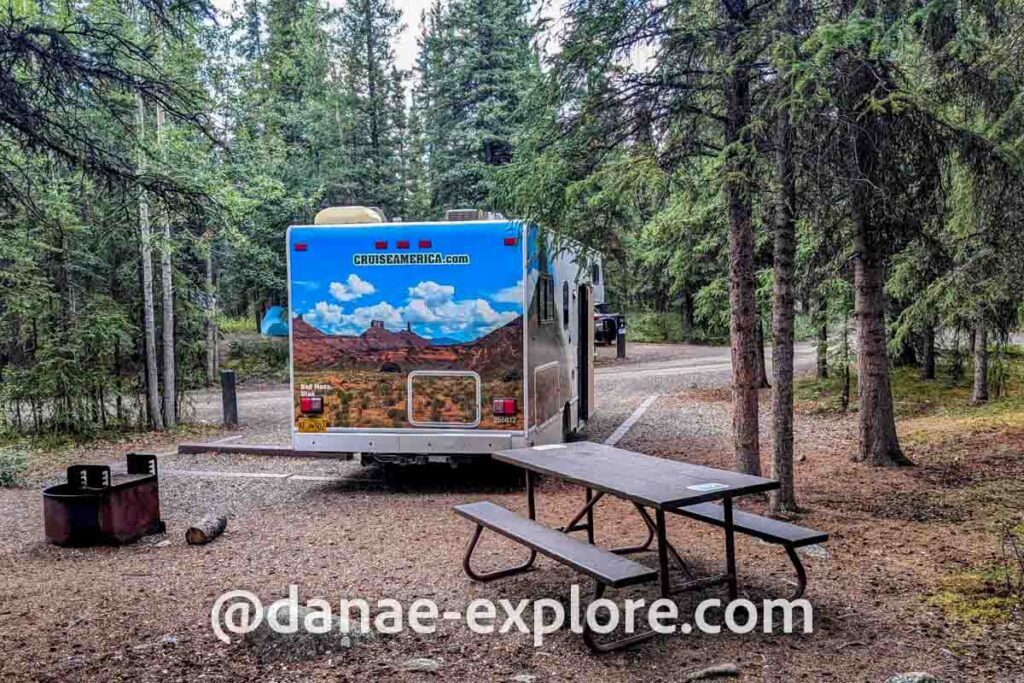
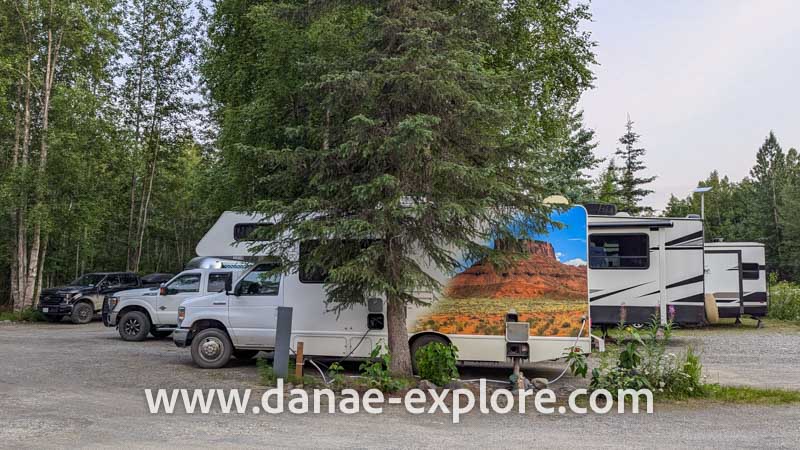
Like true first-timers, we played it safe and prioritized staying in RV campsites during our Alaska road trip, known as RV Parks or Campgrounds.
The infrastructure varied a lot from one place to another. Some were super basic — essentially just a gravel parking lot with a a pit toilet (which, as RV users, we had no use for). Others were surprisingly fancy, with great bathrooms, laundry facilities, a lounge, restaurant, small shop, and a playground. The top-tier ones also offered full hook-ups, meaning you could connect your RV to water, electricity, and sewage. Naturally, prices also ranged widely — from around $35 to $90 per night during Alaska’s peak summer season.
After two weeks on the road in an RV, we felt confident enough to try wild camping — basically parking somewhere it’s legally allowed and sleeping there overnight, for free. In the end, though, we didn’t actually do it. Even without booking most places in advance, we always managed to find a campsite wherever we wanted to stop for the night.
In National Parks like Denali, though, it’s crucial to book your site in advance through the official National Park Service website. The campground we stayed at in Denali didn’t have any hook-ups, but it did have excellent bathrooms, a laundry room, and a small store. There was also a water fill station and a sewage dump station available.
.

.
RV operation: water, electricity and sewage
This was the part of the RV trip that had me most anxious: What if we run out of water? What if we run out of propane? What if the toilet clogs? And how do you even hook everything up? I asked the few people I knew who had done an RV trip before, and the answer was always the same: “It’s easy.” But still — what if the water runs out?
Well, after two weeks traveling through some of the most remote areas in the U.S. in an RV, I can now say the exact same thing: It’s easy. Seriously. Believe me.
.
Water in the motorhome
There are two water sources when you’re traveling in an RV: the onboard water tank (ours had a 40-gallon/151-liter capacity), and — when you’re lucky enough to be at a campsite that offers it — a direct connection to the local water supply. In that case, just plug in the hose that comes with the RV, the same way you’d hook up a garden hose at home. That’s it.
Most of the campgrounds we stayed at didn’t offer a direct water hookup, but they did have water fill stations where we could top up the tank.
On three consecutive days (two in Denali National Park and the night after), we didn’t have access to any water fill station — and everything still worked out fine. We cooked, did dishes, and used the bathroom. We just skipped showers, since the campgrounds had their own. The water didn’t run out, and the RV stayed comfortable the whole time.
.

.
The RV bathroom
We generally tried to use the campground restrooms whenever possible — especially for anything more “substantial.”
That said, we did use the RV bathroom often, and it worked just fine. The space is tight, of course, but manageable. Every now and then we’d freshen it up with a bit of disinfectant in the toilet and a quick wipe-down of the other surfaces. Even after two weeks of full use, the RV stayed clean and didn’t smell at all.
As for showers, we prioritized using campground facilities — they’re roomier and save water, and it’s just less of a hassle than filling the tank, heating the water, and dealing with the extra wastewater. Still, we did shower inside the RV several times, even washed our hair, and everyone stayed clean and happy.
One thing I noticed: bath towels took forever to dry. I’m not sure if it was the Alaskan climate during our trip or just the challenge of drying multiple towels in such a small space — probably both.
.
RV sewage system
RVs have two separate wastewater tanks: one for black water (toilet waste) and one for gray water (everything else — showers, sinks, kitchen). You need to empty them periodically at what’s called a dump station.
Most of the campgrounds we stayed at had a communal dump station where you could stop on your way out and empty the tanks. At a few places, we had our own private hook-up right at our spot, so we left the hoses connected the whole time. Some campsites had neither option — in those cases, we just made do. We went three days without dumping what we affectionately called the swamp water, and it was totally fine.
.
.
Electricity in the RV
You only get electricity in the RV when it’s plugged into an external power source — there’s a specific cable for that. This was actually one of the main reasons we prioritized staying at campgrounds. Since we work while traveling, we needed outlets for our laptops, not to mention the camera batteries.
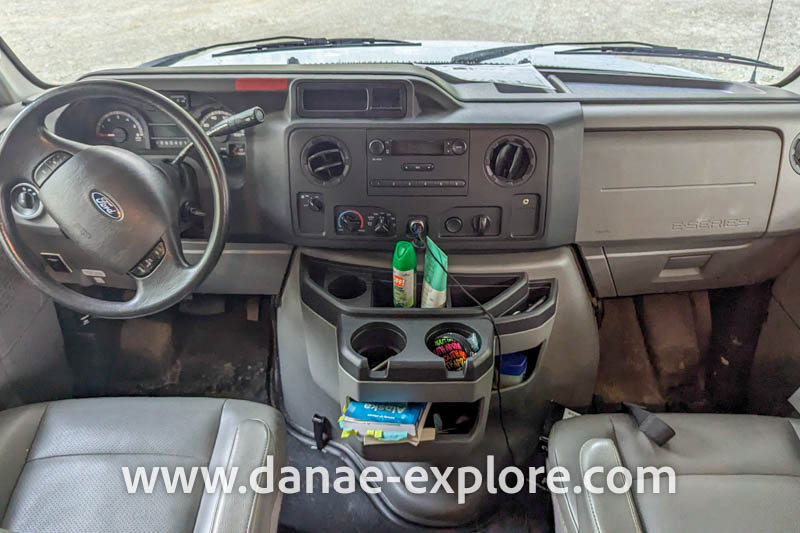
Phones can be charged via a USB port on the dashboard if your RV has one. Ours was pretty old and didn’t even have USB ports. So we ended up buying an adapter and I definitely recommend bringing one from home. With it, we had two USB ports, which was more than enough to keep all our phones charged throughout our two week trip in Alaska.
There’s also a device called a power inverter that plugs into the vehicle’s cigarette lighter and can generate regular power for laptops and similar gear. We didn’t buy one, but in hindsight, it would have made a big difference.
Oh — and don’t forget to unplug everything before hitting the road. Sounds obvious, right? Well… let’s just say that once, we drove off feeling very pleased with ourselveswith the power cord still connected. Thankfully, nothing broke and no one got hurt, but it was a close call.
.

.
Bedding and towels
The RV we rented didn’t come with bed or bath linens — those had to be rented separately for the low, low price of $75 per person. Yep, $300 for the four of us! I thought that was outrageous.
Instead, I packed two empty suitcases and made a Target run once we arrived. We picked up sheets, towels, blankets, a comforter, pillows, a bath mat, dish towels, and placemats — all for way less than the cost of the “personal kit.”
At the end of the trip, I managed to squeeze everything into our luggage — one of the perks of travelling light: there’s always space in the suitcase! And as a bonus, we gave our household linen collection a nice little upgrade.
.
.
Motorhome safety
When planning your route and how far you’ll drive each day, keep in mind: RVs aren’t exactly speed machines. They don’t go very fast — and you’ll likely drive even slower than they’re capable of, especially on narrow roads or in bad weather.
Also, they’re loud. There’s the roar of the engine (way louder than a regular car), plus the constant clatter of dishes, rattling drawers, and whatever else is in the back. Be ready for some background noise.
Everyone needs to be seated and buckled while the RV is moving — kind of obvious, but it’s easy to forget, especially for whoever’s in the back. There’s always a temptation to get up and grab something.
Also, never leave things loose on the counters or table. One sharp turn and your water bottle, cereal box, or whatever was on the sink goes flying.
Pay extra attention to the side mirrors. Ours didn’t make it very far into the trip — goodbye, passenger-side mirror! Thankfully, we had full insurance (with no deductible, highly recommend!), so there were no issues. Since the mirror was a special model not available in stores, the rental company suggested we improvise one and continue on. So yes, we made a DIY side mirror abroad! After that, all went smoothly, and when we returned the RV, they even reimbursed us for what we spent on our makeshift fix.
.


.
Some practical tips for RV travel in the USA
.
– Bring flip-flops for using at campground bathrooms, and a second pair — or grippy socks— for inside the RV. The floor gets cold, and you really don’t want to track campground dirt into your living space.
– Don’t forget a USB adapter for the dashboard, and a power inverter if you plan to charge laptops or other electronics using the RV battery. If you work remotely, this is a game changer.
– Pack some basic cleaning supplies: disinfectant wipes for the bathroom and kitchen, plus dish soap and a sponge. It makes a difference.
– Our RV came with a broom, but if yours doesn’t, you’ll want to buy one. A quick sweep every other day takes twenty seconds and keeps things livable.
– At the Cruise America location in Anchorage, AK, there was a “donation table” — a fantastic idea. People returning RVs left behind unused items for the next travelers to take. We scored detergent, paper towels, soap, salt, pepper, vinegar, and more. At the end of our trip, we paid it forward with things like pillows, cleaning products, and, yes, even the same salt and pepper.
– Our fuel tank held fifty gallons, and gas prices ranged between $3.60 and $4.20 per gallon. We calculated our average fuel consumption to be around 4.5 km per liter (or 10.6 MPG) — something to keep in mind when budgeting.
.
Here are the websites I always use to plan my trips:
– 🛌 Accommodation: Booking
– ☀️ Tours & activities: Civitatis & Get Your Guide
– 📱 eSIM for mobile data: Airalo e-SIM – use promo code DANAE2375
– 🚗 Car rental: RentCars – use promo code DANAE, or DiscoverCars
All our posts about traveling in the United States of America:
- Christmas in New York: a complete guide to making the most of the season
- 4 days in Rocky Mountain National Park, Colorado
- 2-week Alaska RV roadtrip itinerary – The best of the last frontier
- Wrangell-St. Elias: all you need to know to explore America’s largest National Park
- Everything you need to know to travel in a motorhome across America
.
Did you like these tips? Then follow me on social media:
Instagram @danae_explore
Pinterest @danaeexplore
Comments or questions? Contact me on social media! I love to chat about travel 😉
And before you go, don’t forget to SAVE THIS PIN to your PINTEREST account, so you can find this post with all the tips for traveling by motorhome across the United States whenever you need it!