
I first went to Évora in the late ’90s, when I was backpacking through Portugal and Spain. I spent a night in town and found it one of the most charming and fascinating stops on that trip around the region. Many years later, when the chance came to go back to the country, this time with my husband and our young daughters, I didn’t think twice about including Évora in the itinerary for the two weeks we spent in Portugal.
Except this time we opted for a day trip from Lisbon: the town is about 1.5 hours away by train, and the main sights fit into one day. You can go on a tour from Lisbon, but we went on our own, with the rental car that then stayed with us for the rest of the trip (I explain how further down). It was a bit of a push, mostly because of the hellish heat that day, but it was worth it.
Évora is already well known on the tourist circuit, but it’s still worth a stop on your next trip to Portugal. And 2027 is a great year to go: the town s the European Capital of Culture, with an official program starting in February.
Évora
How long: a full day from Lisbon is enough for the old town and, by car, the Almendres Cromlech; with one night, you can see the town at a slower pace.
Getting there: we went by rental car, picked up on our last day in Lisbon: it’s 130 km, about 1.5 hours. Without a car, by train (also about 1.5 hours) or on a tour from Lisbon.
What we liked most: the Temple of Diana, the Chapel of Bones, the Cathedral and Praça do Giraldo for a coffee.
Where to stay, if you spend the night: the Evora Olive Hotel or the Pousada Convento de Évora, both inside the walls.
When to go: we went in July, in hellish heat. In 2027 Évora is the European Capital of Culture, opening on February 6.
First of all, follow me on Instagram @danae_explore – that’s where you can keep up with my trips, find lots of travel tips, and send me a DM anytime. I love chatting about travel!
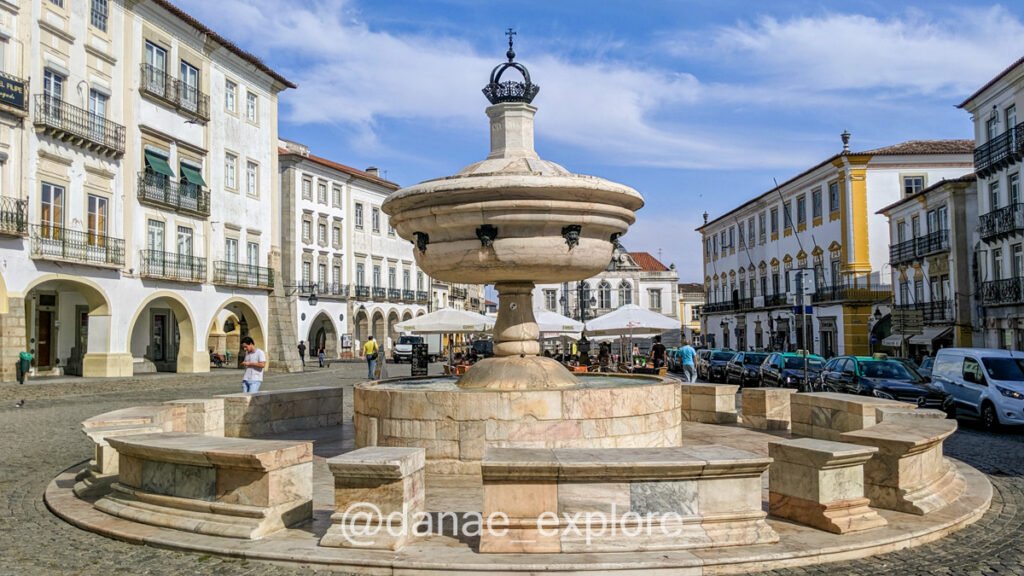
Évora, European Capital of Culture in 2027
The official opening is on February 6, 2027, with a show by director Marco Martins and 400 participants, and the program runs all year, in Évora and other towns across the Alentejo. The motto is “O vagar é a cena” (roughly, “slowness takes the stage”). The monthly calendar is on the official website, worth checking before you pick the date for your day trip.
How to get from Lisbon to Évora
We went by car. We rented it on our last day in Lisbon, did the day trip to Évora and, the next day, carried on around Portugal. It’s the same trick we used in Melbourne, Australia: in a big city a car is more trouble than it’s worth, so we only pick it up on the way out, which saves on rental days and parking headaches.
By car, it’s about 130 km on the A6 motorway, a toll road, and a rental car lets you fit in a visit to the Almendres Cromlech on the same day. Inside the walls the streets are narrow; the easiest thing is to park outside and walk in.
By train: the Intercidades leaves from Lisboa Oriente and gets to Évora in about 1.5 hours. A one-way ticket costs around €14. There are only a few departures a day, and seats on this line tend to run short: book both legs in advance on the CP website. Évora station is outside the walls, about 500 meters’ walk from the entrance to the old town.
By bus: Rede Expressos leaves from Sete Rios bus station in Lisbon and takes 1.5 to 1¾ hours; FlixBus leaves from Gare do Oriente and is usually cheaper. Évora’s bus station is also just a few minutes’ walk from the walls.
On a tour: there are day trips from Lisbon that also include the Almendres Cromlech, and others that combine Évora and Arraiolos.
What to do in Évora in one day
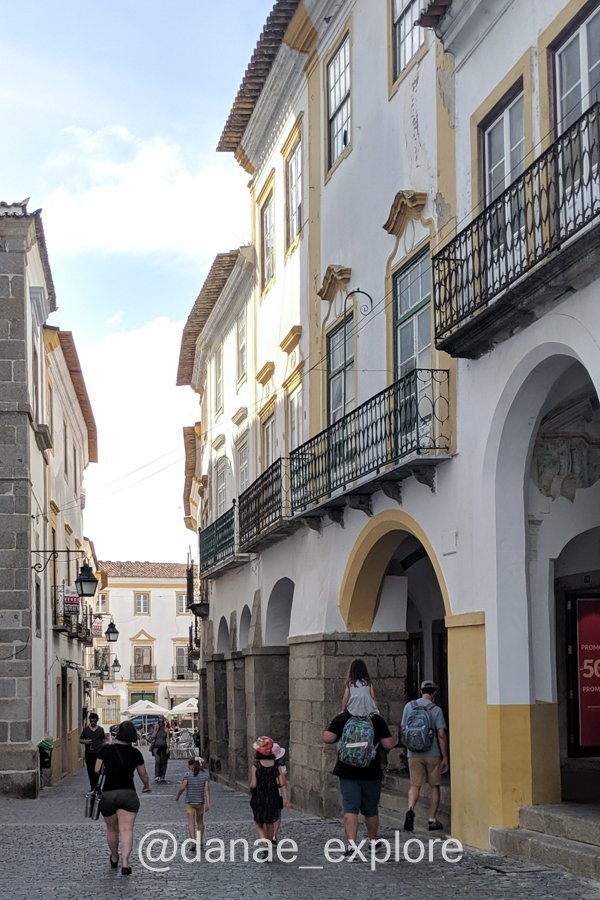
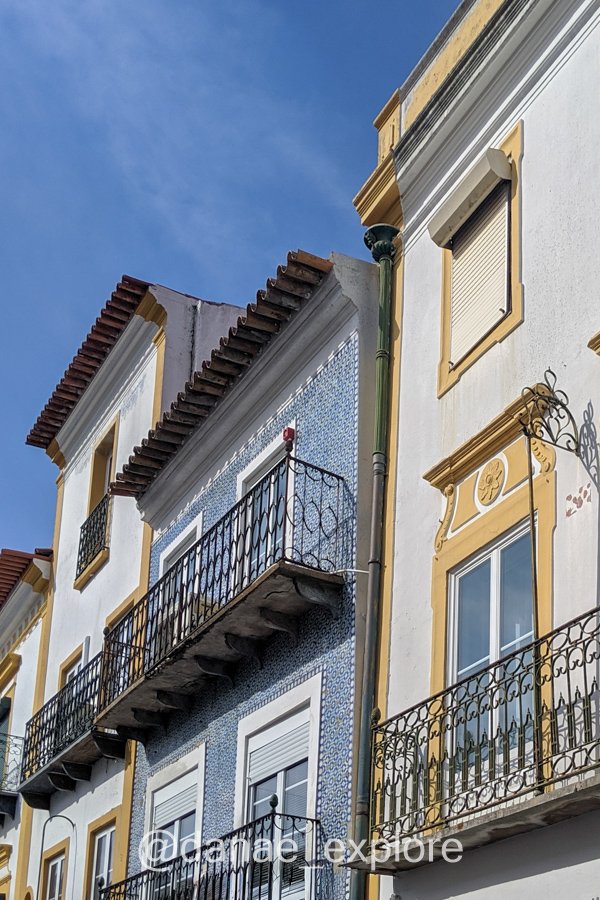
Évora is a town to be savored slowly, wandering its little streets and stopping whenever you feel like it. If you can, take a guided walking tour of the town: we include this kind of tour whenever possible, because there’s nothing like getting to know a place and its stories with a local guide, it’s so much richer and more rewarding.
But if you do what we did and visit Évora on a day trip from Lisbon, the truth is you won’t have quite that much time to linger, so here’s a complete itinerary, in the order I’d do it, on foot, leaving the Cromlech, which you need a car for, until the end (if you still have the time and energy):
Start with the walls and the Água de Prata Aqueduct, right at the entrance to town. Évora is surrounded by well-preserved medieval walls, and the Água de Prata Aqueduct is worth a look: from 1537 to this day, it has carried water into town from the springs around Graça do Divor, 18 km away.
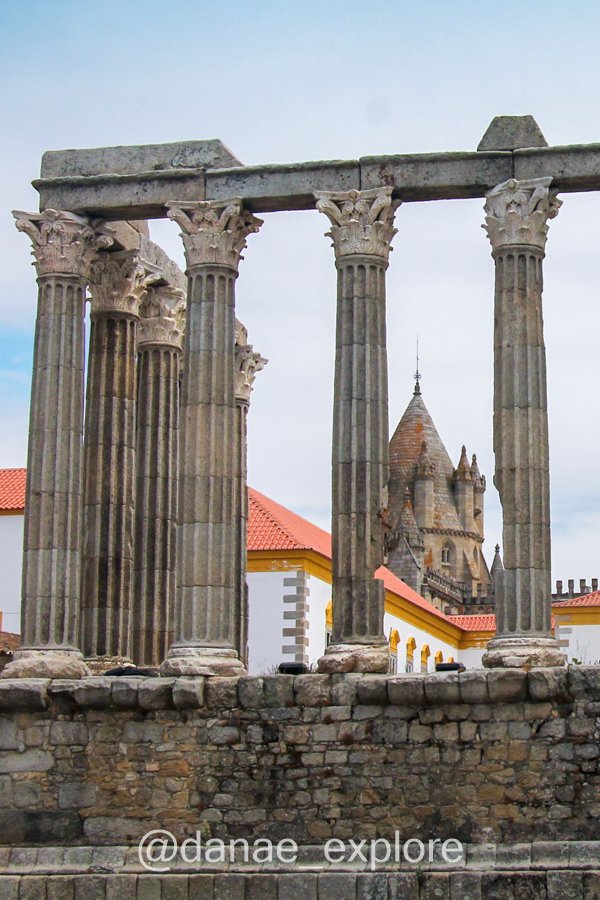
Once in the old town, head up Rua do Cano (which translates as “Pipe Street”, ha), turn right at the end (Google Maps is your friend here) and you’ll reach the Temple of Diana (Roman Temple). The 1st-century Roman columns stand at the highest point in town, out in the open and free to visit.
Across from the Roman Temple is the former Inquisition Palace, which, despite the name, now houses the Fórum Eugénio de Almeida, a contemporary art center (we didn’t go). Right next door, in the former archbishops’ palace, is the Museu Nacional Frei Manuel do Cenáculo (also known as the Évora Museum), with archaeological and historical pieces and some temporary exhibitions. And very close by is the Palace of the Dukes of Cadaval, a mix of Mudéjar, Gothic and Manueline styles.

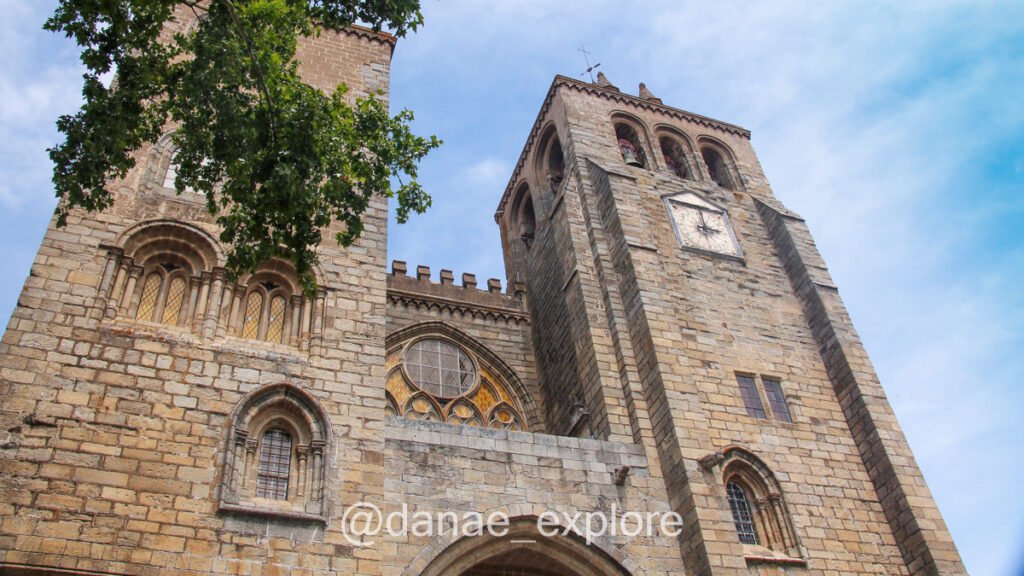
A little further on you’ll find Évora Cathedral (the Sé). It’s the largest medieval cathedral in Portugal. With the combined ticket, you can see the Gothic cloister and climb up to the terrace, with the best view over the town’s rooftops and the Alentejo plain.
The next stop is Praça do Giraldo, with its famous fountain and surrounded by little shops and restaurants, perfect for a coffee and an ice cream.
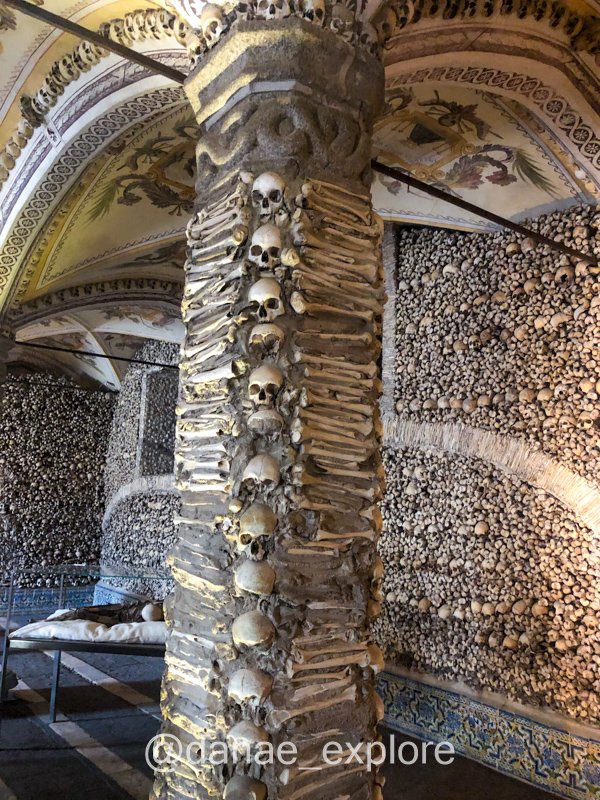
Carry on to the Chapel of Bones and the Church of São Francisco, one of the town’s most famous sights. The 17th-century chapel has its walls and pillars lined with human bones and skulls, and over the entrance the line “Nós ossos que aqui estamos, pelos vossos esperamos” (“We bones that are here are waiting for yours”). Entry to the church is free; the chapel has a ticket, which includes the museum area and the nativity scene collection.
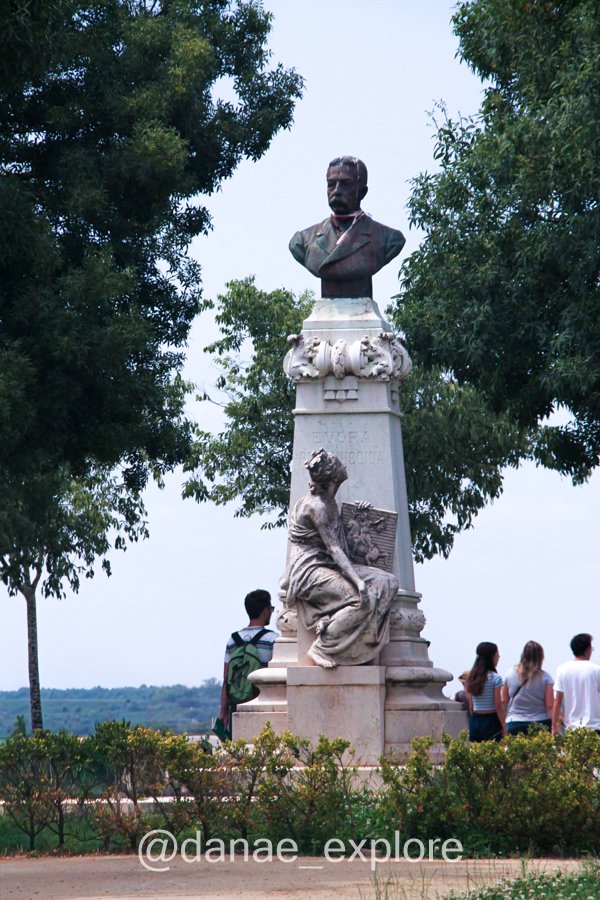
While you’re in the area, visit the Public Garden and the Ruínas Fingidas (fake ruins), where you’ll also find the Palace of King Manuel, with the Ladies’ Gallery, then head back to the Giraldo area to soak up the atmosphere.
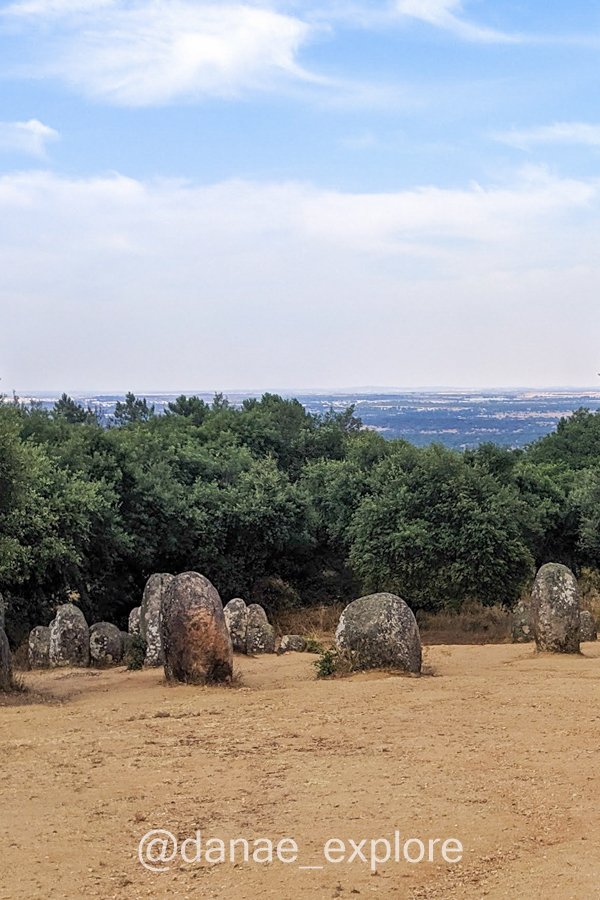
Another spot worth seeing near Évora is the Almendres Cromlech. Close to town but outside the walls, it’s a complex of standing stones dating back to the 6th millennium BC (you can only get there by car or on a tour). We drove there at the end of the day, and from there headed straight back to Lisbon.
Where to eat in Évora
We ate at 1/4 Para as 9 (that’s “quarter to nine”: Portuguese names never stop amusing me), in the old town, a classic of Alentejo cooking. The house’s most famous dish is açorda de marisco, a seafood bread stew that’s been on the menu since 1977. Heads-up: it’s closed on Wednesdays.
Other good options are Fialho, one of the most traditional restaurants in town, run by the same family for three generations; Recanto, small and cozy, right up against the Aqueduct, on Largo do Chão das Covas; and Enoteca Cartuxa, from the winery that makes Pêra-Manca, very close to the Roman Temple.
And for something sweet, I recommend Pastelaria Violeta, Brigadeiria D’Évora (brigadeiros are Brazil’s chocolate fudge bonbons) or Cafetaria Camões.
Is it worth spending the night in Évora?
The first time I was in Portugal, back in the ’90s, I stayed at a dirt-cheap hostel in Évora’s old town whose name I no longer remember (and that probably doesn’t even exist anymore). It was great, and I recommend it: the town feels different once the tour groups leave. It was February, and at night there was that lovely crisp chill in the air; I remember the Temple of Diana lit up, and sitting at an outdoor table soaking up the atmosphere.
The second time, we went for the day trip, because with young kids we thought it was better to keep our stays to a few hotels rather than constantly moving on, packing and unpacking our bags. It was fine, and I recommend it to anyone short on time or who prefers that kind of travel setup. But if you do spend the night, don’t miss the sunset at the Alto de São Bento viewpoint, a little outside the center (go by car), looking out over the town and the Alentejo countryside.
There’s no shortage of places to stay in Évora. The ones that caught my eye (and that I’ve already saved for my next trip) were the Evora Olive Hotel and the Pousada Convento de Évora. Both are in the historic part of town, inside the walls, which makes it so much easier to reach all the sights, restaurants and shops. If you’d like to see others, here are the options in Évora, or pick one straight from the map below. Oh, and the town’s tourist tax is €1.50 per person per night.
When to visit Évora
We went in July, and the Alentejo summer heat is no joke. If you’re doing a day trip, start early and save the indoor stops (the Cathedral and the Chapel of Bones, plus lunch) for the middle of the day. Spring and autumn are the most pleasant seasons; in 2027, the European Capital of Culture program runs from February to the end of the year.
And if Évora is part of a bigger trip, here’s the full itinerary of our two weeks in Portugal, with Sintra, the Alentejo, Coimbra, Porto and the Algarve.
Heading to Portugal? Think about the Azores too. If you can stretch your trip, the islands are worth adding: it’s another Portugal, green and volcanic, with a pace that’s very different from the mainland. Here on the blog there’s a one-week Azores itinerary, covering São Miguel, Pico and Terceira.
Évora day trip from Lisbon: frequently asked questions
Can you do an Évora day trip from Lisbon?
Yes, that’s what we did: the old town is compact and you can see it on foot in a day. It was a push because of the July heat, but worth it. If you can, stay a night.
What’s the best way to get from Lisbon to Évora?
We drove, in a car rented on our last day in Lisbon, and the next day carried on around the country: it’s 130 km, and you can fit in the Almendres Cromlech. Without a car, the Intercidades train takes about 1.5 hours from Lisboa Oriente; the Rede Expressos bus takes 1.5 to 1¾ hours from Sete Rios. To see the Cromlech without a car, a tour is the easiest option.
What shouldn’t you miss in Évora?
The Temple of Diana, the Cathedral and its terrace, the Chapel of Bones and Praça do Giraldo. With a car or on a tour, the Almendres Cromlech.
How much does it cost to visit Évora’s monuments?
The Temple of Diana is outdoors and free. The Cathedral and the Chapel of Bones charge a few euros’ admission; prices change, so check each one’s website.
What’s different about Évora in 2027?
Évora is the European Capital of Culture, opening on February 6, 2027, with a program all year round. Expect more going on in town and more demand for hotels, especially on weekends.
Plan your trip
The websites I always use to plan my trips. Booking through these links costs you nothing extra and helps keep the blog going.